Matsuyama Yasushi, Nakaya Motoyuki, Leppink Jimmie, van der Vleuten Cees, Asada Yoshikazu, Lebowitz Adam Jon, Sasahara Teppei, Yamamoto Yu, Matsumura Masami, Gomi Akira, Ishikawa Shizukiyo, Okazaki Hitoaki
Medical Education Center, Jichi Medical University, 3311-1 Yakushiji, Shimotsuke, Tochigi, Japan.
The department of Psychology and Human Developmental Sciences, Nagoya University, Furo-cho, Chikusa-ku, Nagoya, Japan.
BMC Med Educ. 2021 Jan 7;21(1):30. doi: 10.1186/s12909-020-02460-3.
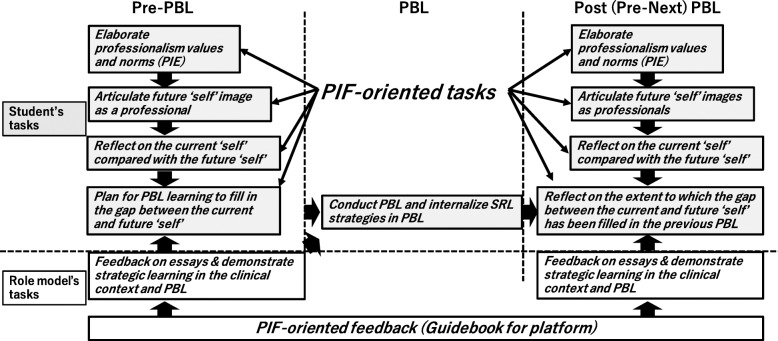
Developing self-regulated learning in preclinical settings is important for future lifelong learning. Previous studies indicate professional identity formation, i.e., formation of self-identity with internalized values and norms of professionalism, might promote self-regulated learning. We designed a professional identity formation-oriented reflection and learning plan format, then tested effectiveness on raising self-regulated learning in a preclinical year curriculum.
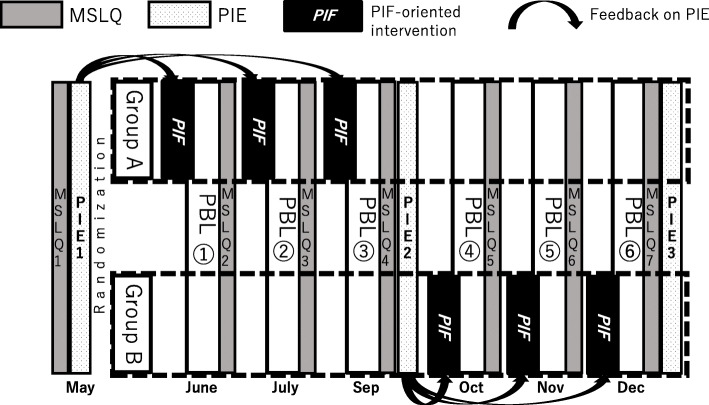
A randomized controlled crossover trial was conducted using 112 students at Jichi Medical University. In six one-day problem-based learning sessions in a 7-month pre-clinical year curriculum, Groups A (n = 56, female 18, mean age 21.5y ± 0.7) and B (n = 56, female 11, mean age 21.7y ± 1.0) experienced professional identity formation-oriented format: Group A had three sessions with the intervention format in the first half, B in the second half. Between-group identity stages and self-regulated learning levels were compared using professional identity essays and the Motivated Strategies for Learning Questionnaire.
Two-level regression analyses showed no improvement in questionnaire categories but moderate improvement of professional identity stages over time (R = 0.069), regardless of timing of intervention.
Professional identity moderately forms during the pre-clinical year curriculum. However, neither identity nor self-regulated learning is raised significantly by limited intervention.
在临床前阶段培养自主学习能力对未来的终身学习很重要。先前的研究表明,职业身份形成,即形成具有内化的职业价值观和规范的自我认同,可能会促进自主学习。我们设计了一种以职业身份形成为导向的反思和学习计划形式,然后在临床前一年的课程中测试其对提高自主学习能力的有效性。
对筑波医科大学的112名学生进行了一项随机对照交叉试验。在为期7个月的临床前一年课程的六次为期一天的基于问题的学习课程中,A组(n = 56,女性18名,平均年龄21.5岁±0.7)和B组(n = 56,女性11名,平均年龄21.7岁±1.0)采用了以职业身份形成为导向的形式:A组在上半场有三次干预形式的课程,B组在下半场。使用职业身份论文和学习动机策略问卷比较组间身份阶段和自主学习水平。
两级回归分析显示,问卷类别没有改善,但随着时间的推移,职业身份阶段有适度改善(R = 0.069),与干预时间无关。
在临床前一年的课程中,职业身份适度形成。然而,有限的干预并没有显著提高身份认同或自主学习能力。