Institute of Blood Transfusion, Chinese Academy of Medical Sciences and Peking Union Medical College, Chengdu, 610052, Sichuan, People's Republic of China.
Key Laboratory of Transfusion Adverse Reactions, Chinese Academy of Medical Sciences, Chengdu, 610052, Sichuan, People's Republic of China.
J Transl Med. 2021 Jan 7;19(1):30. doi: 10.1186/s12967-020-02693-2.
COVID-19 has caused a global pandemic and the death toll is increasing. However, there is no definitive information regarding the type of clinical specimens that is the best for SARS-CoV-2 detection, the antibody levels in patients with different duration of disease, and the relationship between antibody level and viral load.
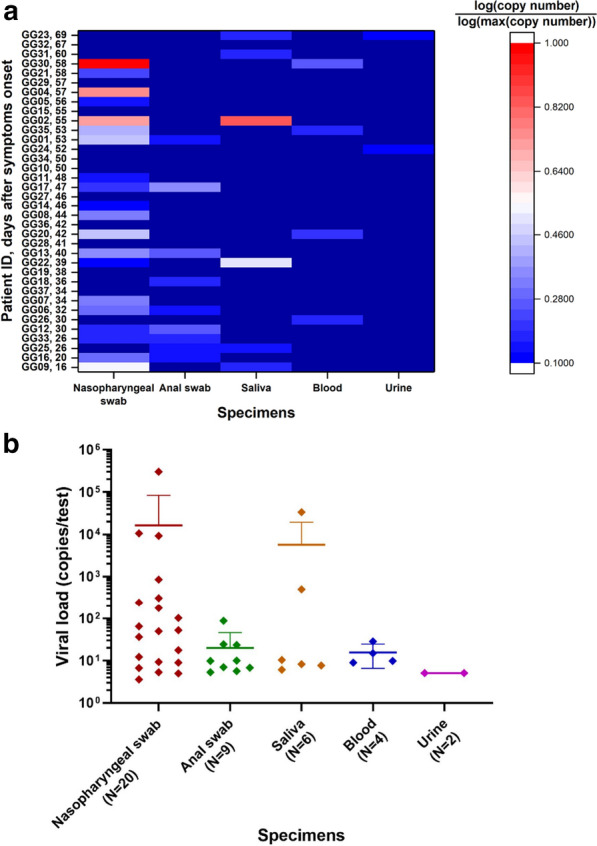
Nasopharyngeal swabs, anal swabs, saliva, blood, and urine specimens were collected from patients with a course of disease ranging from 7 to 69 days. Viral load in different specimen types was measured using droplet digital PCR (ddPCR). Meanwhile, anti-nucleocapsid protein (anti-N) IgM and IgG antibodies and anti-spike protein receptor-binding domain (anti-S-RBD) IgG antibody in all serum samples were tested using ELISA.
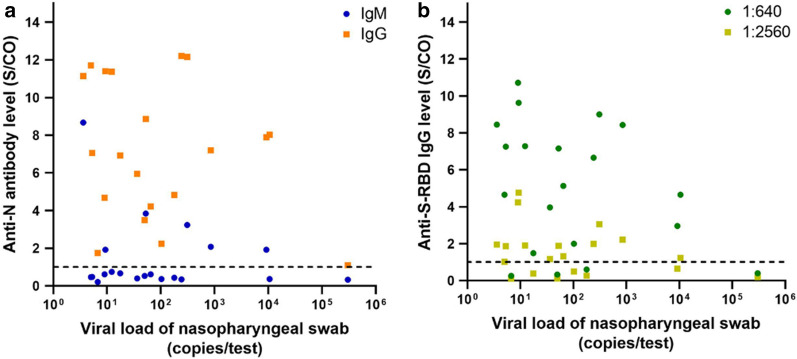
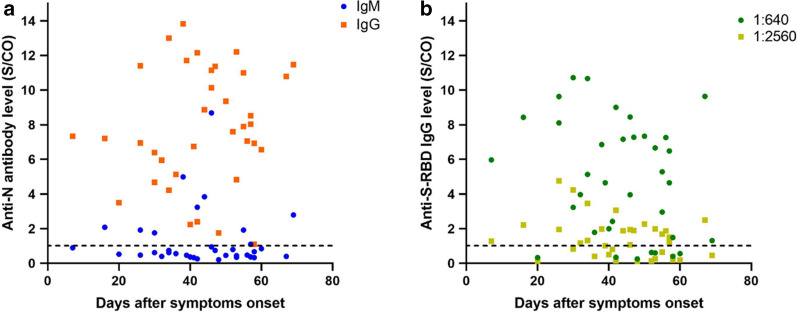
The positive detection rate in nasopharyngeal swab was the highest (54.05%), followed by anal swab (24.32%), and the positive detection rate in saliva, blood, and urine was 16.22%, 10.81%, and 5.41%, respectively. However, some patients with negative nasopharyngeal swabs had other specimens tested positive. There was no significant correlation between antibody level and days after symptoms onset or viral load.
Other specimens could be positive in patients with negative nasopharyngeal swabs, suggesting that for patients in the recovery period, specimens other than nasopharyngeal swabs should also be tested to avoid false negative results, and anal swabs are recommended. The antibody level had no correlation with days after symptoms onset or the viral load of nasopharyngeal swabs, suggesting that the antibody level may also be affected by other factors.
COVID-19 引发了全球性大流行,死亡人数不断增加。然而,目前尚不清楚哪种类型的临床标本最适合 SARS-CoV-2 检测,不同疾病持续时间患者的抗体水平,以及抗体水平与病毒载量之间的关系。
收集病程 7-69 天的患者的鼻咽拭子、肛拭子、唾液、血液和尿液标本。使用液滴数字 PCR(ddPCR)测量不同标本类型中的病毒载量。同时,使用 ELISA 检测所有血清样本中的核衣壳蛋白(anti-N)IgM 和 IgG 抗体以及刺突蛋白受体结合域(anti-S-RBD)IgG 抗体。
鼻咽拭子的阳性检出率最高(54.05%),其次是肛拭子(24.32%),唾液、血液和尿液的阳性检出率分别为 16.22%、10.81%和 5.41%。然而,一些鼻咽拭子阴性的患者其他标本检测为阳性。抗体水平与症状出现后天数或病毒载量之间无显著相关性。
在鼻咽拭子阴性的患者中,其他标本可能为阳性,提示对于恢复期患者,除鼻咽拭子外,还应检测其他标本,以避免假阴性结果,建议使用肛拭子。抗体水平与症状出现后天数或鼻咽拭子的病毒载量无相关性,表明抗体水平可能还受到其他因素的影响。