Division of Cardiovascular Medicine, Henry Ford Hospital, Detroit, MI.
Division of Cardiovascular Medicine, Henry Ford Hospital, Detroit, MI.
Mayo Clin Proc. 2021 Jan;96(1):32-39. doi: 10.1016/j.mayocp.2020.10.003. Epub 2020 Oct 10.
To investigate the relationship between maximal exercise capacity measured before severe acute respiratory syndrome coronavirus 2 (SARS-CoV-2) infection and hospitalization due to coronavirus disease 2019 (COVID-19).
We identified patients (≥18 years) who completed a clinically indicated exercise stress test between January 1, 2016, and February 29, 2020, and had a test for SARS-CoV-2 (ie, real-time reverse transcriptase polymerase chain reaction test) between February 29, 2020, and May 30, 2020. Maximal exercise capacity was quantified in metabolic equivalents of task (METs). Logistic regression was used to evaluate the likelihood that hospitalization secondary to COVID-19 is related to peak METs, with adjustment for 13 covariates previously identified as associated with higher risk for severe illness from COVID-19.
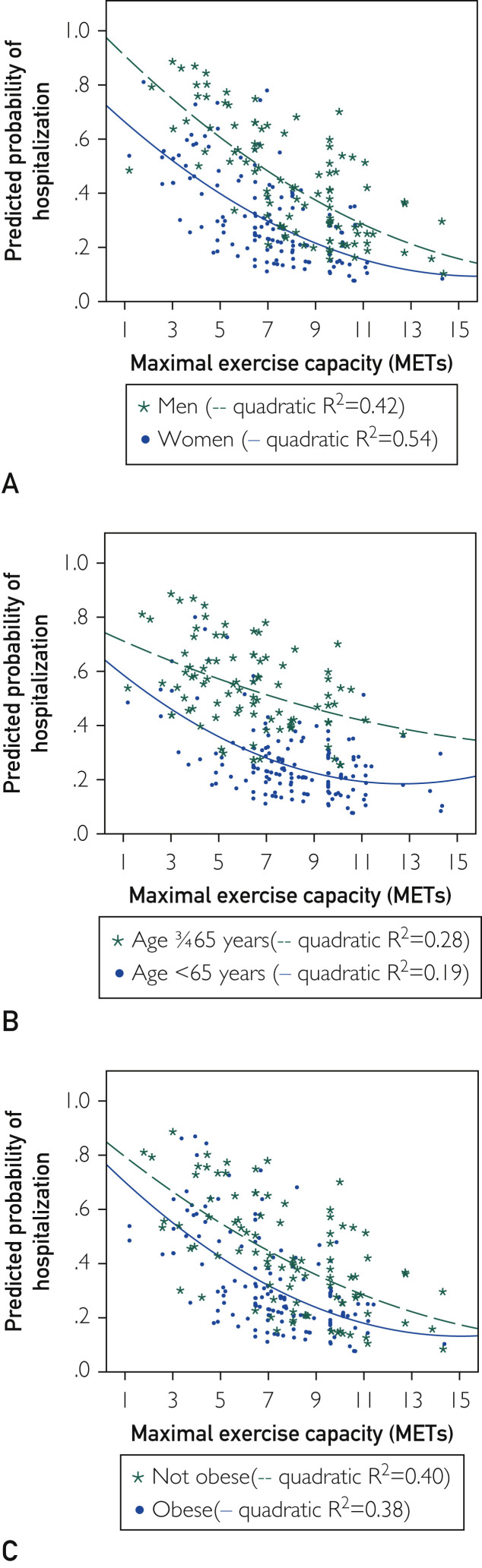
We identified 246 patients (age, 59±12 years; 42% male; 75% black race) who had an exercise test and tested positive for SARS-CoV-2. Among these, 89 (36%) were hospitalized. Peak METs were significantly lower (P<.001) among patients who were hospitalized (6.7±2.8) compared with those not hospitalized (8.0±2.4). Peak METs were inversely associated with the likelihood of hospitalization in unadjusted (odds ratio, 0.83; 95% CI, 0.74-0.92) and adjusted models (odds ratio, 0.87; 95% CI, 0.76-0.99).
Maximal exercise capacity is independently and inversely associated with the likelihood of hospitalization due to COVID-19. These data further support the important relationship between cardiorespiratory fitness and health outcomes. Future studies are needed to determine whether improving maximal exercise capacity is associated with lower risk of complications due to viral infections, such as COVID-19.
研究严重急性呼吸综合征冠状病毒 2(SARS-CoV-2)感染前最大运动能力与因 2019 年冠状病毒病(COVID-19)住院的关系。
我们确定了在 2016 年 1 月 1 日至 2020 年 2 月 29 日之间完成临床指示性运动压力测试且在 2020 年 2 月 29 日至 2020 年 5 月 30 日之间进行 SARS-CoV-2 检测(即实时逆转录酶聚合酶链反应检测)的患者(≥18 岁)。最大运动能力以代谢当量(METs)表示。使用逻辑回归评估因 COVID-19 住院的可能性与峰值 METs 相关,调整了先前确定的 13 个与 COVID-19 严重疾病风险较高相关的协变量。
我们确定了 246 名(年龄 59±12 岁;42%为男性;75%为黑种人)进行运动测试且 SARS-CoV-2 检测阳性的患者。其中,89 名(36%)住院。与未住院的患者(8.0±2.4)相比,住院患者的峰值 METs 明显较低(P<.001)(6.7±2.8)。在未调整(比值比,0.83;95%置信区间,0.74-0.92)和调整模型(比值比,0.87;95%置信区间,0.76-0.99)中,峰值 METs 与住院的可能性呈反比关系。
最大运动能力与因 COVID-19 住院的可能性独立且呈反比关系。这些数据进一步支持心肺功能与健康结果之间的重要关系。需要进一步的研究来确定提高最大运动能力是否与降低因病毒感染(如 COVID-19)引起的并发症风险相关。