Johns Hopkins University School of Medicine, Division of Nephrology, Baltimore, Maryland.
Johns Hopkins University School of Medicine, Division of Nephrology, Baltimore, Maryland.
Transplant Proc. 2021 May;53(4):1202-1206. doi: 10.1016/j.transproceed.2020.10.050. Epub 2020 Dec 17.
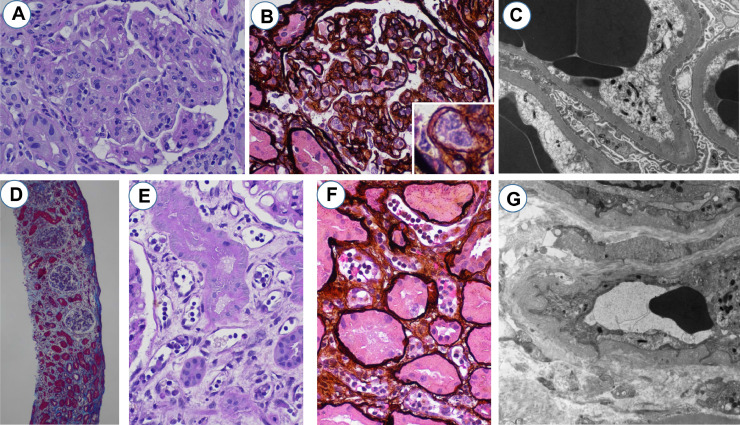
Kidney transplant recipients who develop coronavirus disease 2019 (COVID-19) are at increased risk of life-threatening illness, which often requires reducing immunosuppression despite the potential risk of causing an allograft rejection. Herein, we describe the clinical presentation and course of a kidney transplant recipient who acquired COVID-19 and was hospitalized with severe symptoms and hypoxemia. Upon admission, the patient was found to have elevated de novo donor-specific antibodies (DSA) yielding a positive cytotoxicity crossmatch and concurrent elevated plasma donor-derived cell-free DNA (dd-cfDNA) level, indicating a possible ongoing rejection despite improvement in his serum creatinine. Because of persistent positive COVID-19 tests and stable serum creatinine, a kidney allograft biopsy was initially deferred and his dd-cfDNA and DSA were monitored closely postdischarge. Three months later, because of persistent elevated dd-cfDNA and positive DSA, a kidney allograft biopsy was performed, which showed chronic active antibody-mediated rejection. Accordingly, the patient was treated with intravenous immunoglobulin and his maintenance immunosuppressive regimen was increased.
患有 2019 冠状病毒病(COVID-19)的肾移植受者罹患危及生命的疾病的风险增加,尽管存在引起移植物排斥的潜在风险,但往往需要减少免疫抑制。在此,我们描述了一名肾移植受者感染 COVID-19 并因严重症状和低氧血症住院的临床经过。入院时,患者发现新出现的供体特异性抗体(DSA)升高,导致细胞毒性交叉匹配阳性,同时血浆供体游离 DNA(dd-cfDNA)水平升高,表明尽管血清肌酐有所改善,但仍可能存在正在进行的排斥反应。由于持续的 COVID-19 检测呈阳性和血清肌酐稳定,最初推迟了肾移植活检,并且在出院后密切监测了 dd-cfDNA 和 DSA。三个月后,由于持续升高的 dd-cfDNA 和阳性的 DSA,进行了肾移植活检,显示慢性活动性抗体介导的排斥反应。因此,患者接受了静脉注射免疫球蛋白治疗,并增加了他的维持性免疫抑制方案。