Pagano Katiuscia, Tomaselli Simona, Molinari Henriette, Ragona Laura
NMR Laboratory, Istituto di Scienze e Tecnologie Chimiche (SCITEC), Consiglio Nazionale delle Ricerche - CNR, Milan, Italy.
Front Neurosci. 2020 Dec 22;14:619667. doi: 10.3389/fnins.2020.619667. eCollection 2020.
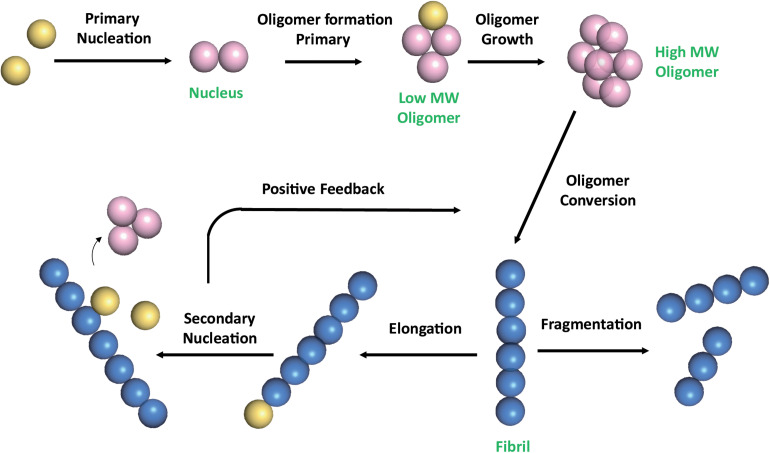
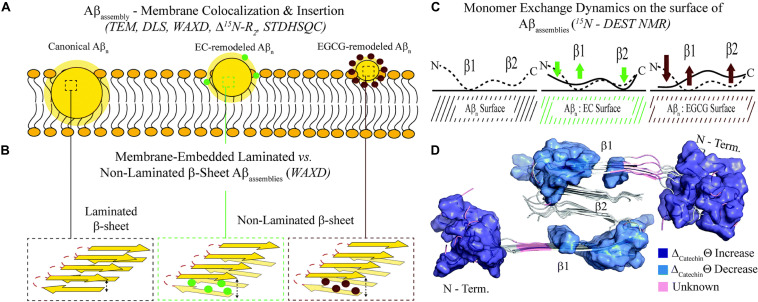
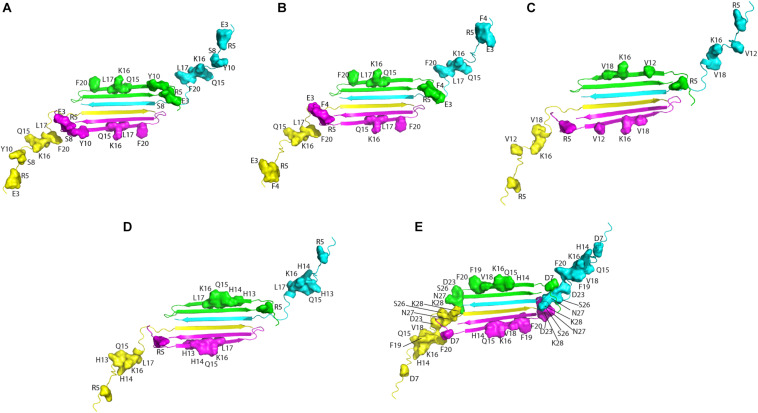
Alzheimer's disease (AD) is one of the most common neurodegenerative disorders, with no cure and preventive therapy. Misfolding and extracellular aggregation of Amyloid-β (Aβ) peptides are recognized as the main cause of AD progression, leading to the formation of toxic Aβ oligomers and to the deposition of β-amyloid plaques in the brain, representing the hallmarks of AD. Given the urgent need to provide alternative therapies, natural products serve as vital resources for novel drugs. In recent years, several natural compounds with different chemical structures, such as polyphenols, alkaloids, terpenes, flavonoids, tannins, saponins and vitamins from plants have received attention for their role against the neurodegenerative pathological processes. However, only for a small subset of them experimental evidences are provided on their mechanism of action. This review focuses on those natural compounds shown to interfere with Aβ aggregation by direct interaction with Aβ peptide and whose inhibitory mechanism has been investigated by means of biophysical and structural biology experimental approaches. In few cases, the combination of approaches offering a macroscopic characterization of the oligomers, such as TEM, AFM, fluorescence, together with high-resolution methods could shed light on the complex mechanism of inhibition. In particular, solution NMR spectroscopy, through peptide-based and ligand-based observation, was successfully employed to investigate the interactions of the natural compounds with both soluble NMR-visible (monomer and low molecular weight oligomers) and NMR-invisible (high molecular weight oligomers and protofibrils) species. The molecular determinants of the interaction of promising natural compounds are here compared to infer the chemical requirements of the inhibitors and the common mechanisms of inhibition. Most of the data converge to indicate that the Aβ regions relevant to perturb the aggregation cascade and regulate the toxicity of the stabilized oligomers, are the N-term and β1 region. The ability of the natural aggregation inhibitors to cross the brain blood barrier, together with the tactics to improve their low bioavailability are discussed. The analysis of the data ensemble can provide a rationale for the selection of natural compounds as molecular scaffolds for the design of new therapeutic strategies against the progression of early and late stages of AD.
阿尔茨海默病(AD)是最常见的神经退行性疾病之一,目前尚无治愈方法和预防性治疗手段。淀粉样β(Aβ)肽的错误折叠和细胞外聚集被认为是AD进展的主要原因,导致有毒Aβ寡聚体的形成以及β-淀粉样蛋白斑块在大脑中的沉积,这是AD的标志性特征。鉴于迫切需要提供替代疗法,天然产物成为新药的重要资源。近年来,几种具有不同化学结构的天然化合物,如来自植物的多酚、生物碱、萜类、黄酮类、单宁、皂苷和维生素,因其在对抗神经退行性病理过程中的作用而受到关注。然而,只有一小部分化合物有关于其作用机制的实验证据。本综述聚焦于那些已显示通过与Aβ肽直接相互作用来干扰Aβ聚集且其抑制机制已通过生物物理和结构生物学实验方法进行研究的天然化合物。在少数情况下,将提供寡聚体宏观表征的方法(如透射电子显微镜、原子力显微镜、荧光)与高分辨率方法相结合,有助于阐明复杂的抑制机制。特别是,溶液核磁共振光谱通过基于肽和基于配体的观察,成功用于研究天然化合物与可溶性核磁共振可见(单体和低分子量寡聚体)以及核磁共振不可见(高分子量寡聚体和原纤维)物种之间的相互作用。本文比较了有前景的天然化合物相互作用的分子决定因素,以推断抑制剂的化学要求和共同的抑制机制。大多数数据表明,与扰乱聚集级联和调节稳定寡聚体毒性相关的Aβ区域是N端和β1区域。还讨论了天然聚集抑制剂穿越血脑屏障的能力以及提高其低生物利用度的策略。对这些数据的综合分析可为选择天然化合物作为分子支架以设计针对AD早期和晚期进展的新治疗策略提供理论依据。