Zuo Hao, Chen Luojun, Li Na, Song Qibin
Cancer Center, Renmin Hospital of Wuhan University, Wuhan, China.
Hubei Provincial Research Center for Precision Medicine of Cancer, Wuhan, China.
Front Genet. 2020 Dec 22;11:612196. doi: 10.3389/fgene.2020.612196. eCollection 2020.
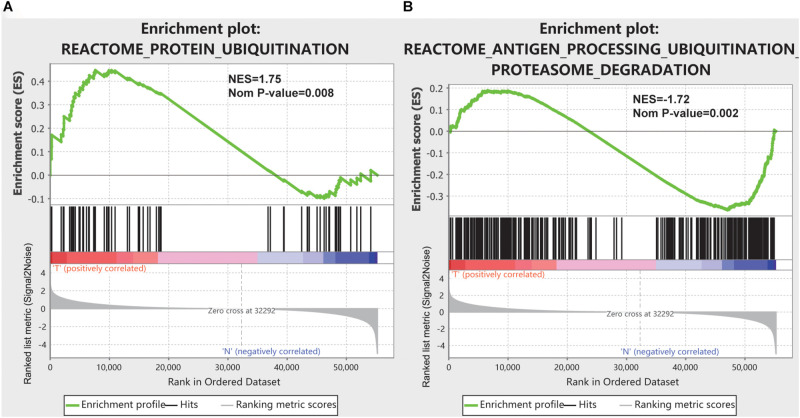
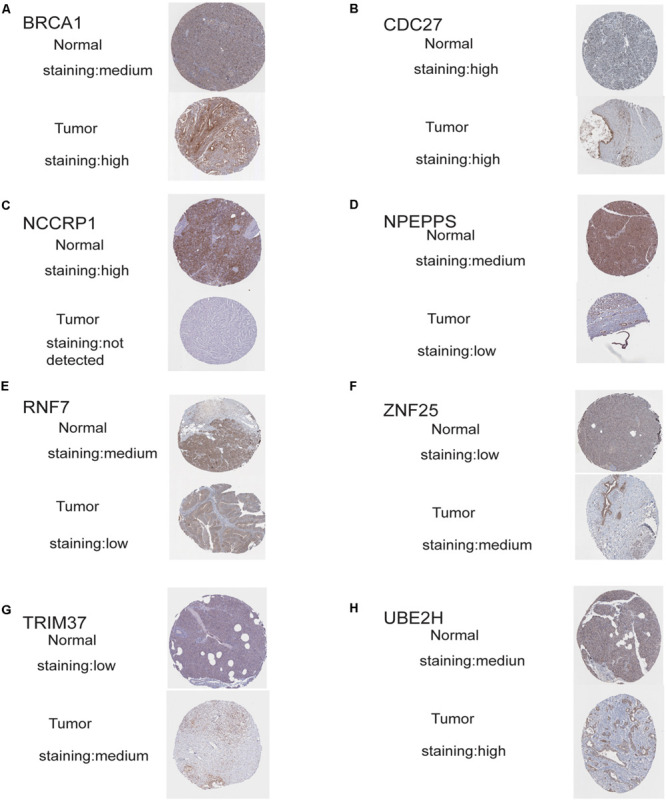
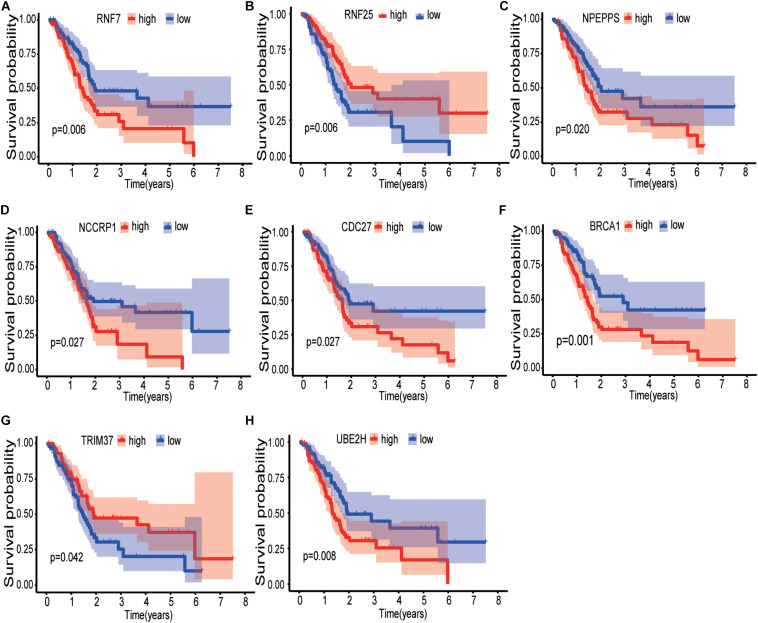
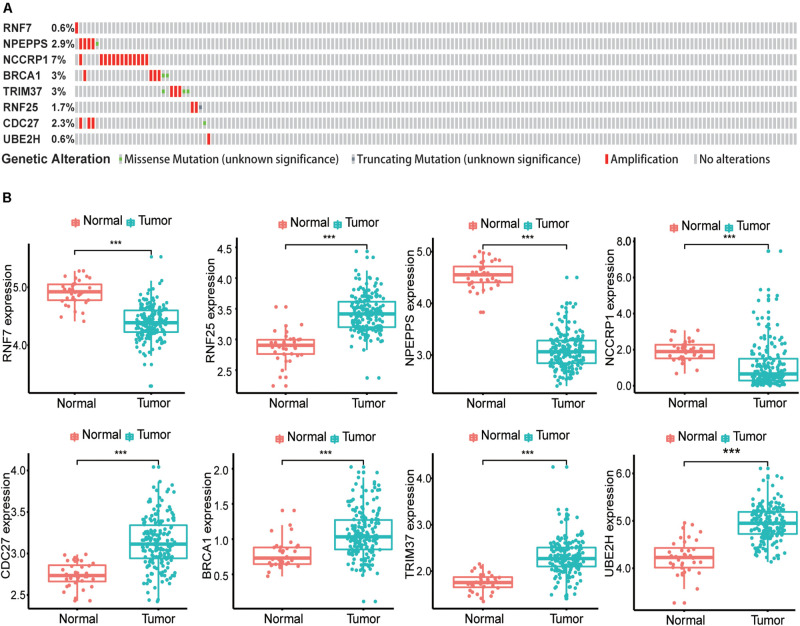
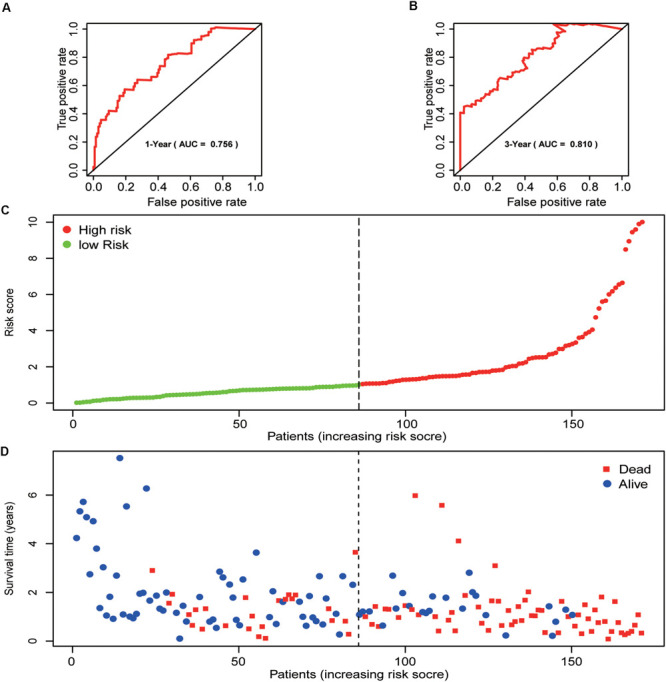
Pancreatic cancer is known as "the king of cancer," and ubiquitination/deubiquitination-related genes are key contributors to its development. Our study aimed to identify ubiquitination/deubiquitination-related genes associated with the prognosis of pancreatic cancer patients by the bioinformatics method and then construct a risk model. In this study, the gene expression profiles and clinical data of pancreatic cancer patients were downloaded from The Cancer Genome Atlas (TCGA) database and the Genotype-tissue Expression (GTEx) database. Ubiquitination/deubiquitination-related genes were obtained from the gene set enrichment analysis (GSEA). Univariate Cox regression analysis was used to identify differentially expressed ubiquitination-related genes selected from GSEA which were associated with the prognosis of pancreatic cancer patients. Using multivariate Cox regression analysis, we detected eight optimal ubiquitination-related genes (RNF7, NPEPPS, NCCRP1, BRCA1, TRIM37, RNF25, CDC27, and UBE2H) and then used them to construct a risk model to predict the prognosis of pancreatic cancer patients. Finally, the eight risk genes were validated by the Human Protein Atlas (HPA) database, the results showed that the protein expression level of the eight genes was generally consistent with those at the transcriptional level. Our findings suggest the risk model constructed from these eight ubiquitination-related genes can accurately and reliably predict the prognosis of pancreatic cancer patients. These eight genes have the potential to be further studied as new biomarkers or therapeutic targets for pancreatic cancer.
胰腺癌被称为“癌中之王”,泛素化/去泛素化相关基因是其发展的关键因素。我们的研究旨在通过生物信息学方法鉴定与胰腺癌患者预后相关的泛素化/去泛素化相关基因,然后构建一个风险模型。在本研究中,从癌症基因组图谱(TCGA)数据库和基因型-组织表达(GTEx)数据库下载了胰腺癌患者的基因表达谱和临床数据。泛素化/去泛素化相关基因是从基因集富集分析(GSEA)中获得的。单变量Cox回归分析用于鉴定从GSEA中选择的与胰腺癌患者预后相关的差异表达泛素化相关基因。使用多变量Cox回归分析,我们检测到八个最佳泛素化相关基因(RNF7、NPEPPS、NCCRP1、BRCA1、TRIM37、RNF25、CDC27和UBE2H),然后用它们构建一个风险模型来预测胰腺癌患者的预后。最后,通过人类蛋白质图谱(HPA)数据库对这八个风险基因进行了验证,结果表明这八个基因的蛋白质表达水平与转录水平上的表达水平总体一致。我们的研究结果表明,由这八个泛素化相关基因构建的风险模型可以准确可靠地预测胰腺癌患者的预后。这八个基因有潜力作为胰腺癌新的生物标志物或治疗靶点进行进一步研究。