Tufts University, Department of Electrical and Computer Engineering, Medford, Massachusetts, United States.
Tufts University, Department of Biomedical Engineering, Medford, Massachusetts, United States.
J Biomed Opt. 2021 Jan;26(2). doi: 10.1117/1.JBO.26.2.022908.
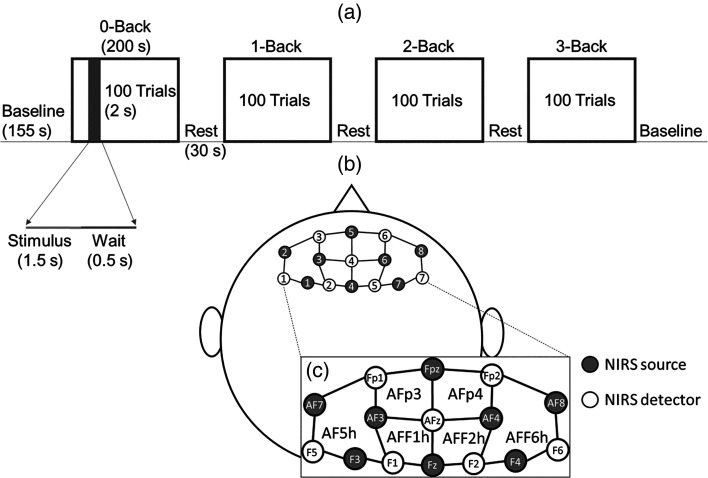
We demonstrated the potential of using domain adaptation on functional near-infrared spectroscopy (fNIRS) data to classify different levels of n-back tasks that involve working memory.
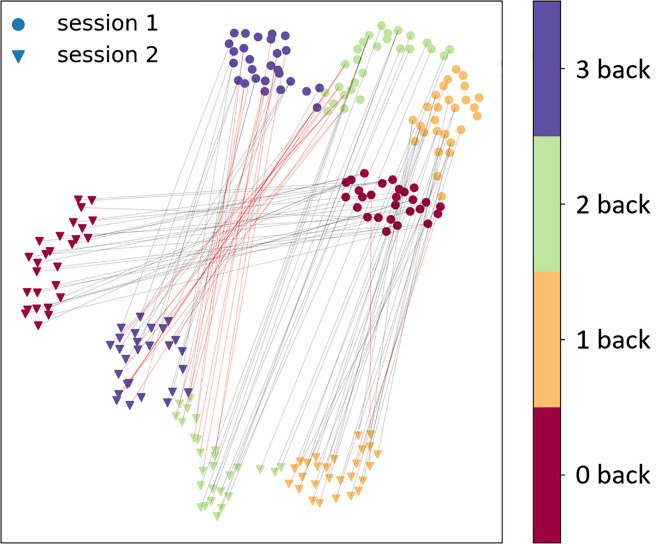
Domain shift in fNIRS data is a challenge in the workload level alignment across different experiment sessions and subjects. To address this problem, two domain adaptation approaches-Gromov-Wasserstein (G-W) and fused Gromov-Wasserstein (FG-W) were used.
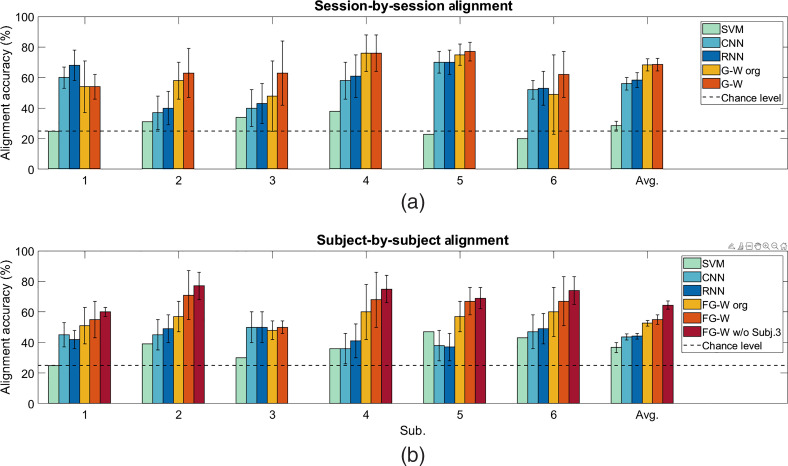
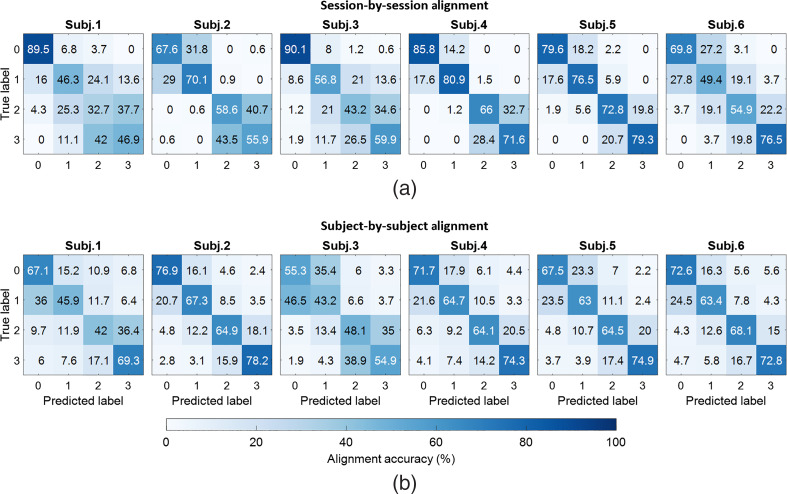
Specifically, we used labeled data from one session or one subject to classify trials in another session (within the same subject) or another subject. We applied G-W for session-by-session alignment and FG-W for subject-by-subject alignment to fNIRS data acquired during different n-back task levels. We compared these approaches with three supervised methods: multiclass support vector machine (SVM), convolutional neural network (CNN), and recurrent neural network (RNN).
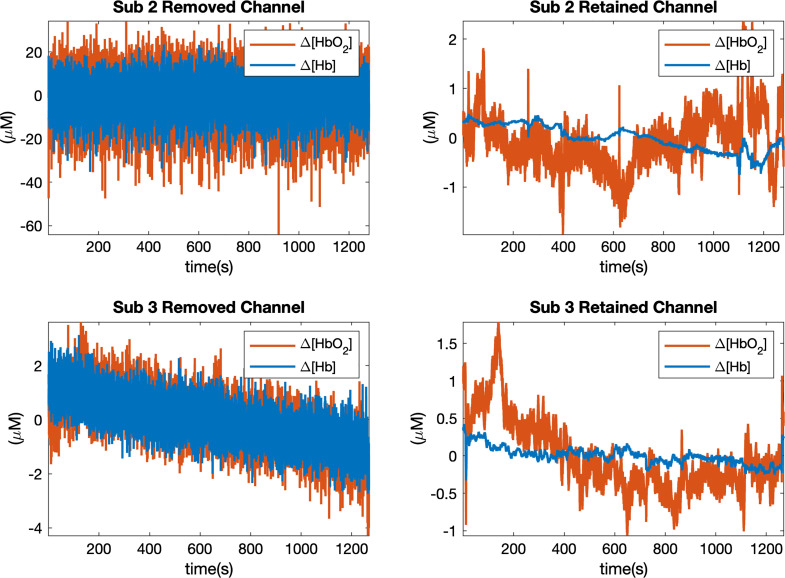
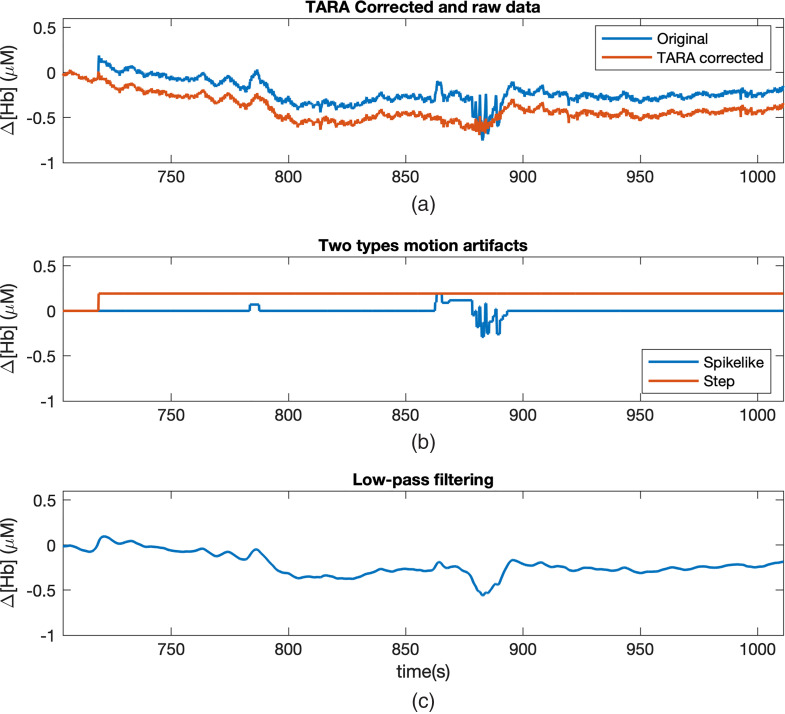
In a sample of six subjects, G-W resulted in an alignment accuracy of 68 % ± 4 % (weighted mean ± standard error) for session-by-session alignment, FG-W resulted in an alignment accuracy of 55 % ± 2 % for subject-by-subject alignment. In each of these cases, 25% accuracy represents chance. Alignment accuracy results from both G-W and FG-W are significantly greater than those from SVM, CNN, and RNN. We also showed that removal of motion artifacts from the fNIRS data plays an important role in improving alignment performance.
Domain adaptation has potential for session-by-session and subject-by-subject alignment of mental workload by using fNIRS data.
我们展示了在功能近红外光谱(fNIRS)数据上使用领域自适应的潜力,以对涉及工作记忆的不同 n 回任务水平进行分类。
fNIRS 数据中的领域转移是在不同实验会话和受试者之间对齐工作负荷水平的一个挑战。为了解决这个问题,我们使用了两种领域自适应方法——Gromov-Wasserstein(G-W)和融合 Gromov-Wasserstein(FG-W)。
具体来说,我们使用来自一个会话或一个受试者的标记数据来对另一个会话(同一受试者内)或另一个受试者中的试验进行分类。我们将 G-W 用于会话到会话的对齐,将 FG-W 用于受试者到受试者的对齐,以获取在不同 n 回任务水平下采集的 fNIRS 数据。我们将这些方法与三种监督方法进行了比较:多类支持向量机(SVM)、卷积神经网络(CNN)和递归神经网络(RNN)。
在 6 名受试者的样本中,G-W 实现了 68%±4%的会话到会话对齐精度(加权平均值±标准误差),FG-W 实现了 55%±2%的受试者到受试者对齐精度。在这两种情况下,25%的准确率都代表了随机水平。G-W 和 FG-W 的对齐精度结果均显著高于 SVM、CNN 和 RNN。我们还表明,从 fNIRS 数据中去除运动伪影在提高对齐性能方面起着重要作用。
通过使用 fNIRS 数据,领域自适应具有在会话到会话和受试者到受试者的层面上对齐心理工作量的潜力。