Martin-Key Nayra A, Schei Thea S, Barker Eleanor J, Spadaro Benedetta, Funnell Erin, Benacek Jiri, Tomasik Jakub, Bahn Sabine
Department of Chemical Engineering and Biotechnology, Cambridge Centre for Neuropsychiatric Research, University of Cambridge, Cambridge, United Kingdom.
Psyomics Ltd, Cambridge, United Kingdom.
JMIR Res Protoc. 2021 Jan 8;10(1):e25382. doi: 10.2196/25382.
Despite the rapidly growing number of digital assessment tools for screening and diagnosing mental health disorders, little is known about their diagnostic accuracy.
The purpose of this systematic review and meta-analysis is to establish the diagnostic accuracy of question- and answer-based digital assessment tools for diagnosing a range of highly prevalent psychiatric conditions in the adult population.
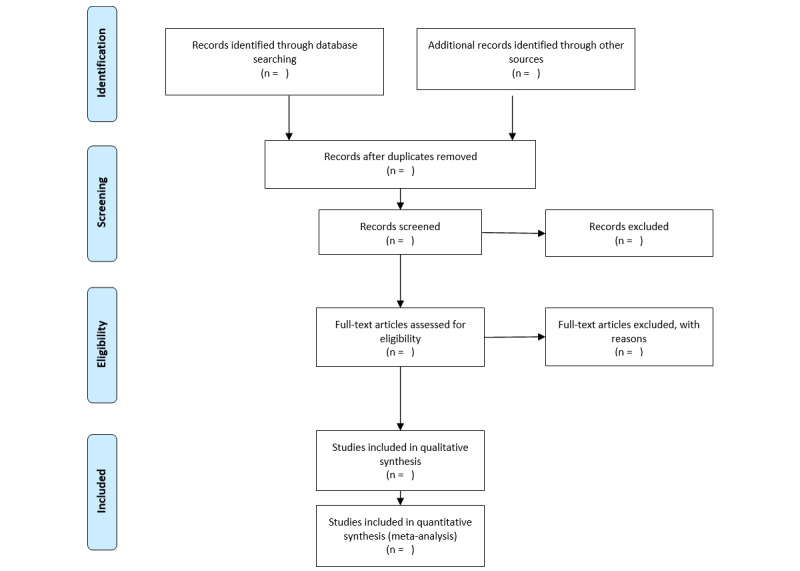
The Preferred Reporting Items for Systematic Review and Meta-Analysis Protocols (PRISMA-P) will be used. The focus of the systematic review is guided by the population, intervention, comparator, and outcome framework (PICO). We will conduct a comprehensive systematic literature search of MEDLINE, PsychINFO, Embase, Web of Science Core Collection, Cochrane Library, Applied Social Sciences Index and Abstracts (ASSIA), and Cumulative Index to Nursing and Allied Health Literature (CINAHL) for appropriate articles published from January 1, 2005. Two authors will independently screen the titles and abstracts of identified references and select studies according to the eligibility criteria. Any inconsistencies will be discussed and resolved. The two authors will then extract data into a standardized form. Risk of bias will be assessed using the Quality Assessment of Diagnostic Accuracy Studies-2 (QUADAS-2) tool, and a descriptive analysis and meta-analysis will summarize the diagnostic accuracy of the identified digital assessment tools.
The systematic review and meta-analysis commenced in November 2020, with findings expected by May 2021.
This systematic review and meta-analysis will summarize the diagnostic accuracy of question- and answer-based digital assessment tools. It will identify implications for clinical practice, areas for improvement, and directions for future research.
PROSPERO International Prospective Register of Systematic Reviews CRD42020214724; https://www.crd.york.ac.uk/prospero/display_record.php?ID=CRD42020214724.
INTERNATIONAL REGISTERED REPORT IDENTIFIER (IRRID): DERR1-10.2196/25382.
尽管用于筛查和诊断精神健康障碍的数字评估工具数量迅速增加,但对其诊断准确性却知之甚少。
本系统评价和荟萃分析的目的是确定基于问答的数字评估工具在诊断成年人群中一系列高度流行的精神疾病方面的诊断准确性。
将使用系统评价和荟萃分析方案的首选报告项目(PRISMA-P)。系统评价的重点由人群、干预措施、对照和结局框架(PICO)指导。我们将对MEDLINE、PsychINFO、Embase、科学引文索引核心合集、Cochrane图书馆、应用社会科学索引与摘要(ASSIA)以及护理及相关健康文献累积索引(CINAHL)进行全面的系统文献检索,以查找2005年1月1日以来发表的相关文章。两名作者将独立筛选已识别参考文献的标题和摘要,并根据纳入标准选择研究。任何不一致之处将进行讨论并解决。然后,两名作者将把数据提取到标准化表格中。将使用诊断准确性研究质量评估-2(QUADAS-2)工具评估偏倚风险,描述性分析和荟萃分析将总结已识别数字评估工具的诊断准确性。
系统评价和荟萃分析于2020年11月开始,预计2021年5月得出结果。
本系统评价和荟萃分析将总结基于问答的数字评估工具的诊断准确性。它将确定对临床实践的影响、改进领域以及未来研究方向。
PROSPERO国际前瞻性系统评价注册库CRD42020214724;https://www.crd.york.ac.uk/prospero/display_record.php?ID=CRD42020214724。
国际注册报告识别号(IRRID):DERR1-10.2196/25382。