Center for Infectious Disease Dynamics, Department of Biology, The Pennsylvania State University, University Park, PA 16802, United States of America.
Theor Popul Biol. 2021 Feb;137:2-9. doi: 10.1016/j.tpb.2020.12.003. Epub 2021 Jan 5.
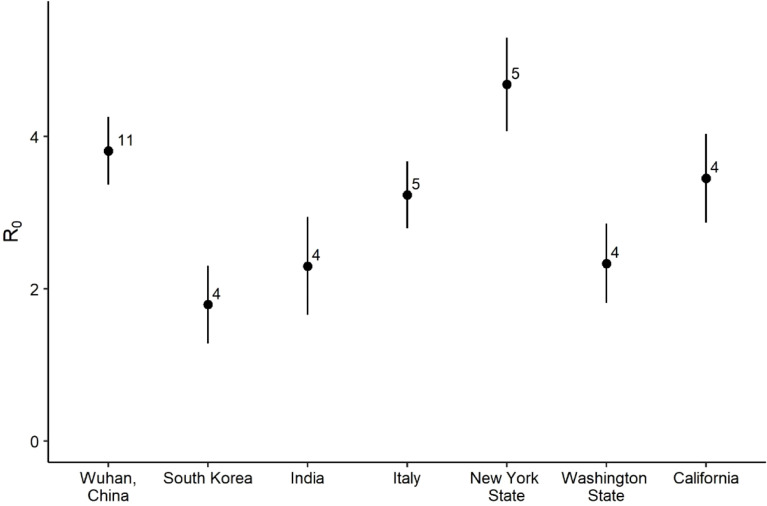
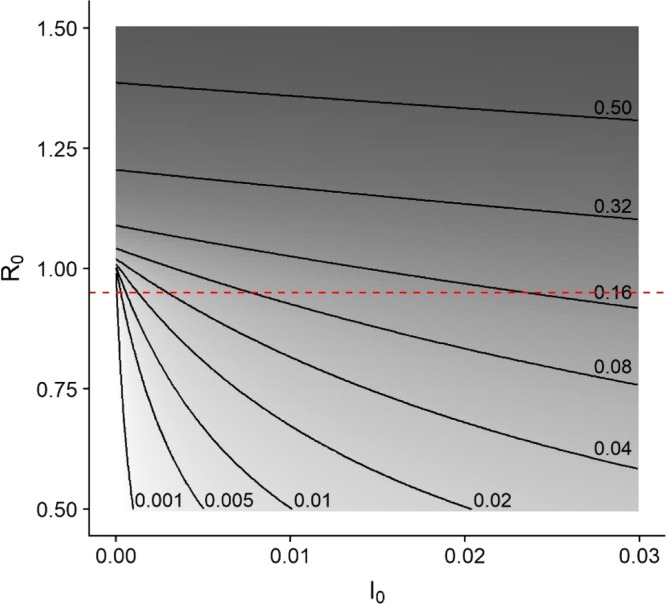
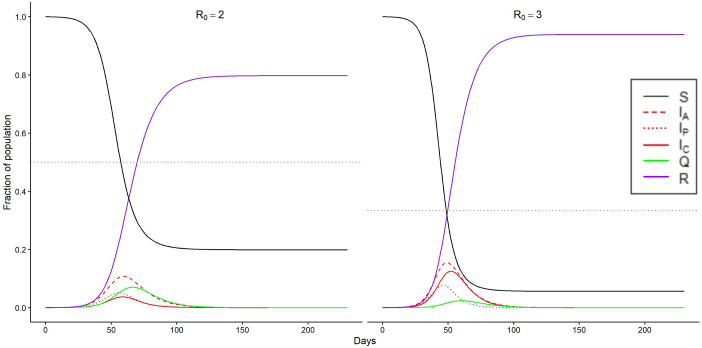
The reproductive number R (or R, the initial reproductive number in an immune-naïve population) has long been successfully used to predict the likelihood of pathogen invasion, to gauge the potential severity of an epidemic, and to set policy around interventions. However, often ignored complexities have generated confusion around use of the metric. This is particularly apparent with the emergent pandemic virus SARS-CoV-2, the causative agent of COVID-19. We address some misconceptions about the predictive ability of the reproductive number, focusing on how it changes over time, varies over space, and relates to epidemic size by referencing the mathematical definition of R and examples from the current pandemic. We hope that a better appreciation of the uses, nuances, and limitations of R and R facilitates a better understanding of epidemic spread, epidemic severity, and the effects of interventions in the context of SARS-CoV-2.
繁殖数 R(或 R,在免疫原性人群中的初始繁殖数)长期以来一直被成功用于预测病原体入侵的可能性,评估传染病的潜在严重程度,并制定干预措施方面的政策。然而,经常被忽略的复杂性给该指标的使用带来了困惑。这在新兴的 SARS-CoV-2 大流行病毒(导致 COVID-19 的病原体)中尤为明显。我们将解决有关繁殖数的预测能力的一些误解,重点介绍它随时间的变化、在空间上的变化以及与流行规模的关系,参考 R 的数学定义和当前大流行中的例子。我们希望更好地理解 R 和 R 的用途、细微差别和局限性,有助于更好地理解 SARS-CoV-2 背景下的传染病传播、传染病严重程度和干预措施的效果。