T-6 Theoretical Biology and Biophysics, Theoretical Division, Los Alamos National Laboratory, NM87545, USA.
T-6 Theoretical Biology and Biophysics, Theoretical Division, Los Alamos National Laboratory, NM87545, USA.
J Theor Biol. 2021 May 21;517:110621. doi: 10.1016/j.jtbi.2021.110621. Epub 2021 Feb 13.
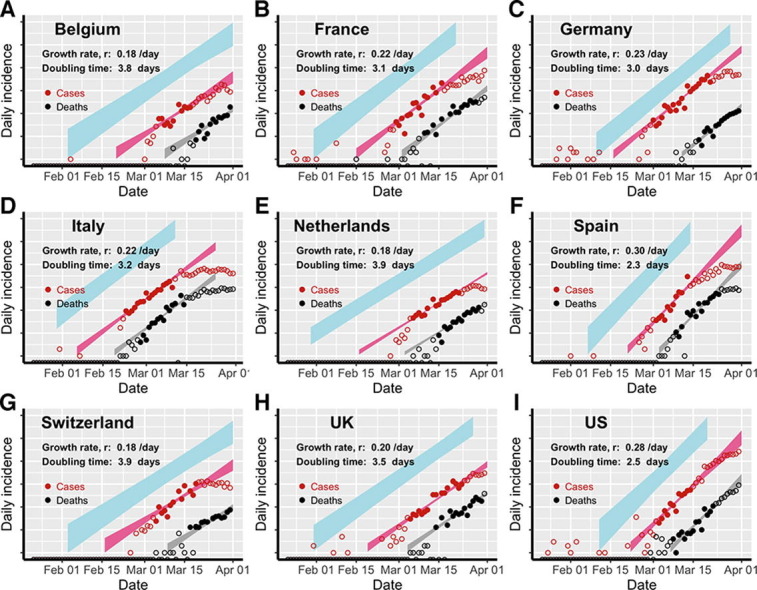
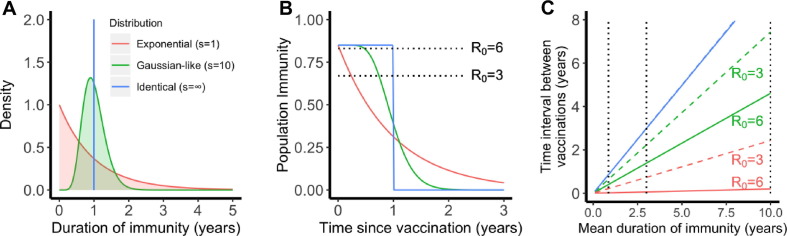
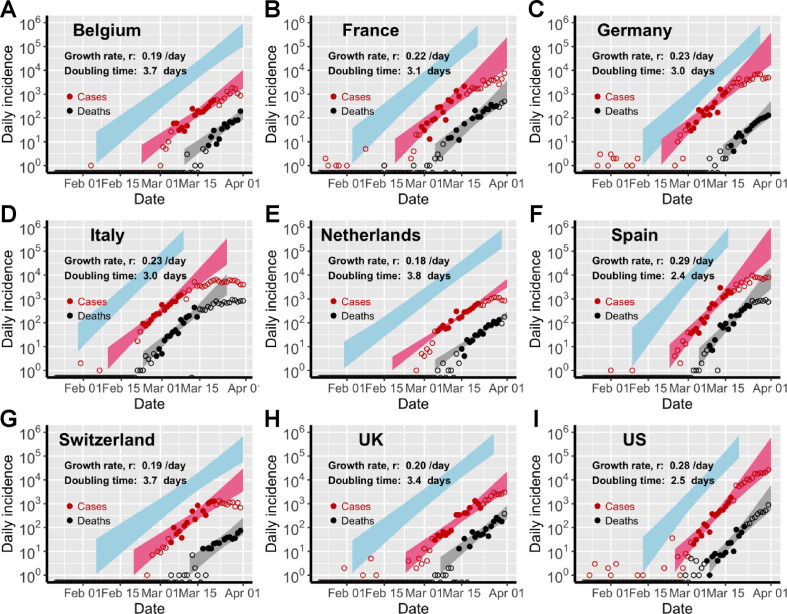
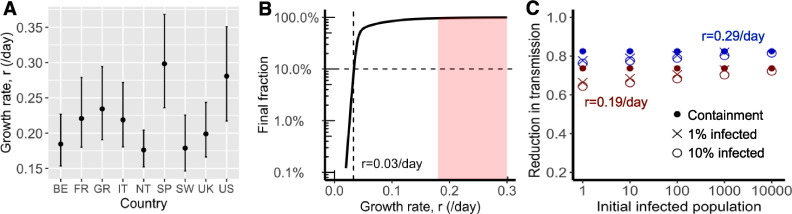
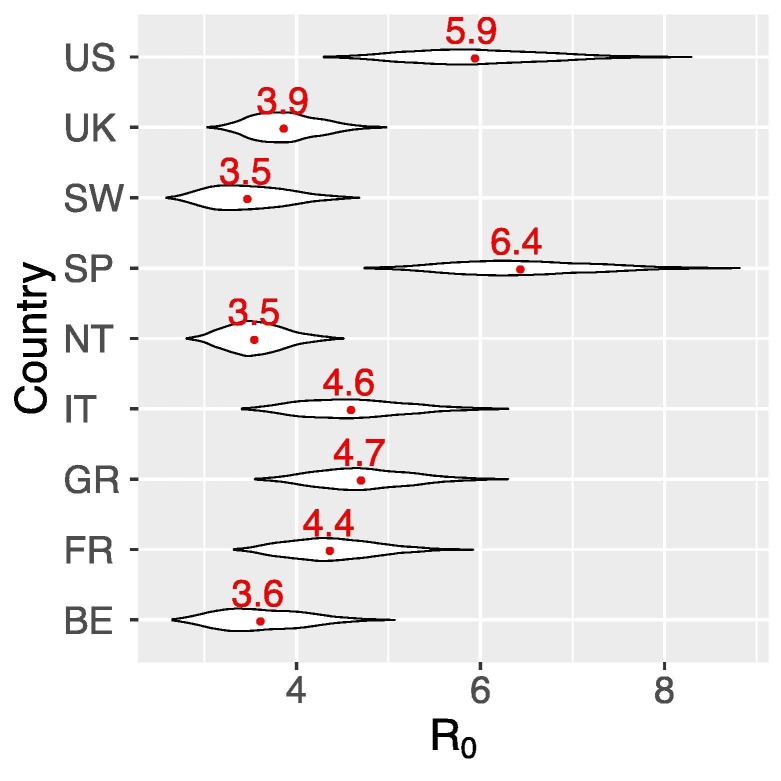
SARS-CoV-2 rapidly spread from a regional outbreak to a global pandemic in just a few months. Global research efforts have focused on developing effective vaccines against COVID-19. However, some of the basic epidemiological parameters, such as the exponential epidemic growth rate and the basic reproductive number, R, across geographic areas are still not well quantified. Here, we developed and fit a mathematical model to case and death count data collected from the United States and eight European countries during the early epidemic period before broad control measures were implemented. Results show that the early epidemic grew exponentially at rates between 0.18 and 0.29/day (epidemic doubling times between 2.4 and 3.9 days). We found that for such rapid epidemic growth, high levels of intervention efforts are necessary, no matter the goal is mitigation or containment. We discuss the current estimates of the mean serial interval, and argue that existing evidence suggests that the interval is between 6 and 8 days in the absence of active isolation efforts. Using parameters consistent with this range, we estimated the median R value to be 5.8 (confidence interval: 4.7-7.3) in the United States and between 3.6 and 6.1 in the eight European countries. We further analyze how vaccination schedules depend on R, the duration of protective immunity to SARS-CoV-2, and show that individual-level heterogeneity in vaccine induced immunity can significantly affect vaccination schedules.
SARS-CoV-2 在短短几个月内迅速从局部爆发演变为全球大流行。全球研究工作的重点是开发针对 COVID-19 的有效疫苗。然而,一些基本的流行病学参数,如在地理区域内的指数型疫情增长率和基本繁殖数 R,仍未得到很好的量化。在这里,我们针对在广泛实施控制措施之前的早期流行期间,从美国和八个欧洲国家收集的病例和死亡数据,开发并拟合了一个数学模型。结果表明,早期疫情以每天 0.18 至 0.29 的速度呈指数级增长(疫情倍增时间为 2.4 至 3.9 天)。我们发现,对于如此快速的疫情增长,无论目标是缓解还是遏制,都需要采取高强度的干预措施。我们讨论了目前对平均序列间隔的估计,并认为现有证据表明,在没有积极隔离措施的情况下,间隔在 6 至 8 天之间。使用与这一范围一致的参数,我们估计美国的中位数 R 值为 5.8(置信区间:4.7-7.3),而在八个欧洲国家中,R 值在 3.6 至 6.1 之间。我们进一步分析了疫苗接种计划如何取决于 R、对 SARS-CoV-2 的保护免疫持续时间,并表明个体疫苗诱导免疫的异质性可能会显著影响疫苗接种计划。