Agricultural and Ecological Research Unit, Indian Statistical Institute, 203, B. T. Road, Kolkata 700108, India; Center for Advanced Systems Understanding (CASUS), Goerlitz, Germany.
Department of Statistics, Visva-Bharati University, Santiniketan, West Bengal, India.
J Theor Biol. 2021 Aug 21;523:110711. doi: 10.1016/j.jtbi.2021.110711. Epub 2021 Apr 20.
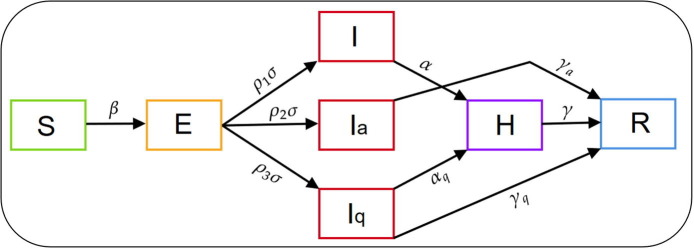
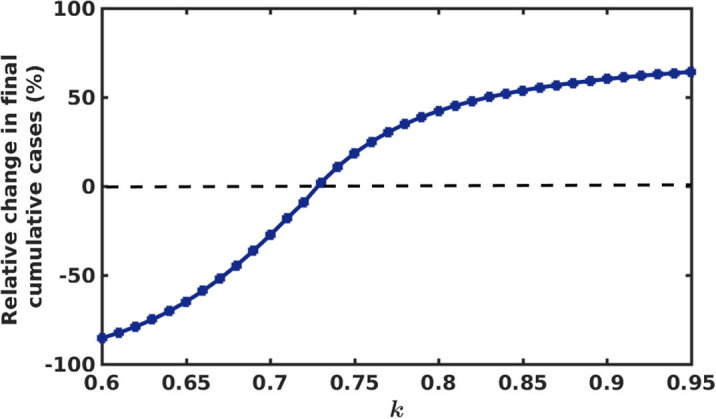
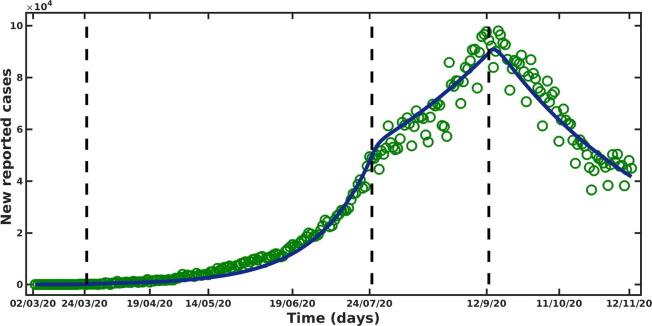
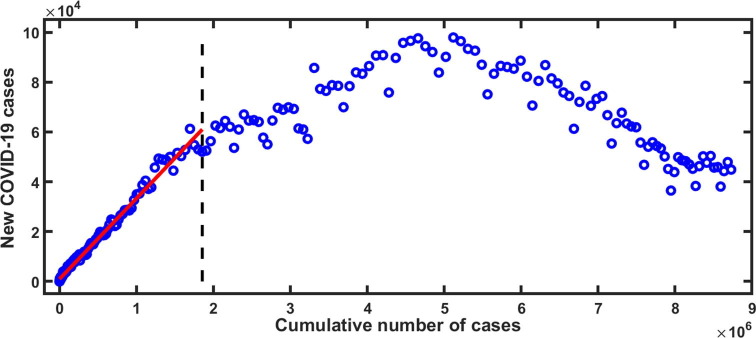
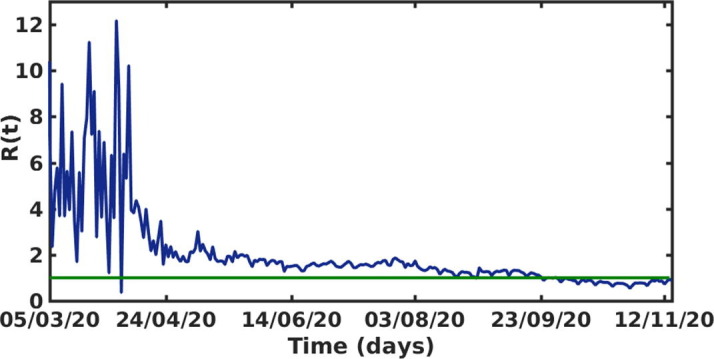
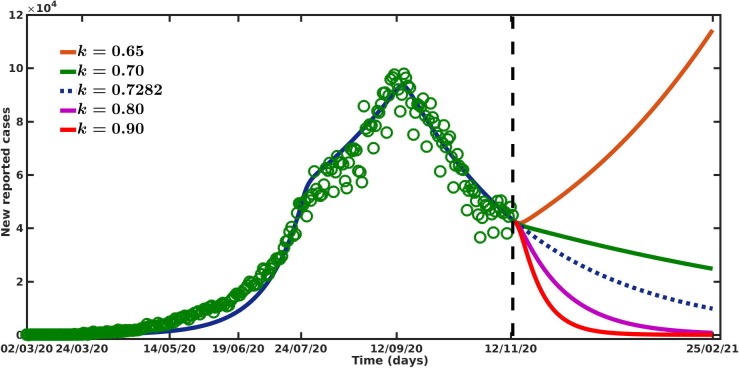
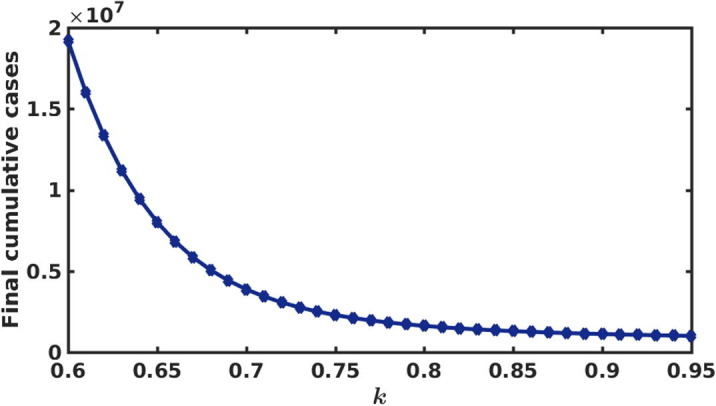
The outbreak of coronavirus disease 2019 (COVID-19), caused by the virus severe acute respiratory syndrome coronavirus 2 (SARS-CoV-2) has already created emergency situations in almost every country of the world. The disease spreads all over the world within a very short period of time after its first identification in Wuhan, China in December, 2019. In India, the outbreak, starts on 2 March, 2020 and after that the cases are increasing exponentially. Very high population density, the unavailability of specific medicines or vaccines, insufficient evidences regarding the transmission mechanism of the disease also make it more difficult to fight against the disease properly in India. Mathematical models have been used to predict the disease dynamics and also to assess the efficiency of the intervention strategies in reducing the disease burden. In this work, we propose a mathematical model to describe the disease transmission mechanism between the individuals. Our proposed model is fitted to the daily new reported cases in India during the period 2 March, 2020 to 12 November, 2020. We estimate the basic reproduction number, effective reproduction number and epidemic doubling time from the incidence data for the above-mentioned period. We further assess the effect of implementing preventive measures in reducing the new cases. Our model projects the daily new COVID-19 cases in India during 13 November, 2020 to 25 February, 2021 for a range of intervention strength. We also investigate that higher intervention effort is required to control the disease outbreak within a shorter period of time in India. Moreover, our analysis reveals that the strength of the intervention should be increased over the time to eradicate the disease effectively.
2019 年冠状病毒病(COVID-19)的爆发是由病毒严重急性呼吸系统综合症冠状病毒 2(SARS-CoV-2)引起的,几乎已经在世界上每个国家造成紧急情况。该疾病在中国武汉于 2019 年 12 月首次被确认后,在很短的时间内就传遍了全球。在印度,疫情于 2020 年 3 月 2 日开始爆发,此后病例呈指数级增长。极高的人口密度、缺乏特定的药物或疫苗、关于疾病传播机制的证据不足,也使得印度更难以正确对抗这种疾病。数学模型已被用于预测疾病动态,以及评估干预策略在减轻疾病负担方面的效率。在这项工作中,我们提出了一个数学模型来描述个体之间的疾病传播机制。我们提出的模型适用于 2020 年 3 月 2 日至 2020 年 11 月 12 日期间印度每天新报告的病例。我们根据上述时间段的发病率数据估计了基本繁殖数、有效繁殖数和流行病倍增时间。我们进一步评估了实施预防措施对减少新发病例的效果。我们的模型预测了 2020 年 11 月 13 日至 2021 年 2 月 25 日期间印度每天新的 COVID-19 病例数,针对一系列干预强度。我们还调查了在印度,需要更高的干预力度来在更短的时间内控制疾病爆发。此外,我们的分析表明,为了有效地消灭这种疾病,应该随着时间的推移增加干预的力度。