Bottje Walter G, Lassiter Kentu R, Kuttappan Vivek A, Hudson Nicholas J, Owens Casey M, Abasht Behnam, Dridi Sami, Kong Byungwhi C
Department of Poultry Science & The Center of Excellence for Poultry Science, University of Arkansas, 1260 W. Maple, Fayetteville, AR 72701, USA.
Novus International, 20 Research Park, St. Charles, MO 63304, USA.
Foods. 2021 Jan 6;10(1):104. doi: 10.3390/foods10010104.
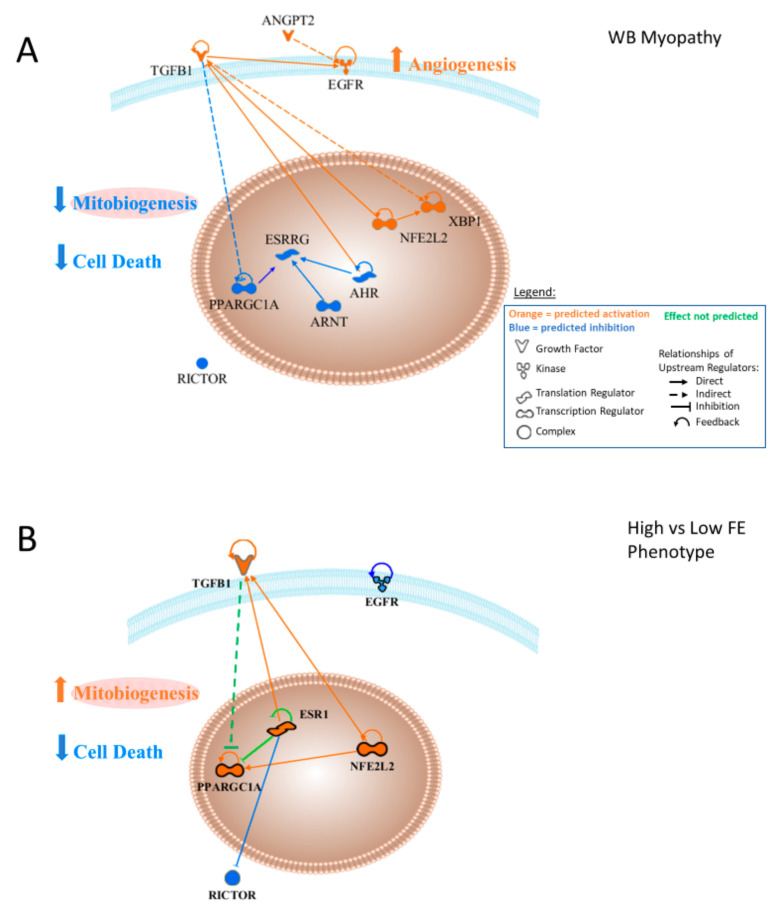
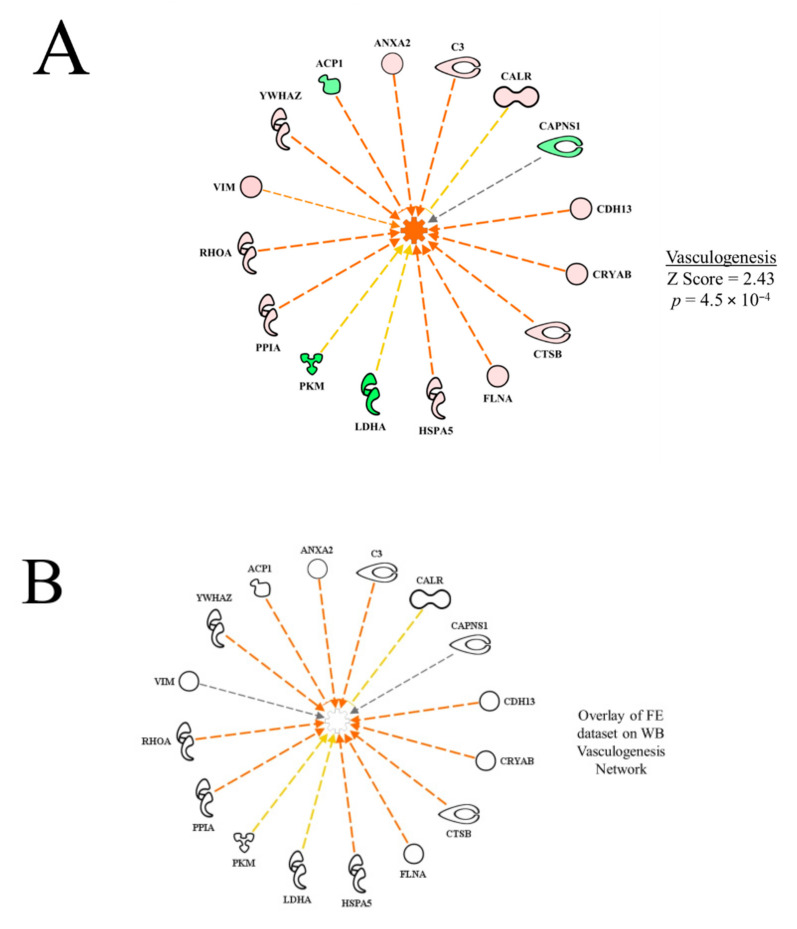
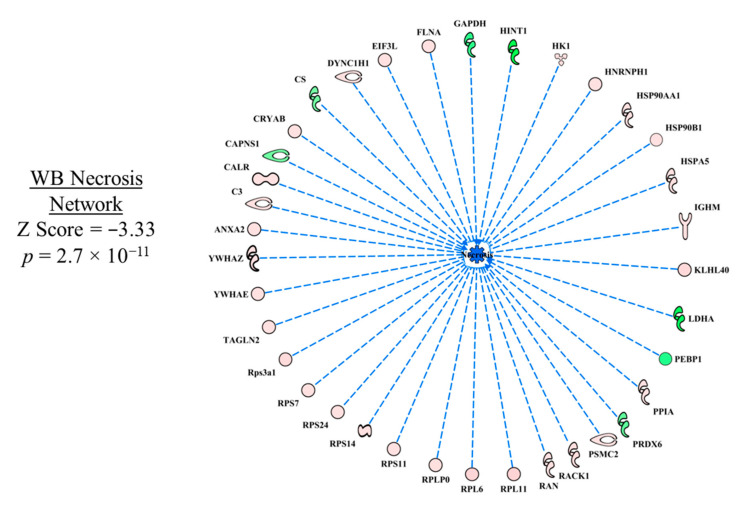
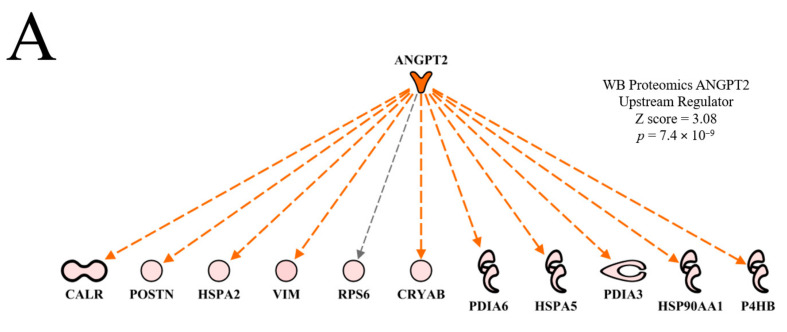
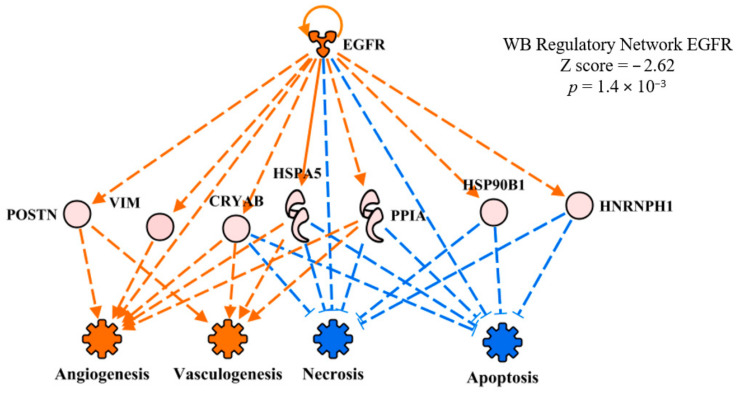
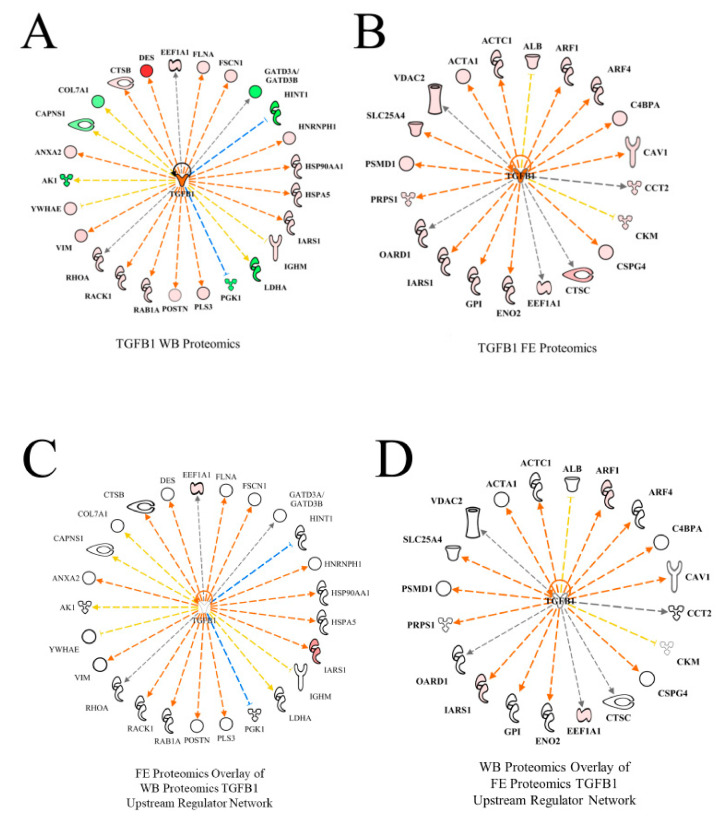
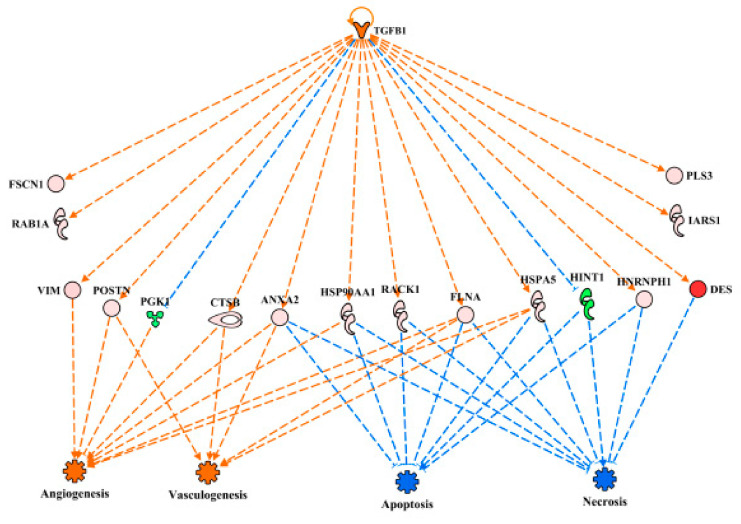
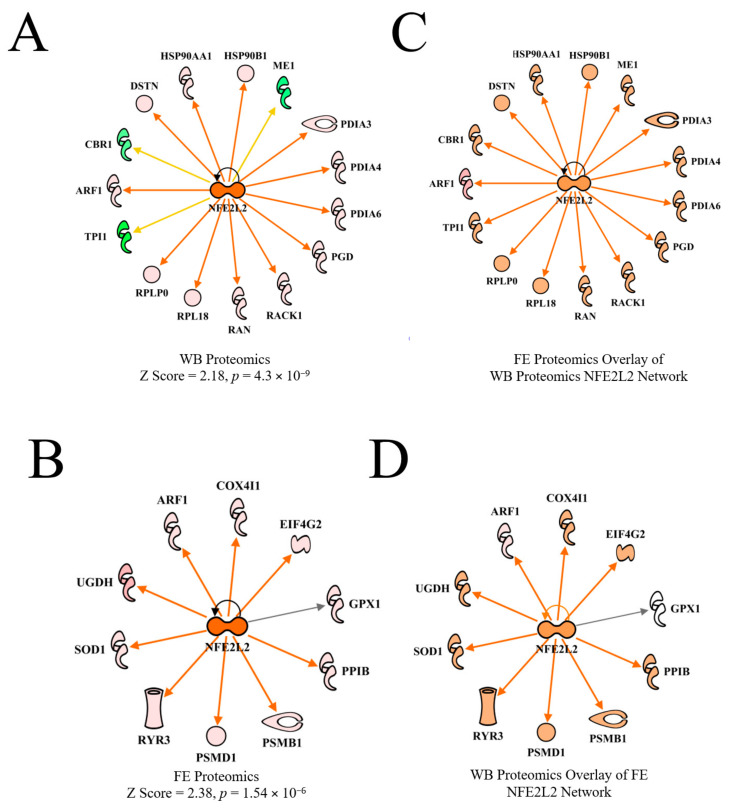
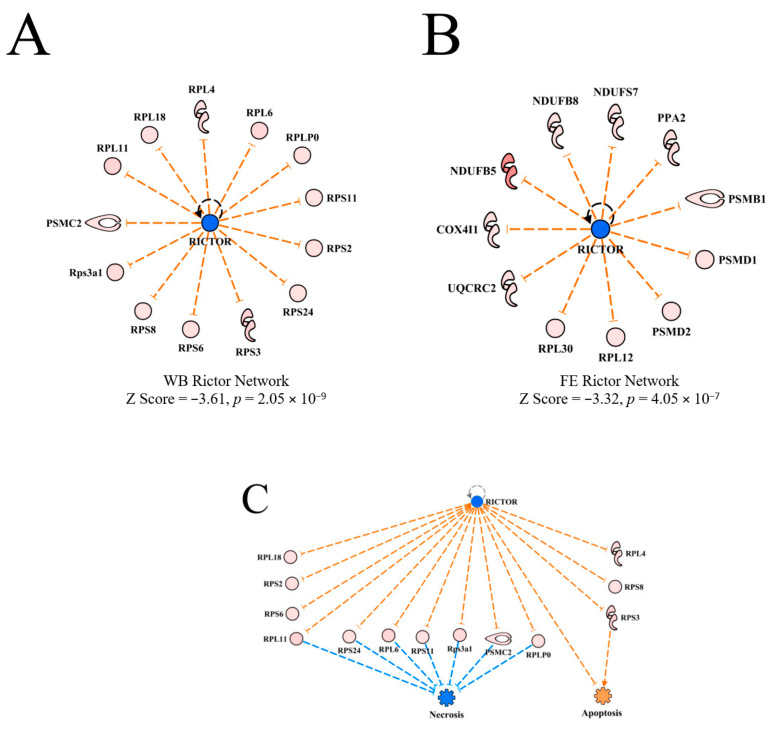
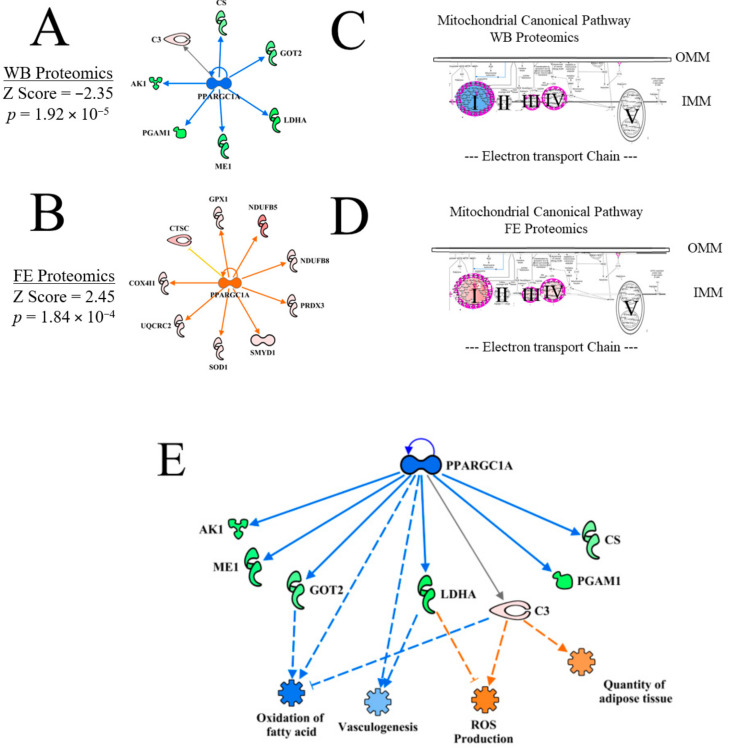
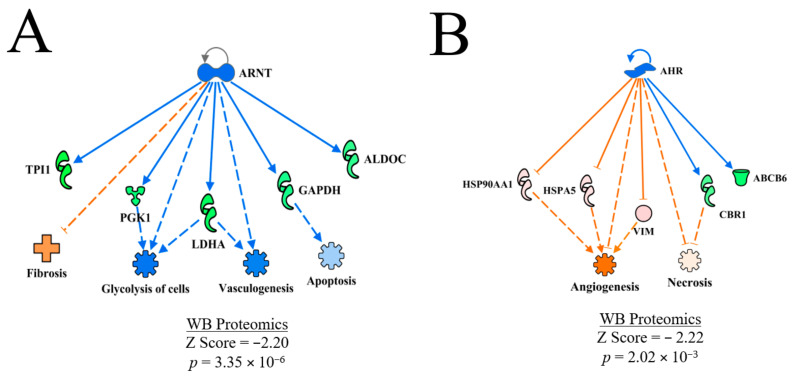
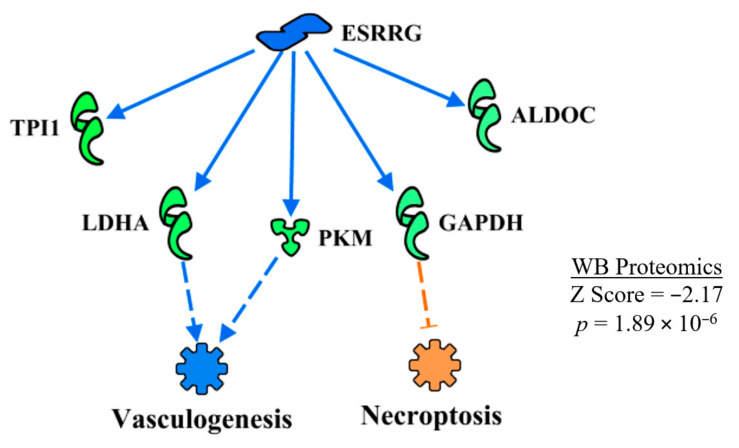
In an effort to understand the apparent trade-off between the continual push for growth performance and the recent emergence of muscle pathologies, shotgun proteomics was conducted on breast muscle obtained at ~8 weeks from commercial broilers with wooden breast (WB) myopathy and compared with that in pedigree male (PedM) broilers exhibiting high feed efficiency (FE). Comparison of the two proteomic datasets was facilitated using the overlay function of Ingenuity Pathway Analysis (IPA) (Qiagen, CA, USA). We focused on upstream regulator analysis and disease-function analysis that provides predictions of activation or inhibition of molecules based on (a) expression of downstream target molecules, (b) the IPA scientific citation database. Angiopoeitin 2 (ANGPT2) exhibited the highest predicted activation Z-score of all molecules in the WB dataset, suggesting that the proteomic landscape of WB myopathy would promote vascularization. Overlaying the FE proteomics data on the WB ANGPT2 upstream regulator network presented no commonality of protein expression and no prediction of ANGPT2 activation. Peroxisome proliferator coactivator 1 alpha (PGC1α) was predicted to be inhibited, suggesting that mitochondrial biogenesis was suppressed in WB. PGC1α was predicted to be activated in high FE pedigree male broilers. Whereas RICTOR (rapamycin independent companion of mammalian target of rapamycin) was predicted to be inhibited in both WB and FE datasets, the predictions were based on different downstream molecules. Other transcription factors predicted to be activated in WB muscle included epidermal growth factor (EGFR), X box binding protein (XBP1), transforming growth factor beta 1 (TGFB1) and nuclear factor (erythroid-derived 2)-like 2 (NFE2L2). Inhibitions of aryl hydrocarbon receptor (AHR), AHR nuclear translocator (ARNT) and estrogen related receptor gamma (ESRRG) were also predicted in the WB muscle. These findings indicate that there are considerable differences in upstream regulators based on downstream protein expression observed in WB myopathy and in high FE PedM broilers that may provide additional insight into the etiology of WB myopathy.
为了理解在持续追求生长性能与近期出现的肌肉病变之间明显的权衡关系,对约8周龄患有木胸肌病(WB)的商品肉鸡的胸肌进行了鸟枪法蛋白质组学分析,并与表现出高饲料效率(FE)的系谱雄性(PedM)肉鸡进行了比较。利用英睿达通路分析(IPA)(美国加利福尼亚州Qiagen公司)的叠加功能,对这两个蛋白质组数据集进行了比较。我们重点关注上游调节因子分析和疾病功能分析,该分析基于(a)下游靶分子的表达、(b)IPA科学引文数据库,对分子的激活或抑制进行预测。血管生成素2(ANGPT2)在WB数据集中所有分子的预测激活Z评分最高,表明WB肌病的蛋白质组格局会促进血管生成。将FE蛋白质组学数据叠加在WB的ANGPT2上游调节网络上,未发现蛋白质表达的共性,也未预测到ANGPT2的激活。过氧化物酶体增殖物激活受体γ共激活因子1α(PGC1α)预计会受到抑制,这表明WB中线粒体生物发生受到抑制。PGC1α预计在高FE系谱雄性肉鸡中被激活。而雷帕霉素不敏感的哺乳动物雷帕霉素靶蛋白伴侣(RICTOR)预计在WB和FE数据集中均会受到抑制,但预测是基于不同的下游分子。预计在WB肌肉中被激活的其他转录因子包括表皮生长因子(EGFR)、X盒结合蛋白(XBP1)、转化生长因子β1(TGFB1)和核因子(红系衍生2)样2(NFE2L2)。在WB肌肉中还预测到芳烃受体(AHR)、AHR核转运体(ARNT)和雌激素相关受体γ(ESRRG)受到抑制。这些发现表明,基于在WB肌病和高FE PedM肉鸡中观察到的下游蛋白质表达,上游调节因子存在相当大的差异,这可能为WB肌病的病因提供更多见解。