Wang Zhuang, Jin Shiguang, Zhang Fan, Wang Degao
Jiangsu Key Laboratory of Atmospheric Environment Monitoring and Pollution Control, Collaborative Innovation Center of Atmospheric Environment and Equipment Technology, School of Environmental Science and Engineering, Nanjing University of Information Science and Technology, Nanjing 210044, China.
School of Environmental Science and Technology, Dalian Maritime University, Dalian 116023, China.
Nanomaterials (Basel). 2020 Dec 20;10(12):2559. doi: 10.3390/nano10122559.
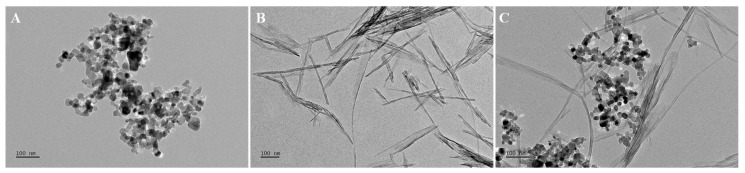
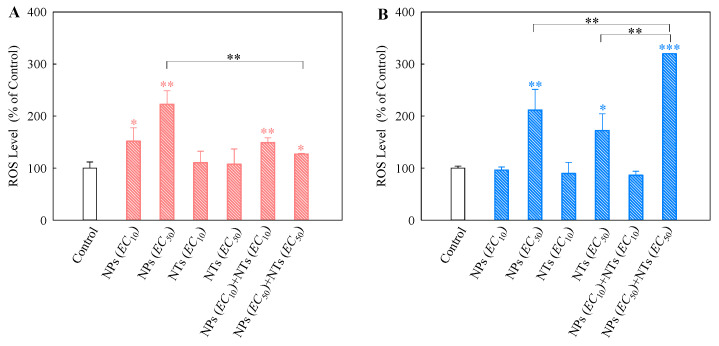
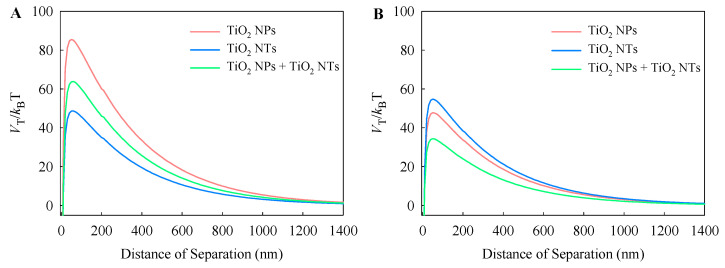
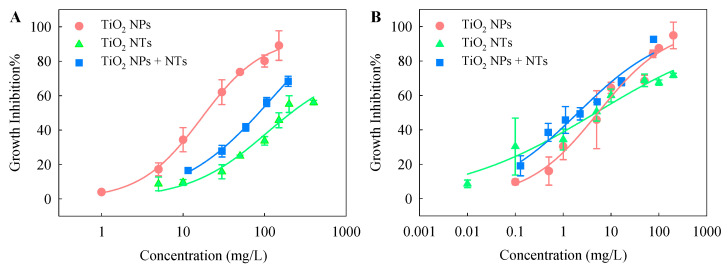
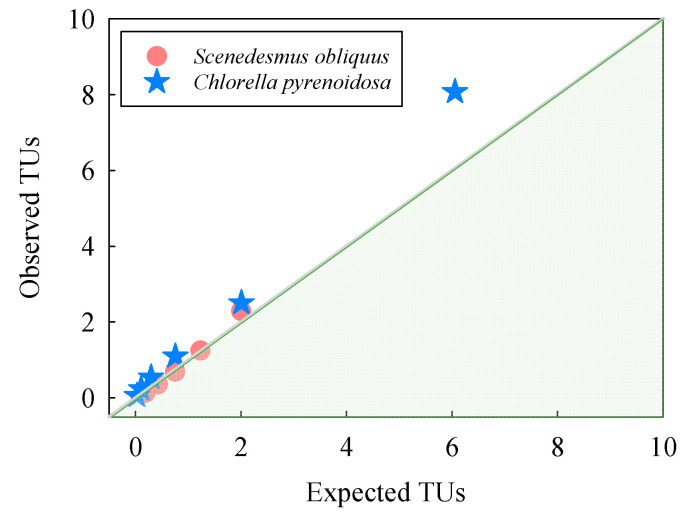
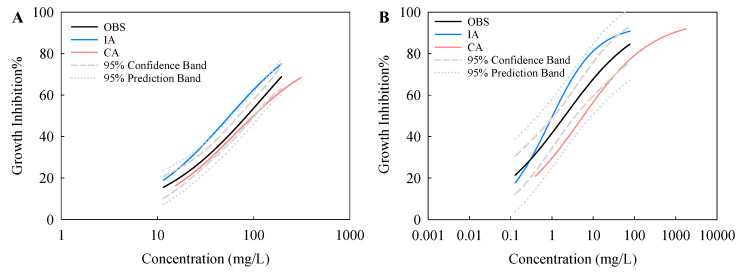
The joint activity of multiple engineered nanoparticles (ENPs) has attracted much attention in recent years. Many previous studies have focused on the combined toxicity of different ENPs with nanostructures of the same dimension. However, the mixture toxicity of multiple ENPs with different dimensions is much less understood. Herein, we investigated the toxicity of the binary mixture of TiO nanospherical particles (NPs) and TiO nanotubes (NTs) to two freshwater algae with different morphology, namely, and . The physicochemical properties, dispersion stability, and the generation of reactive oxygen species (ROS) were determined in the single and binary systems. Classical approaches to assessing mixture toxicity were applied to evaluate and predict the toxicity of the binary mixtures. The results show that the combined toxicity of TiO NPs and NTs to was between the single toxicity of TiO NTs and NPs, while the combined toxicity to was higher than their single toxicity. Moreover, the toxicity of the binary mixtures to was higher than that to A toxic unit assessment showed that the effects of TiO NPs and NTs were additive to the algae. The combined toxicity to and can be effectively predicted by the concentration addition model and the independent action model, respectively. The mechanism of the toxicity caused by the binary mixtures of TiO NPs and NTs may be associated with the dispersion stability of the nanoparticles in aquatic media and the ROS-induced oxidative stress effects. Our results may offer a new insight into evaluating and predicting the combined toxicological effects of ENPs with different dimensions and of probing the mechanisms involved in their joint toxicity.
近年来,多种工程纳米颗粒(ENPs)的联合作用备受关注。此前许多研究聚焦于具有相同尺寸纳米结构的不同ENPs的联合毒性。然而,对于多种不同尺寸ENPs的混合毒性了解甚少。在此,我们研究了TiO纳米球颗粒(NPs)和TiO纳米管(NTs)的二元混合物对两种不同形态淡水藻类的毒性,即 和 。测定了单体系和二元体系中的物理化学性质、分散稳定性以及活性氧物种(ROS)的产生。应用经典的评估混合物毒性的方法来评估和预测二元混合物的毒性。结果表明,TiO NPs和NTs对 的联合毒性介于TiO NTs和NPs的单一毒性之间,而对 的联合毒性高于它们的单一毒性。此外,二元混合物对 的毒性高于对 的毒性。毒性单位评估表明,TiO NPs和NTs对藻类的影响具有加和性。对 和 的联合毒性可分别通过浓度相加模型和独立作用模型有效预测。TiO NPs和NTs二元混合物引起毒性的机制可能与纳米颗粒在水生介质中的分散稳定性以及ROS诱导的氧化应激效应有关。我们的结果可能为评估和预测不同尺寸ENPs的联合毒理学效应以及探究其联合毒性所涉及的机制提供新的见解。