Earlham Institute (EI), Norwich, UK.
Department of Biostatistics and Medical Informatics, UW Madison, Madison, USA.
Genome Biol. 2021 Jan 8;22(1):25. doi: 10.1186/s13059-020-02208-8.
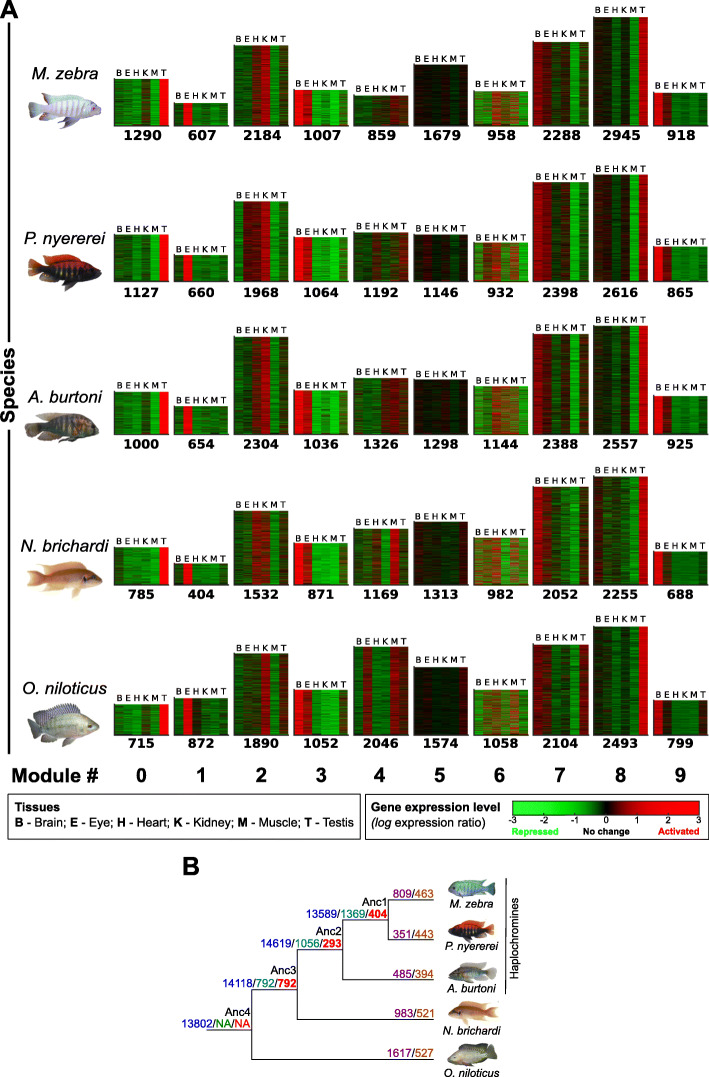
Seminal studies of vertebrate protein evolution speculated that gene regulatory changes can drive anatomical innovations. However, very little is known about gene regulatory network (GRN) evolution associated with phenotypic effect across ecologically diverse species. Here we use a novel approach for comparative GRN analysis in vertebrate species to study GRN evolution in representative species of the most striking examples of adaptive radiations, the East African cichlids. We previously demonstrated how the explosive phenotypic diversification of East African cichlids can be attributed to diverse molecular mechanisms, including accelerated regulatory sequence evolution and gene expression divergence.
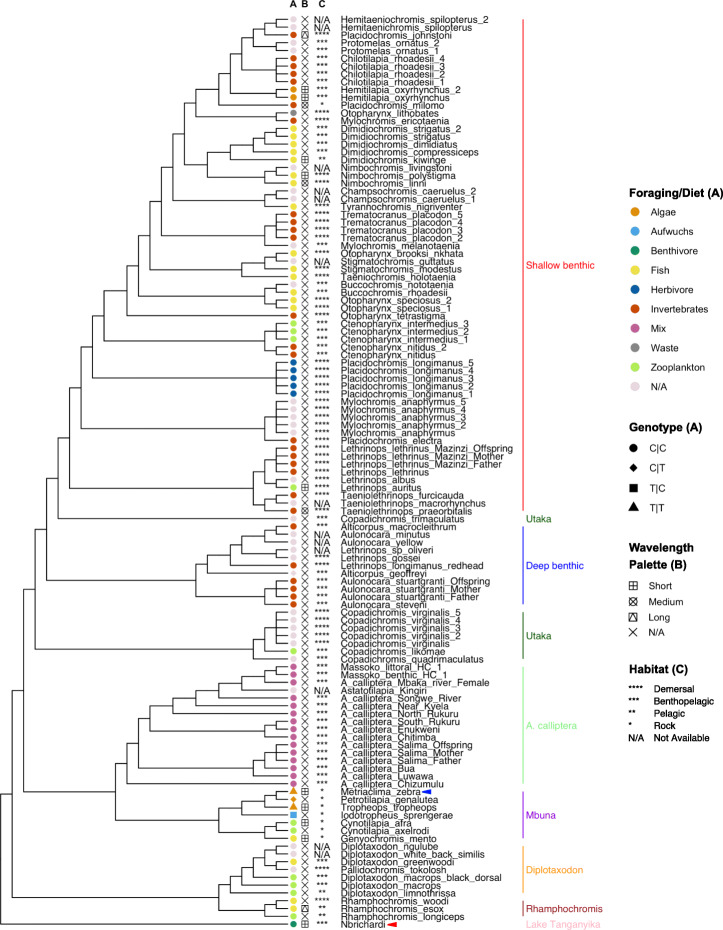
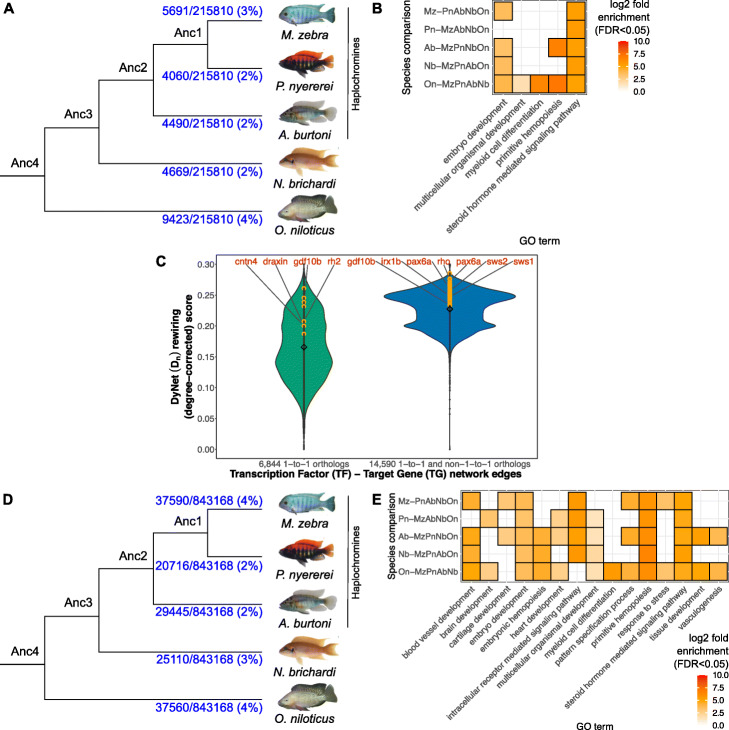
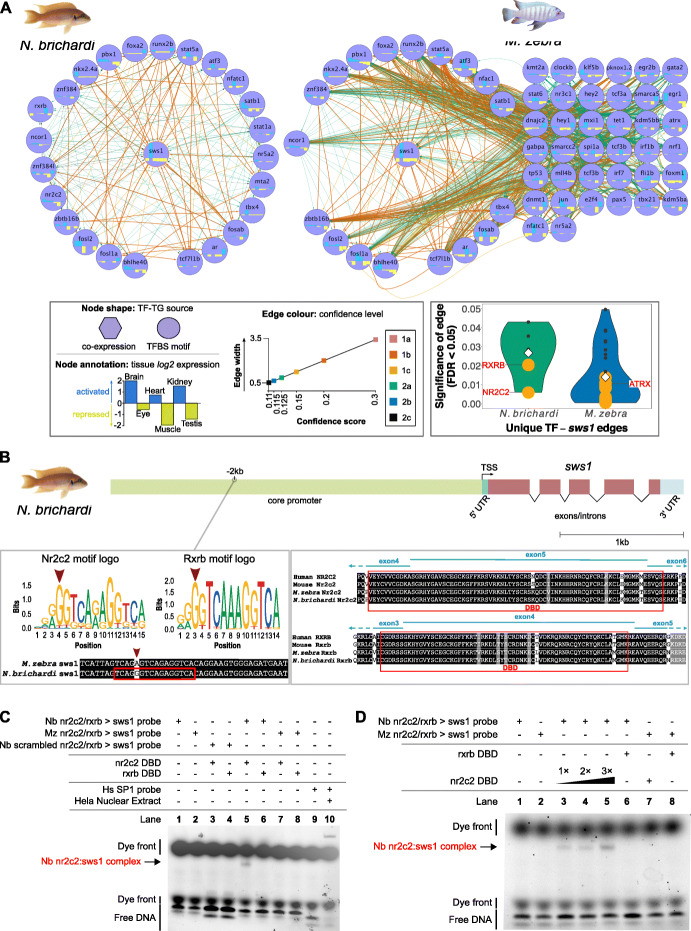
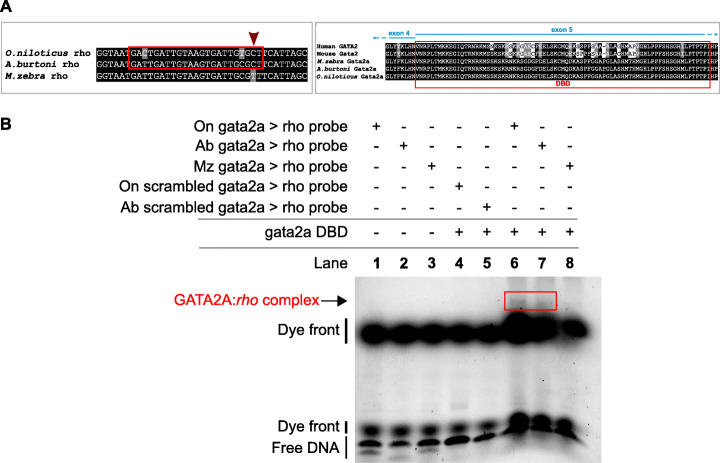
To investigate these mechanisms across species at a genome-wide scale, we develop a novel computational pipeline that predicts regulators for co-extant and ancestral co-expression modules along a phylogeny, and candidate regulatory regions associated with traits under selection in cichlids. As a case study, we apply our approach to a well-studied adaptive trait-the visual system-for which we report striking cases of network rewiring for visual opsin genes, identify discrete regulatory variants, and investigate their association with cichlid visual system evolution. In regulatory regions of visual opsin genes, in vitro assays confirm that transcription factor binding site mutations disrupt regulatory edges across species and segregate according to lake species phylogeny and ecology, suggesting GRN rewiring in radiating cichlids.
Our approach reveals numerous novel potential candidate regulators and regulatory regions across cichlid genomes, including some novel and some previously reported associations to known adaptive evolutionary traits.
脊椎动物蛋白进化的开创性研究推测,基因调控变化可以驱动解剖学创新。然而,对于与表型效应相关的跨生态多样化物种的基因调控网络(GRN)进化,我们知之甚少。在这里,我们使用一种新的比较脊椎动物物种 GRN 分析的方法来研究东非慈鲷最显著的适应辐射例子的代表性物种中的 GRN 进化。我们之前证明了东非慈鲷的爆发性表型多样化如何归因于多种分子机制,包括加速的调控序列进化和基因表达分化。
为了在全基因组范围内研究这些机制,我们开发了一种新的计算管道,该管道可预测共同表达模块以及共同祖先的共同表达模块沿系统发育的调控因子,以及与慈鲷中选择下的特征相关的候选调控区域。作为一个案例研究,我们将我们的方法应用于一个研究充分的适应性特征 - 视觉系统 - 对于这个系统,我们报告了视觉视蛋白基因网络重布线的惊人案例,确定了离散的调控变体,并研究了它们与慈鲷视觉系统进化的关系。在视觉视蛋白基因的调控区域中,体外测定证实转录因子结合位点突变会破坏跨物种的调控边缘,并根据湖物种的系统发育和生态学进行分离,这表明辐射性慈鲷中的 GRN 重布线。
我们的方法揭示了许多新的潜在候选调控因子和调控区域,跨越了慈鲷基因组,包括一些新的和一些以前报道的与已知适应性进化特征的关联。