Department of Biological Chemistry and Molecular Pharmacology, Harvard Medical School, Boston, MA, 02115, USA.
Program in Cellular and Molecular Medicine, Boston Children's Hospital, Boston, MA, 02115, USA.
Nat Commun. 2021 Jan 8;12(1):189. doi: 10.1038/s41467-020-20320-y.
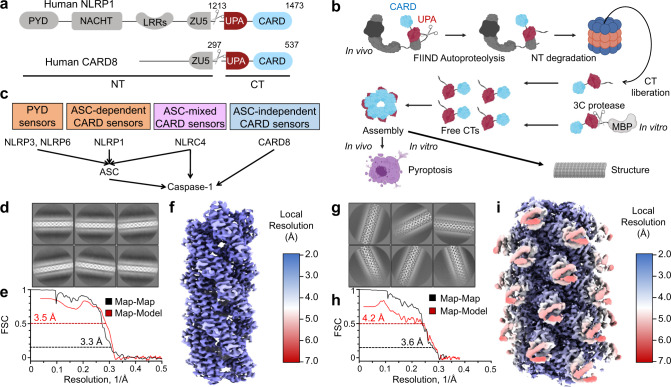
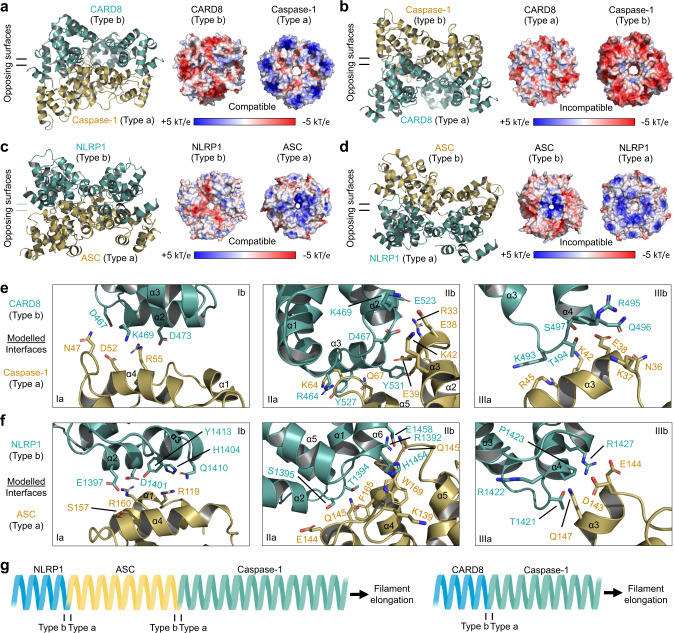
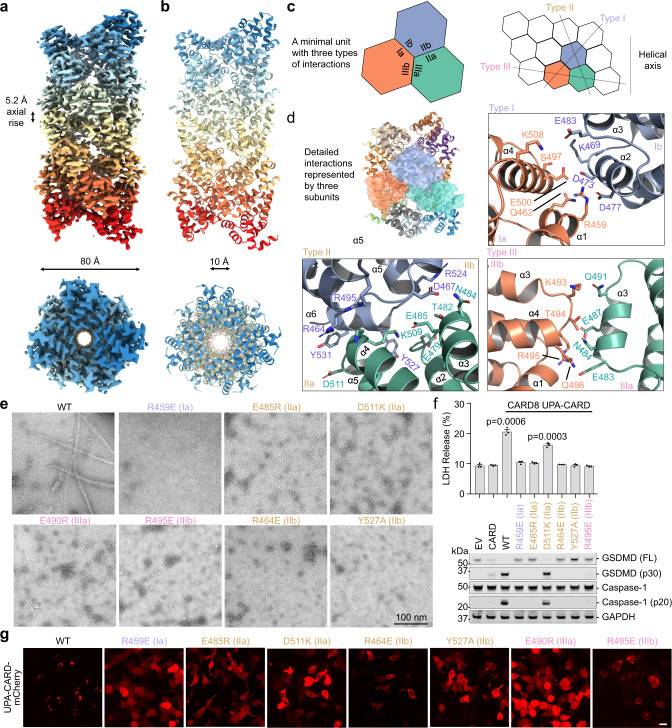
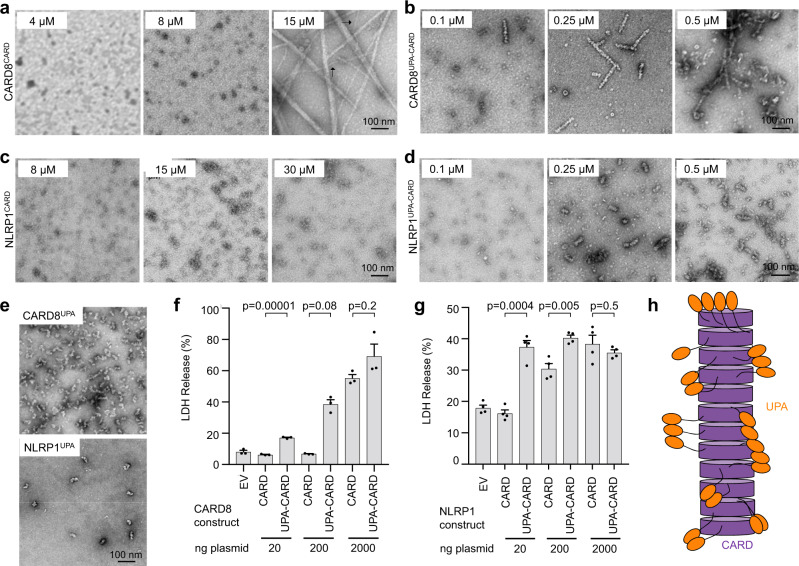
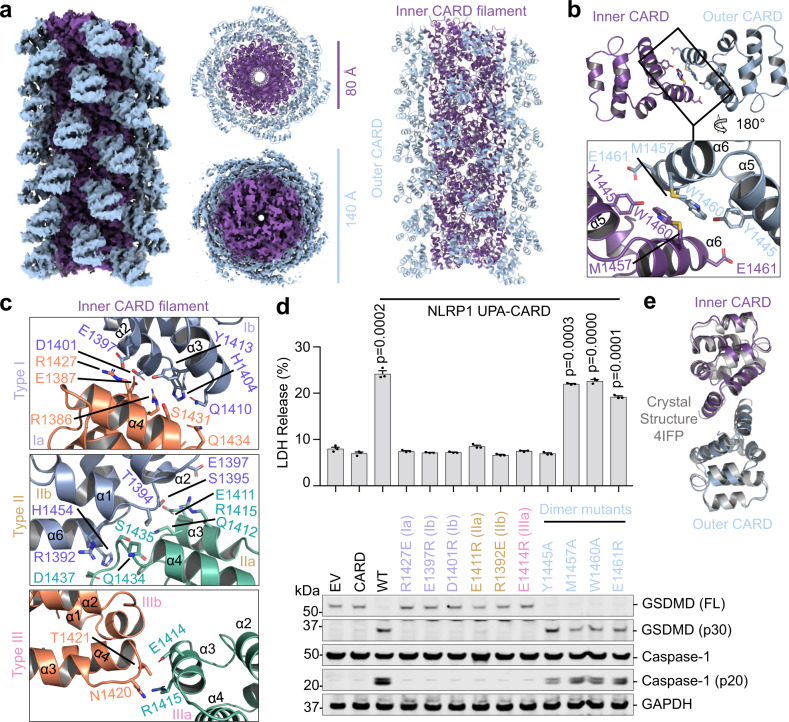
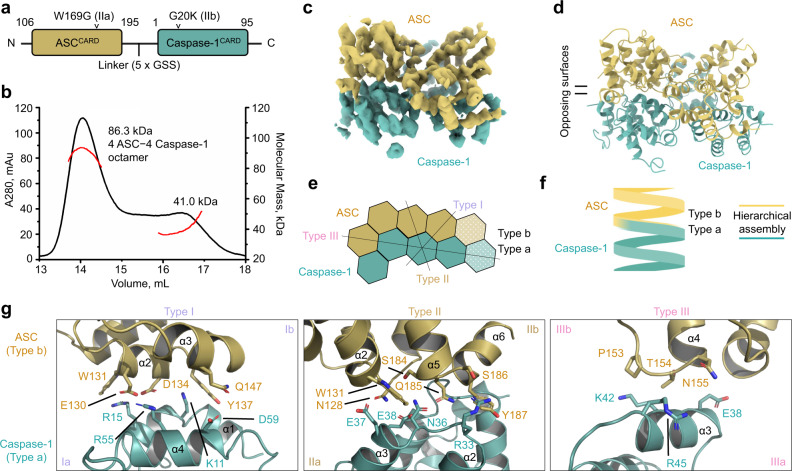
NLRP1 and CARD8 are related cytosolic sensors that upon activation form supramolecular signalling complexes known as canonical inflammasomes, resulting in caspase-1 activation, cytokine maturation and/or pyroptotic cell death. NLRP1 and CARD8 use their C-terminal (CT) fragments containing a caspase recruitment domain (CARD) and the UPA (conserved in UNC5, PIDD, and ankyrins) subdomain for self-oligomerization, which in turn form the platform to recruit the inflammasome adaptor ASC (apoptosis-associated speck-like protein containing a CARD) or caspase-1, respectively. Here, we report cryo-EM structures of NLRP1-CT and CARD8-CT assemblies, in which the respective CARDs form central helical filaments that are promoted by oligomerized, but flexibly linked, UPAs surrounding the filaments. Through biochemical and cellular approaches, we demonstrate that the UPA itself reduces the threshold needed for NLRP1-CT and CARD8-CT filament formation and signalling. Structural analyses provide insights on the mode of ASC recruitment by NLRP1-CT and the contrasting direct recruitment of caspase-1 by CARD8-CT. We also discover that subunits in the central NLRP1 filament dimerize with additional exterior CARDs, which roughly doubles its thickness and is unique among all known CARD filaments. Finally, we engineer and determine the structure of an ASC-caspase-1 octamer, which suggests that ASC uses opposing surfaces for NLRP1, versus caspase-1, recruitment. Together these structures capture the architecture and specificity of the active NLRP1 and CARD8 inflammasomes in addition to key heteromeric CARD-CARD interactions governing inflammasome signalling.
NLRP1 和 CARD8 是相关的细胞质传感器,在激活后形成称为经典炎性小体的超分子信号复合物,导致半胱天冬酶-1 的激活、细胞因子的成熟和/或细胞焦亡。NLRP1 和 CARD8 使用其包含半胱天冬酶募集结构域 (CARD) 和 UPA(UNC5、PIDD 和锚蛋白中保守)亚结构域的 C 末端 (CT) 片段进行自身寡聚化,进而分别形成募集炎性小体衔接子 ASC(含 CARD 的凋亡相关斑点样蛋白)或半胱天冬酶-1 的平台。在这里,我们报告了 NLRP1-CT 和 CARD8-CT 组装体的冷冻电镜结构,其中各自的 CARD 形成中央螺旋丝,由围绕丝的寡聚但灵活连接的 UPAs 促进。通过生化和细胞方法,我们证明 UPA 本身降低了 NLRP1-CT 和 CARD8-CT 丝形成和信号传导所需的阈值。结构分析提供了关于 NLRP1-CT 中 ASC 募集模式的见解,以及 CARD8-CT 中直接募集半胱天冬酶-1 的对比。我们还发现,中央 NLRP1 丝二聚体与额外的外部 CARD 结合,使其厚度增加一倍,这在所有已知的 CARD 丝中是独特的。最后,我们设计并确定了 ASC-半胱天冬酶-1 八聚体的结构,这表明 ASC 使用相反的表面来募集 NLRP1 和半胱天冬酶-1。这些结构共同捕获了活性 NLRP1 和 CARD8 炎性小体的结构和特异性,以及调节炎性小体信号的关键异源 CARD-CARD 相互作用。