Gene Center and Department of Biochemistry, Ludwig-Maximilians-Universität München, Munich, Germany.
Department of Medicine II, University Hospital, Ludwig-Maximilians-Universität München, Munich, Germany.
EMBO J. 2020 Oct 1;39(19):e105071. doi: 10.15252/embj.2020105071. Epub 2020 Aug 25.
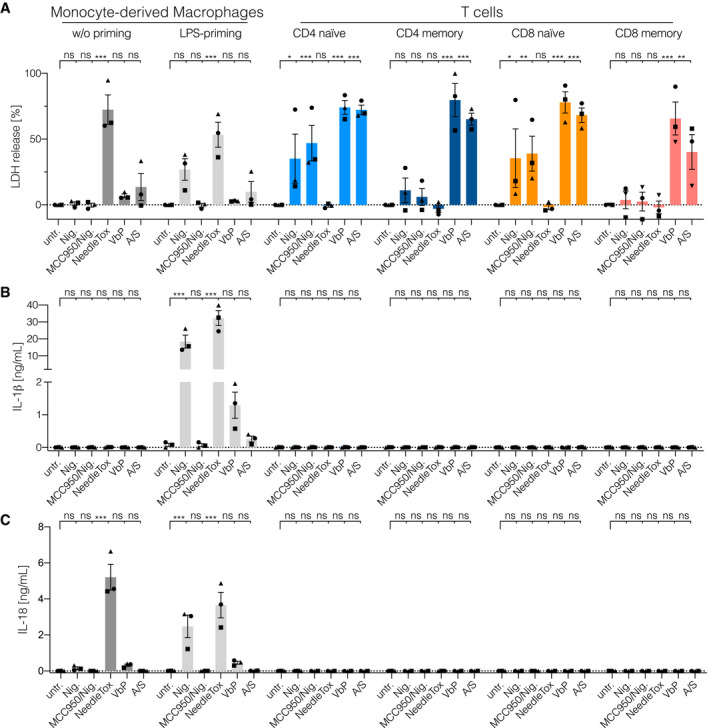
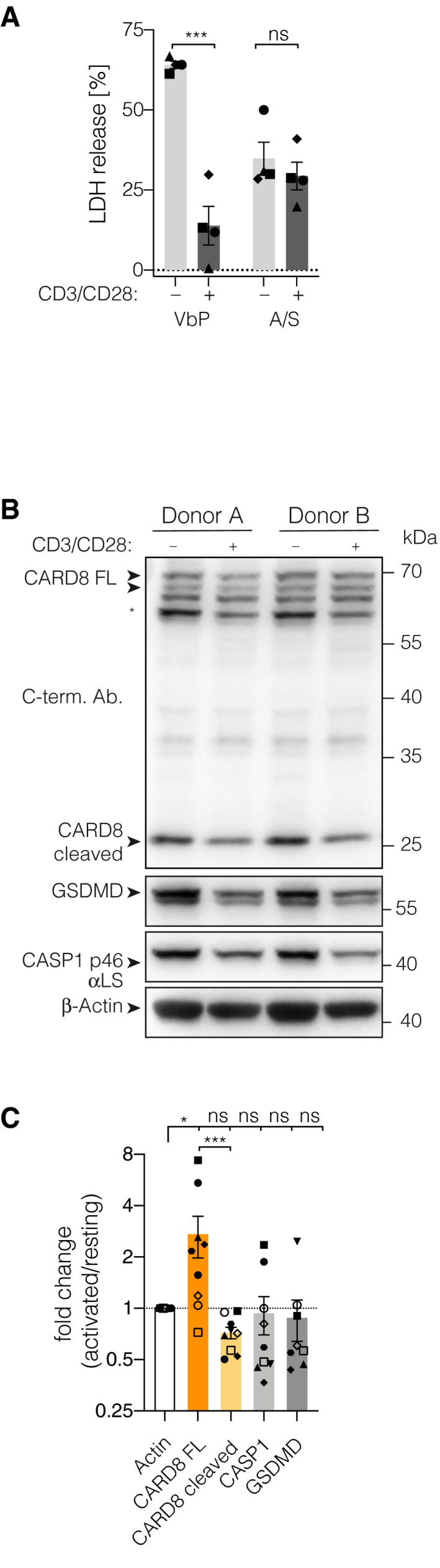
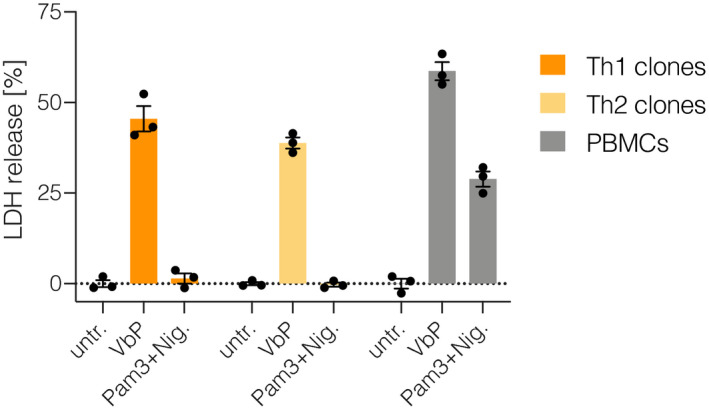
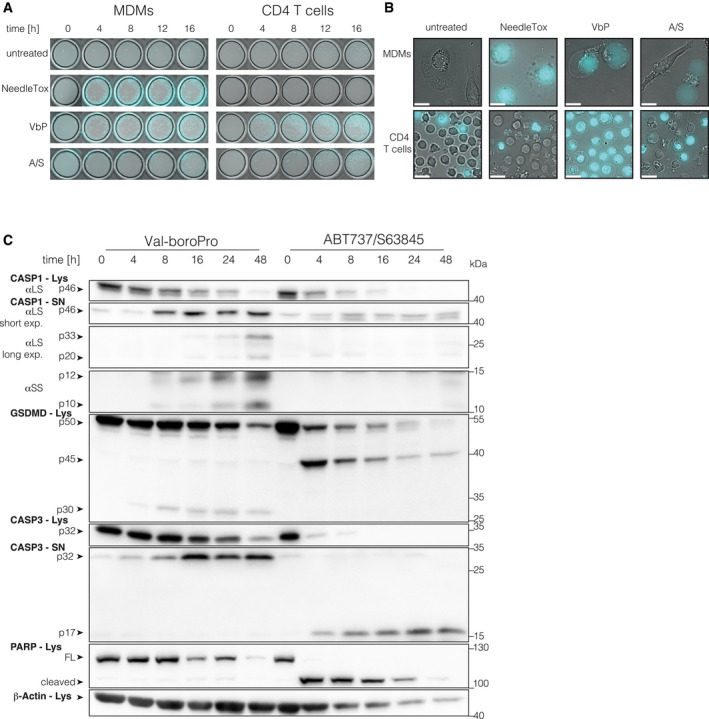
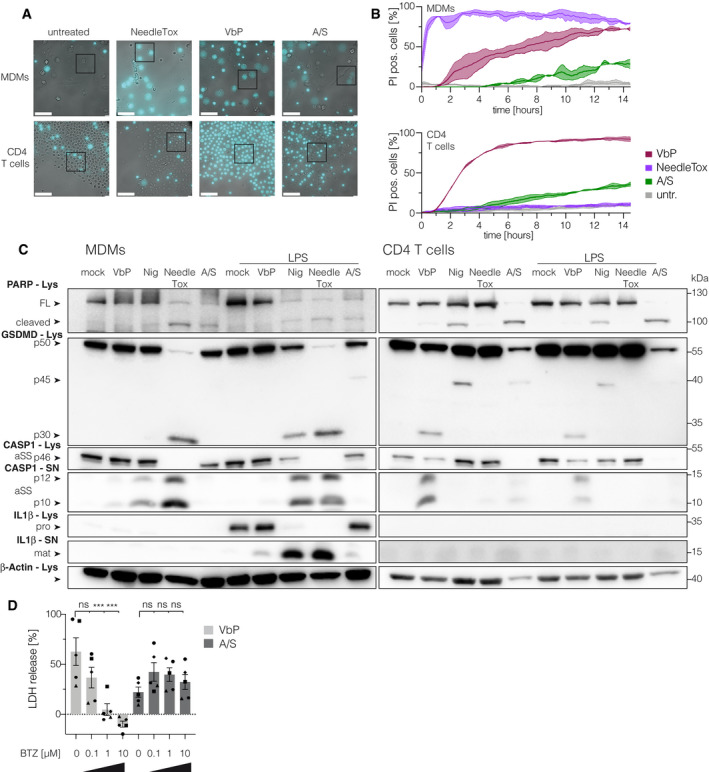
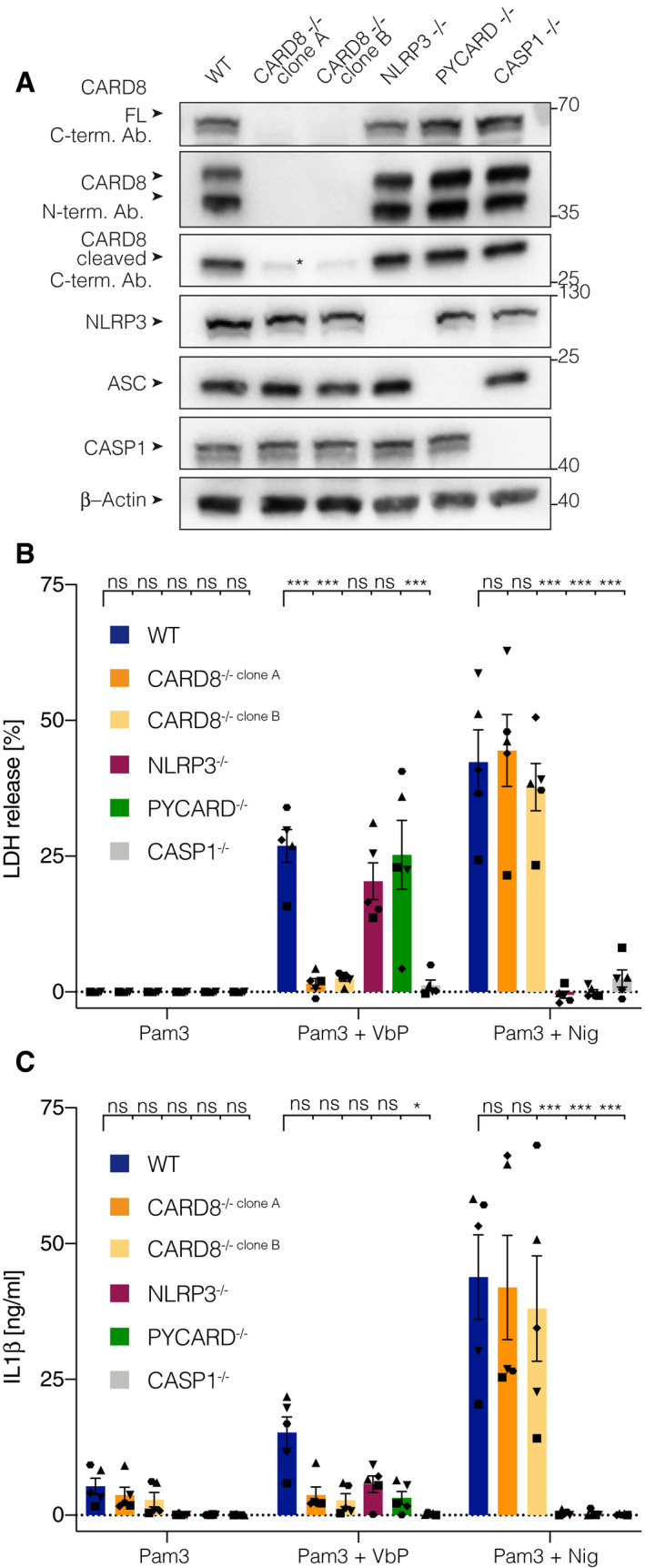
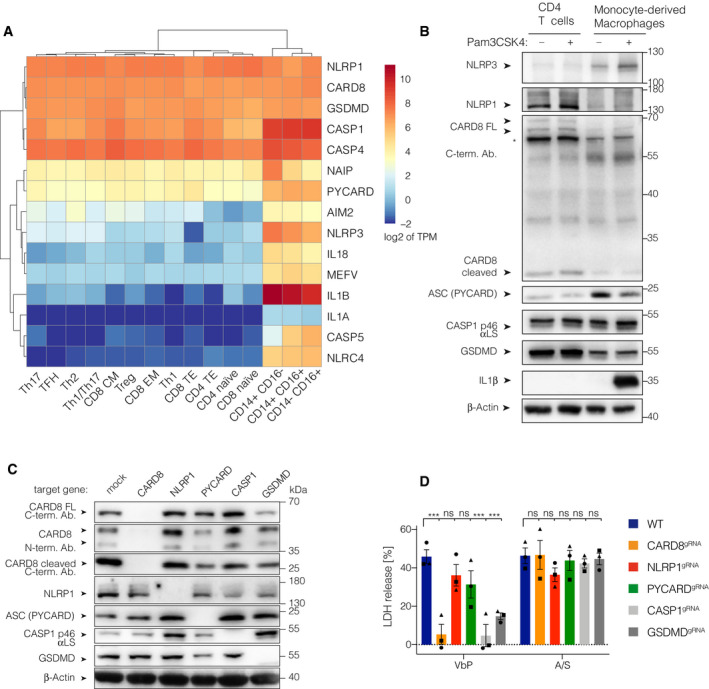
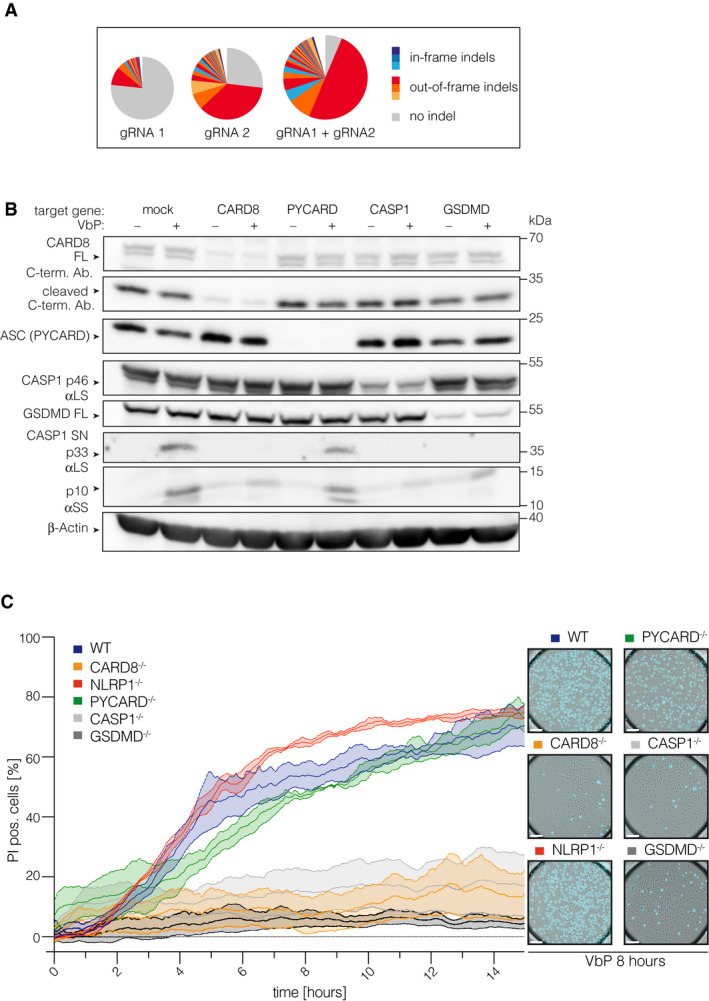
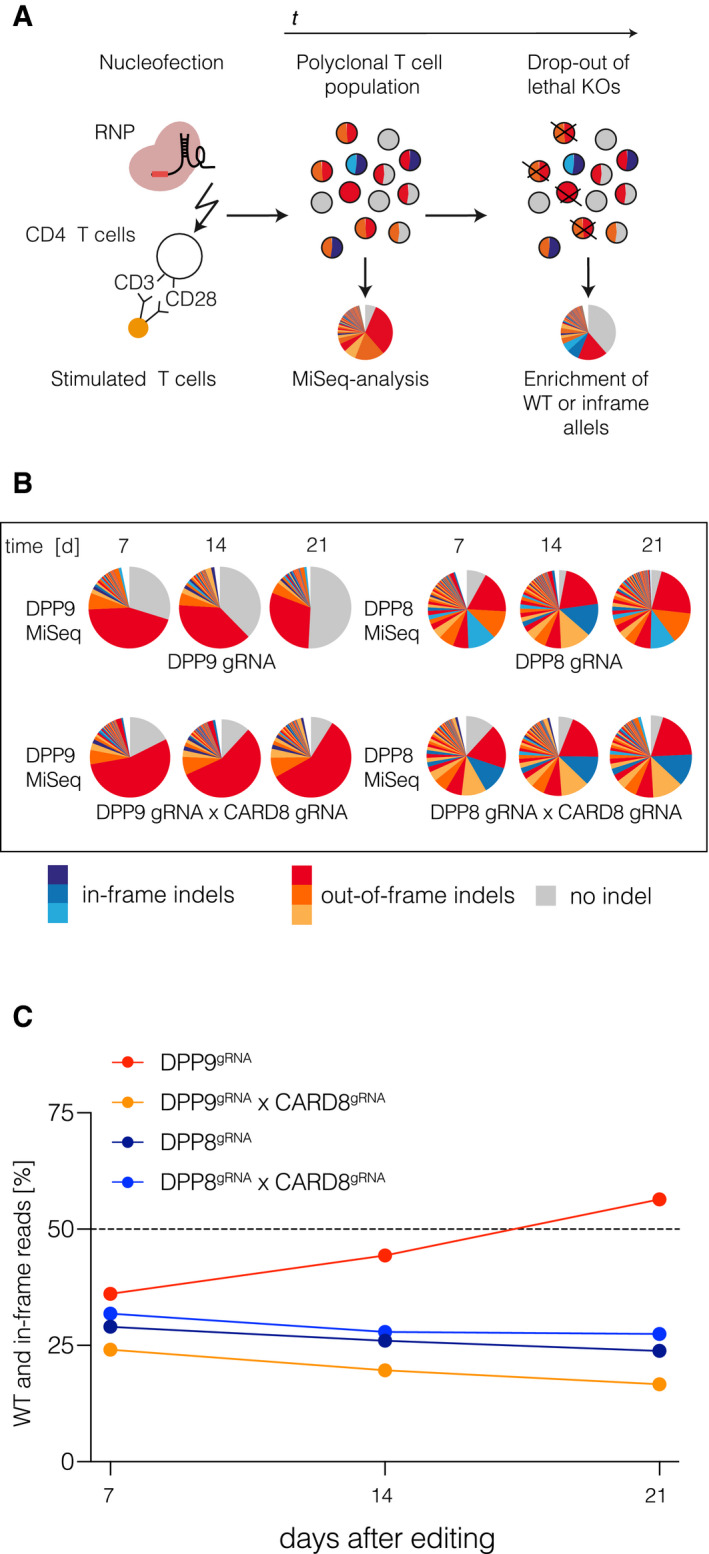
Inflammasomes execute a unique type of cell death known as pyroptosis. Mostly characterized in myeloid cells, caspase-1 activation downstream of an inflammasome sensor results in the cleavage and activation of gasdermin D (GSDMD), which then forms a lytic pore in the plasma membrane. Recently, CARD8 was identified as a novel inflammasome sensor that triggers pyroptosis in myeloid leukemia cells upon inhibition of dipeptidyl-peptidases (DPP). Here, we show that blocking DPPs using Val-boroPro triggers a lytic form of cell death in primary human CD4 and CD8 T cells, while other prototypical inflammasome stimuli were not active. This cell death displays morphological and biochemical hallmarks of pyroptosis. By genetically dissecting candidate components in primary T cells, we identify this response to be dependent on the CARD8-caspase-1-GSDMD axis. Moreover, DPP9 constitutes the relevant DPP restraining CARD8 activation. Interestingly, this CARD8-induced pyroptosis pathway can only be engaged in resting, but not in activated T cells. Altogether, these results broaden the relevance of inflammasome signaling and associated pyroptotic cell death to T cells, central players of the adaptive immune system.
炎性小体执行一种独特的细胞死亡方式,称为细胞焦亡。在髓系细胞中主要表现为,炎性小体传感器下游的半胱氨酸天冬氨酸蛋白酶-1(caspase-1)激活导致天冬氨酸半胱氨酸蛋白酶-1 效应蛋白水解酶(gasdermin D,GSDMD)的切割和激活,随后在质膜上形成一个溶细胞孔。最近,CARD8 被鉴定为一种新型炎性小体传感器,它可在抑制二肽基肽酶(DPP)后触发髓系白血病细胞的细胞焦亡。在这里,我们发现使用 Val-boroPro 阻断 DPP 会在原代人 CD4 和 CD8 T 细胞中引发溶细胞形式的细胞死亡,而其他典型的炎性小体刺激物则没有活性。这种细胞死亡表现出细胞焦亡的形态和生化特征。通过在原代 T 细胞中遗传剖析候选成分,我们确定这种反应依赖于 CARD8-caspase-1-GSDMD 轴。此外,DPP9 构成了抑制 CARD8 激活的相关 DPP。有趣的是,CARD8 诱导的细胞焦亡途径只能在静止的而不是激活的 T 细胞中被激活。总之,这些结果拓宽了炎性小体信号及其相关的细胞焦亡对适应性免疫系统关键参与者 T 细胞的相关性。