Institut de Recerca Sant Joan de Déu (Saint John of God Children's Hospital Barcelona), Endocrinology, Esplugues, Barcelona, Spain.
Instituto de Investigaciones Biomédicas Alberto Sols, Consejo Superior de Investigaciones Científicas/Universidad Autónoma de Madrid y Centro de Investigación Biomédica en Red de Diabetes y Enfermedades Metabólicas Asociadas CIBERDEM, Madrid, Spain.
Mol Metab. 2021 Mar;45:101162. doi: 10.1016/j.molmet.2021.101162. Epub 2021 Jan 7.
Childhood obesity is a strong risk factor for adult obesity, type 2 diabetes, and cardiovascular disease. The mechanisms that link early adiposity with late-onset chronic diseases are poorly characterised. We developed a mouse model of early adiposity through litter size reduction. Mice reared in small litters (SLs) developed obesity, insulin resistance, and hepatic steatosis during adulthood. The liver played a major role in the development of the disease.
To gain insight into the molecular mechanisms that link early development and childhood obesity with adult hepatic steatosis and insulin resistance.
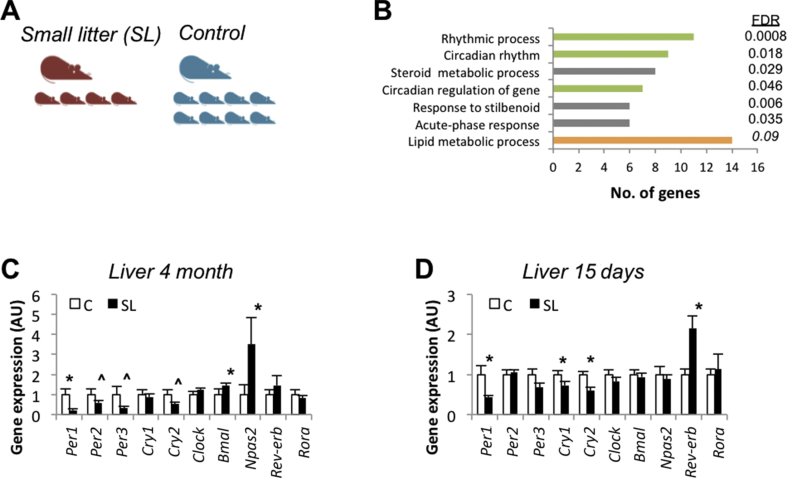
We analysed the hepatic transcriptome (Affymetrix) of control and SL mice to uncover potential pathways involved in the long-term programming of disease in our model.
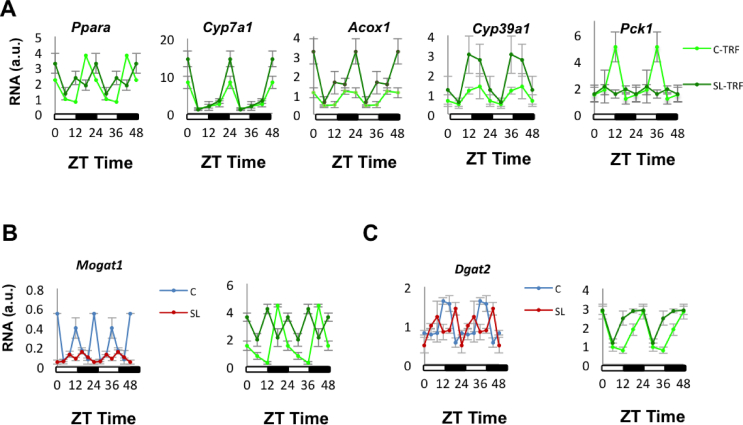
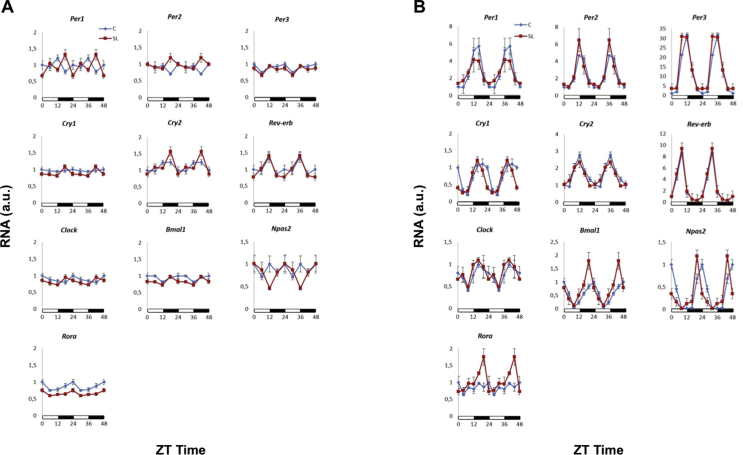
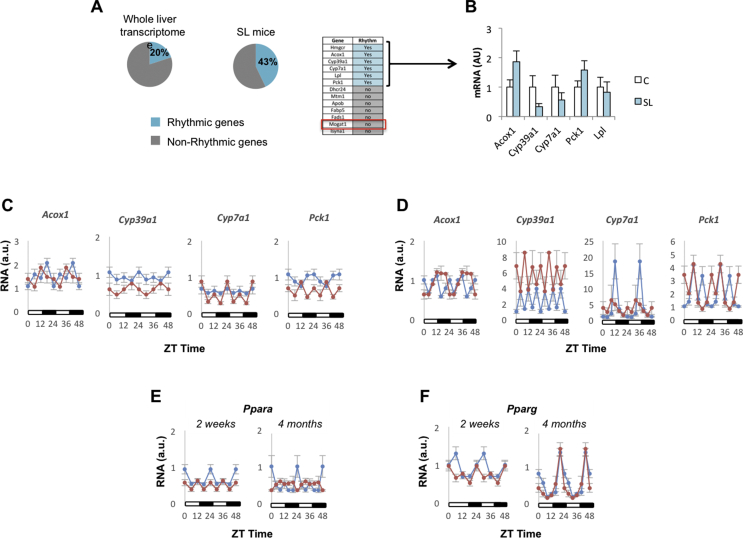
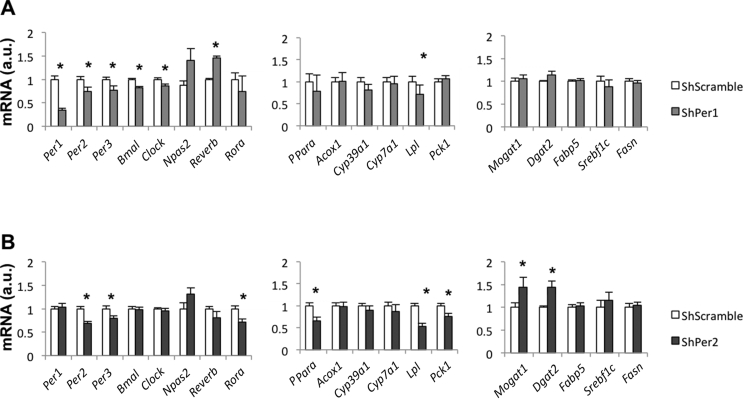
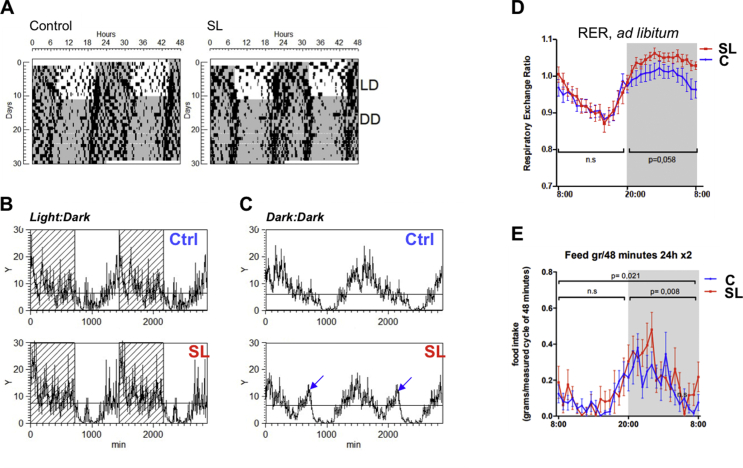
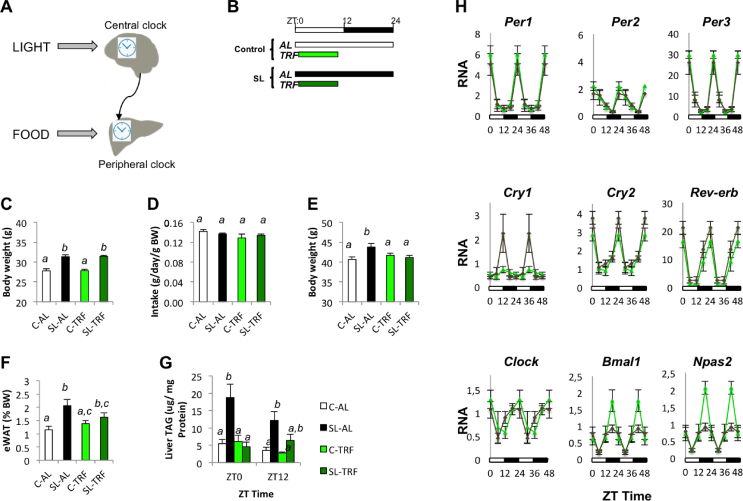
The circadian rhythm was the most significantly deregulated Gene Ontology term in the liver of adult SL mice. Several core clock genes, such as period 1-3 and cryptochrome 1-2, were altered in two-week-old SL mice and remained altered throughout their life course until they reached 4-6 months of age. Defective circadian rhythm was restricted to the periphery since the expression of clock genes in the hypothalamus, the central pacemaker, was normal. The period-cryptochrome genes were primarily entrained by dietary signals. Hence, restricting food availability during the light cycle only uncoupled the central rhythm from the peripheral and completely normalised hepatic triglyceride content in adult SL mice. This effect was accompanied by better re-alignment of the hepatic period genes, suggesting that they might have played a causal role in mediating hepatic steatosis in the adult SL mice. Functional downregulation of Per2 in hepatocytes in vitro confirmed that the period genes regulated lipid-related genes in part through peroxisome proliferator-activated receptor alpha (Ppara).
The hepatic circadian rhythm matures during early development, from birth to postnatal day 30. Hence, nutritional challenges during early life may misalign the hepatic circadian rhythm and secondarily lead to metabolic derangements. Specific time-restricted feeding interventions improve metabolic health in the context of childhood obesity by partially re-aligning the peripheral circadian rhythm.
儿童肥胖是成年肥胖、2 型糖尿病和心血管疾病的一个强烈危险因素。将早期肥胖与晚期慢性疾病联系起来的机制尚未得到很好的描述。我们通过减少窝仔数开发了一种早期肥胖的小鼠模型。在成年期,从小窝中饲养的小鼠(SL)会发展为肥胖、胰岛素抵抗和肝脂肪变性。肝脏在疾病的发展中起着主要作用。
深入了解将早期发育和儿童肥胖与成年肝脂肪变性和胰岛素抵抗联系起来的分子机制。
我们分析了对照和 SL 小鼠的肝转录组(Affymetrix),以揭示我们模型中潜在的与疾病长期编程相关的途径。
在成年 SL 小鼠的肝脏中,昼夜节律是最显著失调的基因本体术语。几个核心时钟基因,如周期 1-3 和隐色素 1-2,在两周大的 SL 小鼠中发生改变,并在整个生命过程中保持改变,直到它们达到 4-6 个月大。昼夜节律的缺陷仅限于外周,因为下丘脑中央起搏器中的时钟基因表达正常。周期-隐色素基因主要受饮食信号的调节。因此,仅在光照周期内限制食物供应就会使中央节律与外周节律脱耦,并使成年 SL 小鼠的肝甘油三酯含量完全正常化。这种效果伴随着肝周期基因更好的重新调整,表明它们可能在介导成年 SL 小鼠的肝脂肪变性中发挥了因果作用。体外在肝细胞中功能性下调 Per2 证实,周期基因通过过氧化物酶体增殖物激活受体 alpha(Ppara)部分调节脂质相关基因。
肝脏昼夜节律在早期发育过程中成熟,从出生到出生后第 30 天。因此,生命早期的营养挑战可能会使肝脏昼夜节律失调,并继发导致代谢紊乱。特定的限时喂养干预通过部分重新调整外周昼夜节律,改善儿童肥胖症背景下的代谢健康。