Inflammation, Repair and Development Section, National Heart and Lung Institute, Imperial College London, London, UK.
The Kennedy Institute of Rheumatology, University of Oxford, Oxford, UK.
Clin Exp Immunol. 2021 Apr;204(1):134-143. doi: 10.1111/cei.13573. Epub 2021 Jan 28.
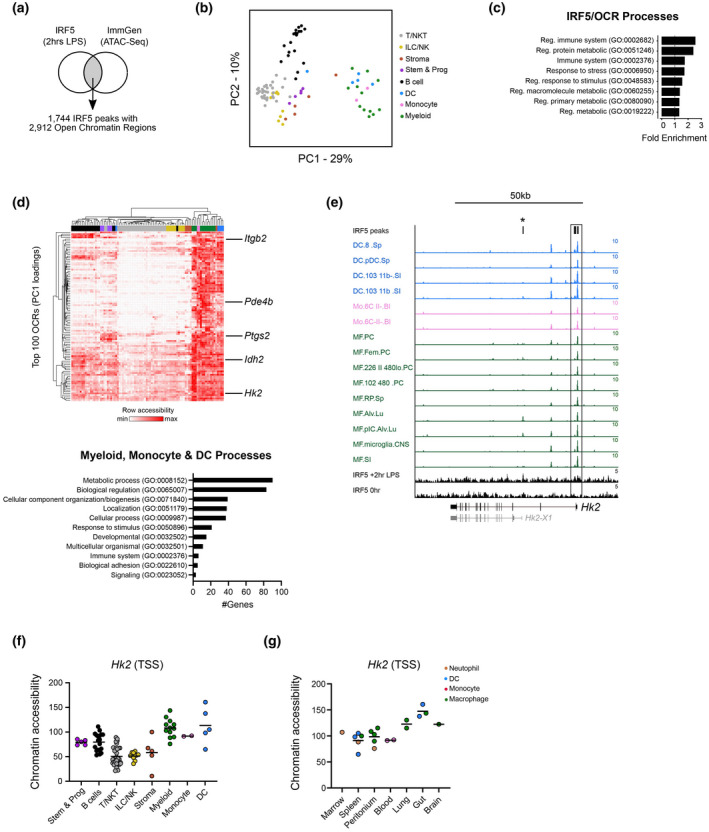
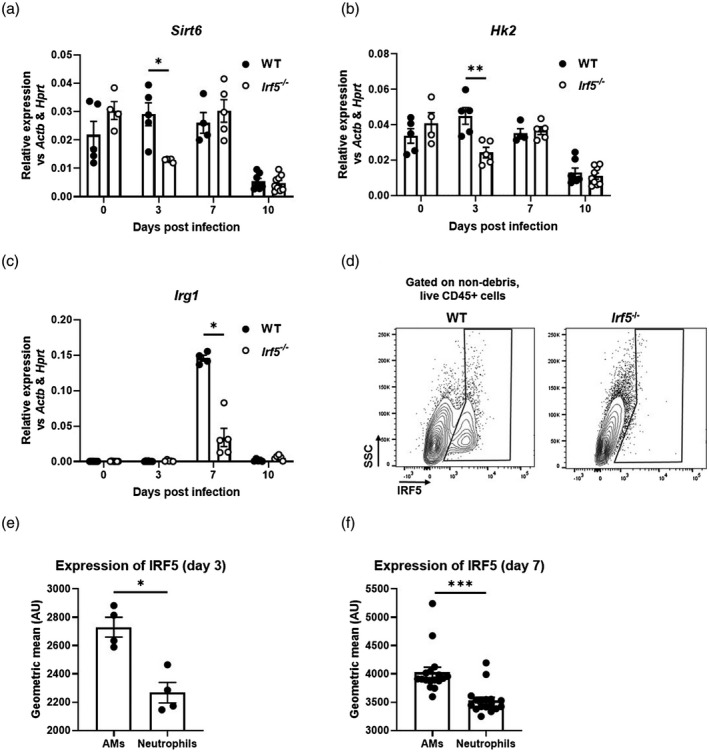
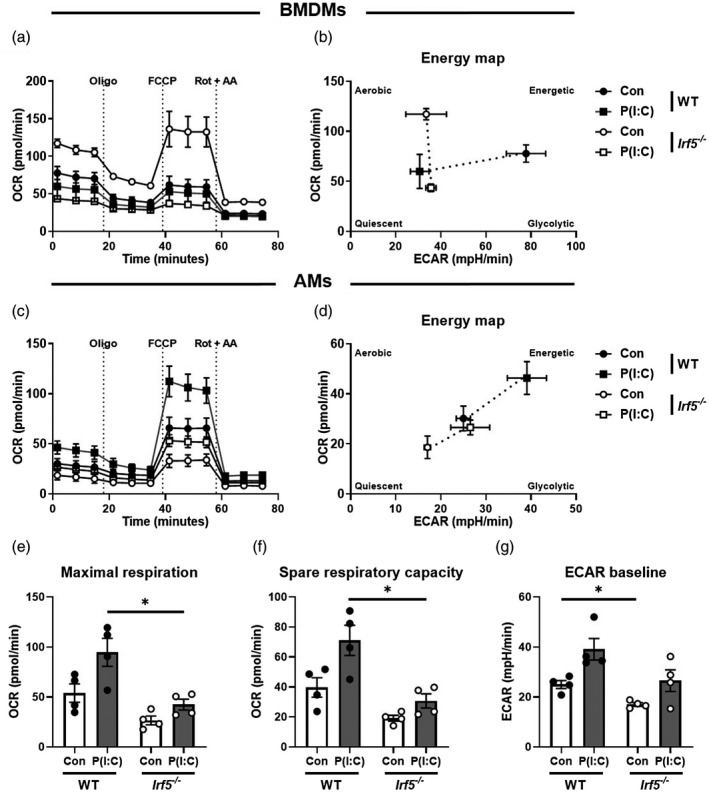
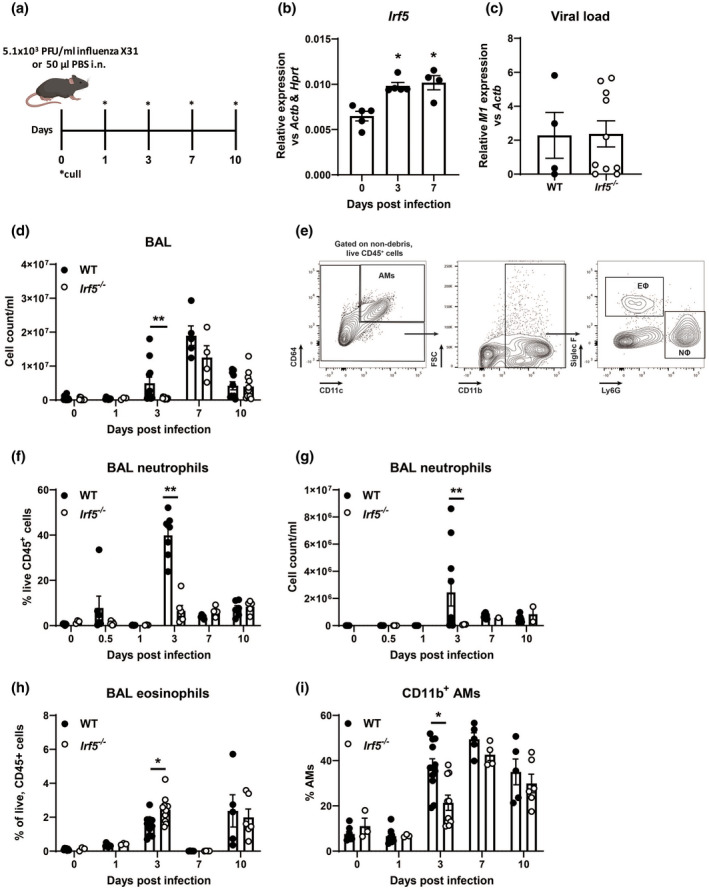
Interferon regulatory factor 5 (IRF5) is a master regulator of macrophage phenotype and a key transcription factor involved in expression of proinflammatory cytokine responses to microbial and viral infection. Here, we show that IRF5 controls cellular and metabolic responses. By integrating ChIP sequencing (ChIP-Seq) and assay for transposase-accessible chromatin using sequencing (ATAC)-seq data sets, we found that IRF5 directly regulates metabolic genes such as hexokinase-2 (Hk2). The interaction of IRF5 and metabolic genes had a functional consequence, as Irf5 airway macrophages but not bone marrow-derived macrophages (BMDMs) were characterized by a quiescent metabolic phenotype at baseline and had reduced ability to utilize oxidative phosphorylation after Toll-like receptor (TLR)-3 activation, in comparison to controls, ex vivo. In a murine model of influenza infection, IRF5 deficiency had no effect on viral load in comparison to wild-type controls but controlled metabolic responses to viral infection, as IRF5 deficiency led to reduced expression of Sirt6 and Hk2. Together, our data indicate that IRF5 is a key component of AM metabolic responses following influenza infection and TLR-3 activation.
干扰素调节因子 5(IRF5)是巨噬细胞表型的主要调节因子,也是参与微生物和病毒感染后促炎细胞因子反应表达的关键转录因子。在这里,我们表明 IRF5 控制细胞和代谢反应。通过整合染色质免疫沉淀测序(ChIP-Seq)和转座酶可及染色质测序(ATAC-seq)数据集,我们发现 IRF5 可以直接调节代谢基因,如己糖激酶 2(Hk2)。IRF5 和代谢基因的相互作用具有功能后果,因为 Irf5 气道巨噬细胞而非骨髓来源的巨噬细胞(BMDMs)在基线时表现出静止的代谢表型,并且与对照相比,在 Toll 样受体(TLR)-3 激活后,利用氧化磷酸化的能力降低,在体外。在流感感染的小鼠模型中,IRF5 缺乏与野生型对照相比对病毒载量没有影响,但控制了病毒感染的代谢反应,因为 IRF5 缺乏导致 Sirt6 和 Hk2 的表达减少。总之,我们的数据表明,IRF5 是流感感染和 TLR-3 激活后 AM 代谢反应的关键组成部分。