Zhou Zhe, Dong Di, Yuan Yuyao, Luo Juan, Liu Xiao-Ding, Chen Long-Yun, Wang Guangxi, Yin Yuxin
Institute of Systems Biomedicine, Department of Pathology, School of Basic Medical Sciences, Peking University Health Science Centre and School of Life Sciences, Peking University, Beijing 100191, China.
Institute of Precision Medicine, Peking University Shenzhen Hospital, Shenzhen 518036, China.
EBioMedicine. 2024 Nov;109:105389. doi: 10.1016/j.ebiom.2024.105389. Epub 2024 Oct 10.
Metabolic reprogramming plays a pivotal role in cancer progression, contributing to substantial intratumour heterogeneity and influencing tumour behaviour. However, a systematic characterization of metabolic heterogeneity across multiple cancer types at the single-cell level remains limited.
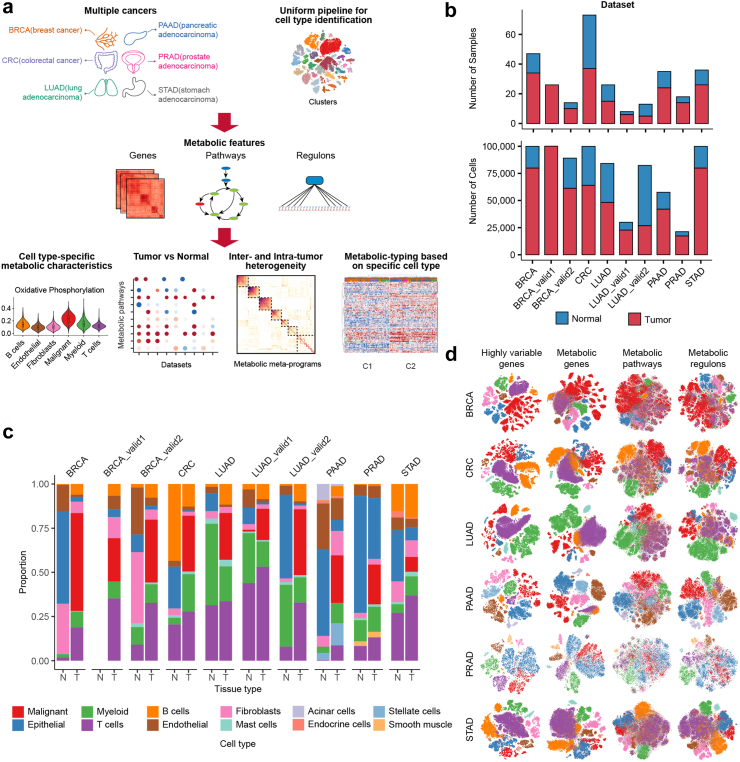
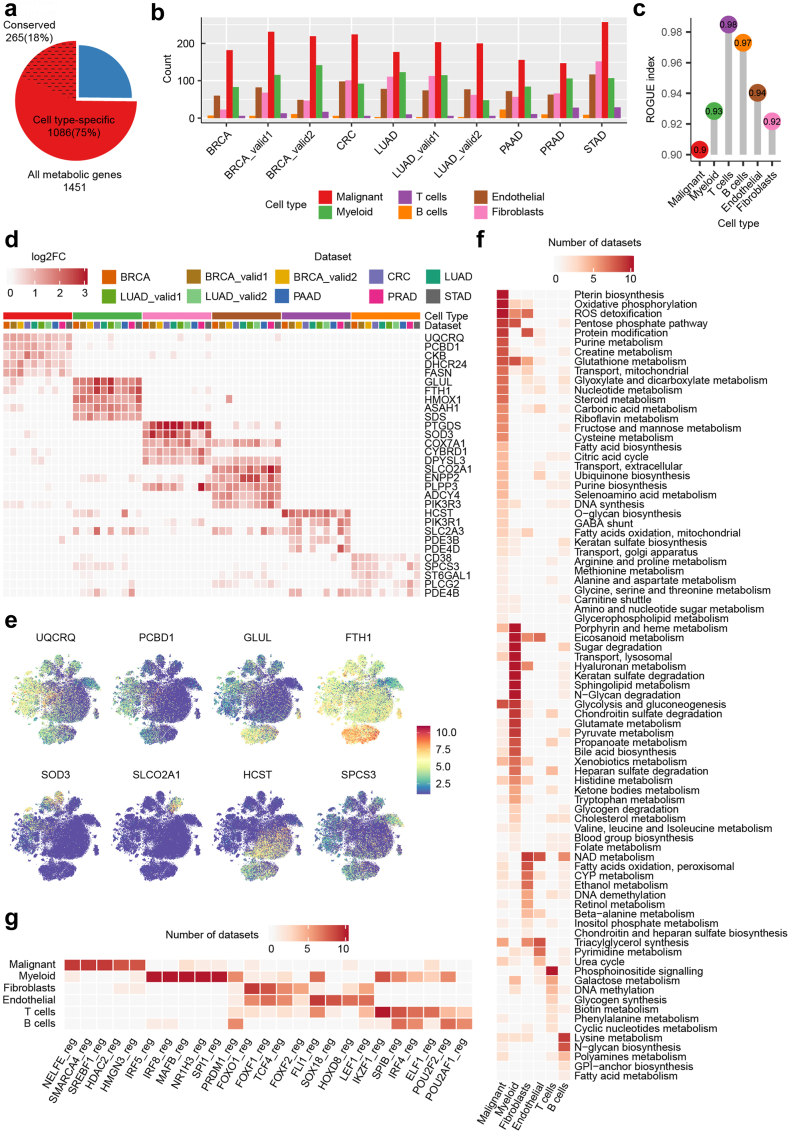
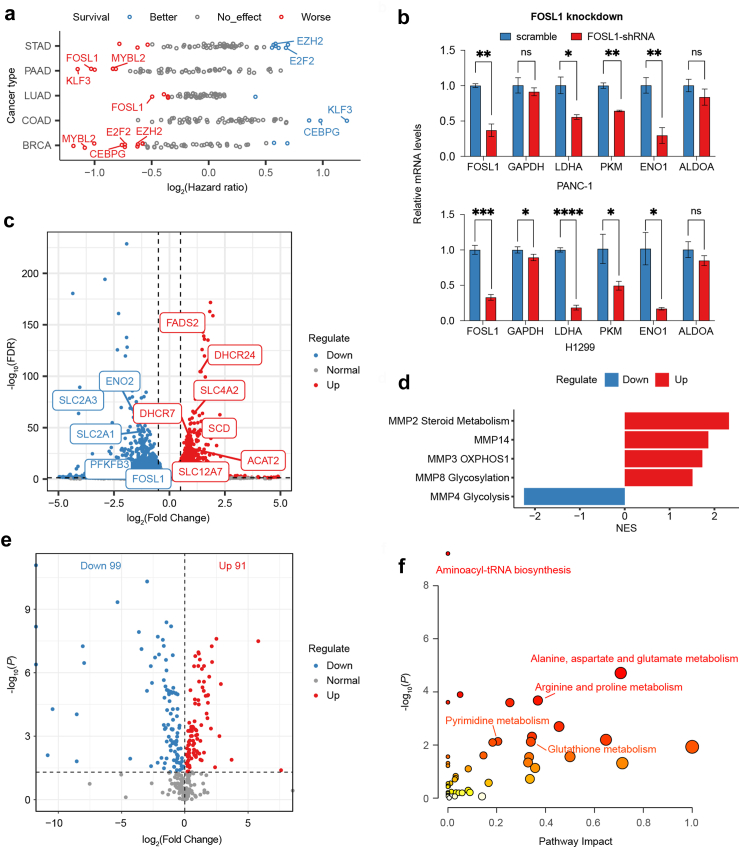
We integrated 296 tumour and normal samples spanning six common cancer types to construct a single-cell compendium of metabolic gene expression profiles and identify cell type-specific metabolic properties and reprogramming patterns. A computational approach based on non-negative matrix factorization (NMF) was utilised to identify metabolic meta-programs (MMPs) showing intratumour heterogeneity. In-vitro cell experiments were conducted to confirm the associations between MMPs and chemotherapy resistance, as well as the function of key metabolic regulators. Survival analyses were performed to assess clinical relevance of cellular metabolic properties.
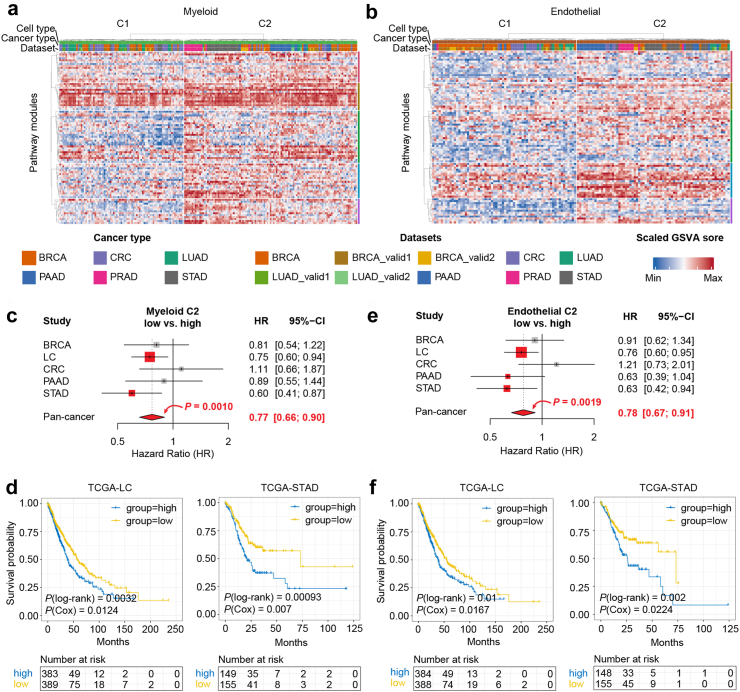
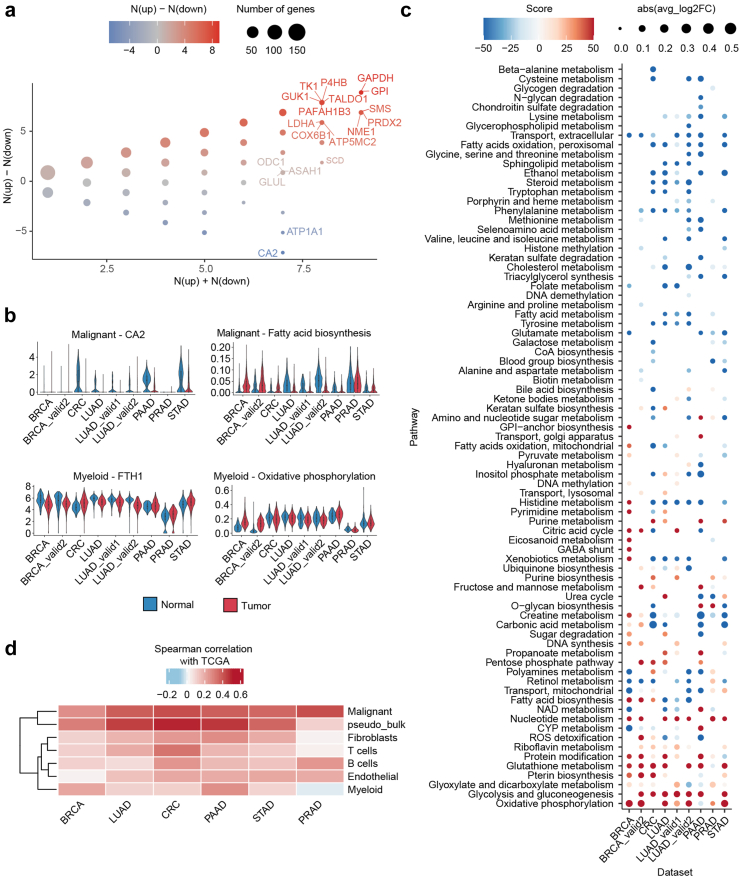
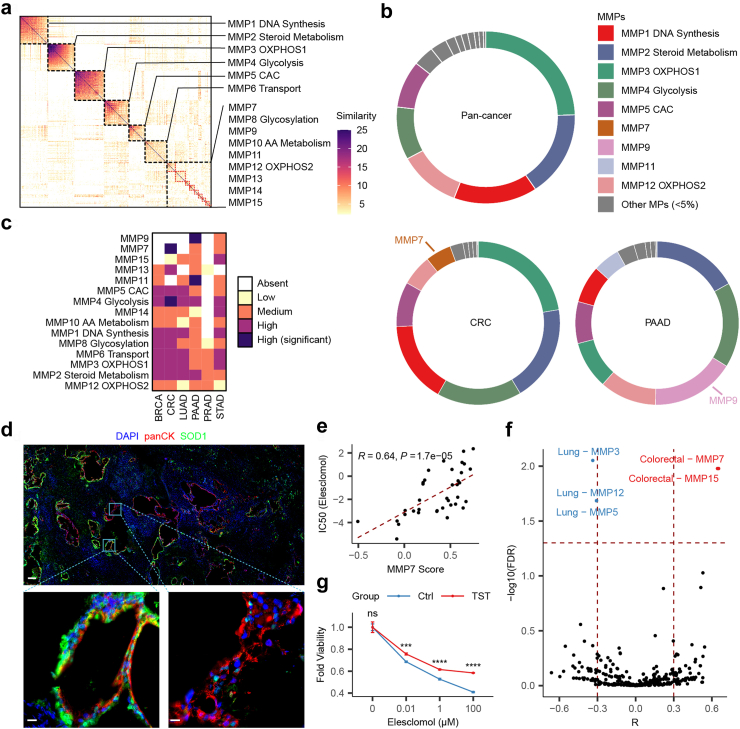
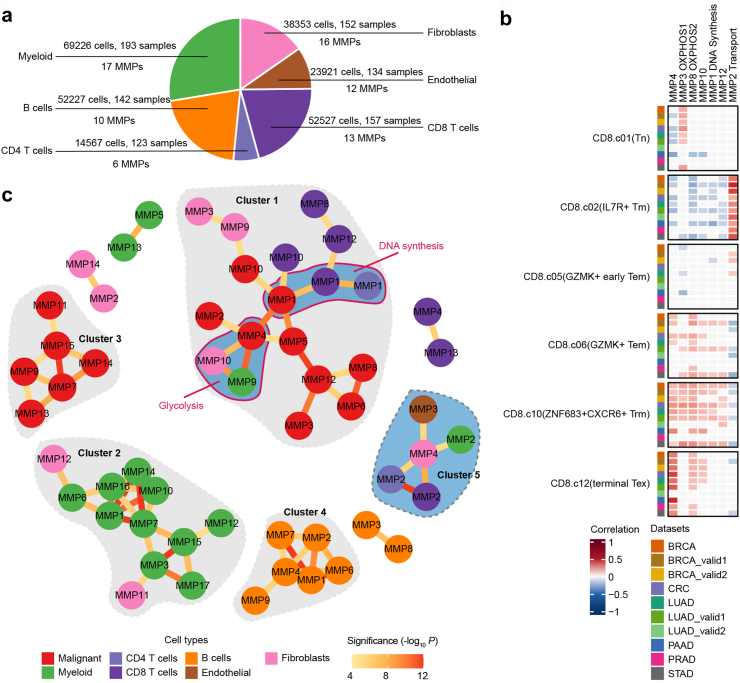
Our analysis revealed shared glycolysis upregulation and divergent regulation of citric acid cycle across different cell types. In malignant cells, we identified a colorectal cancer-specific MMP associated with resistance to the cuproptosis inducer elesclomol, validated through in-vitro cell experiments. Furthermore, our findings enabled the stratification of patients into distinct prognostic subtypes based on metabolic properties of specific cell types, such as myeloid cells.
This study presents a nuanced understanding of multilayered metabolic heterogeneity, offering valuable insights into potential personalized therapies targeting tumour metabolism.
National Key Research and Development Program of China (2021YFA1300601). National Natural Science Foundation of China (key grants 82030081 and 81874235). The Shenzhen High-level Hospital Construction Fund and Shenzhen Basic Research Key Project (JCYJ20220818102811024). The Lam Chung Nin Foundation for Systems Biomedicine.
代谢重编程在癌症进展中起关键作用,导致肿瘤内显著的异质性并影响肿瘤行为。然而,在单细胞水平上对多种癌症类型的代谢异质性进行系统表征仍然有限。
我们整合了涵盖六种常见癌症类型的296个肿瘤和正常样本,构建了代谢基因表达谱的单细胞汇编,并确定细胞类型特异性的代谢特性和重编程模式。利用基于非负矩阵分解(NMF)的计算方法来识别显示肿瘤内异质性的代谢元程序(MMP)。进行体外细胞实验以确认MMP与化疗耐药性之间的关联以及关键代谢调节因子的功能。进行生存分析以评估细胞代谢特性的临床相关性。
我们的分析揭示了不同细胞类型之间共享的糖酵解上调和柠檬酸循环的不同调节。在恶性细胞中,我们鉴定出一种与对铜死亡诱导剂依斯氯胺酮耐药相关的结直肠癌特异性MMP,并通过体外细胞实验得到验证。此外,我们的研究结果能够根据特定细胞类型(如髓样细胞)的代谢特性将患者分层为不同的预后亚型。
本研究对多层次的代谢异质性提供了细致入微的理解,为针对肿瘤代谢的潜在个性化治疗提供了有价值的见解。
国家重点研发计划(2021YFA1300601)。国家自然科学基金(重点项目820300,81和81874235)。深圳市高水平医院建设基金和深圳市基础研究重点项目(JCYJ20220818102811024)。林重年系统生物医学基金会。