Department of Natural Sciences, School of Arts and Sciences, Lebanese American University, P.O. Box: 13-5053, Chouran, Beirut, 1102 2801, Lebanon.
J Ovarian Res. 2021 Jan 11;14(1):13. doi: 10.1186/s13048-021-00767-3.
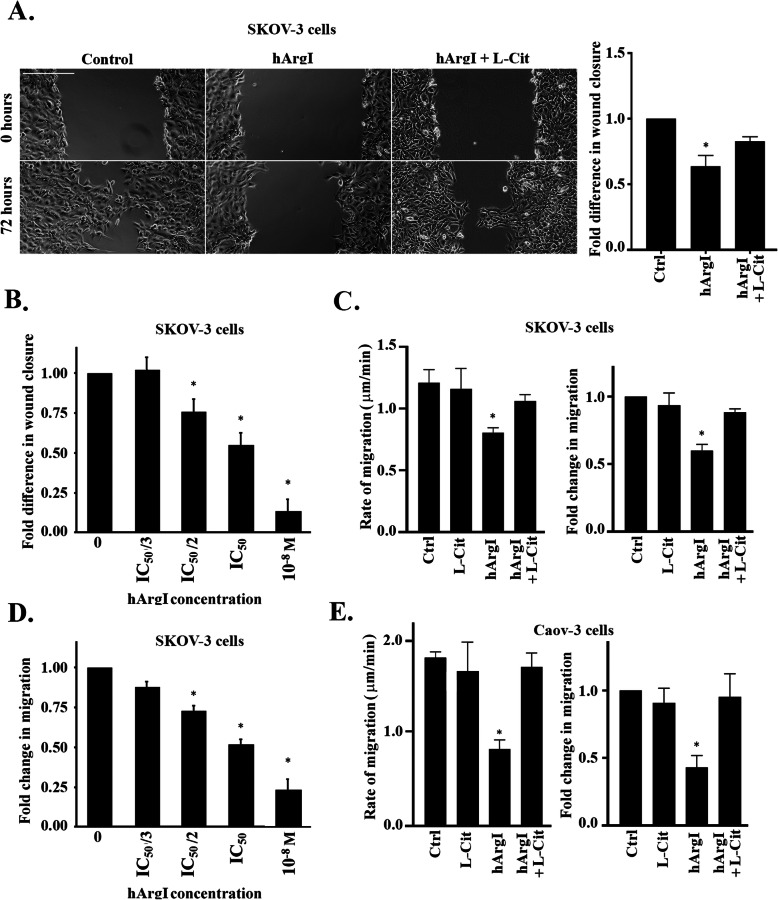
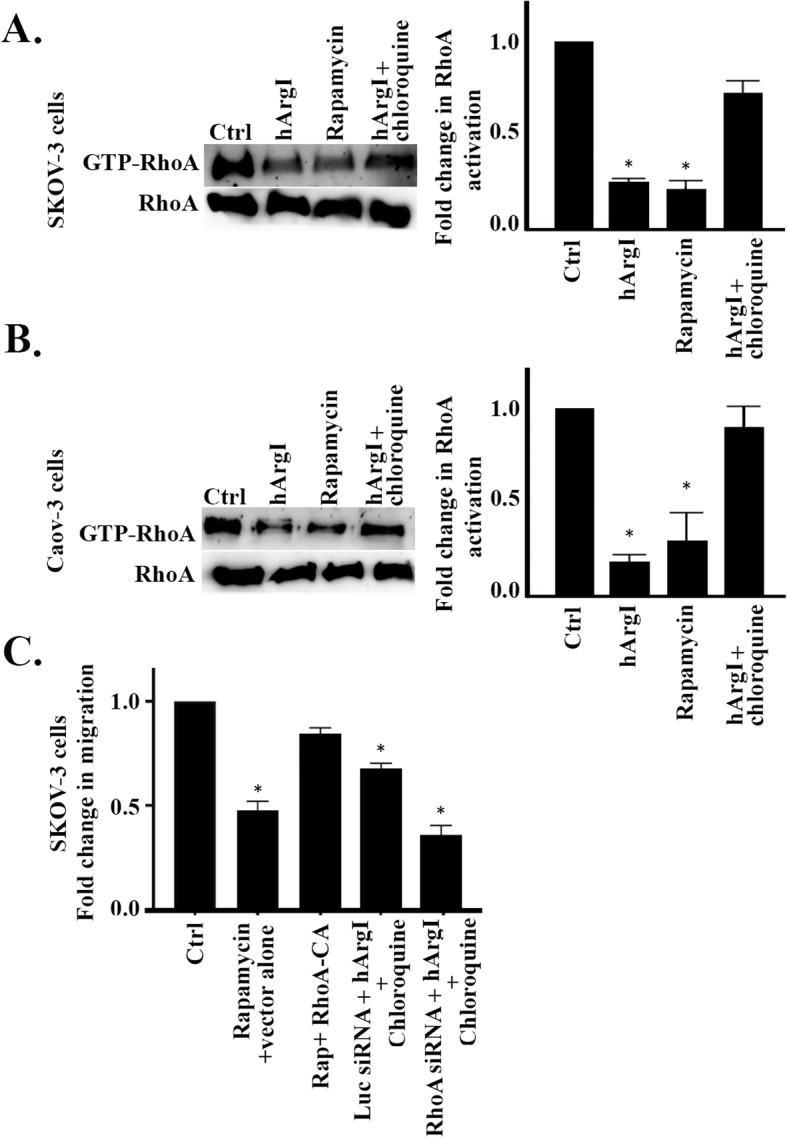
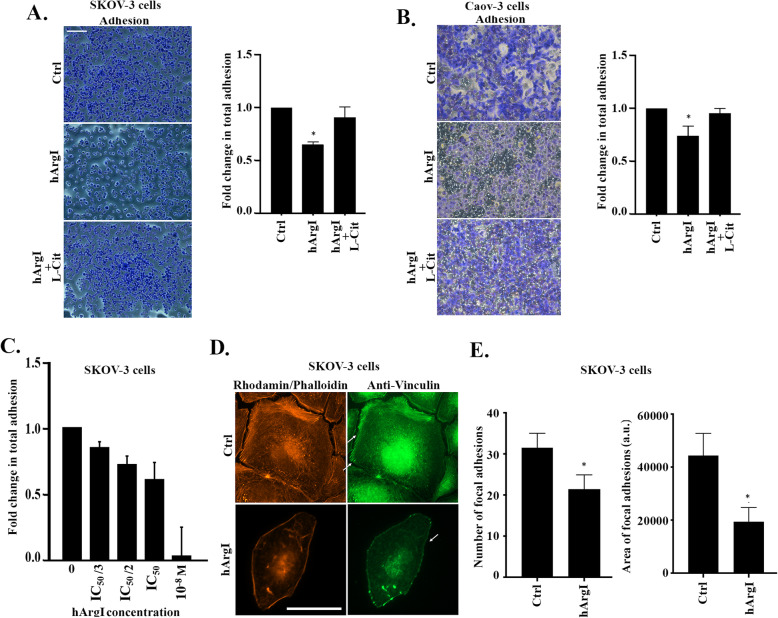
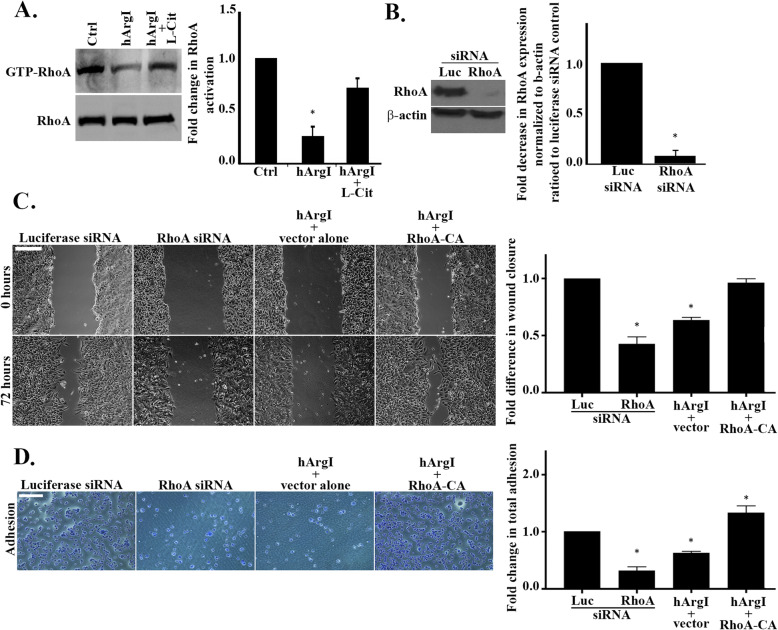
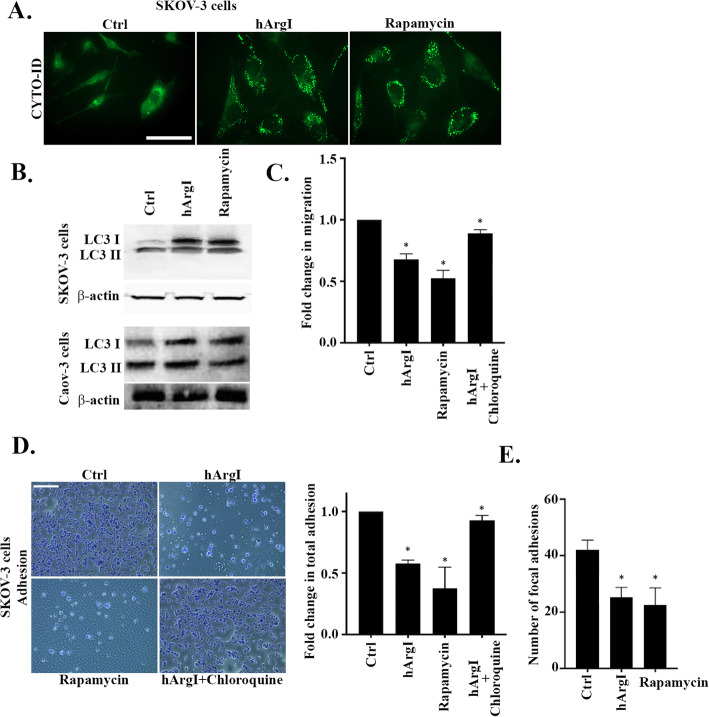
Ovarian carcinoma is the second most common malignancy of the female reproductive system and the leading cause of death from female reproductive system malignancies. Cancer cells have increased proliferation rate and thus require high amounts of amino acids, including arginine. L-arginine is a non-essential amino acid synthesized from L-citrulline by the Arginosuccinate synthetase (ASS1) enzyme. We have previously shown that the ovarian cancer cells, SKOV3, are auxotrophic to arginine, and that arginine deprivation by treatment with the genetically engineered human arginase I (HuArgI (Co)-PEG5000) triggers the death of SKOV3 cells by autophagy. In this study we examine the effect of HuArgI (Co)-PEG5000 on ovarian cancer cell migration and we dissect the mechanism involved. Wound healing assays, 2D random cell migration assays and cell adhesion analysis indicate that arginine deprivation decreases SKOV3 cell migration and adhesion. This effect was mimicked when autophagy was induced through rapamycin and reversed with the autophagy inhibitor chloroquine when autophagy was inhibited. This proved that arginine deprivation leads to the inhibition of cancer cell migration through autophagy, in addition to cell death. In addition, we were able to establish through pull-down assays and reversal experiments, that arginine deprivation-mediated autophagy inhibits cell migration through a direct inhibition of RhoA, member of the Rho family of GTPases. In conclusion, here we identify, for the first time, an autophagy-mediated inhibition of RhoA that plays an important role in regulating ovarian cancer cells motility and adhesion in response to arginine depletion.
卵巢癌是女性生殖系统第二大常见恶性肿瘤,也是女性生殖系统恶性肿瘤死亡的主要原因。癌细胞增殖速度加快,因此需要大量的氨基酸,包括精氨酸。L-精氨酸是一种非必需氨基酸,可由 L-瓜氨酸通过精氨琥珀酸合成酶(ASS1)酶合成。我们之前已经表明,卵巢癌细胞 SKOV3 对精氨酸有辅助依赖性,并且用基因工程改造的人精氨酸酶 I(HuArgI(Co)-PEG5000)处理导致精氨酸耗竭会通过自噬触发 SKOV3 细胞死亡。在这项研究中,我们研究了 HuArgI(Co)-PEG5000 对卵巢癌细胞迁移的影响,并剖析了涉及的机制。伤口愈合测定、2D 随机细胞迁移测定和细胞黏附分析表明,精氨酸耗竭会降低 SKOV3 细胞的迁移和黏附能力。当通过雷帕霉素诱导自噬时,会产生类似的效果,而当自噬被抑制时,用自噬抑制剂氯喹逆转时,效果也会逆转。这证明,除了细胞死亡之外,精氨酸耗竭还通过自噬抑制癌细胞迁移。此外,通过下拉测定和逆转实验,我们能够确定,精氨酸耗竭介导的自噬通过直接抑制 RhoA(Rho 家族 GTP 酶的成员)来抑制细胞迁移。总之,我们首次鉴定了一种自噬介导的 RhoA 抑制作用,该作用在调节卵巢癌细胞对精氨酸耗竭的运动性和黏附性方面发挥着重要作用。