Department of Cell Biology, Radboud University Medical Centre, Nijmegen 6525GA, The Netherlands.
David H. Koch Center for Applied Research of Genitourinary Cancers, The University of Texas MD Anderson Cancer Center, Houston, TX 77030, USA.
Trends Cell Biol. 2023 May;33(5):388-402. doi: 10.1016/j.tcb.2022.09.009. Epub 2022 Oct 31.
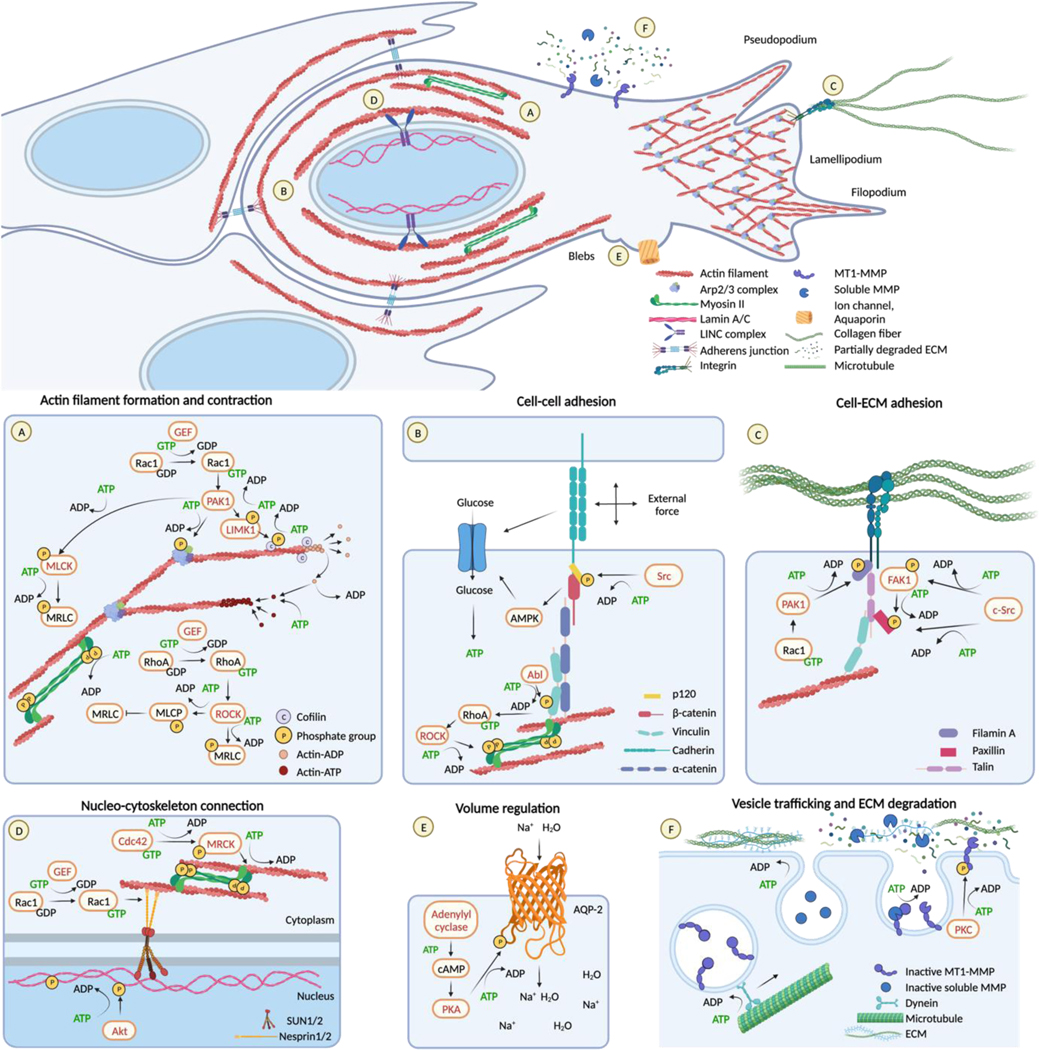
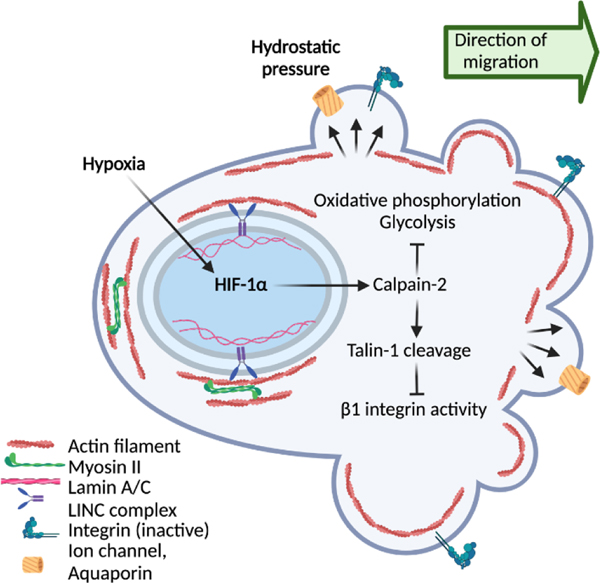
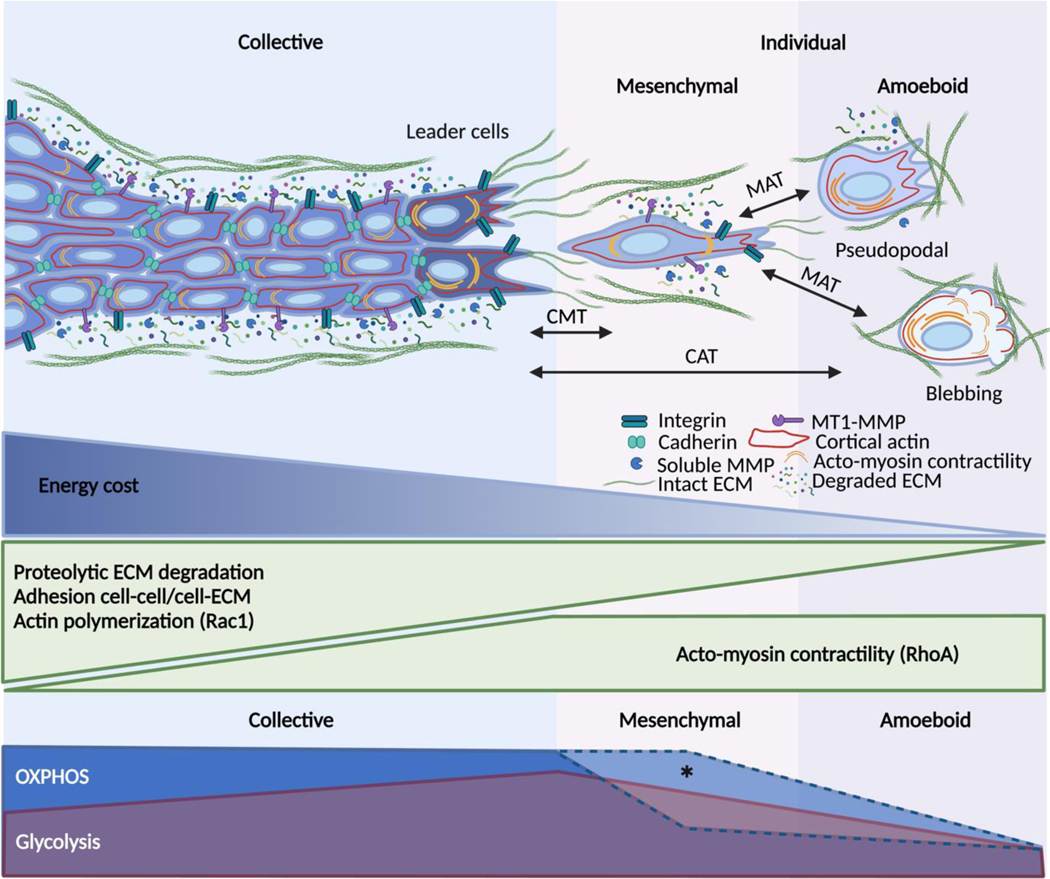
Energy deprivation is a frequent adverse event in tumors that is caused by mutations, malperfusion, hypoxia, and nutrition deficit. The resulting bioenergetic stress leads to signaling and metabolic adaptation responses in tumor cells, secures survival, and adjusts migration activity. The kinetic responses of cancer cells to energy deficit were recently identified, including a switch of invasive cancer cells to energy-conservative amoeboid migration and an enhanced capability for distant metastasis. We review the energy programs employed by different cancer invasion modes including collective, mesenchymal, and amoeboid migration, as well as their interconversion in response to energy deprivation, and we discuss the consequences for metastatic escape. Understanding the energy requirements of amoeboid and other dissemination strategies offers rationales for improving therapeutic targeting of metastatic cancer progression.
能量剥夺是由突变、灌注不良、缺氧和营养缺乏引起的肿瘤常见的不良事件。由此产生的生物能量应激导致肿瘤细胞发生信号和代谢适应反应,确保其存活并调节迁移活性。最近发现了癌细胞对能量缺失的动力学反应,包括侵袭性癌细胞向节能的阿米巴样迁移的转变,以及增强远处转移的能力。我们综述了不同的癌症侵袭模式所利用的能量程序,包括集体性、间质和阿米巴样迁移,以及它们在能量剥夺时的相互转换,并讨论了对转移逃逸的影响。了解阿米巴样和其他扩散策略的能量需求为改善转移性癌症进展的治疗靶向提供了依据。