Department of Vascular Surgery, The 2nd Affiliated Hospital of Harbin Medical University, Harbin 150086, China.
Department of Plastic Surgery, The 2nd Affiliated Hospital of Harbin Medical University, Harbin 150086, China.
Aging (Albany NY). 2020 Nov 16;13(1):933-943. doi: 10.18632/aging.202204.
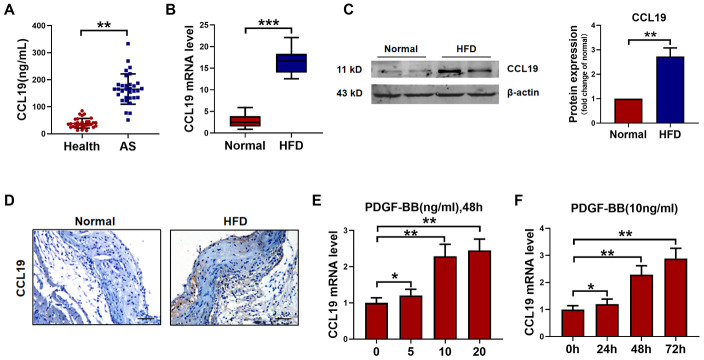
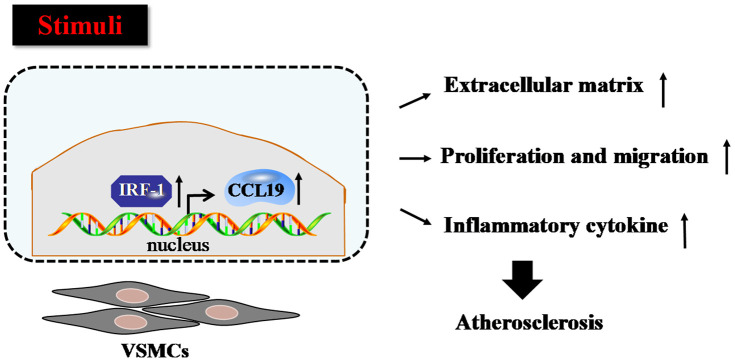
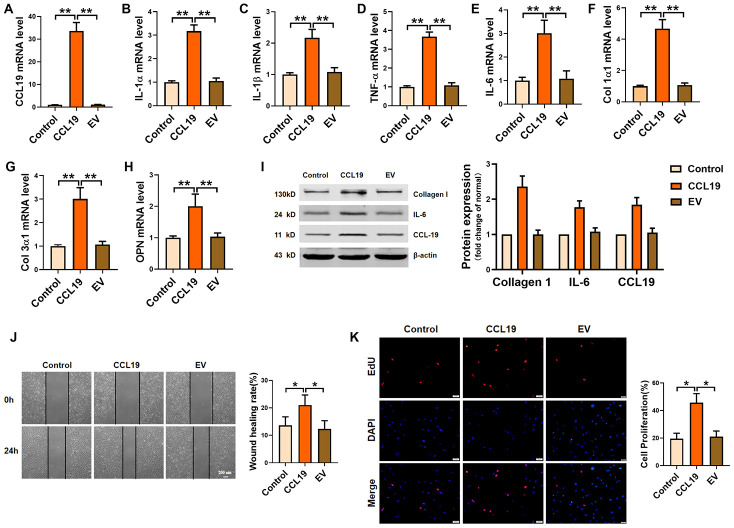
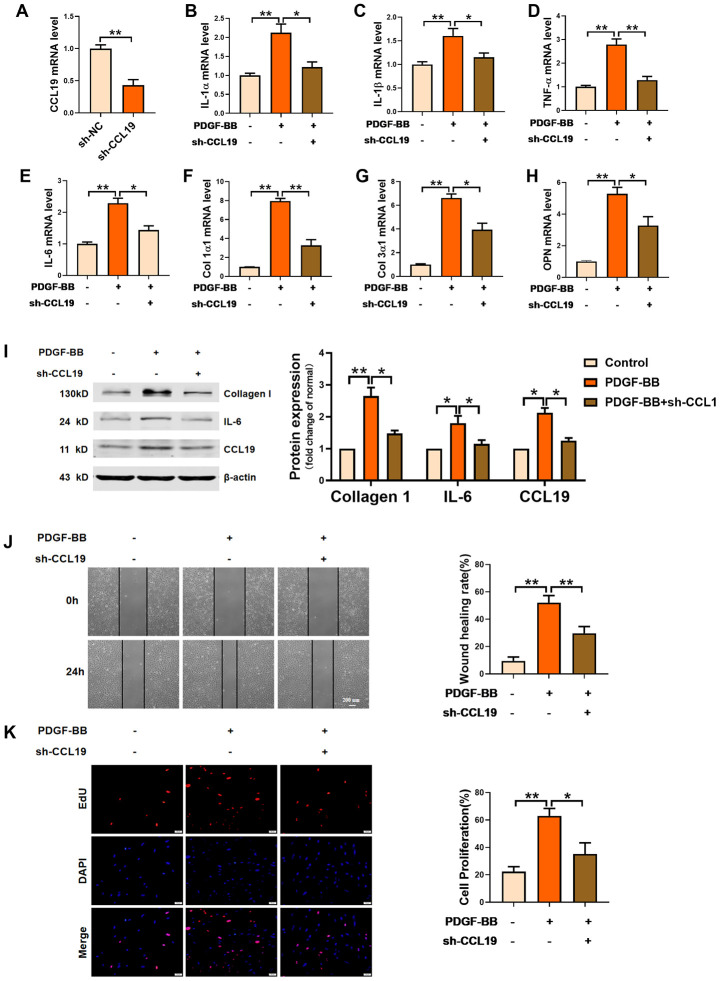
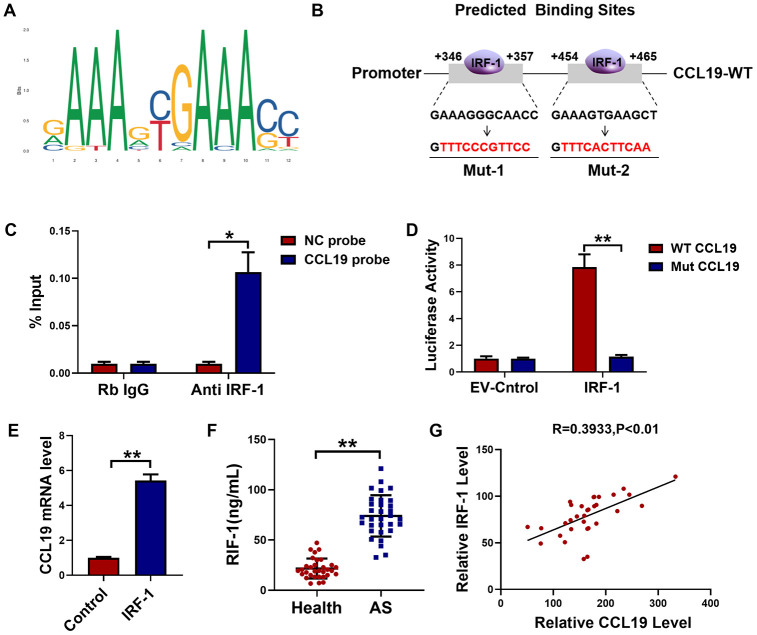
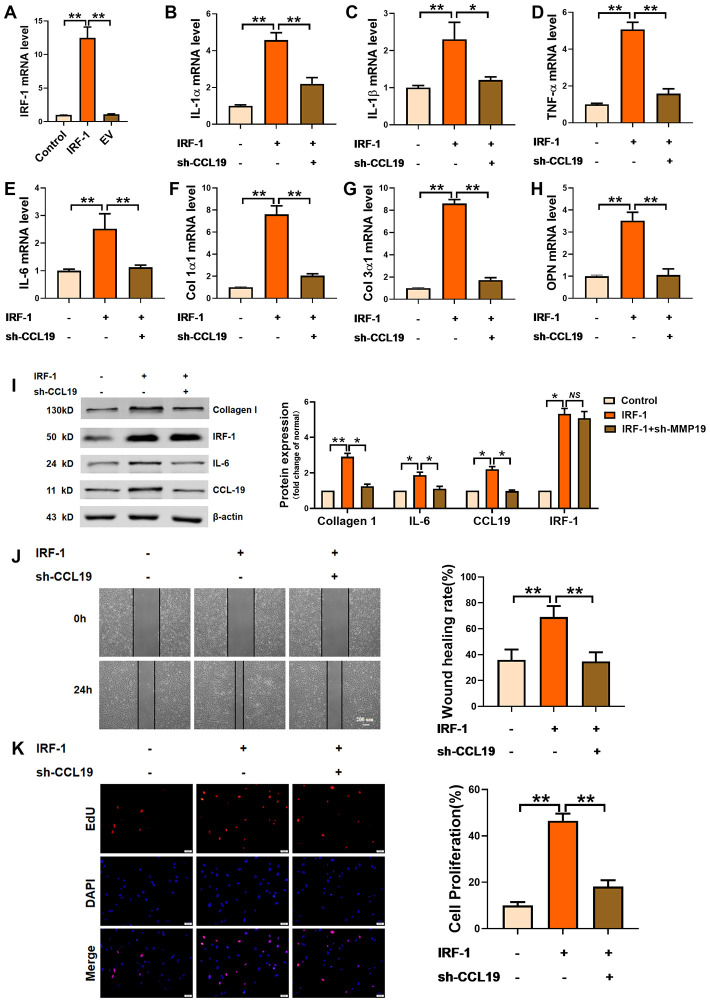
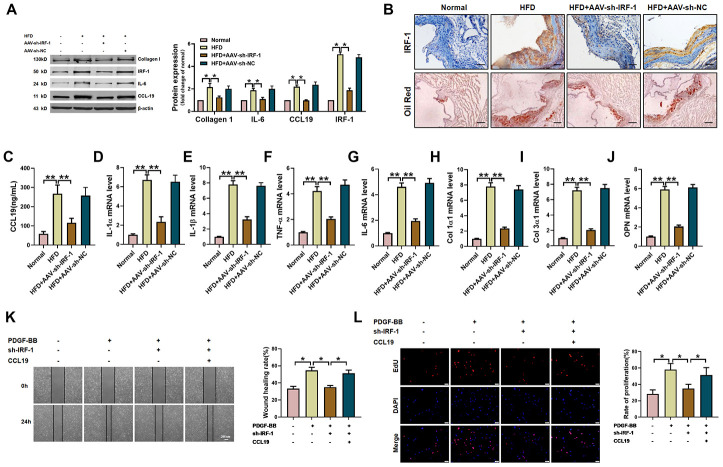
Atherosclerosis (AS) is a chronic inflammatory disease that mainly involves the large and middle arteries, but the specific mechanism is not precise. Chemokine ligand 19 (CCL19) has been reported highly expressed in peripheral blood of patients with atherosclerosis, but its role lacks explicit data. By ELISA assay and immunohistochemical (IHC) analysis, we found that the CCL19 was significantly up-regulated in AS. Therefore, we tried to clarify whether CCL19 expression was related to the progression of AS. QRT-PCR and western blot demonstrated that overexpression of CCL19 promoted the secretion of inflammatory factors and the deposition of the extracellular matrix, and facilitated the proliferation and migration of VSMCS. Besides, knockdown of CCL19 reduced the inflammation, collagen secretion, proliferation and migration of VSMCS induced by PGDF-BB. The results of database analysis, chromatin immunoprecipitation (ChIP) and luciferase assay showed that interferon regulatory factor 1 (IRF-1) activated the expression of CCL19 at the transcriptional level. Importantly, silencing IRF-1 inhibited atherosclerosis in high-fat-fed mice, inhibited the proliferation and migration of VSMCS, and down-regulated the expression of CCL19. Summing up, the results demonstrated that IRF-1 contributed to the pathological phenotype of VSMCs during atherogenesis by increasing CCL19 transcription.
动脉粥样硬化(AS)是一种主要涉及大动脉和中动脉的慢性炎症性疾病,但具体机制尚不清楚。趋化因子配体 19(CCL19)已被报道在动脉粥样硬化患者的外周血中高度表达,但它的作用缺乏明确的数据。通过 ELISA 检测和免疫组织化学(IHC)分析,我们发现 CCL19 在 AS 中显著上调。因此,我们试图阐明 CCL19 的表达是否与 AS 的进展有关。实时定量 PCR(QRT-PCR)和 Western blot 结果表明,CCL19 的过表达促进了炎症因子的分泌和细胞外基质的沉积,促进了血管平滑肌细胞(VSMCs)的增殖和迁移。此外,CCL19 的敲低减少了由血小板衍生生长因子-BB(PGDF-BB)诱导的 VSMCs 的炎症、胶原蛋白分泌、增殖和迁移。数据库分析、染色质免疫沉淀(ChIP)和荧光素酶测定的结果表明,干扰素调节因子 1(IRF-1)在转录水平上激活了 CCL19 的表达。重要的是,沉默 IRF-1 抑制了高脂喂养小鼠的动脉粥样硬化,抑制了 VSMCs 的增殖和迁移,并下调了 CCL19 的表达。综上所述,这些结果表明,IRF-1 通过增加 CCL19 的转录,促进了动脉粥样硬化形成过程中 VSMCs 的病理表型。