Division of Sports Science and Physical Education, Tsinghua University, Beijing 100084, China.
Cells. 2022 Mar 24;11(7):1101. doi: 10.3390/cells11071101.
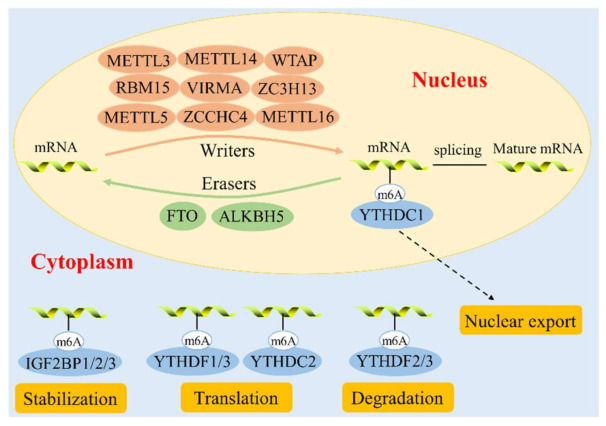
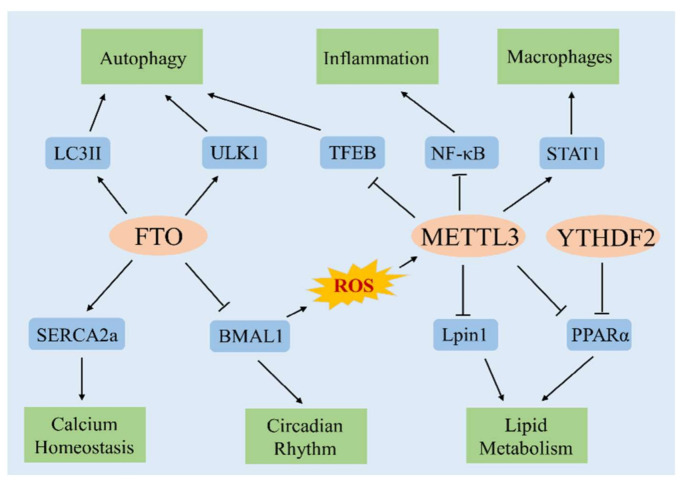
Cardiometabolic diseases (CMDs) are currently the leading cause of death and disability worldwide, and their underlying regulatory mechanisms remain largely unknown. N6-methyladenosine (m6A) methylation, the most common and abundant epigenetic modification of eukaryotic mRNA, is regulated by m6A methyltransferase, demethylase, and the m6A binding protein, which affect the transcription, cleavage, translation, and degradation of target mRNA. m6A methylation plays a vital role in the physiological and pathological processes of CMDs. In this review, we summarize the role played by m6A methylation in CMDs, including obesity, hypertension, pulmonary hypertension, ischemic heart disease, myocardial hypertrophy, heart failure, and atherosclerosis. We also describe mechanisms that potentially involve the participation of m6A methylation, such as those driving calcium homeostasis, circadian rhythm, lipid metabolism, autophagy, macrophage response, and inflammation. m6A methylation and its regulators are expected to be targets for the treatment of CMDs.
心血管代谢疾病(CMDs)目前是全球范围内导致死亡和残疾的主要原因,但其潜在的调节机制在很大程度上尚不清楚。N6-甲基腺苷(m6A)甲基化是真核 mRNA 中最常见和丰富的表观遗传修饰,受 m6A 甲基转移酶、去甲基酶和 m6A 结合蛋白的调控,影响靶 mRNA 的转录、切割、翻译和降解。m6A 甲基化在 CMDs 的生理和病理过程中起着至关重要的作用。在这篇综述中,我们总结了 m6A 甲基化在 CMDs 中的作用,包括肥胖、高血压、肺动脉高压、缺血性心脏病、心肌肥厚、心力衰竭和动脉粥样硬化。我们还描述了可能涉及 m6A 甲基化参与的机制,如钙稳态、昼夜节律、脂质代谢、自噬、巨噬细胞反应和炎症的驱动因素。m6A 甲基化及其调控因子有望成为 CMDs 治疗的靶点。