Parisio Francesco, Vilarrasa Victor
Chair of Soil Mechanics and Foundation Engineering, Institute of Geotechnics Technische Universität Bergakademie Freiberg Freiberg Germany.
Institute of Environmental Assessment and Water Research (IDAEA) Spanish National Research Council (CSIC) Barcelona Spain.
Geophys Res Lett. 2020 Dec 16;47(23):e2020GL090456. doi: 10.1029/2020GL090456. Epub 2020 Nov 29.
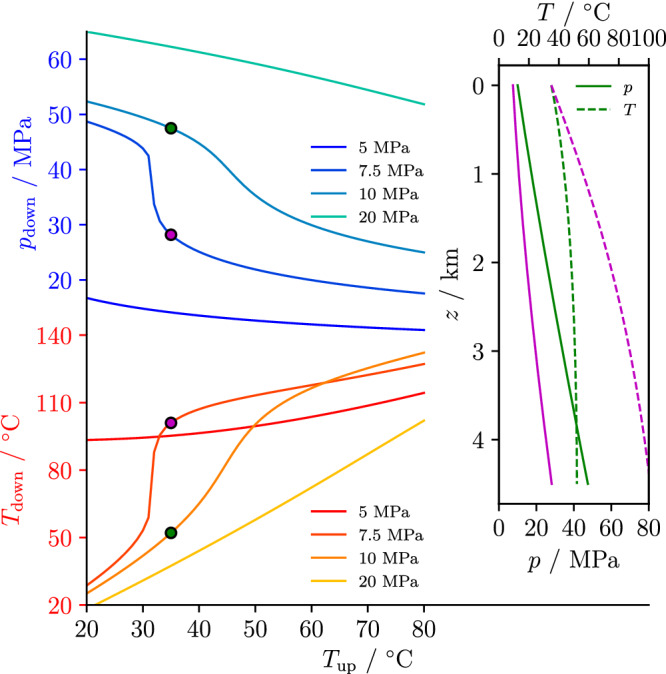
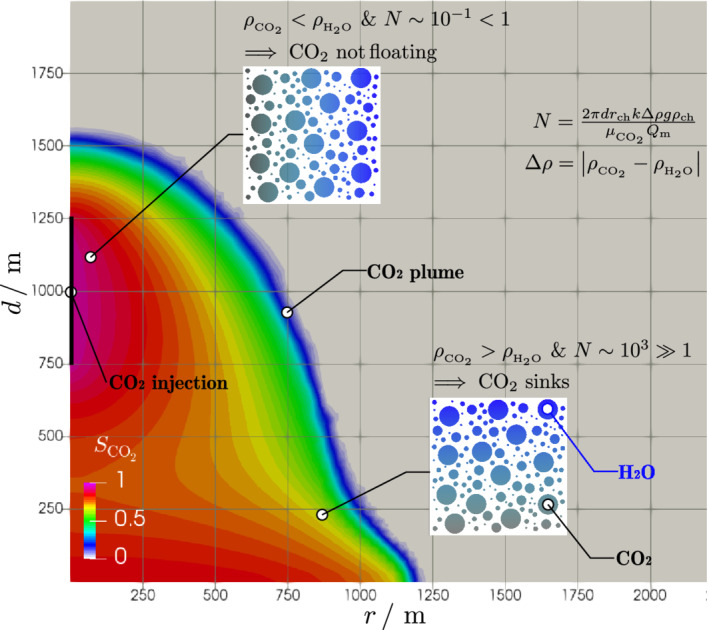
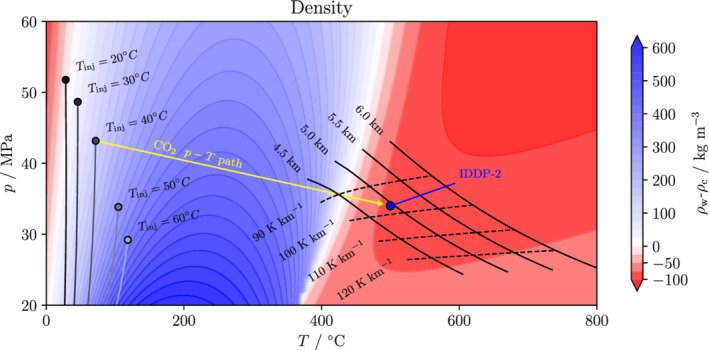
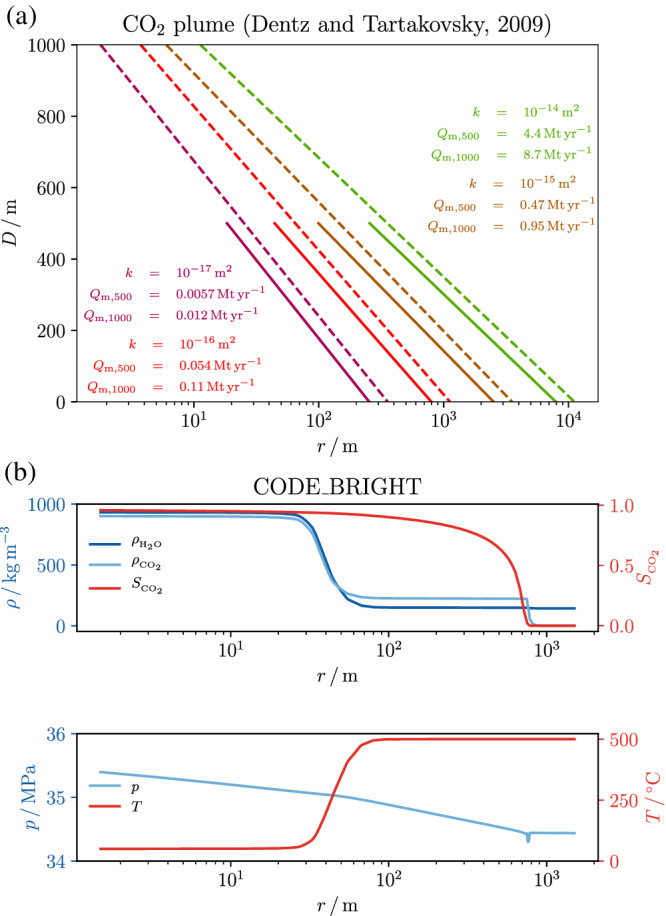
Geologic carbon storage is required for achieving negative CO emissions to deal with the climate crisis. The classical concept of CO storage consists in injecting CO in geological formations at depths greater than 800 m, where CO becomes a dense fluid, minimizing storage volume. Yet CO has a density lower than the resident brine and tends to float, challenging the widespread deployment of geologic carbon storage. Here, we propose for the first time to store CO in supercritical reservoirs to reduce the buoyancy-driven leakage risk. Supercritical reservoirs are found at drilling-reachable depth in volcanic areas, where high pressure ( > 21.8 MPa) and temperature ( > 374°C) imply CO is denser than water. We estimate that a CO storage capacity in the range of 50-500 Mt yr could be achieved for every 100 injection wells. Carbon storage in supercritical reservoirs is an appealing alternative to the traditional approach.
为应对气候危机实现负碳排放,地质碳储存是必要的。传统的碳储存概念是将二氧化碳注入深度大于800米的地质构造中,在那里二氧化碳变成一种致密流体,从而使储存体积最小化。然而,二氧化碳的密度低于原地盐水,容易上浮,这对地质碳储存的广泛应用构成了挑战。在此,我们首次提出将二氧化碳储存在超临界储层中,以降低浮力驱动的泄漏风险。超临界储层在火山地区的可钻探深度被发现,那里的高压(>21.8兆帕)和高温(>374°C)意味着二氧化碳比水密度大。我们估计,每100口注入井每年可实现50-500百万吨的二氧化碳储存能力。在超临界储层中进行碳储存是传统方法的一个有吸引力的替代方案。