Oh Yena, Yang Sibao, Liu Xueyan, Jana Sayantan, Izaddoustdar Farzad, Gao Xiaodong, Debi Ryan, Kim Dae-Kyum, Kim Kyoung-Han, Yang Ping, Kassiri Zamaneh, Lakin Robert, Backx Peter H
Department of Biology, York University, Toronto, ON, Canada.
Department of Physiology, University of Toronto, Toronto, ON, Canada.
Front Physiol. 2020 Dec 23;11:605671. doi: 10.3389/fphys.2020.605671. eCollection 2020.
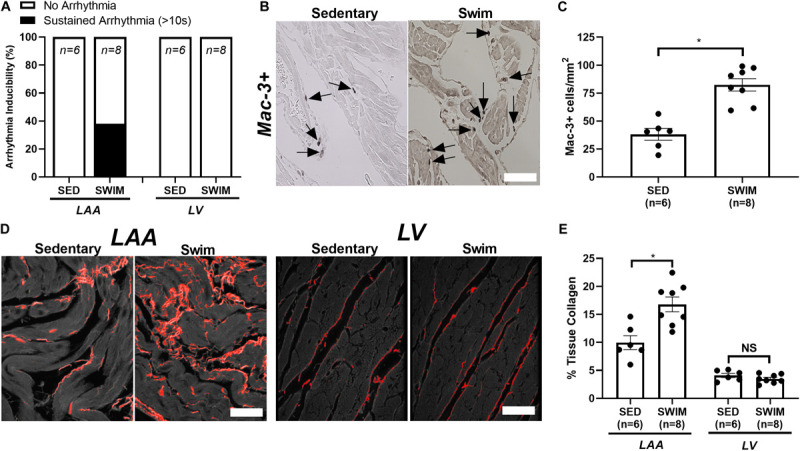
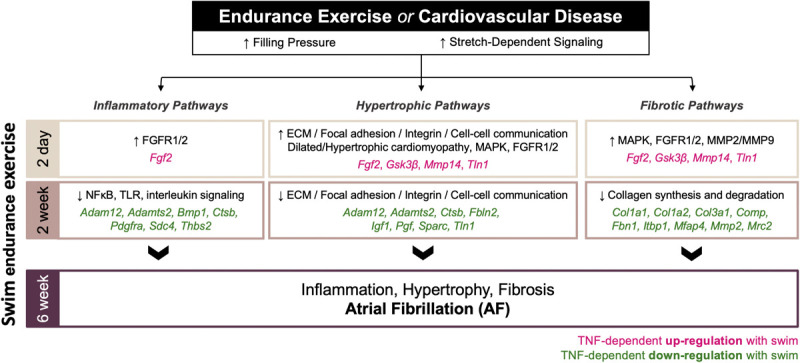
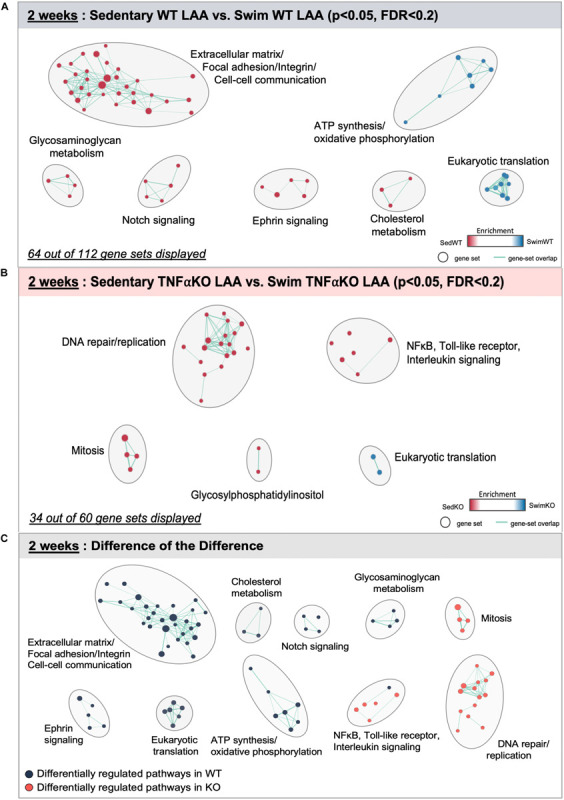
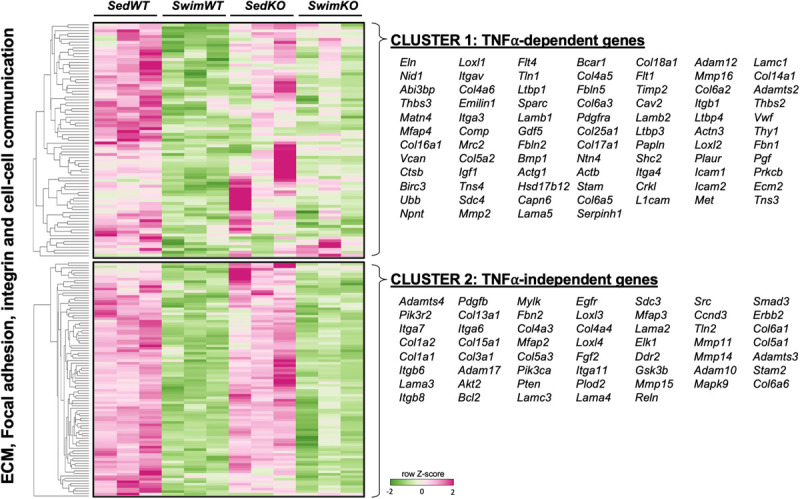
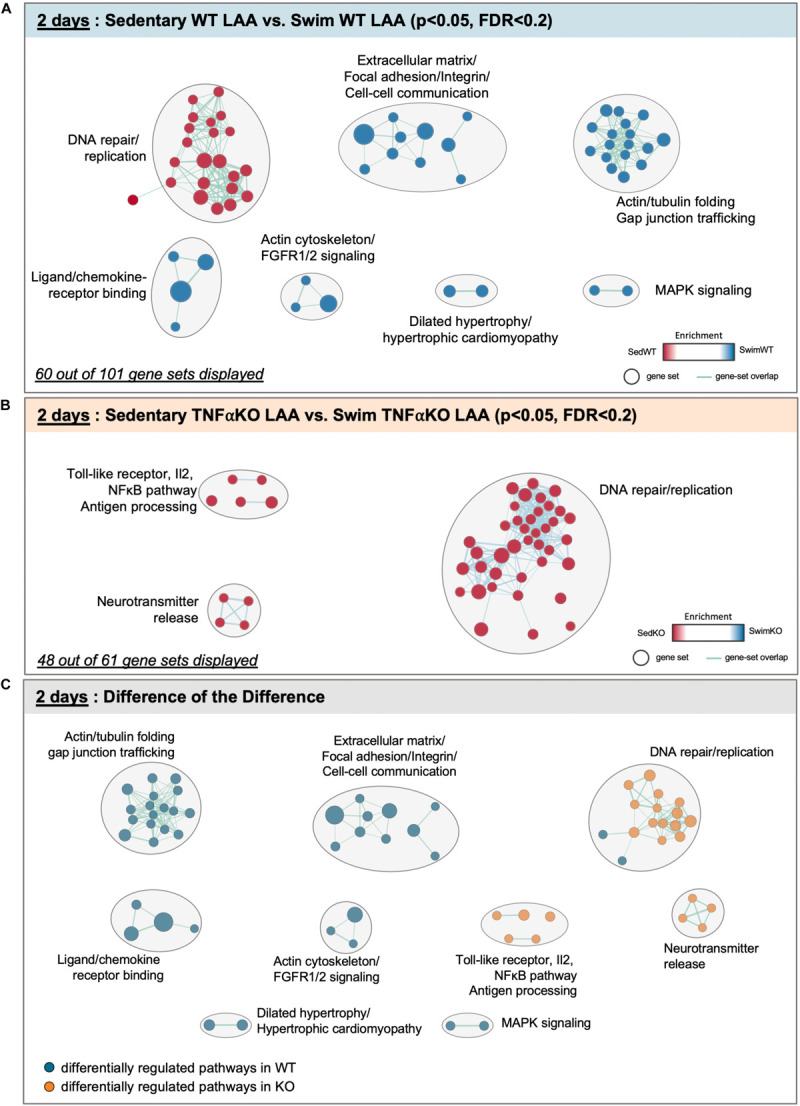
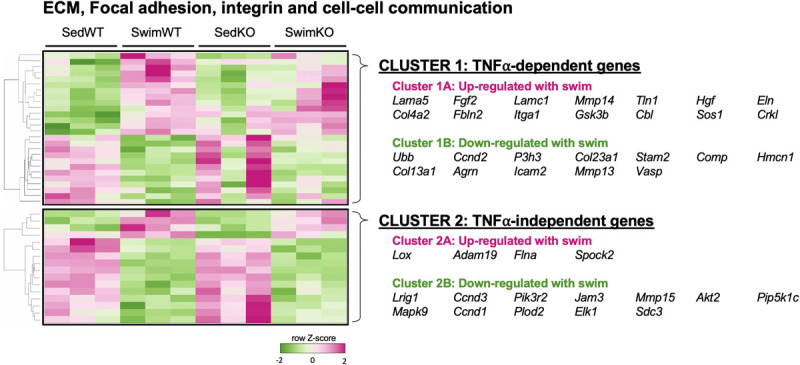
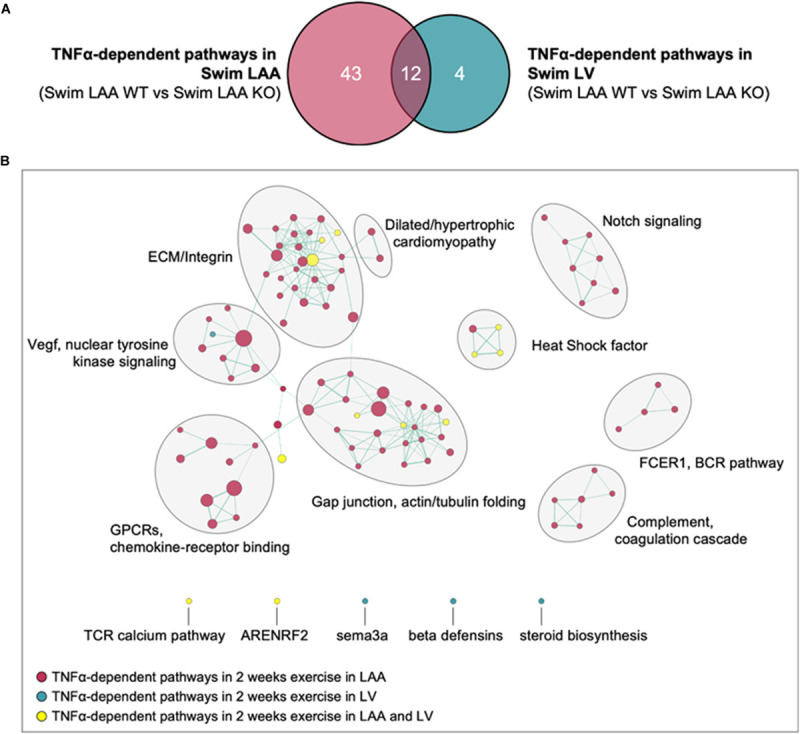
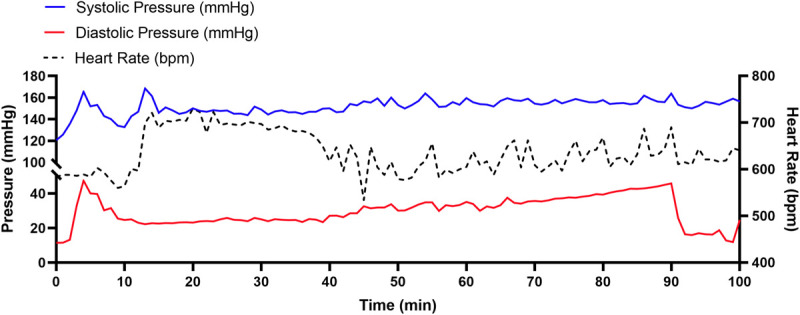
Atrial Fibrillation (AF) is the most common supraventricular tachyarrhythmia that is typically associated with cardiovascular disease (CVD) and poor cardiovascular health. Paradoxically, endurance athletes are also at risk for AF. While it is well-established that persistent AF is associated with atrial fibrosis, hypertrophy and inflammation, intensely exercised mice showed similar adverse atrial changes and increased AF vulnerability, which required tumor necrosis factor (TNF) signaling, even though ventricular structure and function improved. To identify some of the molecular factors underlying the chamber-specific and TNF-dependent atrial changes induced by exercise, we performed transcriptome analyses of hearts from wild-type and TNF-knockout mice following exercise for 2 days, 2 or 6 weeks of exercise. Consistent with the central role of atrial stretch arising from elevated venous pressure in AF promotion, all 3 time points were associated with differential regulation of genes in atria linked to mechanosensing (focal adhesion kinase, integrins and cell-cell communications), extracellular matrix (ECM) and TNF pathways, with TNF appearing to play a permissive, rather than causal, role in gene changes. Importantly, mechanosensing/ECM genes were only enriched, along with tubulin- and hypertrophy-related genes after 2 days of exercise while being downregulated at 2 and 6 weeks, suggesting that early reactive strain-dependent remodeling with exercise yields to compensatory adjustments. Moreover, at the later time points, there was also downregulation of both collagen genes and genes involved in collagen turnover, a pattern mirroring aging-related fibrosis. By comparison, twofold fewer genes were differentially regulated in ventricles vs. atria, independently of TNF. Our findings reveal that exercise promotes TNF-dependent atrial transcriptome remodeling of ECM/mechanosensing pathways, consistent with increased preload and atrial stretch seen with exercise. We propose that similar preload-dependent mechanisms are responsible for atrial changes and AF in both CVD patients and athletes.
心房颤动(AF)是最常见的室上性快速心律失常,通常与心血管疾病(CVD)及心血管健康状况不佳相关。矛盾的是,耐力运动员也有患AF的风险。虽然持续性AF与心房纤维化、肥大和炎症相关已得到充分证实,但剧烈运动的小鼠也出现了类似的心房不良变化且AF易感性增加,这需要肿瘤坏死因子(TNF)信号传导,尽管心室结构和功能有所改善。为了确定运动诱导的心房特异性和TNF依赖性变化背后的一些分子因素,我们对野生型和TNF基因敲除小鼠在运动2天、2周或6周后的心脏进行了转录组分析。与静脉压升高引起的心房牵张在AF促进中的核心作用一致,所有3个时间点均与心房中与机械传感(粘着斑激酶、整合素和细胞间通讯)、细胞外基质(ECM)和TNF途径相关基因的差异调节有关,TNF在基因变化中似乎起允许作用而非因果作用。重要的是,机械传感/ECM基因仅在运动2天后与微管蛋白和肥大相关基因一起富集,而在2周和6周时下调,这表明运动早期的反应性应变依赖性重塑会导致代偿性调整。此外,在后期时间点,胶原蛋白基因和参与胶原蛋白周转的基因也下调,这种模式与衰老相关的纤维化相似。相比之下,与TNF无关,心室中差异调节的基因数量比心房少两倍。我们的研究结果表明,运动促进了ECM/机械传感途径的TNF依赖性心房转录组重塑,这与运动时增加的前负荷和心房牵张一致。我们提出,类似的前负荷依赖性机制导致了CVD患者和运动员的心房变化及AF。