Department of Critical Care Medicine, Union Hospital, Tongji Medical College, Huazhong University of Science and Technology, Wuhan, China.
Institute of Anesthesiology and Critical Care Medicine, Union Hospital, Tongji Medical College, Huazhong University of Science and Technology, Wuhan, China.
Front Immunol. 2020 Dec 16;11:606649. doi: 10.3389/fimmu.2020.606649. eCollection 2020.
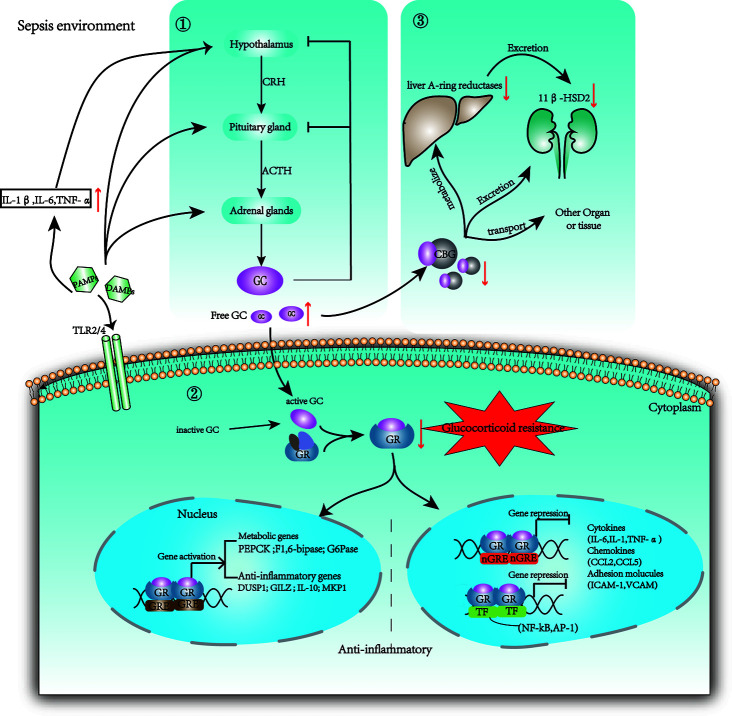
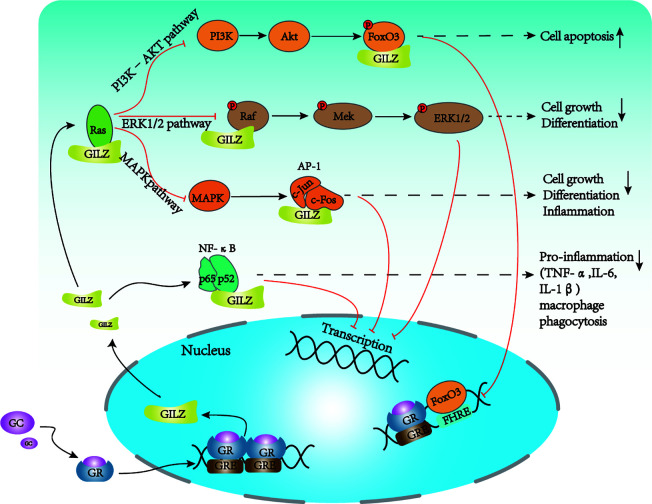
Sepsis is a clinical syndrome that resulting from a dysregulated inflammatory response to infection that leads to organ dysfunction. The dysregulated inflammatory response transitions from a hyper-inflammatory phase to a hypo-inflammatory or immunosuppressive phase. Currently, no phase-specific molecular-based therapies are available for monitoring the complex immune response and treating sepsis due to individual variations in the timing and overlap of the dysregulated immune response in most patients. Glucocorticoid-induced leucine zipper (GILZ), is broadly present in multiple tissues and circumvent glucocorticoid resistance (GCR) or unwanted side effects. Recently, the characteristics of GILZ downregulation during acute hyperinflammation and GILZ upregulation during the immunosuppressive phase in various inflammatory diseases have been well documented, and the protective effects of GILZ have gained attention in the field of sepsis. However, whether GILZ could be a promising candidate biomarker for monitoring and treating septic patients remains unknown. Here, we discuss the effect of GILZ in sepsis and sepsis-induced immunosuppression.
脓毒症是一种临床综合征,是由于感染导致的炎症反应失调而引起的器官功能障碍。失调的炎症反应从高炎症期转变为低炎症或免疫抑制期。目前,由于大多数患者的失调免疫反应的时间和重叠存在个体差异,因此没有针对特定阶段的基于分子的治疗方法可用于监测复杂的免疫反应和治疗脓毒症。糖皮质激素诱导的亮氨酸拉链(GILZ)广泛存在于多种组织中,并绕过糖皮质激素抵抗(GCR)或不必要的副作用。最近,在各种炎症性疾病中,急性高炎症期间 GILZ 的下调和免疫抑制期 GILZ 的上调的特征已得到充分证实,并且 GILZ 的保护作用在脓毒症领域引起了关注。然而,GILZ 是否可以成为监测和治疗脓毒症患者的有前途的候选生物标志物仍不清楚。在这里,我们讨论了 GILZ 在脓毒症和脓毒症引起的免疫抑制中的作用。