Brown-Suedel Alexandra N, Bouchier-Hayes Lisa
Hematology-Oncology Section, Department of Pediatrics, Department of Molecular Cell Biology, Baylor College of Medicine, Houston, TX, United States.
William T. Shearer Center for Human Immunobiology, Texas Children's Hospital, Houston, TX, United States.
Front Cell Dev Biol. 2020 Dec 23;8:610022. doi: 10.3389/fcell.2020.610022. eCollection 2020.
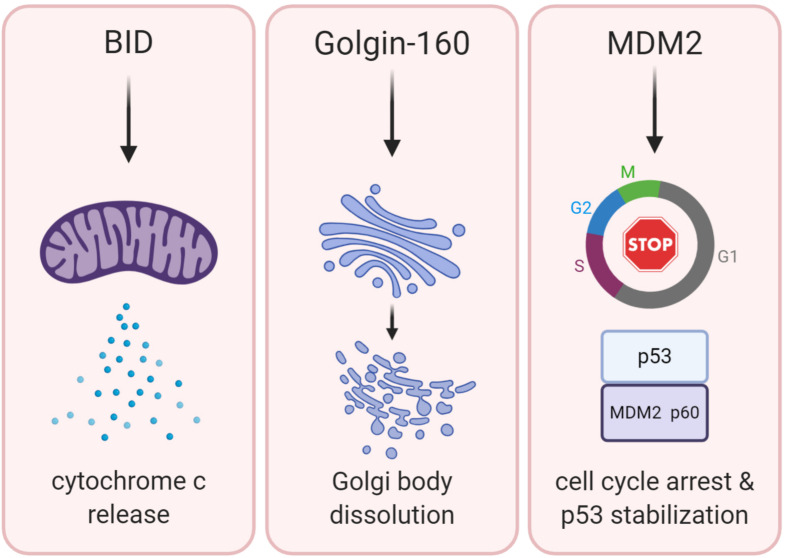
Caspase-2 belongs to the caspase family of proteins responsible for essential cellular functions including apoptosis and inflammation. Uniquely, caspase-2 has been identified as a tumor suppressor, but how it regulates this function is still unknown. For many years, caspase-2 has been considered an "orphan" caspase because, although it is able to induce apoptosis, there is an abundance of conflicting evidence that questions its necessity for apoptosis. Recent evidence supports that caspase-2 has non-apoptotic functions in the cell cycle and protection from genomic instability. It is unclear how caspase-2 regulates these opposing functions, which has made the mechanism of tumor suppression by caspase-2 difficult to determine. As a protease, caspase-2 likely exerts its functions by proteolytic cleavage of cellular substrates. This review highlights the known substrates of caspase-2 with a special focus on their functional relevance to caspase-2's role as a tumor suppressor.
半胱天冬酶-2属于半胱天冬酶蛋白家族,负责包括细胞凋亡和炎症在内的重要细胞功能。独特的是,半胱天冬酶-2已被确定为一种肿瘤抑制因子,但其如何调节这一功能仍不清楚。多年来,半胱天冬酶-2一直被认为是一种“孤儿”半胱天冬酶,因为尽管它能够诱导细胞凋亡,但有大量相互矛盾的证据对其在细胞凋亡中的必要性提出了质疑。最近的证据支持半胱天冬酶-2在细胞周期中具有非凋亡功能,并能防止基因组不稳定。尚不清楚半胱天冬酶-2如何调节这些相反的功能,这使得确定半胱天冬酶-2的肿瘤抑制机制变得困难。作为一种蛋白酶,半胱天冬酶-2可能通过对细胞底物的蛋白水解切割来发挥其功能。本综述重点介绍了半胱天冬酶-2的已知底物,并特别关注它们与半胱天冬酶-2作为肿瘤抑制因子的作用的功能相关性。