Icare JGZ, Meppel, Netherlands.
Chairgroup Consumption & Healthy Lifestyles, Wageningen University, Wageningen, Netherlands.
J Med Internet Res. 2021 Jan 11;23(1):e17655. doi: 10.2196/17655.
Worldwide, patient-centered care is becoming a widely used concept in medical practice, getting more and more attention because of its proven ability to improve quality of care and reduce costs. Although several studies show that patient-accessible electronic health records (PAEHRs) influence certain aspects of patient-centered care, the possible contribution of PAEHR implementation to patient-centered care as a comprehensive concept has not, to our knowledge, been structurally evaluated to date.
The objective of this study is to review whether and how the use of PAEHRs contributes to patient-centered care both in general and among specific population groups.
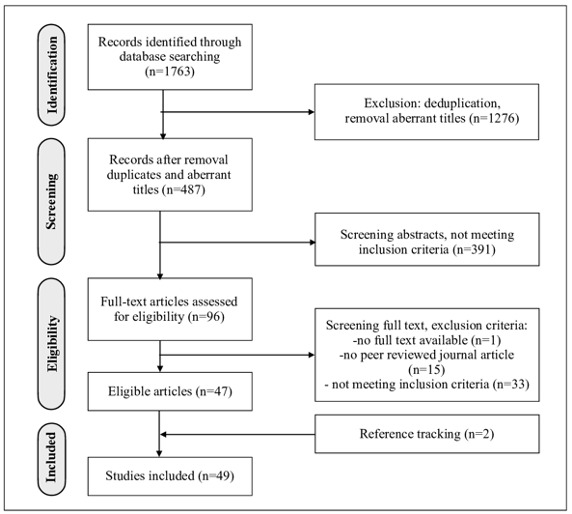
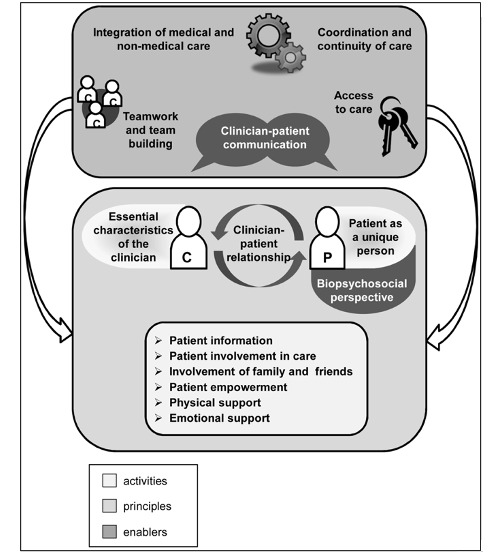
We followed PRISMA Extension for Scoping Reviews reporting guidelines. We identified literature in 5 databases, using the terms "patient-accessible medical records," "patient experiences," and "professional experiences" as key concepts. A total of 49 articles were included and analyzed with a charting code list containing 10 elements of patient-centered care.
Studies were diverse in design, country of origin, functionalities of the investigated PAEHR, and target population. Participants in all studies were adults. Most studies reported positive influence of PAEHR use on patient-centered care; patient accessible health records were appreciated for their opportunity to empower patients, inform patients about their health, and involve patients in their own care. There were mixed results for the extent to which PAEHRs affected the relation between patients and clinicians. Professionals and patients in mental health care held opposing views concerning the impact of transparency, where professionals appeared more worried about potential negative impact of PAEHRs on the patient-clinician relationship. Their worries seemed to be influenced by a reluctant attitude toward patient-centered care. Disadvantaged groups appeared to have less access to and make less use of patient-accessible records than the average population but experienced more benefits than the average population when they actually used PAEHRs.
The review indicates that PAEHRs bear the potential to positively contribute to patient-centered care. However, concerns from professionals about the impact of transparency on the patient-clinician relationship as well as the importance of a patient-centered attitude need to be addressed. Potentially significant benefits for disadvantaged groups will be achieved only through easily accessible and user-friendly PAEHRs.
在全球范围内,以患者为中心的医疗照护正成为医疗实践中广泛应用的概念,因其能够提高医疗质量和降低成本而备受关注。尽管有几项研究表明,患者可获取的电子健康记录(PAEHR)会影响患者为中心的医疗照护的某些方面,但迄今为止,尚未从结构上评估 PAEHR 的实施作为一个全面概念对患者为中心的医疗照护的可能贡献。
本研究旨在综述 PAEHR 的使用是否以及如何在总体上和特定人群中促进患者为中心的医疗照护。
我们遵循 PRISMA 扩展用于范围综述的报告指南。我们使用“患者可获取的医疗记录”、“患者体验”和“专业人员体验”等关键概念,在 5 个数据库中确定文献。共纳入 49 篇文章,并使用包含 10 个患者为中心医疗照护要素的图表代码列表进行分析。
研究设计、来源国、所调查的 PAEHR 功能以及目标人群差异较大。所有研究的参与者均为成年人。大多数研究报告称,PAEHR 的使用对患者为中心的医疗照护有积极影响;患者可获取的健康记录使患者能够获得授权、了解自己的健康状况并参与自己的医疗照护,从而受到赞赏。PAEHR 对患者与临床医生之间关系的影响程度存在差异。心理健康护理中的专业人员和患者对透明度的影响持有相反的观点,专业人员似乎更担心 PAEHR 对医患关系可能产生的负面影响。他们的担忧似乎受到对以患者为中心的医疗照护持抵触态度的影响。与一般人群相比,弱势群体获得和使用患者可获取记录的机会较少,但当他们实际使用 PAEHR 时,他们比一般人群获得更多的益处。
综述表明,PAEHR 有可能对患者为中心的医疗照护产生积极影响。然而,专业人员对透明度对医患关系的影响的担忧以及对以患者为中心的态度的重要性需要得到解决。只有通过易于访问和用户友好的 PAEHR,才能为弱势群体带来潜在的重大益处。