Fujian University of Traditional Chinese Medicine.
Key Laboratory of Orthopedics & Traumatology of Traditional Chinese Medicine and Rehabilitation (Fu Jian university of TCM), Ministry of Education.
Medicine (Baltimore). 2021 Jan 8;100(1):e23819. doi: 10.1097/MD.0000000000023819.
Non-pharmacological intervention methods such as rehabilitation training or psychological treatment are mostly used in the treatment of depression owing to the limitation of adverse reactions such as drug treatment. However, the best non-pharmacological treatment strategy for depression in college students is unclear. Therefore, it is significant to discover non-drug intervention methods that can improve the depression symptoms of college students.
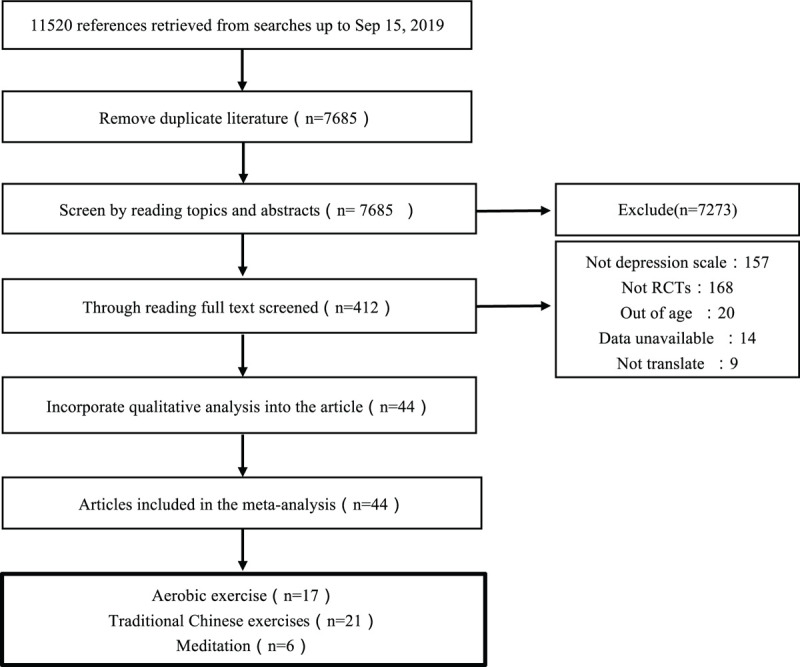
Electronic databases as of Sep 15, 2019, were searched, and reference lists and pharmaceutical dossiers were reviewed to detect published and unpublished studies from the date of their inception to Sep 15, 2019. With document quality evaluations and data extraction, Meta-Analysis was performed using a random effect model to evaluate the intervention effect of the aerobic exercise, traditional Chinese exercises, and meditation.
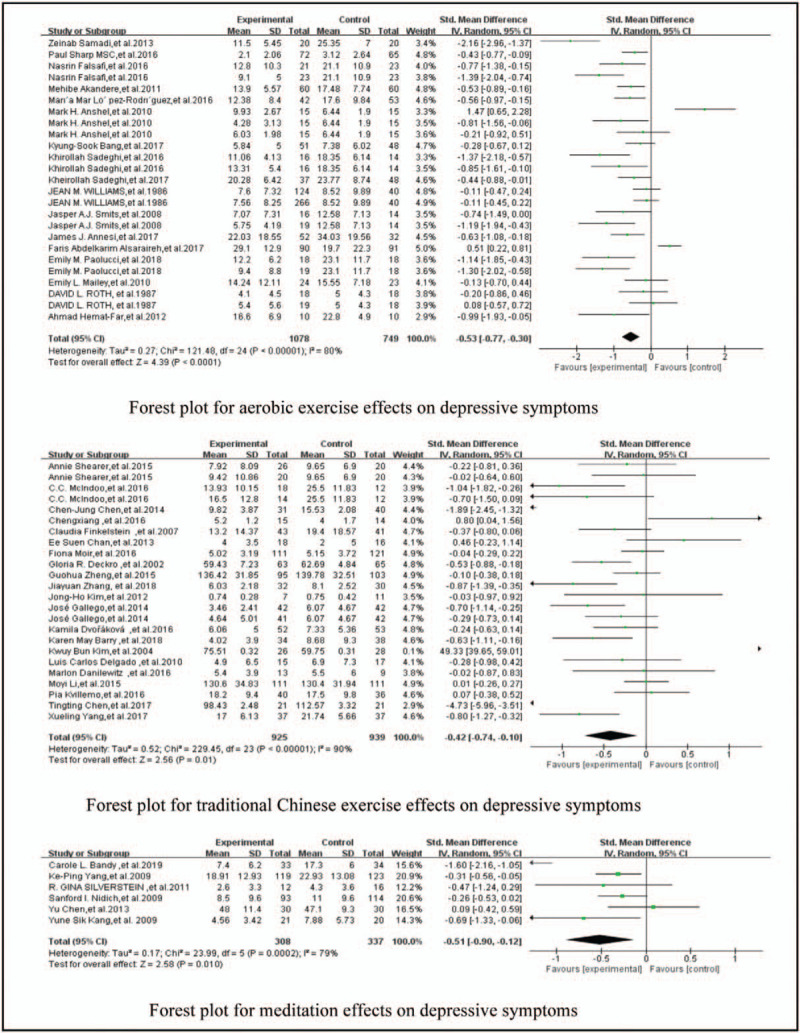
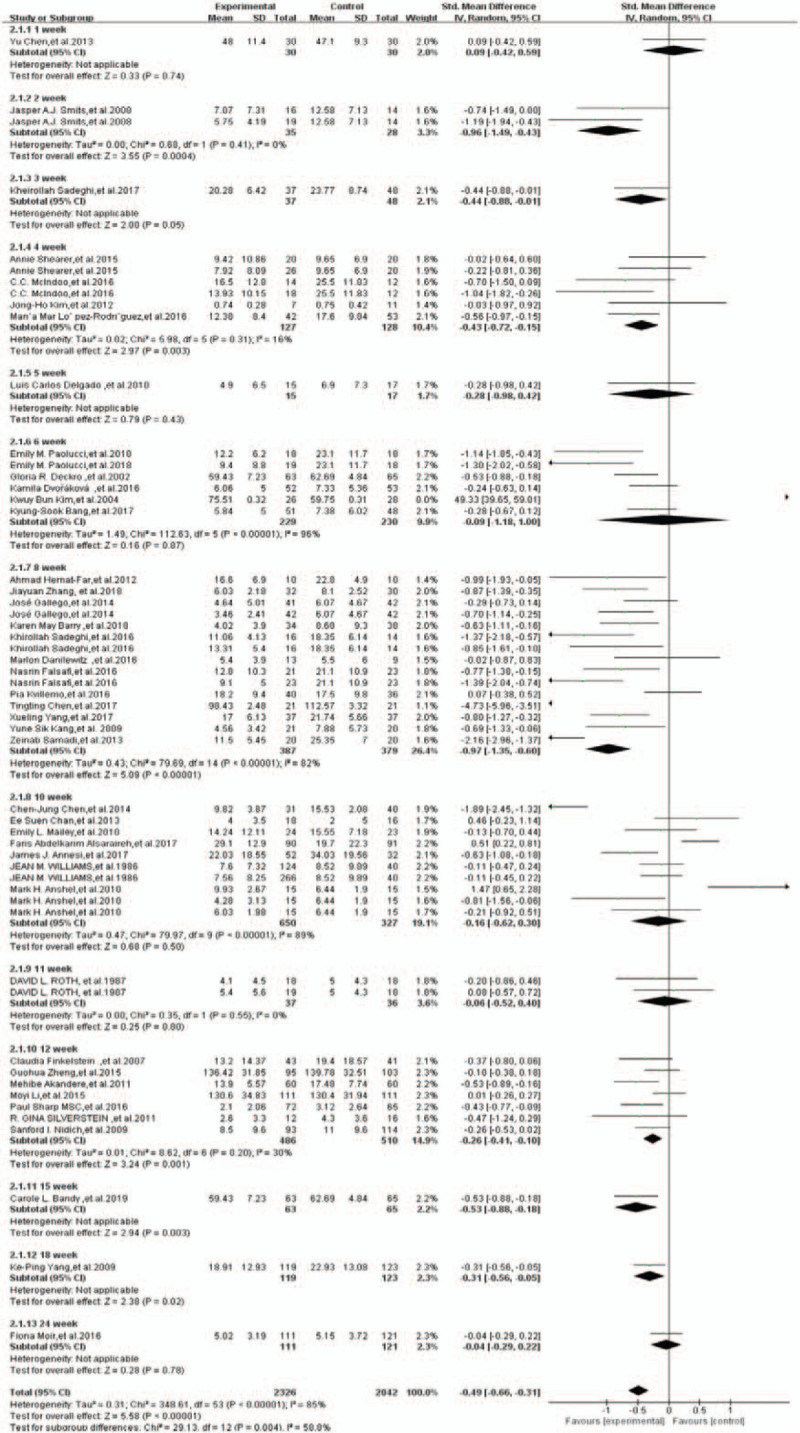
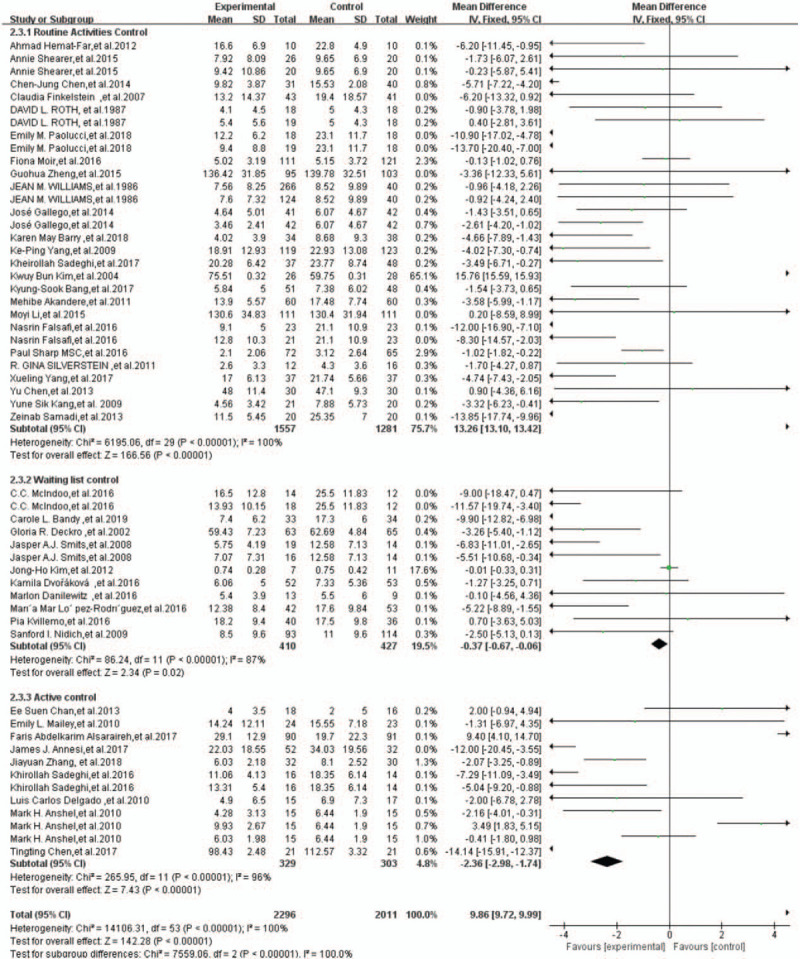
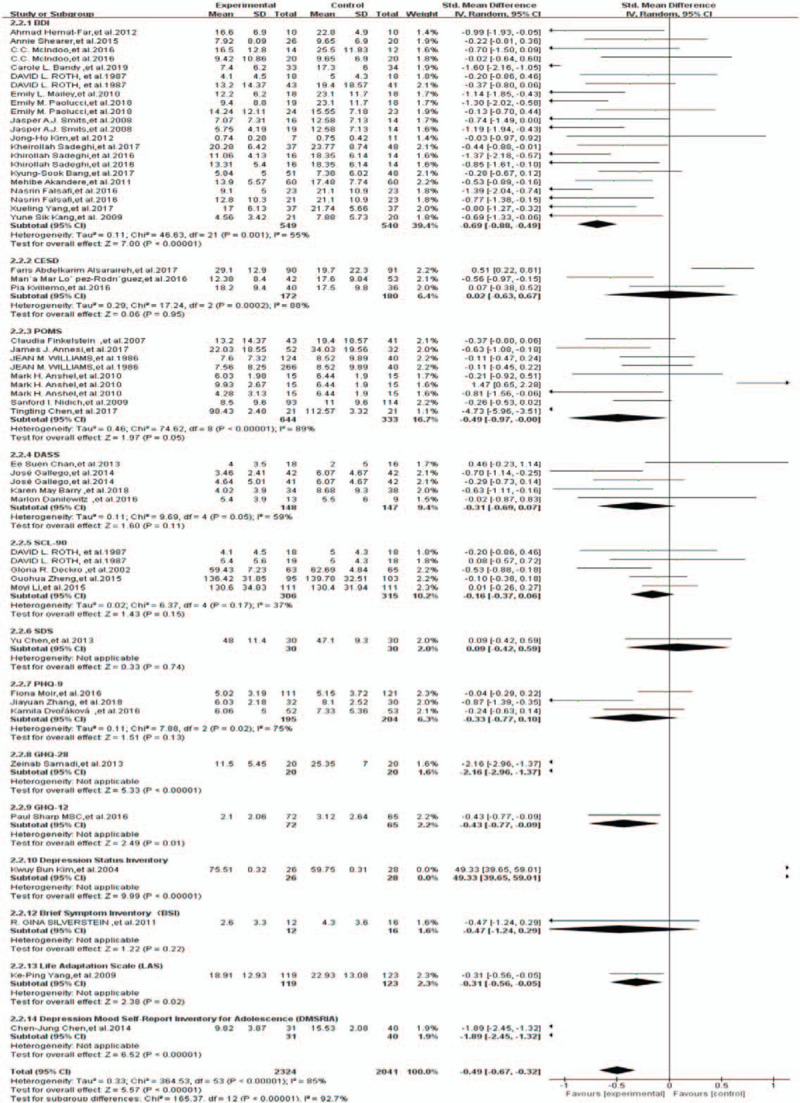
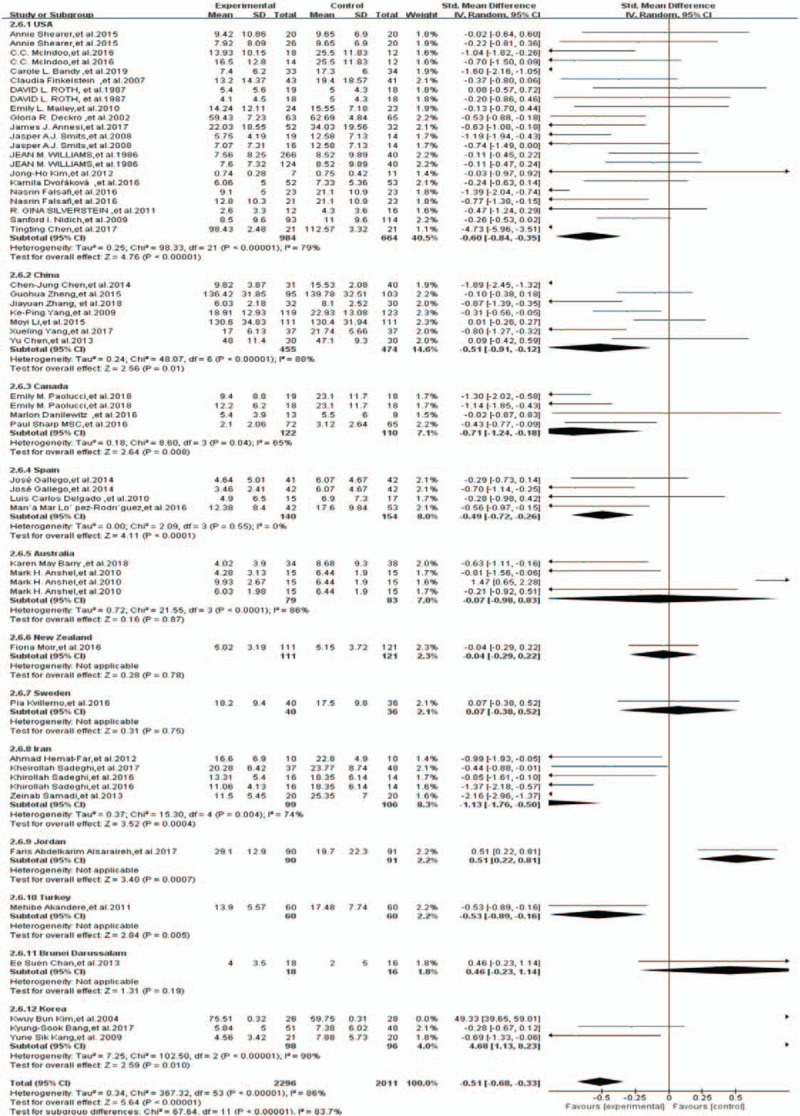
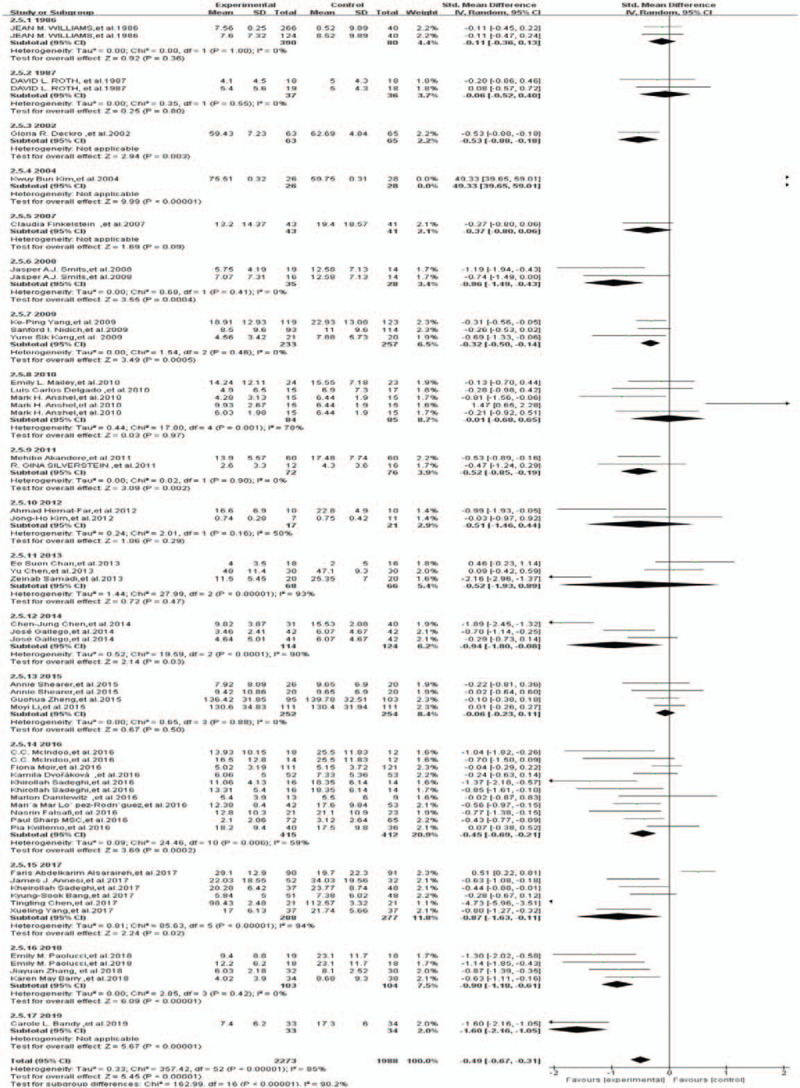
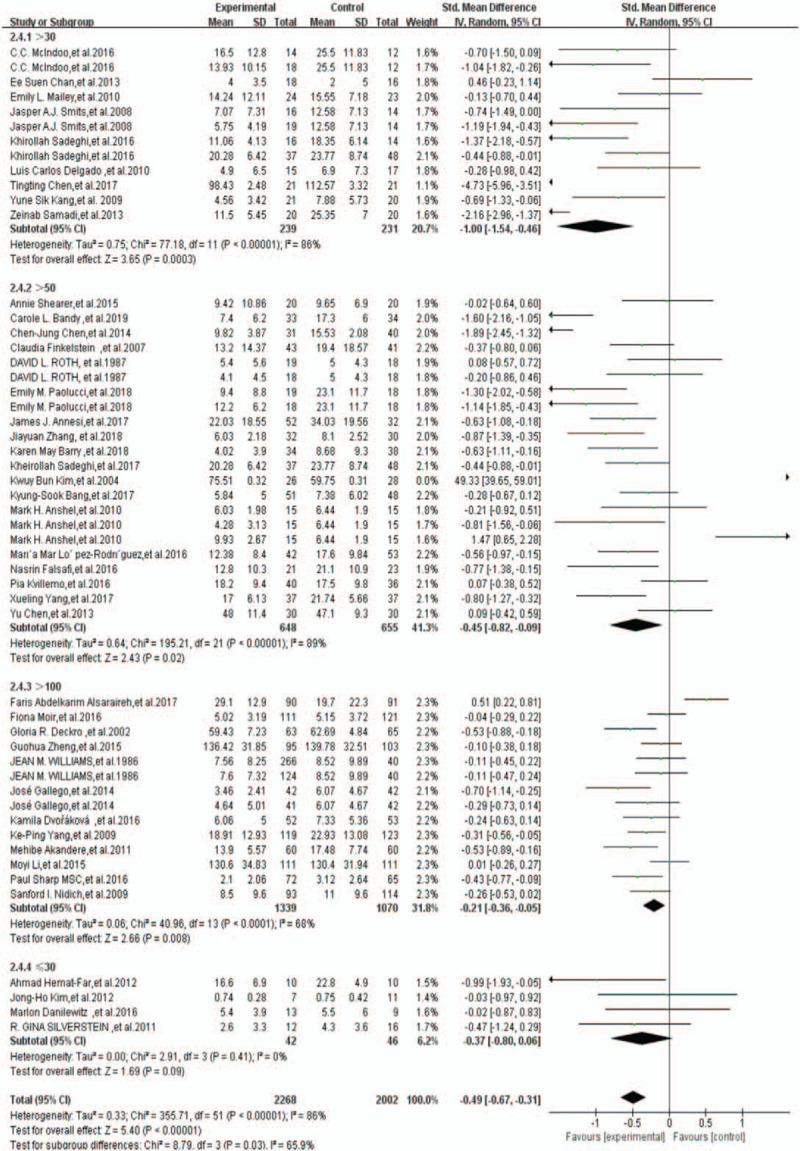
A total of 44 original studies were included. The random effect model was used to combine the effect values with Standard Mean Difference (SMD), and the results were: aerobic exercise [SMD = -0.53, 95% CI (-0.77, -0.30), I2 = 80%, P < .001], traditional Chinese exercises [SMD = -0.42, 95% CI (-0.74, -0.10), I2 = 90%, P = .01], meditation [SMD = -0.51, 95% CI (-0.90, -0.12), I2 = 79%, P = .01]. There was greater heterogeneity among the included studies: aerobic exercise (I2 = 80%, P < .001), traditional Chinese medicine methods (I2 = 90%, P < .001), and meditation (I2 = 79%, P < .001).
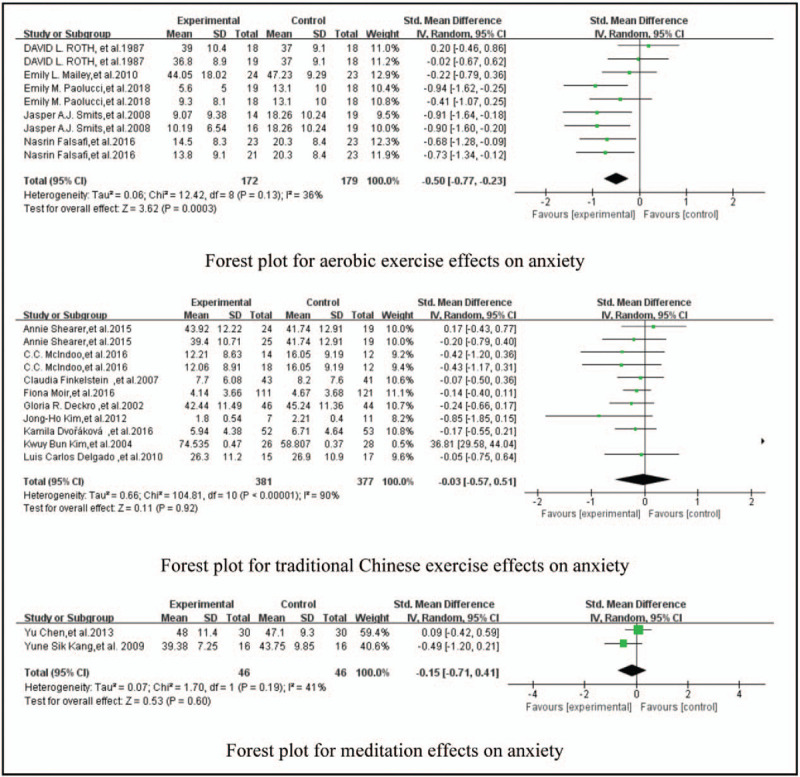
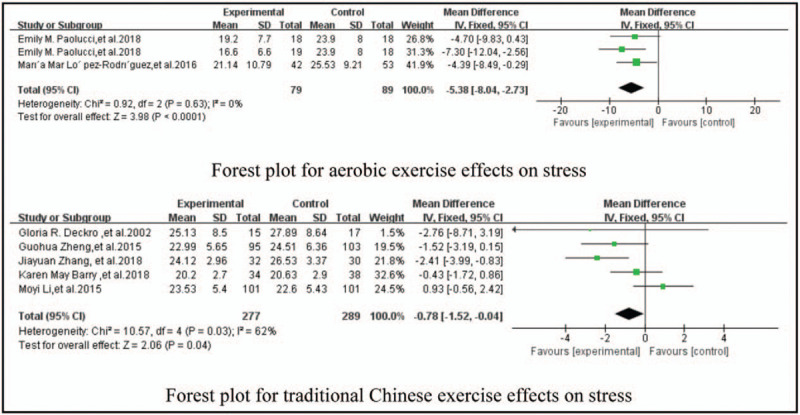
This study revealed that the depression symptoms of college students can be effectively improved by aerobic exercise, traditional Chinese exercises, and meditation. Aerobic exercise would have a better effect on anxiety and stress while traditional Chinese exercise would have a better effect on stress. Further research (such as high-quality randomized controlled trials and long-term follow-up) is required to evaluate the effects of aerobic exercise, traditional Chinese exercise, and meditation on the depressive symptoms of college students to further apply complementary and alternative therapies.
The results of the effects of aerobic exercise, traditional Chinese exercises, and meditation on depressive symptoms for a college student will be reported in a peer-reviewed publication. Hopefully, our findings from this meta-analysis can provide the most up-to-date evidence for the contribution to preventing the occurrence of depressive symptoms in college students.
由于药物治疗的不良反应限制,抑郁的治疗多采用康复训练或心理治疗等非药物干预方法。然而,对于大学生抑郁的最佳非药物治疗策略尚不清楚。因此,发现能够改善大学生抑郁症状的非药物干预方法具有重要意义。
截至 2019 年 9 月 15 日,检索电子数据库,并查阅参考文献列表和药物档案,以检索从成立日期到 2019 年 9 月 15 日的已发表和未发表的研究。通过文献质量评估和数据提取,使用随机效应模型进行 Meta 分析,以评估有氧运动、传统中医运动和冥想的干预效果。
共纳入 44 项原始研究。使用标准均数差(SMD)合并效应值的随机效应模型,结果为:有氧运动[SMD=-0.53,95%CI(-0.77,-0.30),I2=80%,P<0.001],传统中医运动[SMD=-0.42,95%CI(-0.74,-0.10),I2=90%,P=0.01],冥想[SMD=-0.51,95%CI(-0.90,-0.12),I2=79%,P=0.01]。纳入研究的异质性较大:有氧运动(I2=80%,P<0.001),传统中医方法(I2=90%,P<0.001),冥想(I2=79%,P<0.001)。
本研究表明,有氧运动、传统中医运动和冥想可有效改善大学生抑郁症状。有氧运动对焦虑和压力的效果更好,而传统中医运动对压力的效果更好。需要进一步的研究(如高质量的随机对照试验和长期随访)来评估有氧运动、传统中医运动和冥想对大学生抑郁症状的影响,以进一步应用补充和替代疗法。
本研究将在同行评议出版物中报告有氧运动、传统中医运动和冥想对大学生抑郁症状的影响结果。希望我们的这项荟萃分析结果能为预防大学生抑郁症状的发生提供最新的证据。