Division of Medical Biotechnology, Paul Ehrlich Institute, 63225 Langen, Germany.
Viruses. 2021 Jan 8;13(1):76. doi: 10.3390/v13010076.
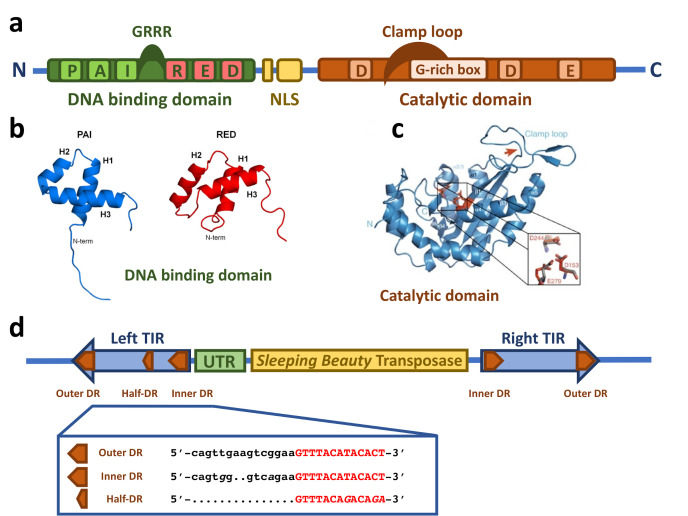
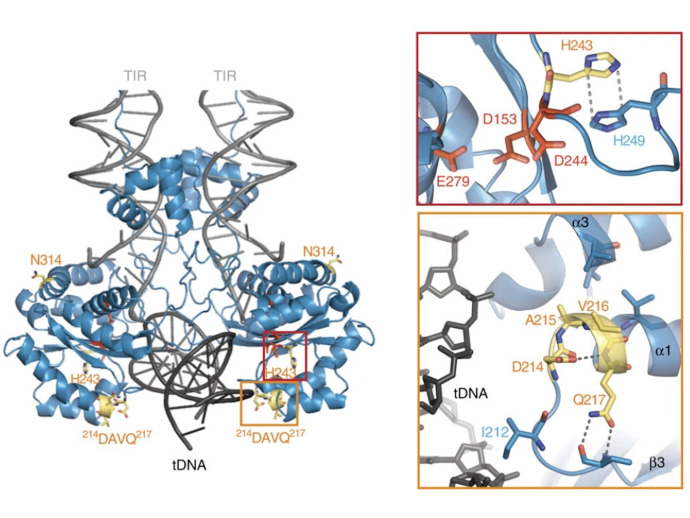
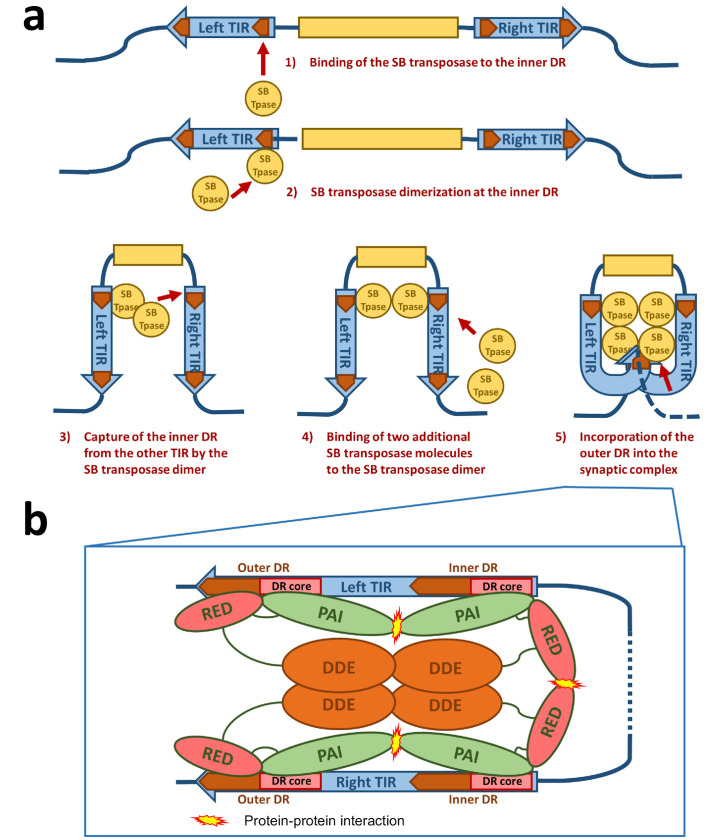
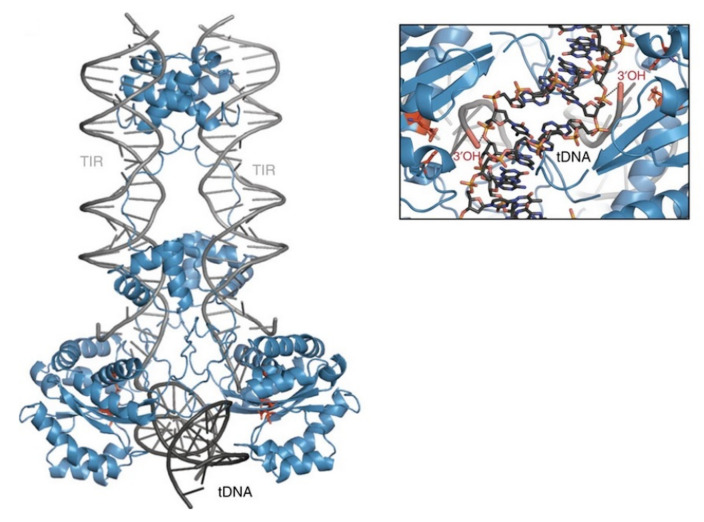
(SB) is a transposon system that has been widely used as a genetic engineering tool. Central to the development of any transposon as a research tool is the ability to integrate a foreign piece of DNA into the cellular genome. Driven by the need for efficient transposon-based gene vector systems, extensive studies have largely elucidated the molecular actors and actions taking place during SB transposition. Close transposon relatives and other recombination enzymes, including retroviral integrases, have served as useful models to infer functional information relevant to SB. Recently obtained structural data on the SB transposase enable a direct insight into the workings of this enzyme. These efforts cumulatively allowed the development of novel variants of SB that offer advanced possibilities for genetic engineering due to their hyperactivity, integration deficiency, or targeting capacity. However, many aspects of the process of transposition remain poorly understood and require further investigation. We anticipate that continued investigations into the structure-function relationships of SB transposition will enable the development of new generations of transposition-based vector systems, thereby facilitating the use of SB in preclinical studies and clinical trials.
(SB)是一种转座子系统,已被广泛用作基因工程工具。任何转座子作为研究工具的发展的核心是能够将外源 DNA 整合到细胞基因组中。由于需要高效的基于转座子的基因载体系统,广泛的研究在很大程度上阐明了 SB 转座过程中发生的分子作用和作用。紧密的转座子相关蛋白和其他重组酶,包括逆转录病毒整合酶,已被用作推断与 SB 相关的功能信息的有用模型。最近获得的关于 SB 转座酶的结构数据使我们能够直接了解该酶的工作原理。这些努力共同促成了新型 SB 变体的开发,由于其高活性、整合缺陷或靶向能力,为基因工程提供了先进的可能性。然而,转座过程的许多方面仍然知之甚少,需要进一步研究。我们预计,对 SB 转座的结构-功能关系的持续研究将能够开发新一代基于转座子的载体系统,从而促进 SB 在临床前研究和临床试验中的应用。