The Mina and Everard Goodman Faculty of Life-Sciences, Bar-Ilan University, Ramat-Gan 5290002, Israel.
Laboratory of Medicine & Pathology, University of Toronto, Toronto, ON M5G 2M1, Canada.
Cells. 2021 Jan 7;10(1):97. doi: 10.3390/cells10010097.
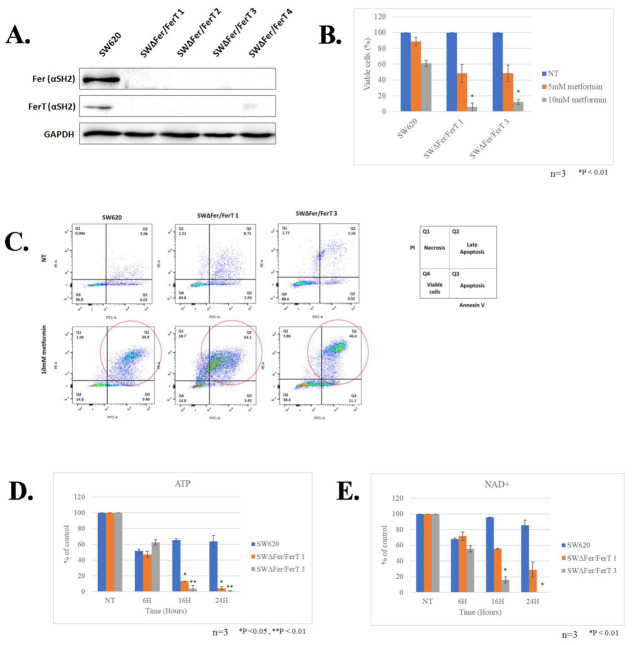
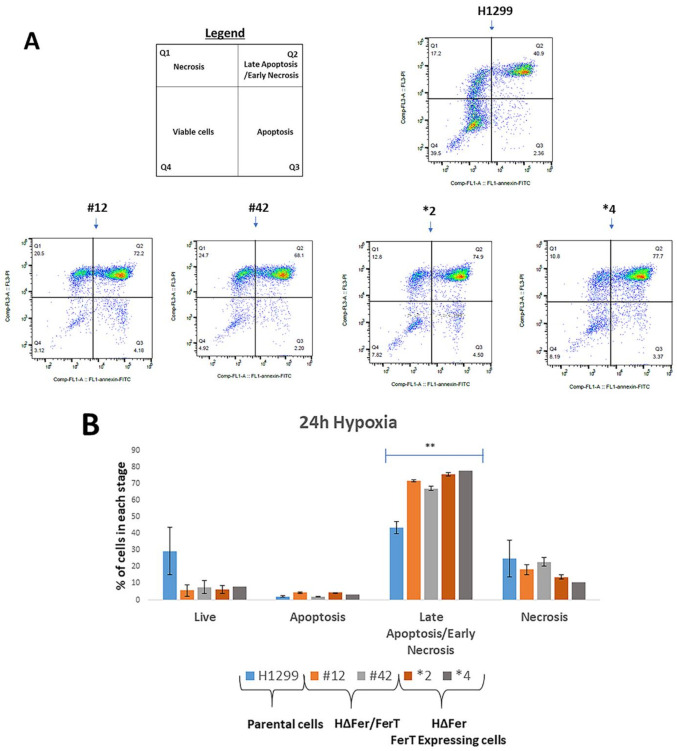
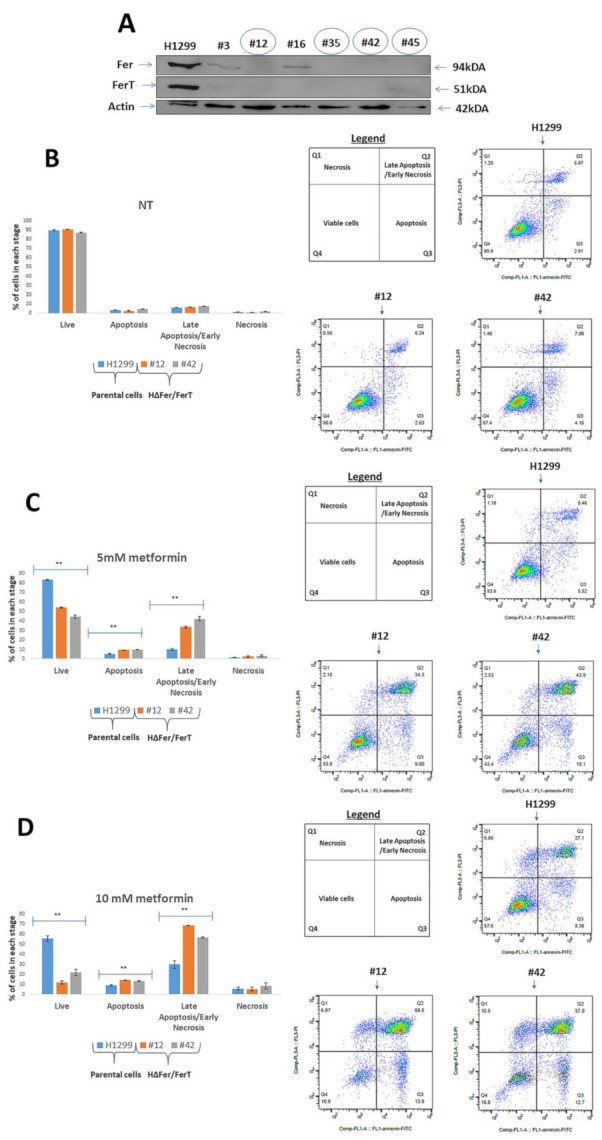
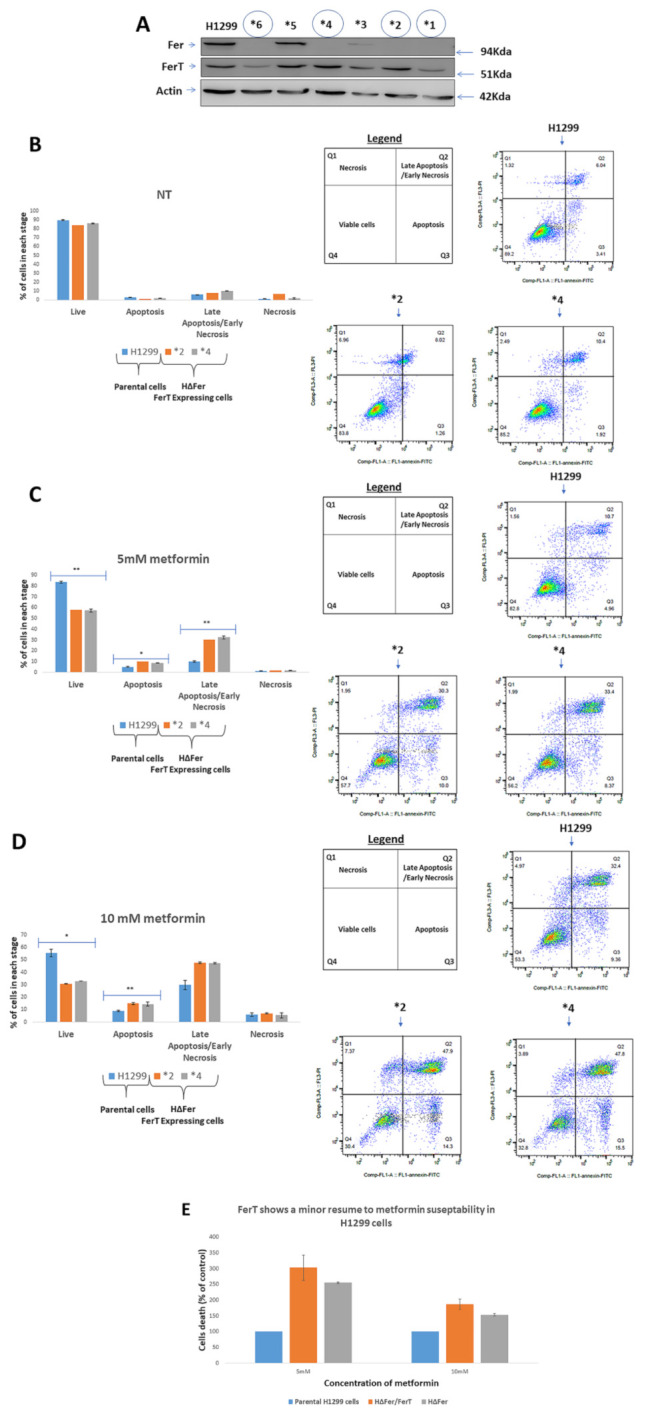
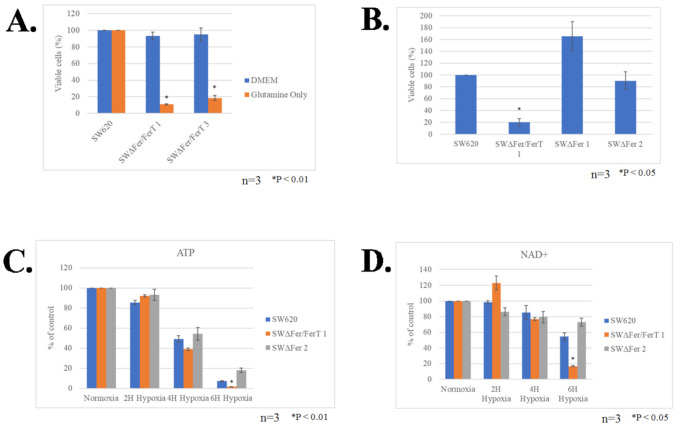
Aerobic glycolysis is an important metabolic adaptation of cancer cells. However, there is growing evidence that reprogrammed mitochondria also play an important metabolic role in metastatic dissemination. Two constituents of the reprogrammed mitochondria of cancer cells are the intracellular tyrosine kinase Fer and its cancer- and sperm-specific variant, FerT. Here, we show that Fer and FerT control mitochondrial susceptibility to therapeutic and hypoxic stress in metastatic colon (SW620) and non-small cell lung cancer (NSCLC-H1299) cells. Fer- and FerT-deficient SW620 and H1299 cells (SW∆Fer/FerT and H∆Fer/FerT cells, respectively) become highly sensitive to metformin treatment and to hypoxia under glucose-restrictive conditions. Metformin impaired mitochondrial functioning that was accompanied by ATP deficiency and robust death in SW∆Fer/FerT and H∆Fer/FerT cells compared to the parental SW620 and H1299 cells. Notably, selective knockout of the gene without affecting FerT expression reduced sensitivity to metformin and hypoxia seen in SW∆Fer/FerT cells. Thus, Fer and FerT modulate the mitochondrial susceptibility of metastatic cancer cells to hypoxia and metformin. Targeting Fer/FerT may therefore provide a novel anticancer treatment by efficient, selective, and more versatile disruption of mitochondrial function in malignant cells.
有氧糖酵解是癌细胞的一种重要代谢适应性。然而,越来越多的证据表明,重编程的线粒体在转移性扩散中也起着重要的代谢作用。癌细胞重编程线粒体的两个组成部分是细胞内酪氨酸激酶 Fer 和其肿瘤和精子特异性变体 FerT。在这里,我们表明 Fer 和 FerT 控制转移性结肠(SW620)和非小细胞肺癌(NSCLC-H1299)细胞中线粒体对治疗和缺氧应激的敏感性。Fer 和 FerT 缺陷的 SW620 和 H1299 细胞(分别为 SW∆Fer/FerT 和 H∆Fer/FerT 细胞)对二甲双胍治疗和葡萄糖限制条件下的缺氧变得高度敏感。与亲本 SW620 和 H1299 细胞相比,二甲双胍会损害线粒体功能,导致 ATP 缺乏和 SW∆Fer/FerT 和 H∆Fer/FerT 细胞中强烈的死亡。值得注意的是,选择性敲除基因而不影响 FerT 表达,会降低 SW∆Fer/FerT 细胞对二甲双胍和缺氧的敏感性。因此,Fer 和 FerT 调节转移性癌细胞对缺氧和二甲双胍的线粒体敏感性。因此,靶向 Fer/FerT 可能通过有效、选择性和更通用地破坏恶性细胞中线粒体功能,提供一种新的抗癌治疗方法。