Freitas Eduardo, Pontes Pedro, Cautela Ricardo, Bahadur Vaibhav, Miranda João, Ribeiro Ana P C, Souza Reinaldo R, Oliveira Jeferson D, Copetti Jacqueline B, Lima Rui, Pereira José E, Moreira António L N, Moita Ana S
IN+, Center for Innovation, Technology and Policy Research, Instituto Superior Técnico, Universidade de Lisboa, Av. Rovisco Pais, 1049-001 Lisboa, Portugal.
Walker Department of Mechanical Engineering, The University of Texas at Austin, Austin, TX 78712, USA.
Nanomaterials (Basel). 2021 Jan 7;11(1):125. doi: 10.3390/nano11010125.
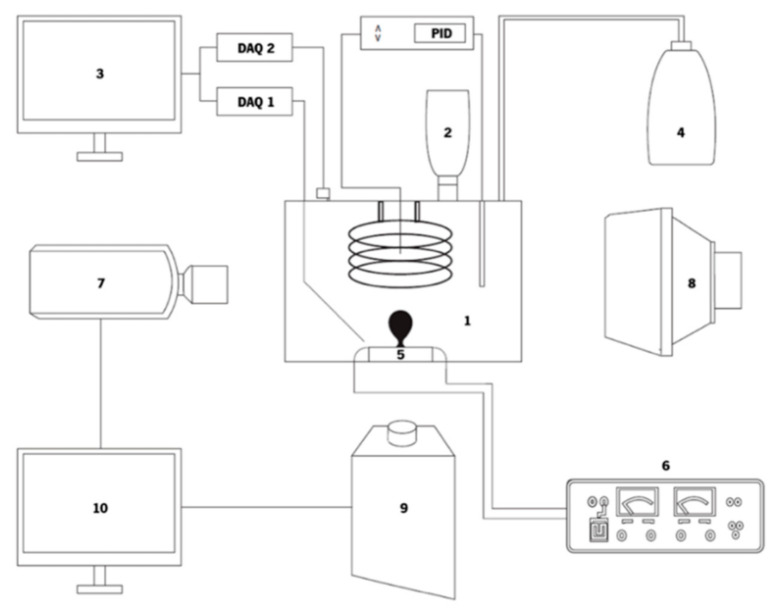
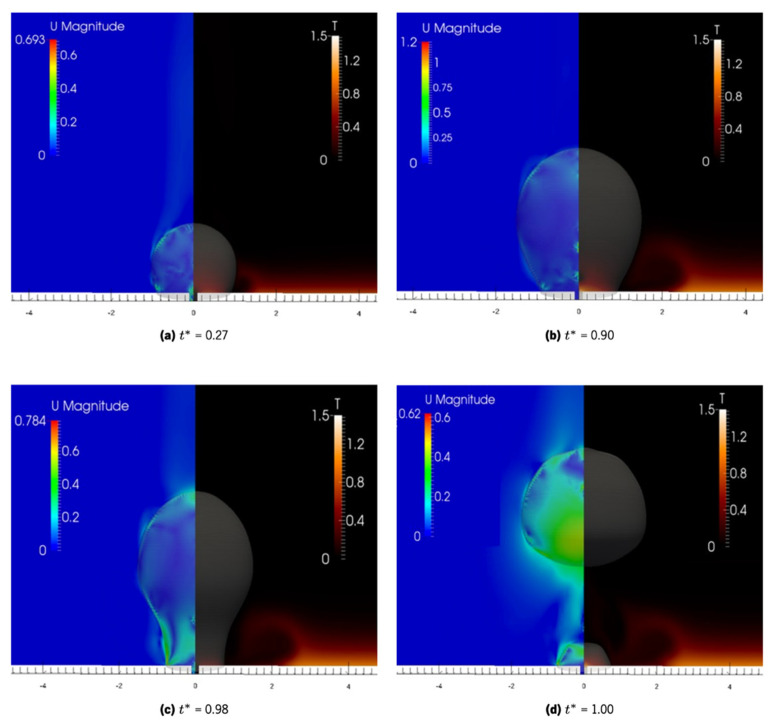
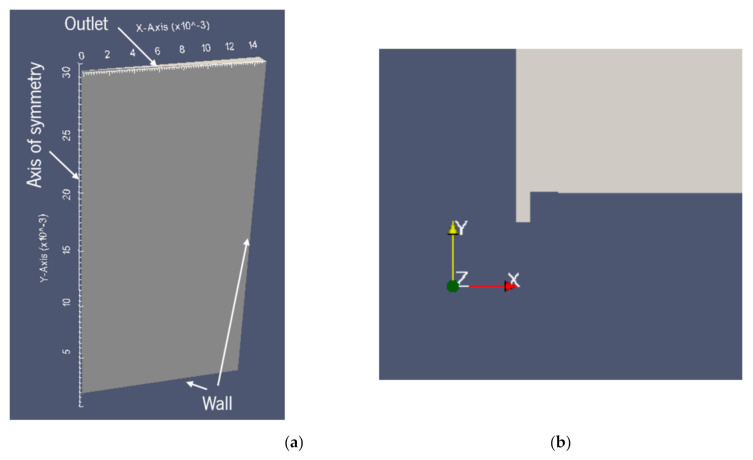
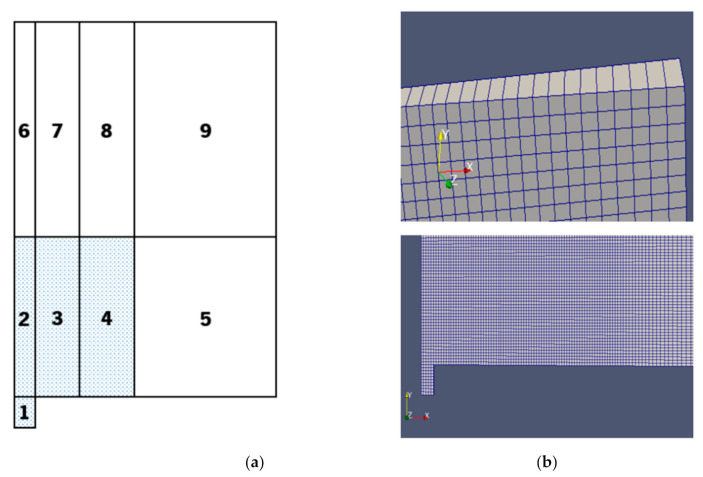
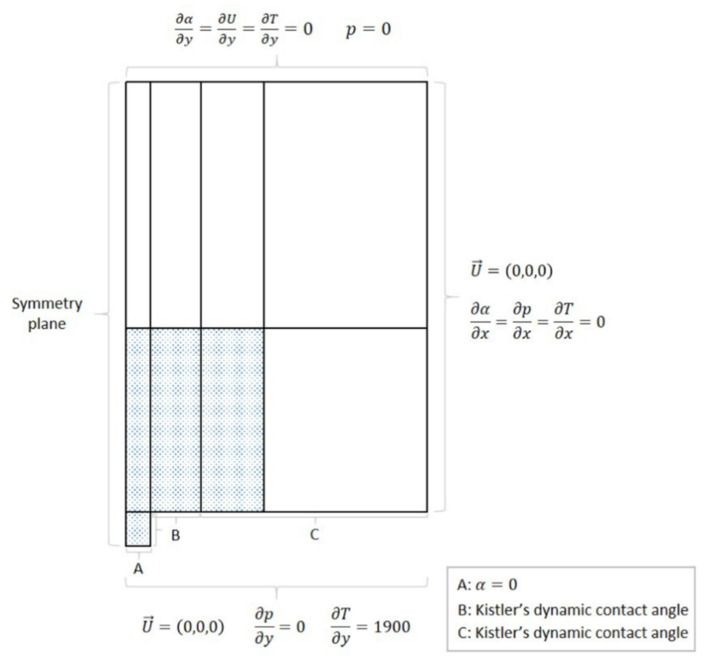
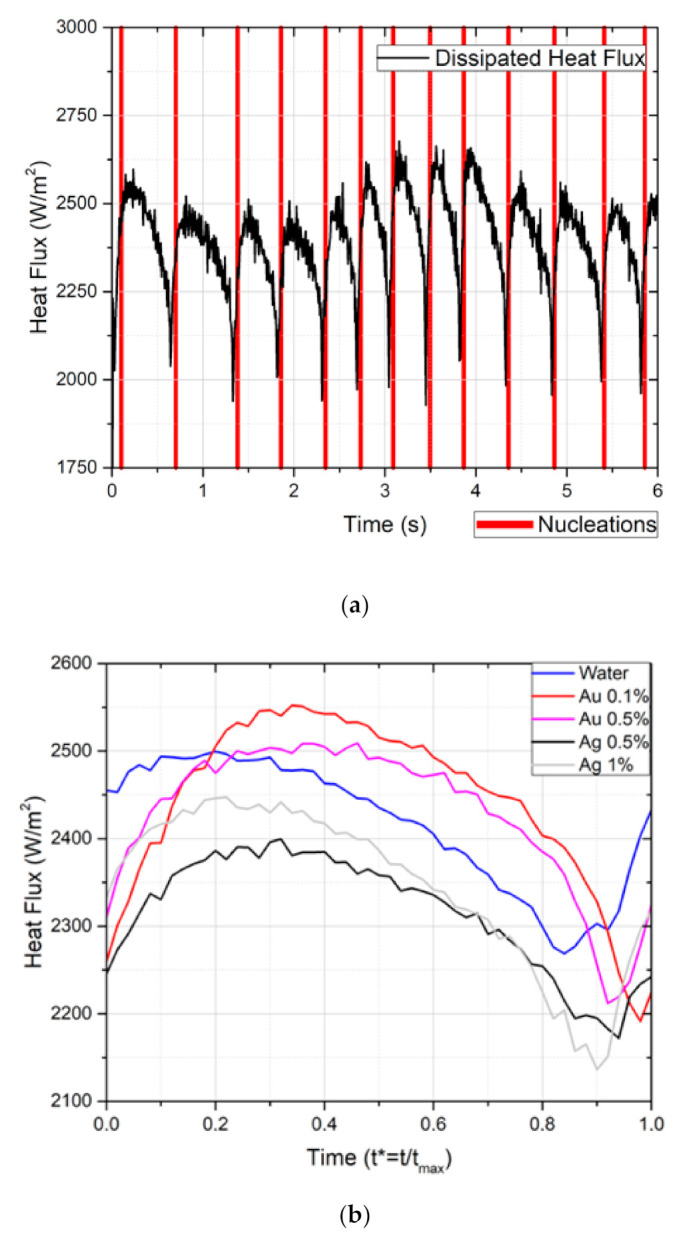
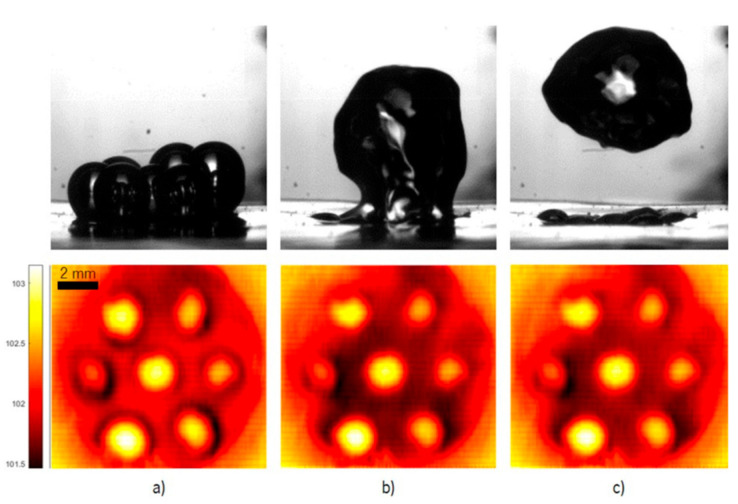
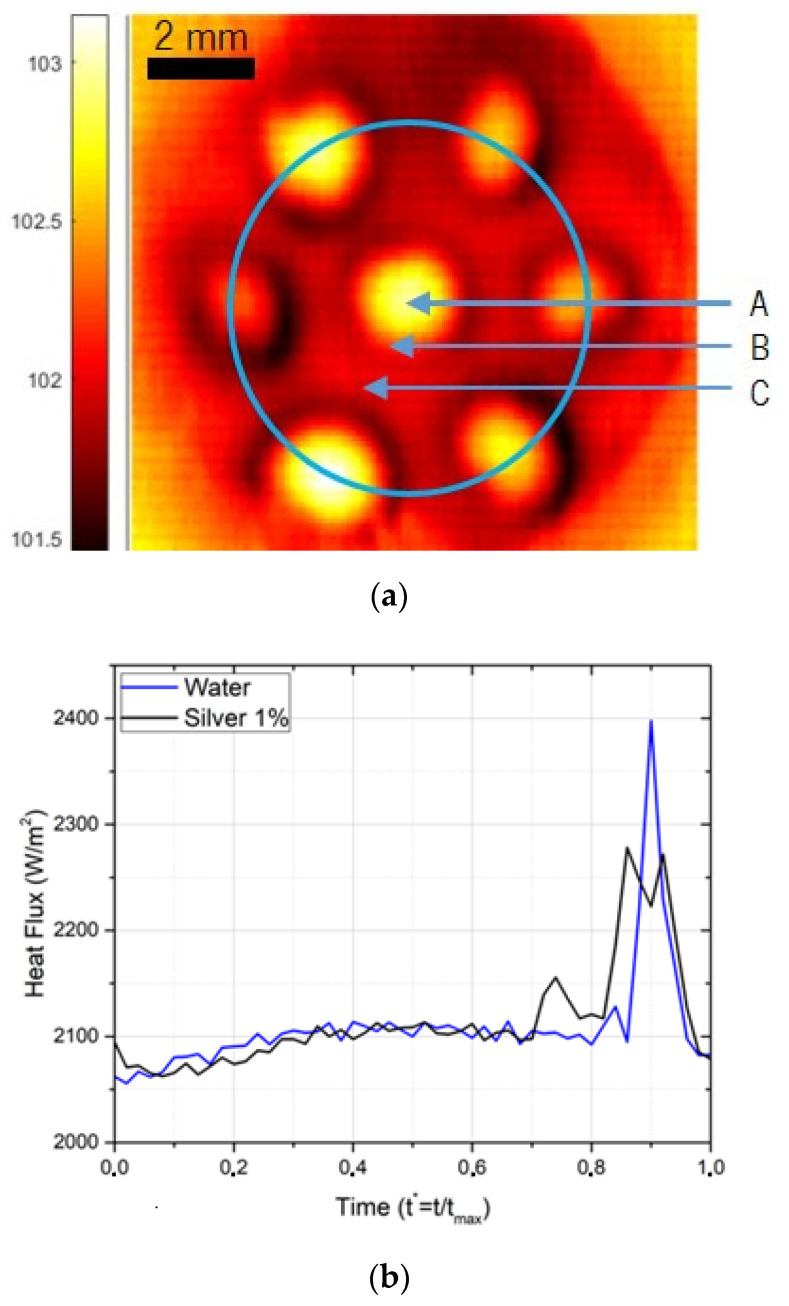
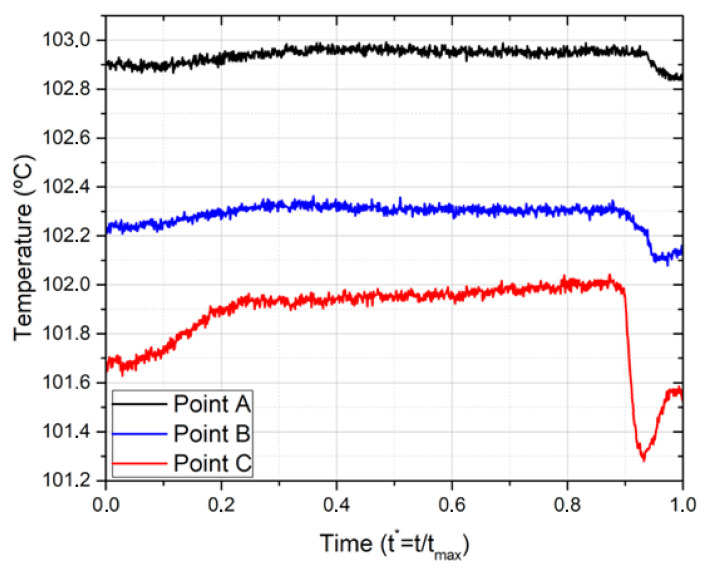
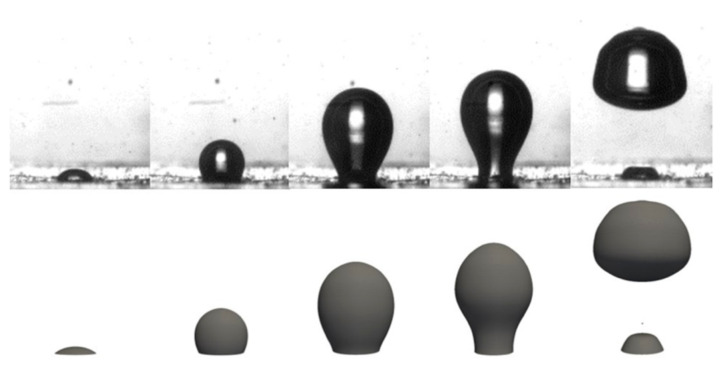
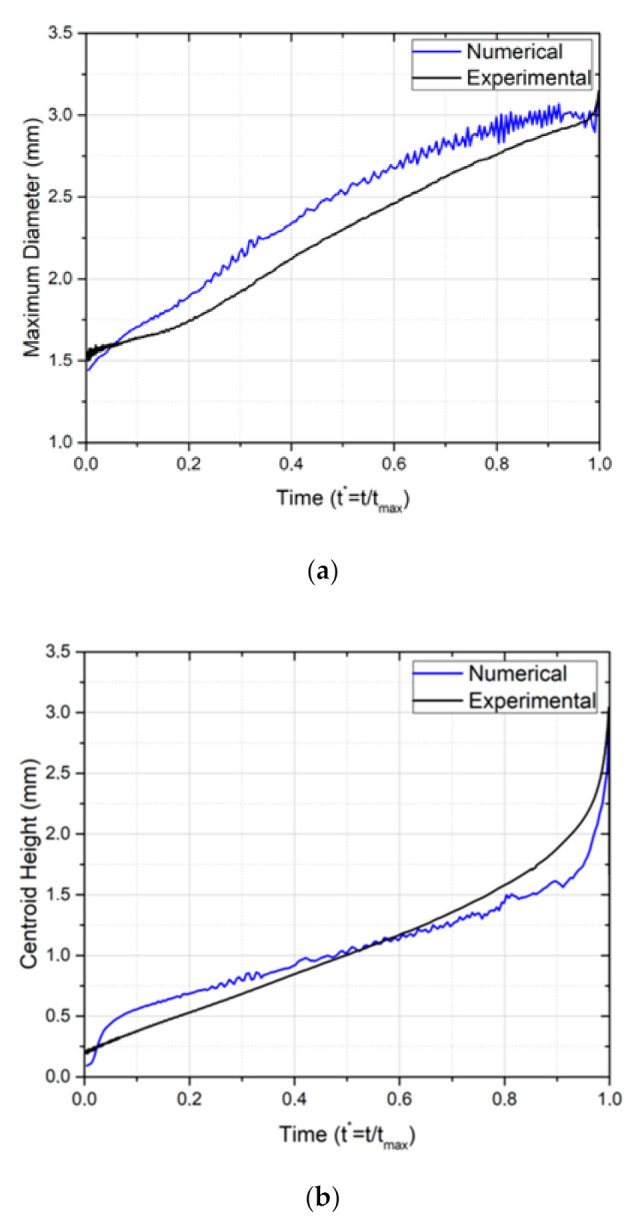
This study addresses the combination of customized surface modification with the use of nanofluids, to infer on its potential to enhance pool-boiling heat transfer. Hydrophilic surfaces patterned with superhydrophobic regions were developed and used as surface interfaces with different nanofluids (water with gold, silver, aluminum and alumina nanoparticles), in order to evaluate the effect of the nature and concentration of the nanoparticles in bubble dynamics and consequently in heat transfer processes. The main qualitative and quantitative analysis was based on extensive post-processing of synchronized high-speed and thermographic images. To study the nucleation of a single bubble in pool boiling condition, a numerical model was also implemented. The results show an evident benefit of using biphilic patterns with well-established distances between the superhydrophobic regions. This can be observed in the resulting plot of the dissipated heat flux for a biphilic pattern with seven superhydrophobic spots, δ = 1/d and an imposed heat flux of 2132 w/m. In this case, the dissipated heat flux is almost constant (except in the instant t* ≈ 0.9 when it reaches a peak of 2400 W/m), whilst when using only a single superhydrophobic spot, where the heat flux dissipation reaches the maximum shortly after the detachment of the bubble, dropping continuously until a new necking phase starts. The biphilic patterns also allow a controlled bubble coalescence, which promotes fluid convection at the hydrophilic spacing between the superhydrophobic regions, which clearly contributes to cool down the surface. This effect is noticeable in the case of employing the Ag 1 wt% nanofluid, with an imposed heat flux of 2132 W/m, where the coalescence of the drops promotes a surface cooling, identified by a temperature drop of 0.7 °C in the hydrophilic areas. Those areas have an average temperature of 101.8 °C, whilst the average temperature of the superhydrophobic spots at coalescence time is of 102.9 °C. For low concentrations as the ones used in this work, the effect of the nanofluids was observed to play a minor role. This can be observed on the slight discrepancy of the heat dissipation decay that occurred in the necking stage of the bubbles for nanofluids with the same kind of nanoparticles and different concentration. For the Au 0.1 wt% nanofluid, a heat dissipation decay of 350 W/m was reported, whilst for the Au 0.5 wt% nanofluid, the same decay was only of 280 W/m. The results of the numerical model concerning velocity fields indicated a sudden acceleration at the bubble detachment, as can be qualitatively analyzed in the thermographic images obtained in this work. Additionally, the temperature fields of the analyzed region present the same tendency as the experimental results.
本研究探讨了定制表面改性与纳米流体的结合,以推断其增强池沸腾传热的潜力。开发了具有超疏水区域图案的亲水性表面,并将其用作与不同纳米流体(含有金、银、铝和氧化铝纳米颗粒的水)的表面界面,以评估纳米颗粒的性质和浓度对气泡动力学以及进而对传热过程的影响。主要的定性和定量分析基于对同步高速和热成像图像的大量后处理。为了研究池沸腾条件下单气泡的成核,还实施了一个数值模型。结果表明,使用具有确定的超疏水区域间距的双亲性图案有明显益处。这可以在具有七个超疏水斑点、δ = 1/d且施加热流密度为2132 w/m²的双亲性图案的散热热流密度的结果图中观察到。在这种情况下,散热热流密度几乎恒定(除了在t* ≈ 0.9瞬间达到2400 W/m²的峰值),而仅使用单个超疏水斑点时,热流密度在气泡脱离后不久达到最大值,然后持续下降,直到新的缩颈阶段开始。双亲性图案还允许可控的气泡聚并,这促进了超疏水区域之间亲水性间距处的流体对流,这显然有助于冷却表面。在使用1 wt%银纳米流体且施加热流密度为2132 W/m²的情况下,这种效果很明显,液滴的聚并促进了表面冷却,在亲水性区域温度下降了0.7°C。这些区域的平均温度为101.8°C,而聚并时超疏水斑点的平均温度为102.9°C。对于本工作中使用的低浓度纳米流体,观察到其作用较小。这可以从具有相同类型纳米颗粒和不同浓度的纳米流体在气泡缩颈阶段发生的散热衰减的轻微差异中看出。对于0.1 wt%金纳米流体,报道的散热衰减为350 W/m²,而对于0.5 wt%金纳米流体,相同的衰减仅为280 W/m²。关于速度场的数值模型结果表明,在气泡脱离时会突然加速,正如在本工作中获得的热成像图像中可以定性分析的那样。此外,分析区域的温度场呈现出与实验结果相同的趋势。