Hadžić Armin, Može Matic, Arhar Klara, Zupančič Matevž, Golobič Iztok
Faculty of Mechanical Engineering, University of Ljubljana, Aškerčeva 6, 1000 Ljubljana, Slovenia.
Nanomaterials (Basel). 2022 Jul 29;12(15):2611. doi: 10.3390/nano12152611.
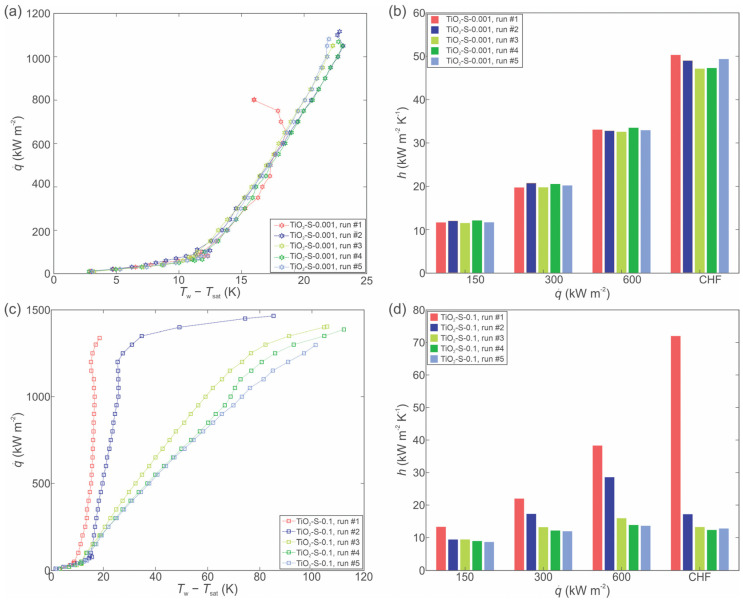
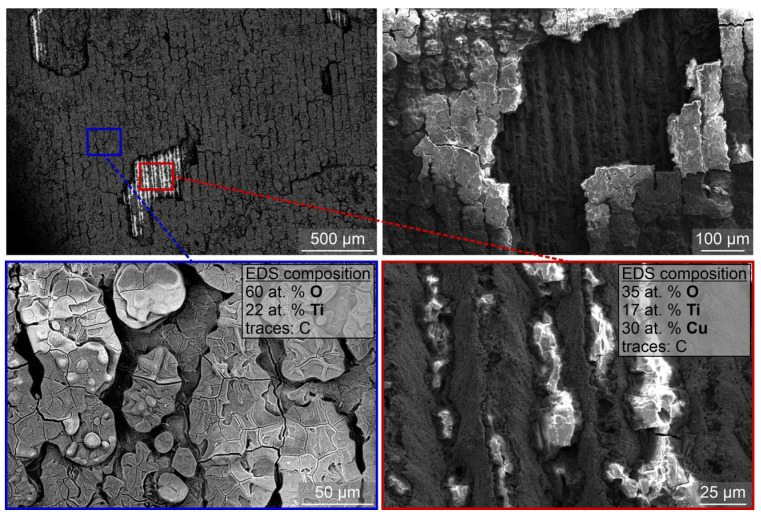
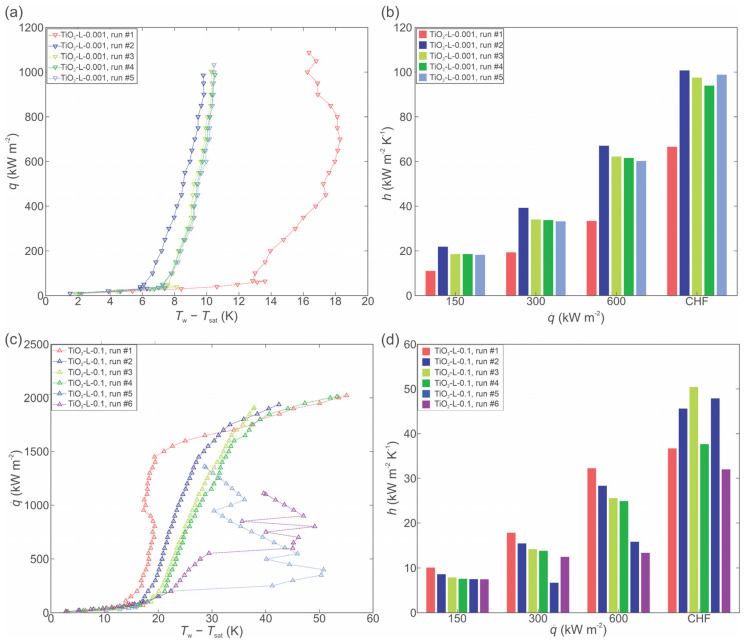
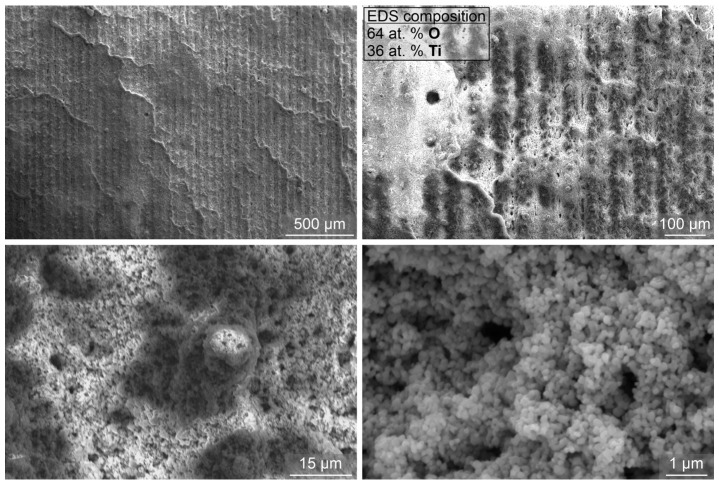
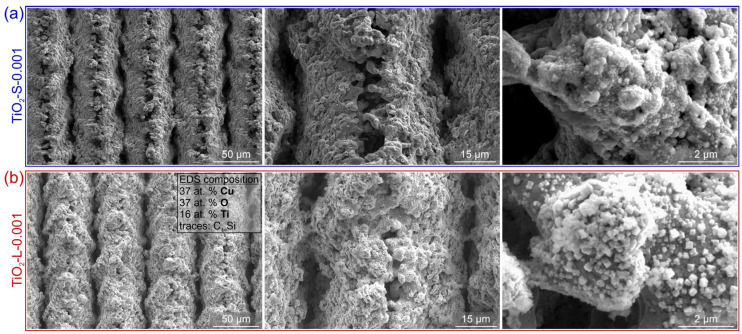
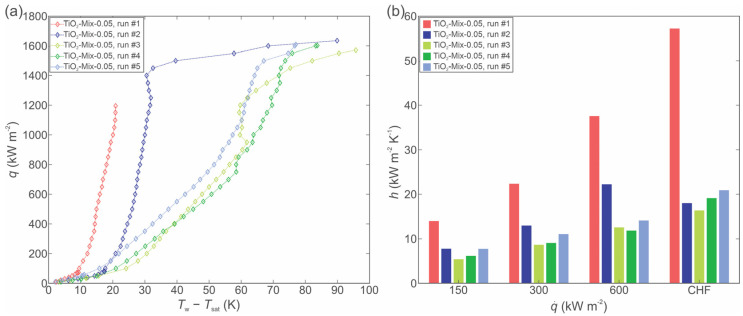
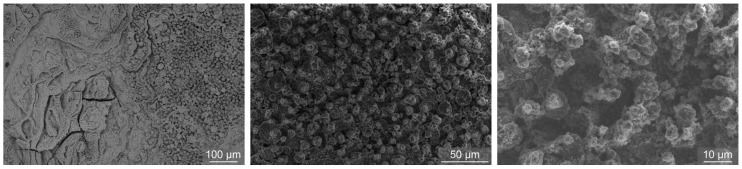
The enhancement of boiling heat transfer has been extensively shown to be achievable through surface texturing or fluid property modification, yet few studies have investigated the possibility of coupling both enhancement approaches. The present work focuses on exploring the possibility of concomitant enhancement of pool boiling heat transfer by using TiO-water nanofluid in combination with laser-textured copper surfaces. Two mass concentrations of 0.001 wt.% and 0.1 wt.% are used, along with two nanoparticle sizes of 4-8 nm and 490 nm. Nanofluids are prepared using sonification and degassed distilled water, while the boiling experiments are performed at atmospheric pressure. The results demonstrate that the heat transfer coefficient (HTC) using nanofluids is deteriorated compared to using pure water on the reference and laser-textured surface. However, the critical heat flux (CHF) is significantly improved at 0.1 wt.% nanoparticle concentration. The buildup of a highly wettable TiO layer on the surface is identified as the main reason for the observed performance. Multiple subsequent boiling experiments using nanofluids on the same surface exhibited a notable shift in boiling curves and their instability at higher concentrations, which is attributable to growth of the nanoparticle layer on the surface. Overall, the combination of nanofluids boiling on a laser-textured surface proved to enhance the CHF after prolonged exposure to highly concentrated nanofluid, while the HTC was universally and significantly decreased in all cases.
大量研究表明,通过表面纹理化或流体性质改性可以显著增强沸腾传热,但很少有研究探讨将这两种增强方法结合起来的可能性。本工作重点探索使用TiO-水纳米流体与激光纹理化铜表面相结合来同时增强池沸腾传热的可能性。使用了0.001 wt.%和0.1 wt.%两种质量浓度,以及4-8 nm和490 nm两种纳米颗粒尺寸。纳米流体采用超声处理和脱气蒸馏水制备,沸腾实验在大气压下进行。结果表明,在参考表面和激光纹理化表面上,与使用纯水相比,使用纳米流体时的传热系数(HTC)有所恶化。然而,在纳米颗粒浓度为0.1 wt.%时,临界热流密度(CHF)显著提高。表面上形成的高润湿性TiO层被认为是观察到这种性能的主要原因。在同一表面上多次使用纳米流体进行后续沸腾实验,在较高浓度下沸腾曲线出现明显偏移且不稳定,这归因于表面纳米颗粒层的生长。总体而言,在激光纹理化表面上沸腾的纳米流体组合在长时间暴露于高浓度纳米流体后被证明可提高CHF,而在所有情况下HTC普遍且显著降低。