Latvian Biomedical Research and Study Centre, Ratsupites iela 1, Riga, 1067, Latvia.
Faculty of Medicine, Riga Stradins University, Dzirciema iela 16, Riga, 1007, Latvia.
BMC Med Genomics. 2021 Jan 11;14(1):18. doi: 10.1186/s12920-020-00860-4.
Type 2 diabetes complications cause a serious emotional and economical burden to patients and healthcare systems globally. Management of both acute and chronic complications of diabetes, which dramatically impair the quality of patients' life, is still an unsolved issue in diabetes care, suggesting a need for early identification of individuals with high risk for developing diabetes complications.
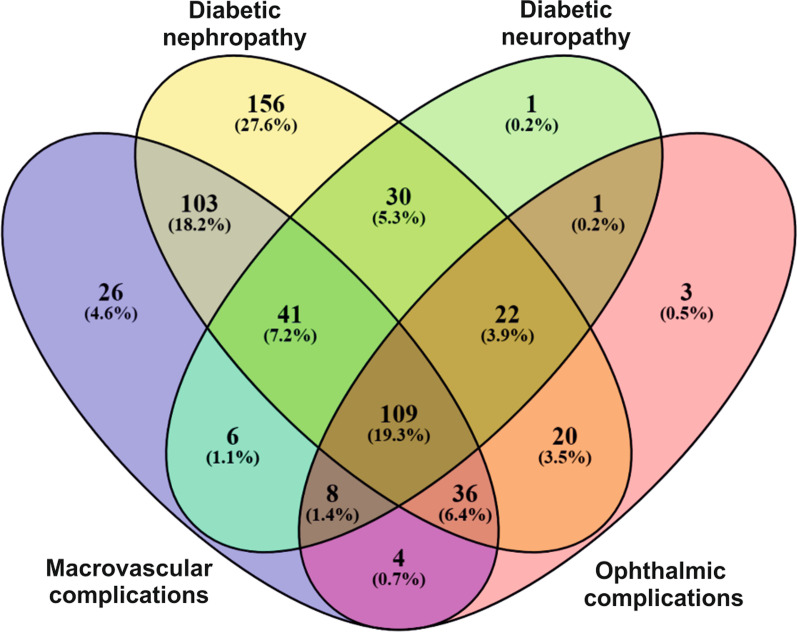
We performed a genome-wide association study in 601 type 2 diabetes patients after stratifying them according to the presence or absence of four types of diabetes complications: diabetic neuropathy, diabetic nephropathy, macrovascular complications, and ophthalmic complications.
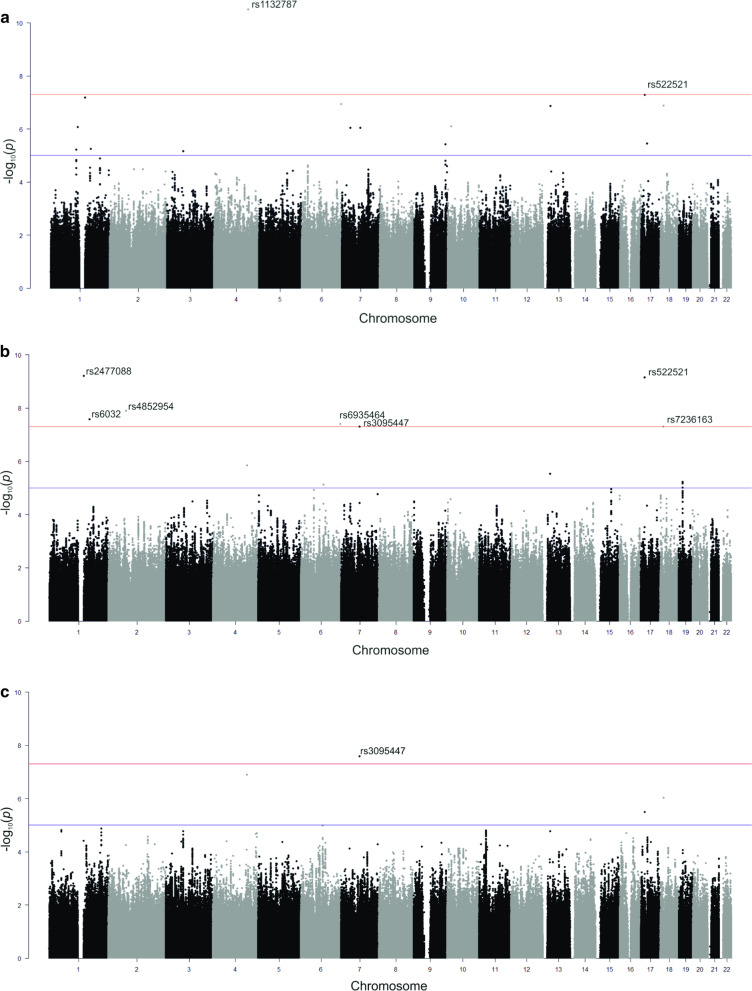
The analysis revealed ten novel associations showing genome-wide significance, including rs1132787 (GYPA, OR = 2.71; 95% CI = 2.02-3.64) and diabetic neuropathy, rs2477088 (PDE4DIP, OR = 2.50; 95% CI = 1.87-3.34), rs4852954 (NAT8, OR = 2.27; 95% CI = 2.71-3.01), rs6032 (F5, OR = 2.12; 95% CI = 1.63-2.77), rs6935464 (RPS6KA2, OR = 2.25; 95% CI = 6.69-3.01) and macrovascular complications, rs3095447 (CCDC146, OR = 2.18; 95% CI = 1.66-2.87) and ophthalmic complications. By applying the targeted approach of previously reported susceptibility loci we managed to replicate three associations: MAPK14 (rs3761980, rs80028505) and diabetic neuropathy, APOL1 (rs136161) and diabetic nephropathy.
Together these results provide further evidence for the implication of genetic factors in the development of type 2 diabetes complications and highlight several potential key loci, able to modify the risk of developing these conditions. Moreover, the candidate variant approach proves a strong and consistent effect for multiple variants across different populations.
2 型糖尿病并发症给患者和全球医疗体系带来了严重的情绪和经济负担。糖尿病急性和慢性并发症的管理仍然是糖尿病护理中的一个未解决的问题,这些并发症极大地降低了患者的生活质量,这表明需要早期识别发生糖尿病并发症风险较高的个体。
我们对 601 名 2 型糖尿病患者进行了全基因组关联研究,根据是否存在 4 种糖尿病并发症(糖尿病神经病变、糖尿病肾病、大血管并发症和眼科并发症)对他们进行分层。
分析显示,10 个新的关联具有全基因组意义,包括 rs1132787(GYPA,OR=2.71;95%CI=2.02-3.64)与糖尿病神经病变、rs2477088(PDE4DIP,OR=2.50;95%CI=1.87-3.34)、rs4852954(NAT8,OR=2.27;95%CI=2.71-3.01)、rs6032(F5,OR=2.12;95%CI=1.63-2.77)、rs6935464(RPS6KA2,OR=2.25;95%CI=6.69-3.01)与大血管并发症、rs3095447(CCDC146,OR=2.18;95%CI=1.66-2.87)与眼科并发症。通过应用先前报道的易感基因座的靶向方法,我们成功复制了 3 个关联:MAPK14(rs3761980,rs80028505)与糖尿病神经病变、APOL1(rs136161)与糖尿病肾病。
这些结果为遗传因素在 2 型糖尿病并发症的发生中的作用提供了进一步的证据,并突出了几个潜在的关键基因座,这些基因座能够改变发生这些疾病的风险。此外,候选变异方法证明了在不同人群中,多个变异的一致性和强大效应。