Department of Medical Parasitology and Mycology, School of Medicine, Guilan University of Medical Sciences, Rasht 41996-13776, Iran.
Skin Research Center, Department of Dermatology, Razi Hospital, Guilan University of Medical Sciences, Rasht 41996-13776, Iran.
Parasite. 2021;28:4. doi: 10.1051/parasite/2020073. Epub 2021 Jan 12.
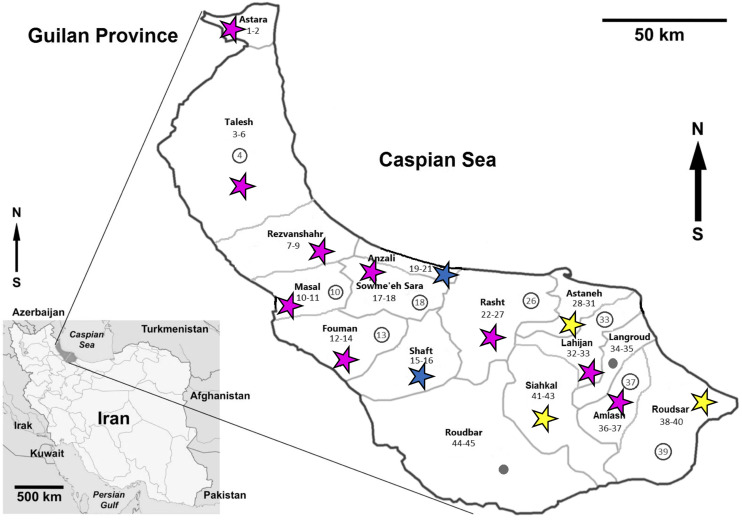
One of the major migration routes for birds going between Europe and Asia is the Black Sea-Mediterranean route that converges on the Volga Delta, continuing into the area of the Caspian Sea. Cercarial dermatitis is a disorder in humans caused by schistosome trematodes that use aquatic birds and snails as hosts and is prevalent in areas of aquaculture in Northern Iran. Before the disorder can be addressed, it is necessary to determine the etiological agents and their host species. This study aimed to document whether domestic mallards are reservoir hosts and if so, to characterize the species of schistosomes. Previous work has shown that domestic mallards are reservoir hosts for a nasal schistosome.
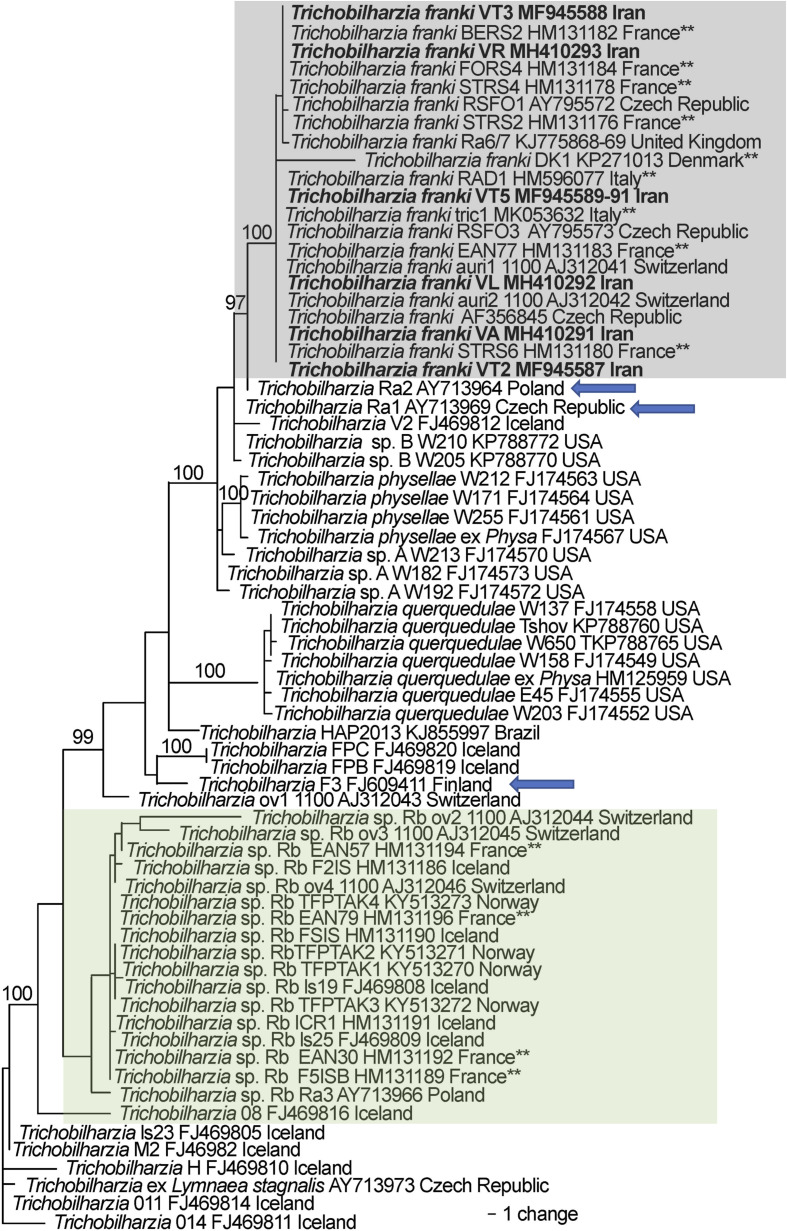
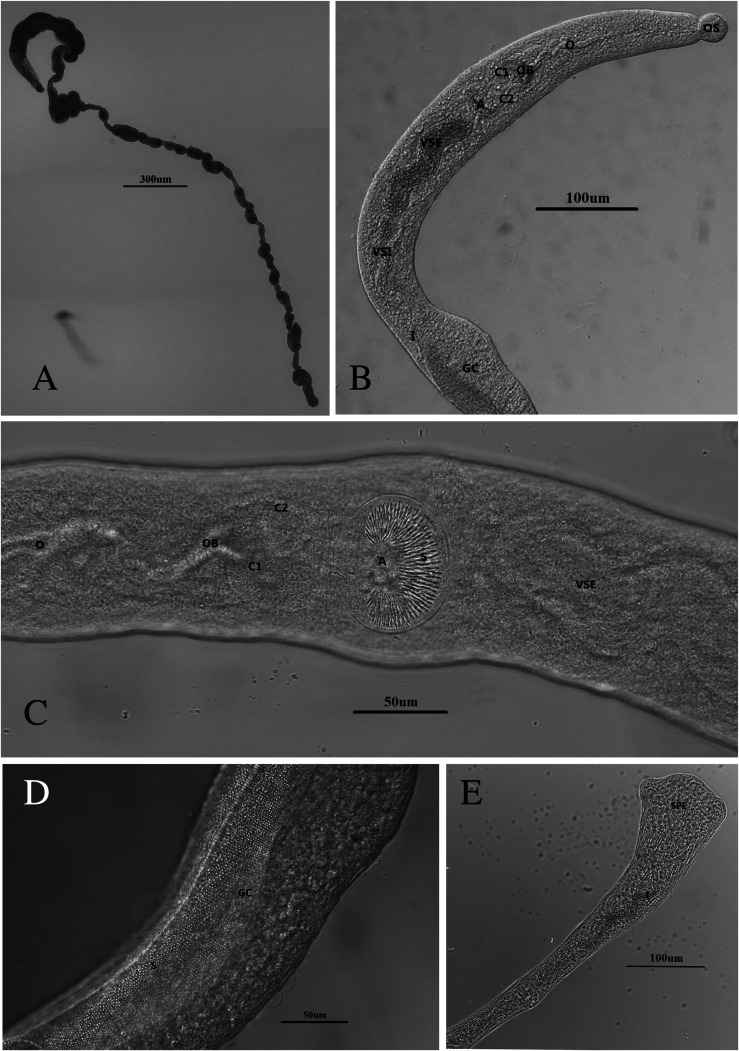
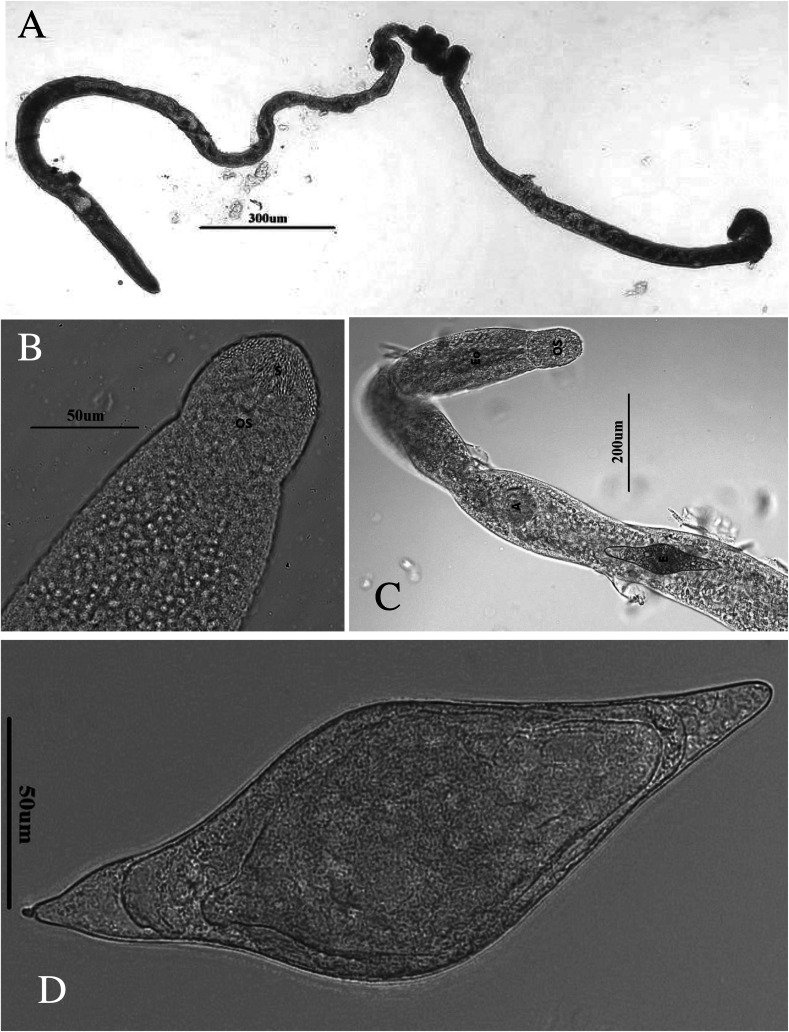
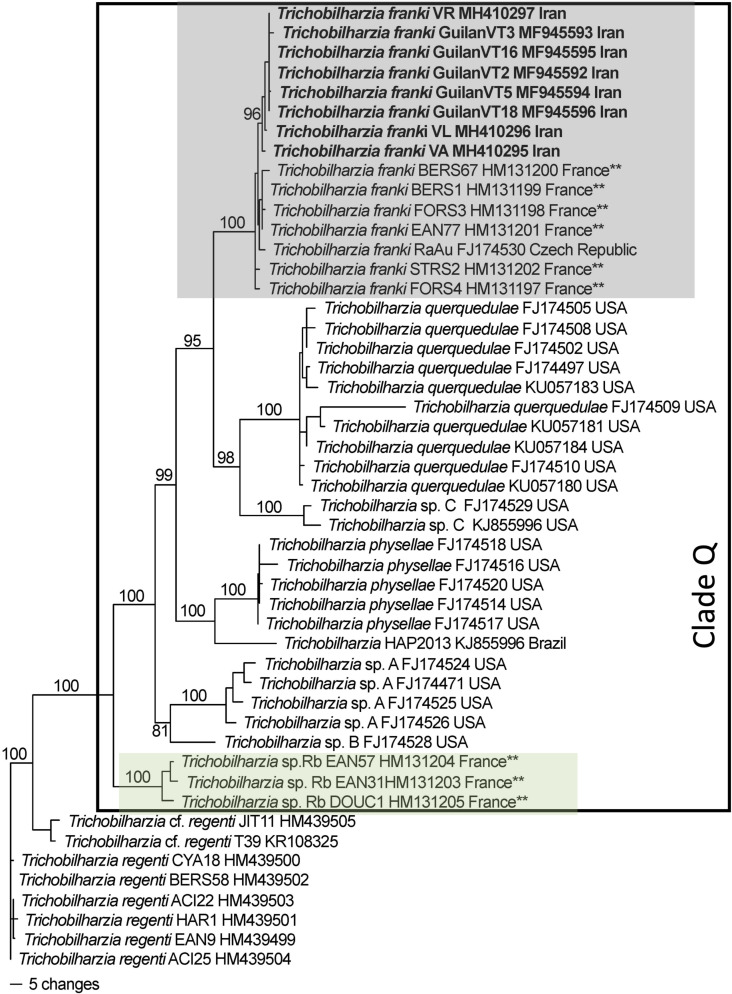
In 32 of 45 domestic mallards (Anas platyrhynchos domesticus) (71.1%), the schistosome Trichobilharzia franki, previously reported only from Europe, was found in visceral veins. Morphological and molecular phylogenetic analysis confirmed the species designation. These findings extend the range of T. franki from Europe to Eurasia.
The occurrence of cercarial dermatitis in Iran is high in areas of aquaculture. Previous studies in the area have shown that domestic mallards are reservoir hosts of T. regenti, a nasal schistosome and T. franki, as shown in this study. The genetic results support the conclusion that populations of T. franki from Iran are not differentiated from populations in Europe. Therefore, the schistosomes are distributed with their migratory duck hosts, maintaining the gene flow across populations with compatible snail hosts in Iran.
鸟类在欧洲和亚洲之间的主要迁徙路线之一是黑海-地中海路线,该路线汇聚于伏尔加三角洲,然后延伸到里海地区。曼氏血吸虫性皮炎是一种由吸虫引起的人类疾病,其宿主为水生鸟类和蜗牛,在伊朗北部水产养殖区较为流行。在解决这种疾病之前,有必要确定病原体及其宿主物种。本研究旨在记录家养野鸭是否为储存宿主,如果是,还需要对其携带的血吸虫种类进行特征描述。先前的研究表明,家养野鸭是一种鼻血吸虫的储存宿主。
在 45 只家养野鸭(Anas platyrhynchos domesticus)中有 32 只(71.1%)的内脏静脉中发现了曼氏血吸虫(Trichobilharzia franki),此前仅在欧洲有报道过。形态学和分子系统发育分析证实了这一物种的鉴定。这些发现将 T. franki 的分布范围从欧洲扩展到了欧亚大陆。
在伊朗水产养殖区,曼氏血吸虫性皮炎的发病率较高。该地区之前的研究表明,家养野鸭是 T. regenti、鼻血吸虫和 T. franki 的储存宿主,正如本研究所示。遗传结果支持了这样的结论,即来自伊朗的 T. franki 种群与来自欧洲的种群没有分化。因此,这些血吸虫与它们的迁徙鸭宿主一起分布,在伊朗与具有兼容性的蜗牛宿主之间保持种群间的基因流。