Postgraduate Program in Health Science, Federal University of Rio Grande do Norte, Natal, RN, Brazil.
Cancer and Inflammation Research Laboratory, Department of Morphology, Federal University of Rio Grande do Norte, Natal, RN, Brazil.
Br J Pharmacol. 2021 Jun;178(11):2284-2304. doi: 10.1111/bph.15373. Epub 2021 Mar 31.
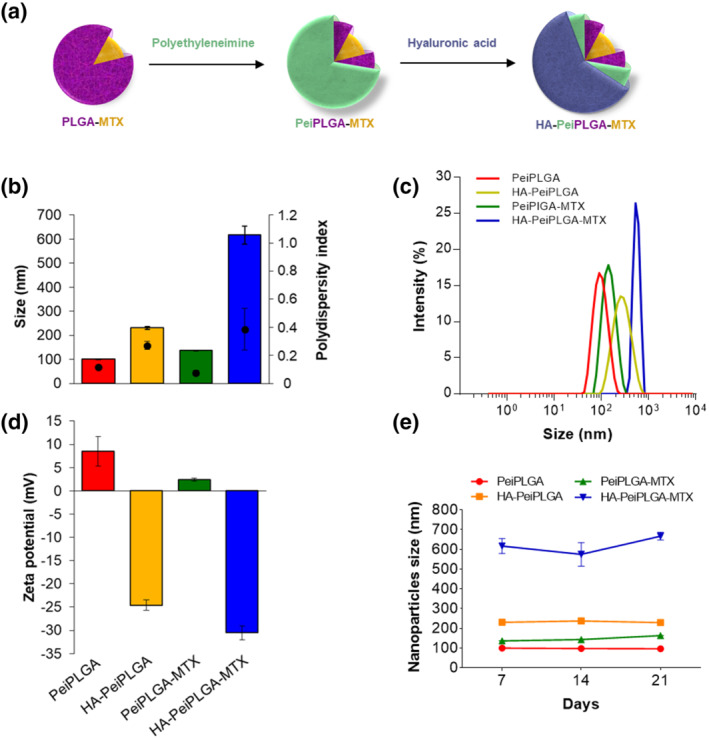
Inflammation associated with the tumour microenvironment (TME) is critical for cancer development, and immunotherapeutic strategies modulating the immune response in cancer have been crucial. In this study, a methotrexate-loaded (MTX) poly(lactic-co-glycolic acid)-based (PLGA) drug nanocarrier covered with polyethyleneimine (Pei) and hyaluronic acid (HA) was developed and combined with an PD-L1 antibody to investigate anti-cancer and immunomodulatory effects in breast cancer TME.
Naked or HA-coated PeiPLGA-MTX nanoparticles (NPs) were assessed on 4T1 breast cancer cells grown in culture and in a mouse model of orthotopic tumour growth. Tumours were evaluated by qRT-PCR and immunohistochemistry. The cell death profile and cell migration were analysed in vitro in 4T1 cells. Polarization of murine macrophages (RAW cells) was also carried out.
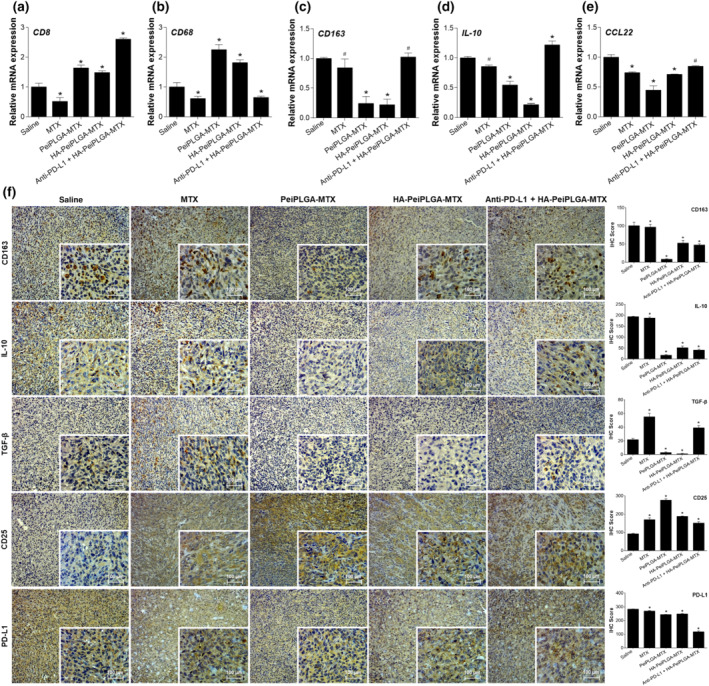
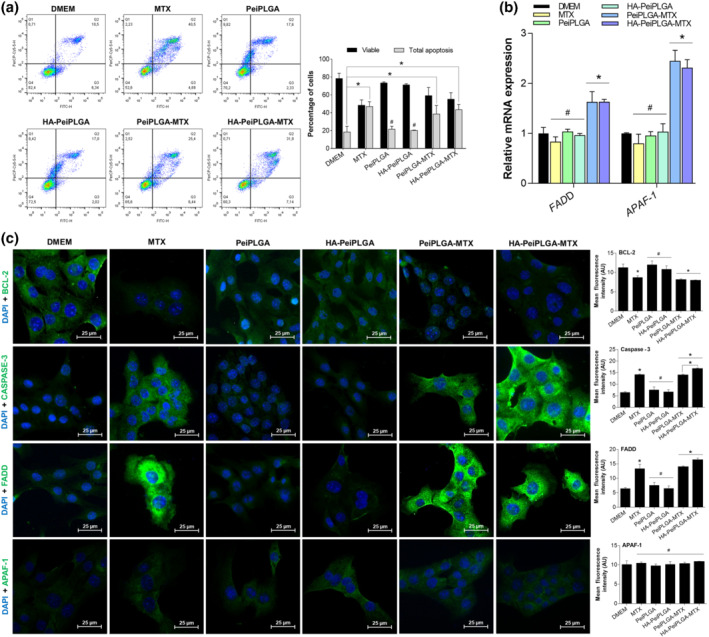
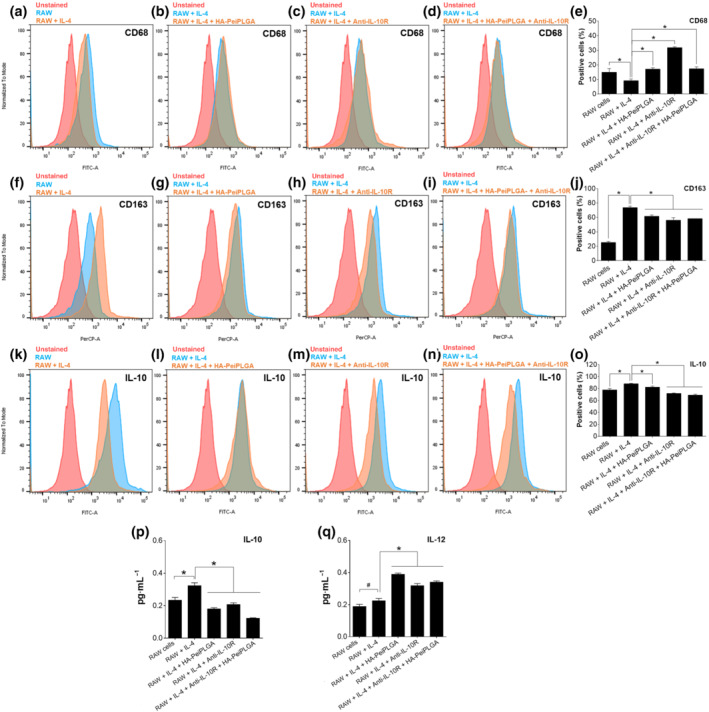
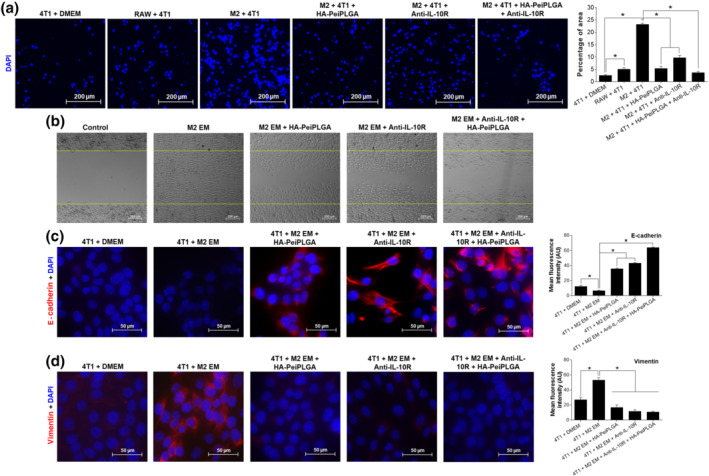
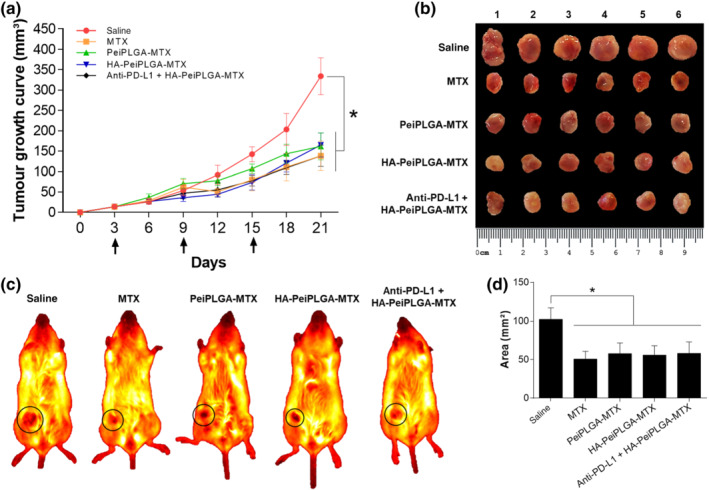
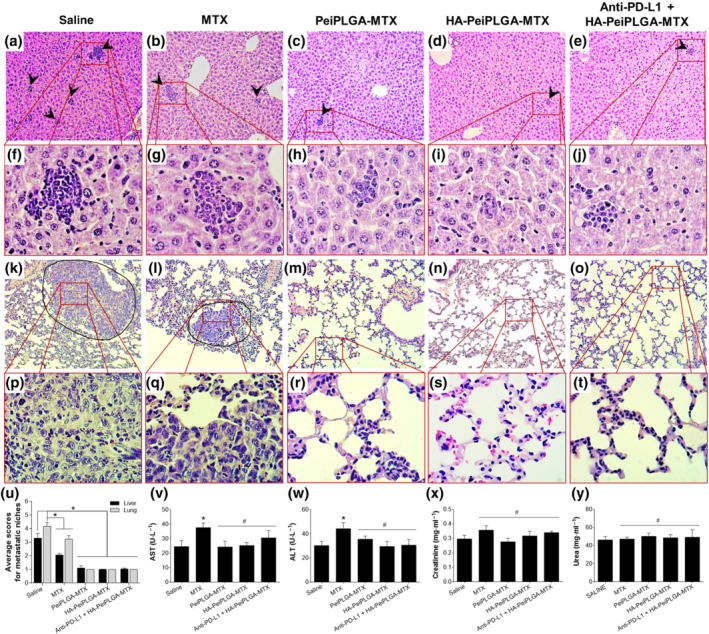
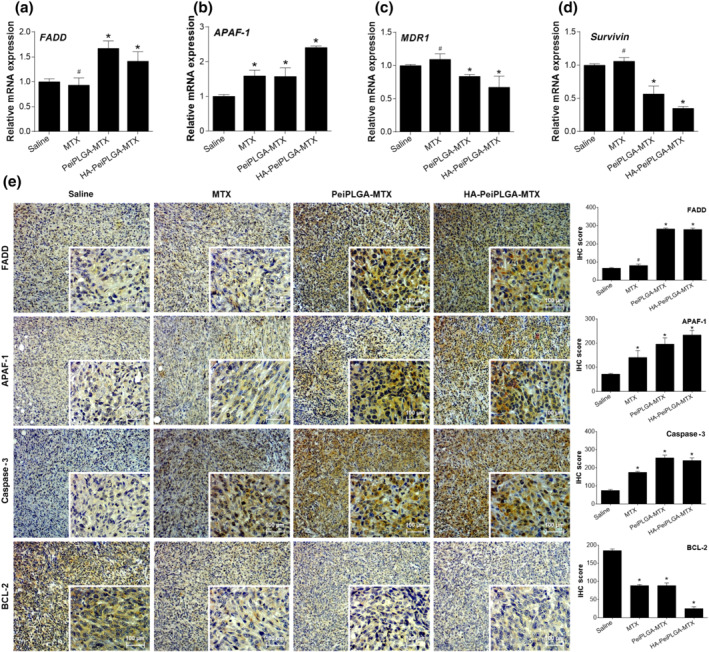
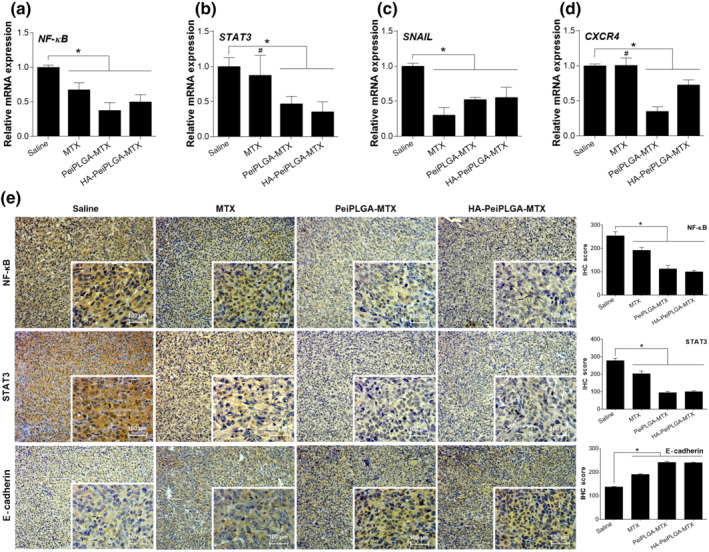
Naked or HA-coated PeiPLGA-MTX NPs used alone or combined with PD-L1 antibody modified the tumourigenic course by TME immunomodulation, leading to reduction of primary tumour size and metastases. STAT3 and NF-κB were the major genes downregulated by NPs. In tumor-associated macrophages (TAM) such regulation switched M2 phenotype (CD163) towards M1 (CD68) and reduced levels of IL-10, TGF-β and CCL22. Moreover, malignant cells showed overexpression of FADD, APAF-1, caspase-3 and E-cadherin, and decreased expression of Bcl-2, MDR-1, survivin, vimentin, CXCR4 and PD-L1 after treatment with NPs.
NPs-mediated STAT3/NF-κB signalling axis suppression disrupted crosstalk between immune and malignant cells, reducing immunosuppression and critical pro-tumour events. These findings provide a promising therapeutic approach capable of guiding the immune TME to suppress the development of breast cancer.
肿瘤微环境(TME)中的炎症对于癌症的发生至关重要,因此调节癌症中免疫反应的免疫治疗策略至关重要。在这项研究中,开发了一种负载甲氨蝶呤(MTX)的聚(乳酸-共-乙醇酸)基(PLGA)药物纳米载体,该载体用聚乙烯亚胺(Pei)和透明质酸(HA)覆盖,并与 PD-L1 抗体结合,以研究乳腺癌 TME 中的抗癌和免疫调节作用。
在体外培养的 4T1 乳腺癌细胞和原位肿瘤生长的小鼠模型中评估裸或 HA 覆盖的 PeiPLGA-MTX 纳米颗粒(NPs)。通过 qRT-PCR 和免疫组织化学评估肿瘤。在 4T1 细胞中分析细胞死亡谱和细胞迁移。还进行了小鼠巨噬细胞(RAW 细胞)的极化。
单独使用或与 PD-L1 抗体联合使用的裸或 HA 覆盖的 PeiPLGA-MTX NPs 通过 TME 免疫调节改变了致瘤过程,导致原发性肿瘤大小和转移减少。NPs 下调的主要基因是 STAT3 和 NF-κB。在肿瘤相关巨噬细胞(TAM)中,这种调节将 M2 表型(CD163)向 M1(CD68)转变,并降低 IL-10、TGF-β 和 CCL22 的水平。此外,恶性细胞在经 NPs 处理后过表达 FADD、APAF-1、caspase-3 和 E-cadherin,同时降低 Bcl-2、MDR-1、survivin、波形蛋白、CXCR4 和 PD-L1 的表达。
NPs 介导的 STAT3/NF-κB 信号轴抑制破坏了免疫和恶性细胞之间的串扰,减少了免疫抑制和关键的促肿瘤事件。这些发现提供了一种有前途的治疗方法,能够指导免疫 TME 抑制乳腺癌的发展。