Department of Neurology, Collegium Medicum in Bydgoszcz, Nicolaus Copernicus University in Toruń, Skłodowskiej 9 Street, 85-094 Bydgoszcz, Poland.
Medicina (Kaunas). 2021 Jan 10;57(1):59. doi: 10.3390/medicina57010059.
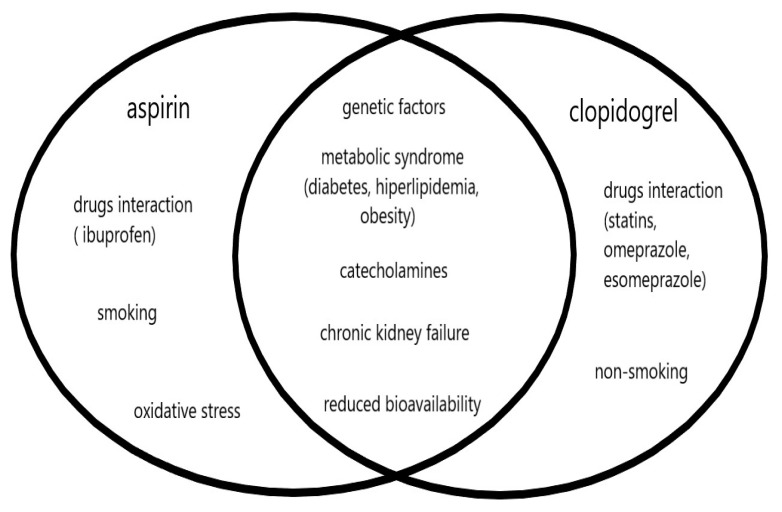
Effective platelet inhibition is the main goal of the antiplatelet therapy recommended as a standard treatment in the secondary prevention of non-embolic ischemic stroke. Acetylsalicylic acid (aspirin) and clopidogrel are commonly used for this purpose worldwide. A low biological response to antiplatelet agents is a phenomenon that significantly reduces the therapeutic and protective properties of the therapy. The mechanisms leading to high on-treatment platelet reactivity are still unclear and remain multifactorial. The aim of the current review is to establish the background of resistance to antiplatelet agents commonly used in the secondary prevention of ischemic stroke and to explain the possible mechanisms. The most important factors influencing the incidence of a low biological response were demonstrated. The similarities and the differences in resistance to both drugs are emphasized, which may facilitate the selection of the appropriate antiplatelet agent in relation to specific clinical conditions and comorbidities. Despite the lack of indications for the routine assessment of platelet reactivity in stroke subjects, this should be performed in selected patients from the high-risk group. Increasing the detectability of low antiaggregant responders, in light of its negative impact on the prognosis and clinical outcomes, can contribute to a more individualized approach and modification of the antiplatelet therapy to maximize the therapeutic effect in the secondary prevention of stroke.
有效的血小板抑制是抗血小板治疗的主要目标,该治疗被推荐为非栓塞性缺血性卒中二级预防的标准治疗方法。乙酰水杨酸(阿司匹林)和氯吡格雷在世界范围内被广泛用于此目的。抗血小板药物的低生物反应是一种显著降低治疗和保护作用的现象。导致高治疗时血小板反应性的机制尚不清楚,仍然是多因素的。目前综述的目的是确定在缺血性卒中二级预防中常用的抗血小板药物的耐药性的背景,并解释可能的机制。确定了影响低生物反应发生率的最重要因素。强调了两种药物的耐药性的相似性和差异,这可能有助于根据特定的临床情况和合并症选择合适的抗血小板药物。尽管在卒中患者中常规评估血小板反应性的指征缺乏,但在高危患者中应在特定患者中进行该评估。提高低抗聚集反应者的检出率,鉴于其对预后和临床结局的负面影响,可以有助于采用更个体化的方法和修改抗血小板治疗,以最大限度地提高卒中二级预防的治疗效果。