Department of Life Sciences and Systems Biology, University of Torino, via Accademia Albertina 13, 1023 Torino, Italy.
Int J Mol Sci. 2021 Jan 10;22(2):631. doi: 10.3390/ijms22020631.
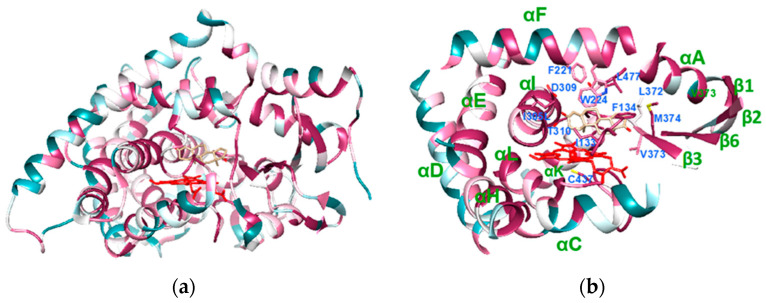
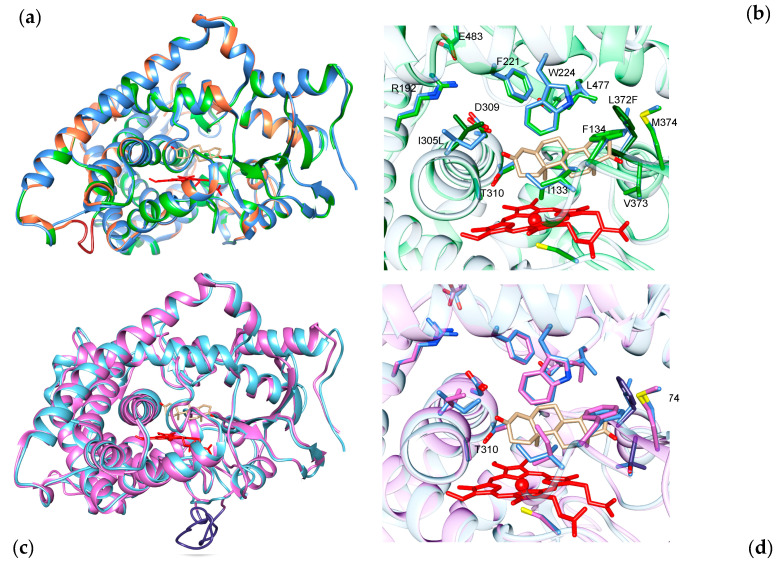
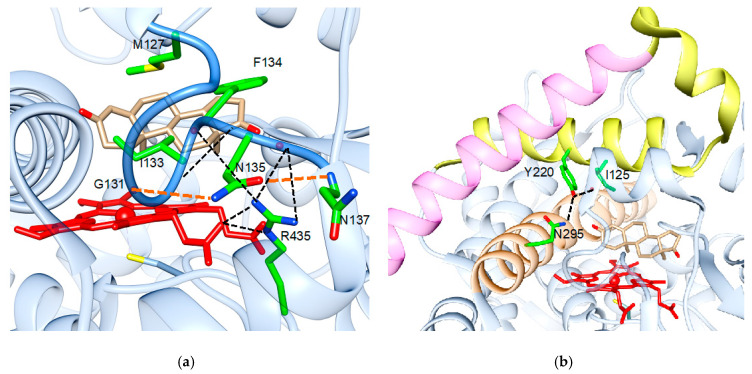
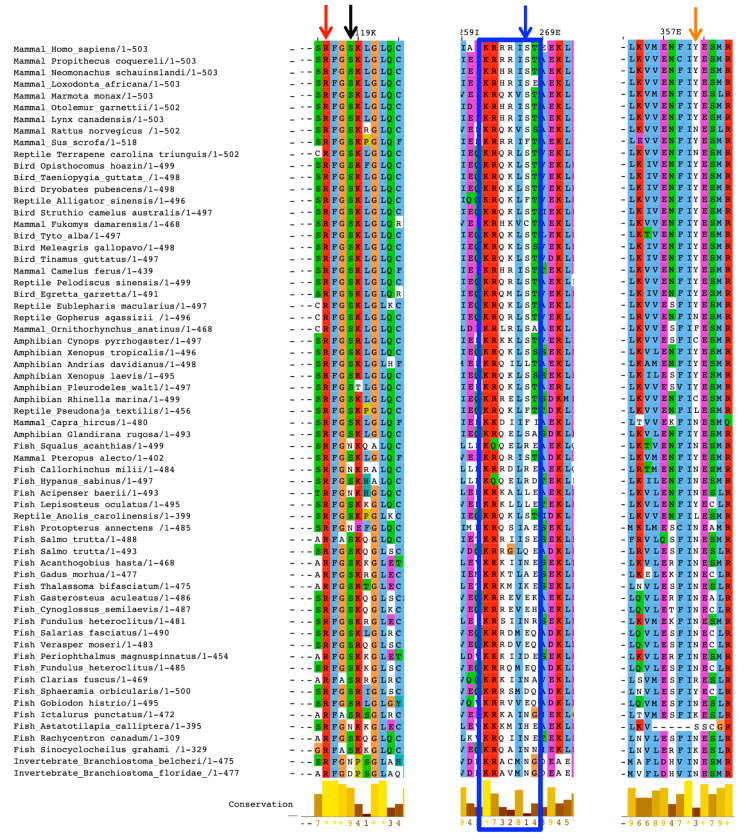
Aromatase is the cytochrome P450 enzyme converting androgens into estrogen in the last phase of steroidogenesis. As estrogens are crucial in reproductive biology, aromatase is found in vertebrates and the invertebrates of the genus , where it carries out the aromatization reaction of the A-ring of androgens that produces estrogens. Here, we investigate the molecular evolution of this unique and highly substrate-selective enzyme by means of structural, sequence alignment, and homology modeling, shedding light on its key role in species conservation. The alignments led to the identification of a core structure that, together with key and unique amino acids located in the active site and the substrate recognition sites, has been well conserved during evolution. Structural analysis shows what their roles are and the reason why they have been preserved. Moreover, the residues involved in the interaction with the redox partner and some phosphorylation sites appeared late during evolution. These data reveal how highly substrate-selective cytochrome P450 has evolved, indicating that the driving forces for evolution have been the optimization of the interaction with the redox partner and the introduction of phosphorylation sites that give the possibility of modulating its activity in a rapid way.
芳香酶是细胞色素 P450 酶,在类固醇生成的最后阶段将雄激素转化为雌激素。由于雌激素在生殖生物学中至关重要,因此芳香酶存在于脊椎动物和属的无脊椎动物中,在那里它进行雄激素 A 环的芳香化反应,产生雌激素。在这里,我们通过结构、序列比对和同源建模研究了这种独特且高度底物选择性酶的分子进化,揭示了它在物种保护中的关键作用。比对确定了一个核心结构,该结构与位于活性位点和底物识别位点的关键和独特氨基酸一起,在进化过程中得到了很好的保守。结构分析表明了它们的作用以及为什么它们被保留了下来。此外,与氧化还原伴侣相互作用的残基和一些磷酸化位点出现在进化的后期。这些数据揭示了高度底物选择性细胞色素 P450 是如何进化的,表明进化的驱动力是优化与氧化还原伴侣的相互作用,并引入磷酸化位点,使快速调节其活性成为可能。