• 文献检索
  • 文档翻译
  • 深度研究
  • 学术资讯
  • Suppr Zotero 插件Zotero 插件
  • 邀请有礼
  • 套餐&价格
  • 历史记录
应用&插件
Suppr Zotero 插件Zotero 插件浏览器插件Mac 客户端Windows 客户端微信小程序
定价
高级版会员购买积分包购买API积分包
服务
文献检索文档翻译深度研究API 文档MCP 服务
关于我们
关于 Suppr公司介绍联系我们用户协议隐私条款
关注我们

Suppr 超能文献

核心技术专利:CN118964589B侵权必究
粤ICP备2023148730 号-1Suppr @ 2026

文献检索

告别复杂PubMed语法,用中文像聊天一样搜索,搜遍4000万医学文献。AI智能推荐,让科研检索更轻松。

立即免费搜索

文件翻译

保留排版,准确专业,支持PDF/Word/PPT等文件格式,支持 12+语言互译。

免费翻译文档

深度研究

AI帮你快速写综述,25分钟生成高质量综述,智能提取关键信息,辅助科研写作。

立即免费体验

基于逻辑网络的阿尔茨海默病药物筛选平台,代表了人脑类器官的病理特征。

A logical network-based drug-screening platform for Alzheimer's disease representing pathological features of human brain organoids.

机构信息

Department of Biochemistry and Biomedical Sciences, College of Medicine, Seoul National University, Seoul, 03080, Republic of Korea.

Neuroscience Research Institute, Medical Research Center, College of Medicine, Seoul National University, Seoul, 03080, Republic of Korea.

出版信息

Nat Commun. 2021 Jan 12;12(1):280. doi: 10.1038/s41467-020-20440-5.

DOI:10.1038/s41467-020-20440-5
PMID:33436582
原文链接:https://pmc.ncbi.nlm.nih.gov/articles/PMC7804132/
Abstract

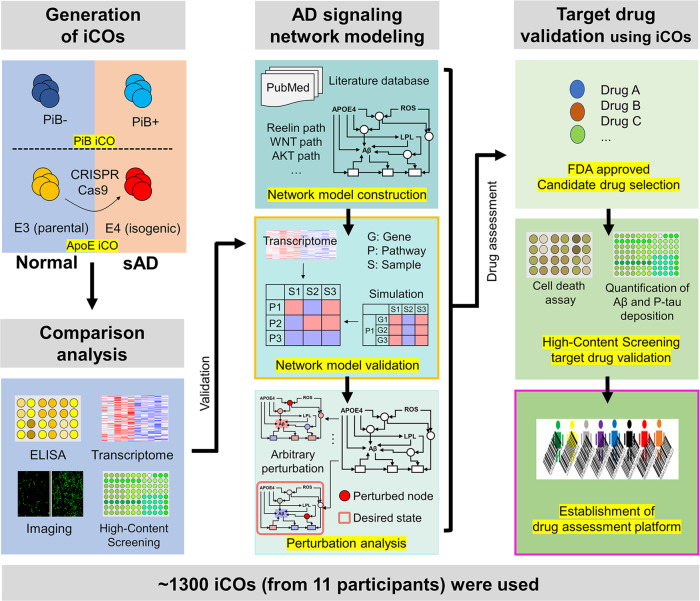
Developing effective drugs for Alzheimer's disease (AD), the most common cause of dementia, has been difficult because of complicated pathogenesis. Here, we report an efficient, network-based drug-screening platform developed by integrating mathematical modeling and the pathological features of AD with human iPSC-derived cerebral organoids (iCOs), including CRISPR-Cas9-edited isogenic lines. We use 1300 organoids from 11 participants to build a high-content screening (HCS) system and test blood-brain barrier-permeable FDA-approved drugs. Our study provides a strategy for precision medicine through the convergence of mathematical modeling and a miniature pathological brain model using iCOs.

摘要

开发治疗阿尔茨海默病(AD)的有效药物一直很困难,因为这种疾病的发病机制很复杂。AD 是痴呆症最常见的病因。在此,我们报告了一种高效的、基于网络的药物筛选平台,该平台是通过将 AD 的数学建模和病理特征与人类诱导多能干细胞衍生的脑类器官(iCOs),包括 CRISPR-Cas9 编辑的同基因系整合起来而开发的。我们使用 11 名参与者的 1300 个类器官来构建高内涵筛选(HCS)系统,并测试血脑屏障通透性的 FDA 批准药物。我们的研究通过将数学建模和使用 iCOs 的微型病理脑模型相结合,为精准医学提供了一种策略。
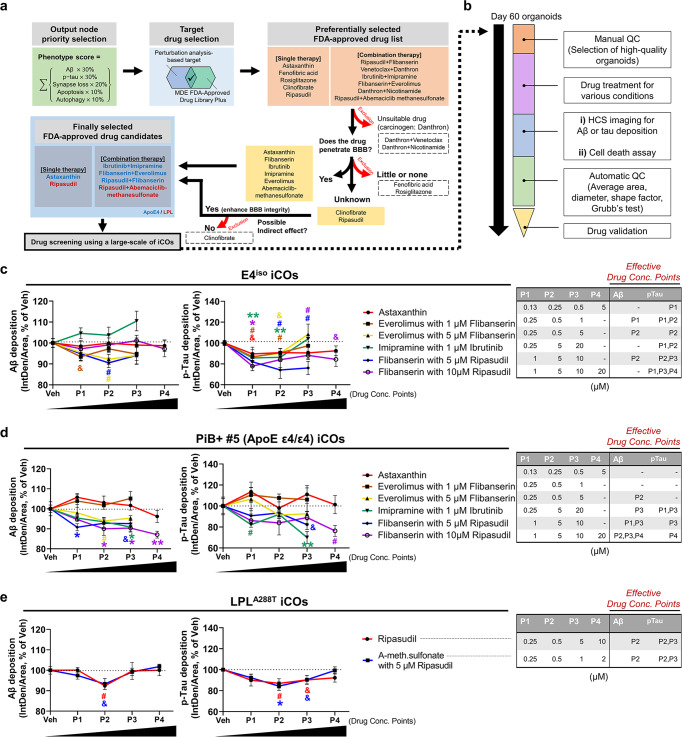
https://cdn.ncbi.nlm.nih.gov/pmc/blobs/054c/7804132/e640d1b27b1b/41467_2020_20440_Fig6_HTML.jpg
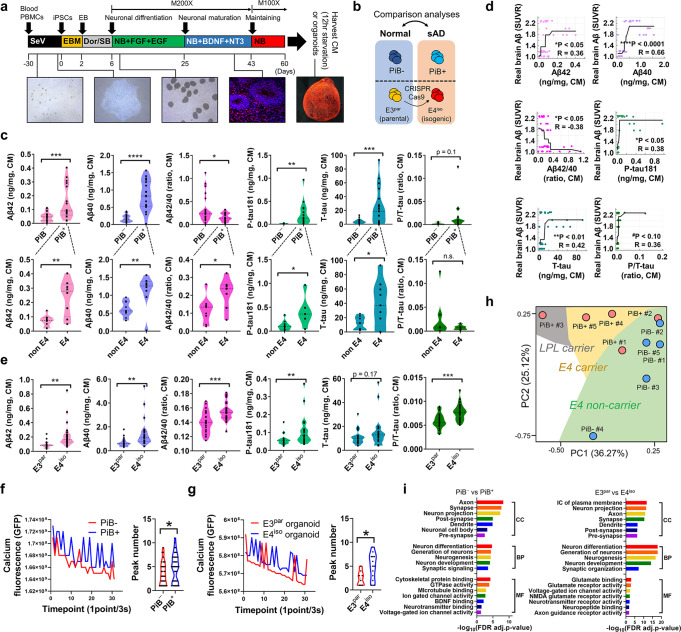
https://cdn.ncbi.nlm.nih.gov/pmc/blobs/054c/7804132/e6bf1c444e69/41467_2020_20440_Fig1_HTML.jpg
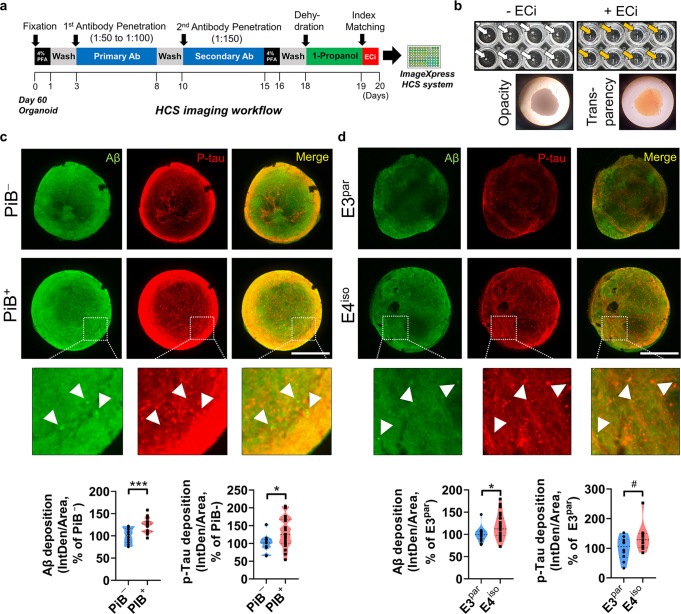
https://cdn.ncbi.nlm.nih.gov/pmc/blobs/054c/7804132/25c7346e9e1c/41467_2020_20440_Fig2_HTML.jpg
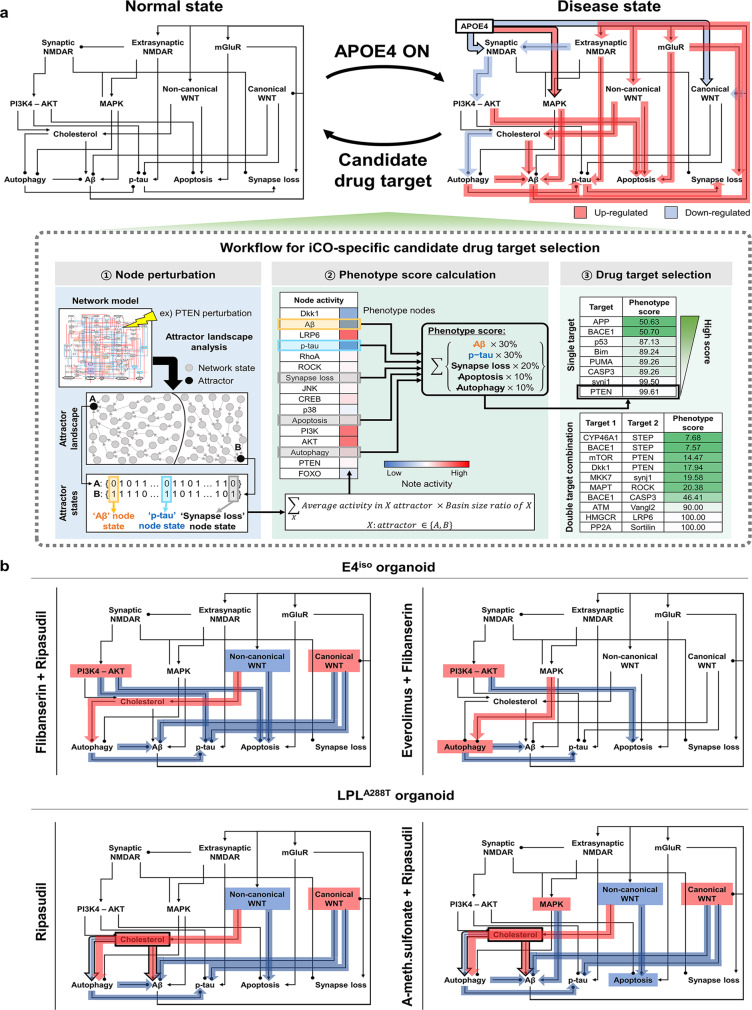
https://cdn.ncbi.nlm.nih.gov/pmc/blobs/054c/7804132/cfeb873c95e5/41467_2020_20440_Fig3_HTML.jpg
https://cdn.ncbi.nlm.nih.gov/pmc/blobs/054c/7804132/09d49f68c411/41467_2020_20440_Fig4_HTML.jpg
https://cdn.ncbi.nlm.nih.gov/pmc/blobs/054c/7804132/0482cd4393c4/41467_2020_20440_Fig5_HTML.jpg
https://cdn.ncbi.nlm.nih.gov/pmc/blobs/054c/7804132/e640d1b27b1b/41467_2020_20440_Fig6_HTML.jpg
https://cdn.ncbi.nlm.nih.gov/pmc/blobs/054c/7804132/e6bf1c444e69/41467_2020_20440_Fig1_HTML.jpg
https://cdn.ncbi.nlm.nih.gov/pmc/blobs/054c/7804132/25c7346e9e1c/41467_2020_20440_Fig2_HTML.jpg
https://cdn.ncbi.nlm.nih.gov/pmc/blobs/054c/7804132/cfeb873c95e5/41467_2020_20440_Fig3_HTML.jpg
https://cdn.ncbi.nlm.nih.gov/pmc/blobs/054c/7804132/09d49f68c411/41467_2020_20440_Fig4_HTML.jpg
https://cdn.ncbi.nlm.nih.gov/pmc/blobs/054c/7804132/0482cd4393c4/41467_2020_20440_Fig5_HTML.jpg
https://cdn.ncbi.nlm.nih.gov/pmc/blobs/054c/7804132/e640d1b27b1b/41467_2020_20440_Fig6_HTML.jpg

相似文献

1
A logical network-based drug-screening platform for Alzheimer's disease representing pathological features of human brain organoids.基于逻辑网络的阿尔茨海默病药物筛选平台,代表了人脑类器官的病理特征。
Nat Commun. 2021 Jan 12;12(1):280. doi: 10.1038/s41467-020-20440-5.
2
Optimization of cerebral organoids: a more qualified model for Alzheimer's disease research.脑类器官的优化:阿尔茨海默病研究更具资质的模型。
Transl Neurodegener. 2021 Aug 9;10(1):27. doi: 10.1186/s40035-021-00252-3.
3
Culture Variabilities of Human iPSC-Derived Cerebral Organoids Are a Major Issue for the Modelling of Phenotypes Observed in Alzheimer's Disease.人诱导多能干细胞衍生的脑类器官的培养变异性是阿尔茨海默病中观察到的表型建模的一个主要问题。
Stem Cell Rev Rep. 2022 Feb;18(2):718-731. doi: 10.1007/s12015-021-10147-5. Epub 2021 Mar 16.
4
Modeling Alzheimer's Disease Using Human Brain Organoids.利用人脑类器官模拟阿尔茨海默病。
Methods Mol Biol. 2023;2561:135-158. doi: 10.1007/978-1-0716-2655-9_7.
5
Enhanced Neuronal Activity and Asynchronous Calcium Transients Revealed in a 3D Organoid Model of Alzheimer's Disease.在阿尔茨海默病的三维类器官模型中揭示的增强的神经元活动和异步钙瞬变
ACS Biomater Sci Eng. 2021 Jan 11;7(1):254-264. doi: 10.1021/acsbiomaterials.0c01583. Epub 2020 Dec 21.
6
The search for better animal models of Alzheimer's disease.寻找更好的阿尔茨海默病动物模型。
Nature. 2018 Jul;559(7715):S13-S15. doi: 10.1038/d41586-018-05722-9.
7
Modeling Sporadic Alzheimer's Disease in Human Brain Organoids under Serum Exposure.在血清暴露下的人类脑类器官中模拟散发性阿尔茨海默病。
Adv Sci (Weinh). 2021 Sep;8(18):e2101462. doi: 10.1002/advs.202101462. Epub 2021 Aug 2.
8
Human iPSC-Derived Neural Models for Studying Alzheimer's Disease: from Neural Stem Cells to Cerebral Organoids.人诱导多能干细胞衍生的神经模型用于研究阿尔茨海默病:从神经干细胞到大脑类器官。
Stem Cell Rev Rep. 2022 Feb;18(2):792-820. doi: 10.1007/s12015-021-10254-3. Epub 2022 Feb 2.
9
APOE4 exacerbates synapse loss and neurodegeneration in Alzheimer's disease patient iPSC-derived cerebral organoids.载脂蛋白 E4 加剧了阿尔茨海默病患者 iPSC 衍生脑类器官中的突触损失和神经退行性变。
Nat Commun. 2020 Nov 2;11(1):5540. doi: 10.1038/s41467-020-19264-0.
10
Human Pluripotent Stem Cell-Derived Neural Cells as a Relevant Platform for Drug Screening in Alzheimer's Disease.人多能干细胞衍生的神经细胞作为阿尔茨海默病药物筛选的相关平台。
Int J Mol Sci. 2020 Sep 18;21(18):6867. doi: 10.3390/ijms21186867.

引用本文的文献

1
CLL to Richter syndrome: Integrating network strategies with experiments elucidating disease drivers and personalized therapies.慢性淋巴细胞白血病向 Richter 综合征的转变:将网络策略与阐明疾病驱动因素和个性化疗法的实验相结合。
Sci Adv. 2025 Sep 12;11(37):eadu7705. doi: 10.1126/sciadv.adu7705.
2
Critical analysis of translational potential of rodent models of white matter pathology across a wide spectrum of human diseases.对白质病理学啮齿动物模型在广泛人类疾病中的转化潜力的批判性分析。
Cell Death Dis. 2025 Jul 31;16(1):580. doi: 10.1038/s41419-025-07893-6.
3
CRISPR/Cas9 and iPSC-Based Therapeutic Approaches in Alzheimer's Disease.

本文引用的文献

1
High-throughput screening of human induced pluripotent stem cell-derived brain organoids.人诱导多能干细胞来源的脑类器官的高通量筛选
J Neurosci Methods. 2020 Apr 1;335:108627. doi: 10.1016/j.jneumeth.2020.108627. Epub 2020 Feb 4.
2
Alzheimer's disease-associated (hydroxy)methylomic changes in the brain and blood.阿尔茨海默病相关的(羟)甲基组学改变在大脑和血液中。
Clin Epigenetics. 2019 Nov 27;11(1):164. doi: 10.1186/s13148-019-0755-5.
3
Alzheimer Disease: An Update on Pathobiology and Treatment Strategies.阿尔茨海默病:病理生物学与治疗策略的最新研究进展。
基于CRISPR/Cas9和诱导多能干细胞的阿尔茨海默病治疗方法
Antioxidants (Basel). 2025 Jun 25;14(7):781. doi: 10.3390/antiox14070781.
4
technology and ADMET research in traditional Chinese medicine.中药中的技术与ADMET研究
Front Pharmacol. 2025 Jul 9;16:1605330. doi: 10.3389/fphar.2025.1605330. eCollection 2025.
5
Brain Organoids and Assembloids-From Disease Modeling to Drug Discovery.脑类器官和组装体——从疾病建模到药物发现
Cells. 2025 Jun 4;14(11):842. doi: 10.3390/cells14110842.
6
Brain organoid model systems of neurodegenerative diseases: recent progress and future prospects.神经退行性疾病的脑类器官模型系统:最新进展与未来展望
Front Neurosci. 2025 May 23;19:1604435. doi: 10.3389/fnins.2025.1604435. eCollection 2025.
7
Human cerebral organoids: Complex, versatile and human-relevant models of neural development and brain diseases.人类大脑类器官:神经发育和脑部疾病的复杂、多功能且与人类相关的模型。
Neural Regen Res. 2025 May 6. doi: 10.4103/NRR.NRR-D-24-01639.
8
Current Development of iPSC-Based Modeling in Neurodegenerative Diseases.基于诱导多能干细胞的神经退行性疾病建模的当前进展
Int J Mol Sci. 2025 Apr 16;26(8):3774. doi: 10.3390/ijms26083774.
9
Non-Invasive Quality Control of Organoid Cultures Using Mesofluidic CSTR Bioreactors and High-Content Imaging.使用微流控连续搅拌槽式生物反应器和高内涵成像技术对类器官培养物进行非侵入性质量控制
Adv Mater Technol. 2025 Feb 5;10(3). doi: 10.1002/admt.202400473. Epub 2024 Aug 31.
10
Imaging 3D cell cultures with optical microscopy.用光学显微镜对3D细胞培养物进行成像。
Nat Methods. 2025 Apr 17. doi: 10.1038/s41592-025-02647-w.
Cell. 2019 Oct 3;179(2):312-339. doi: 10.1016/j.cell.2019.09.001. Epub 2019 Sep 26.
4
Three-dimensional modeling of human neurodegeneration: brain organoids coming of age.人类神经退行性疾病的三维建模:类脑器官趋于成熟。
Mol Psychiatry. 2020 Feb;25(2):254-274. doi: 10.1038/s41380-019-0500-7. Epub 2019 Aug 23.
5
Disease modelling in human organoids.人类类器官中的疾病建模。
Dis Model Mech. 2019 Jul 29;12(7):dmm039347. doi: 10.1242/dmm.039347.
6
A Breakdown in Metabolic Reprogramming Causes Microglia Dysfunction in Alzheimer's Disease.代谢重编程的崩溃导致阿尔茨海默病中小胶质细胞功能障碍。
Cell Metab. 2019 Sep 3;30(3):493-507.e6. doi: 10.1016/j.cmet.2019.06.005. Epub 2019 Jun 27.
7
Individual brain organoids reproducibly form cell diversity of the human cerebral cortex.个体脑类器官可重现形成人类大脑皮层的细胞多样性。
Nature. 2019 Jun;570(7762):523-527. doi: 10.1038/s41586-019-1289-x. Epub 2019 Jun 5.
8
Genetic meta-analysis of diagnosed Alzheimer's disease identifies new risk loci and implicates Aβ, tau, immunity and lipid processing.基于诊断的阿尔茨海默病的全基因组关联荟萃分析鉴定出新的风险位点,并提示 Aβ、tau、免疫和脂类代谢过程的作用。
Nat Genet. 2019 Mar;51(3):414-430. doi: 10.1038/s41588-019-0358-2. Epub 2019 Feb 28.
9
Plasma tau/amyloid-β1-42 ratio predicts brain tau deposition and neurodegeneration in Alzheimer's disease.血浆 tau/淀粉样蛋白-β1-42 比值可预测阿尔茨海默病患者的脑 tau 沉积和神经退行性变。
Brain. 2019 Mar 1;142(3):771-786. doi: 10.1093/brain/awy347.
10
Broad applicability of a streamlined ethyl cinnamate-based clearing procedure.一种简化的肉桂酸乙酯基透明化处理程序的广泛适用性。
Development. 2019 Feb 1;146(3):dev166884. doi: 10.1242/dev.166884.