National Clinical Research Center for Metabolic Diseases, Metabolic Syndrome Research Center, and Department of Metabolism and Endocrinology, The Second Xiangya Hospital of Central South University, 410011, Changsha, Hunan, China.
Department of Pharmacology, University of Texas Health Science Center at San Antonio, San Antonio, TX, 78229, USA.
Nat Commun. 2021 Jan 12;12(1):326. doi: 10.1038/s41467-020-20665-4.
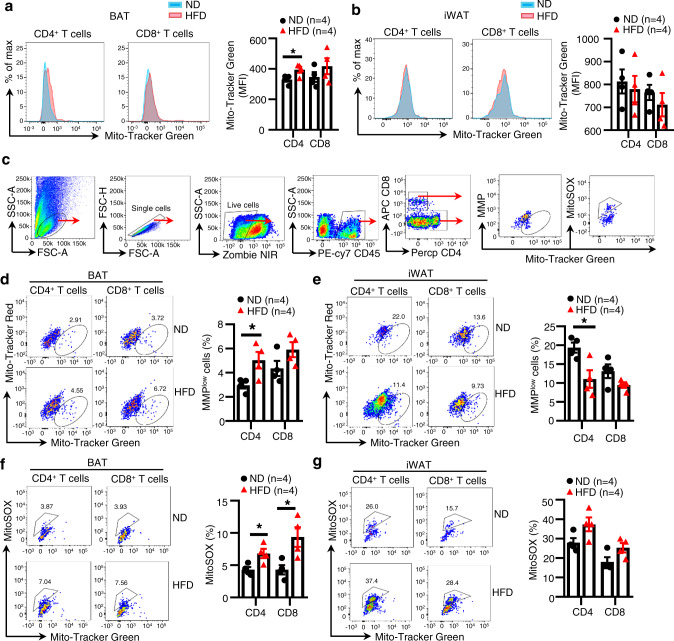
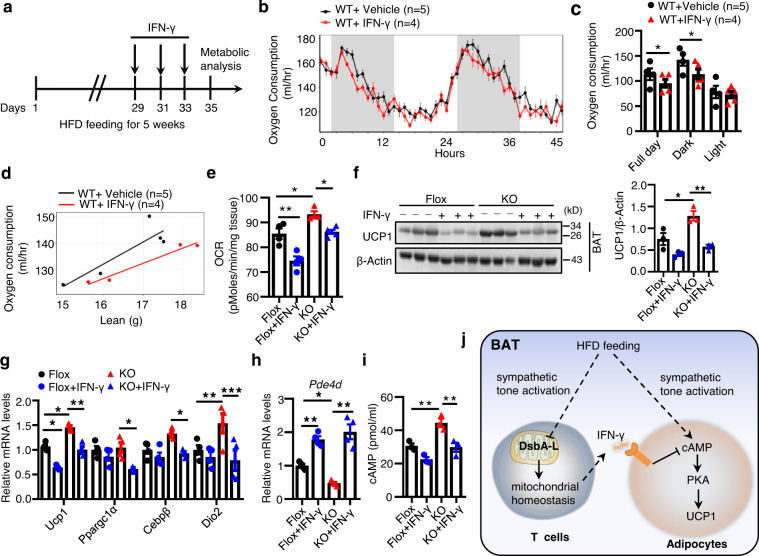
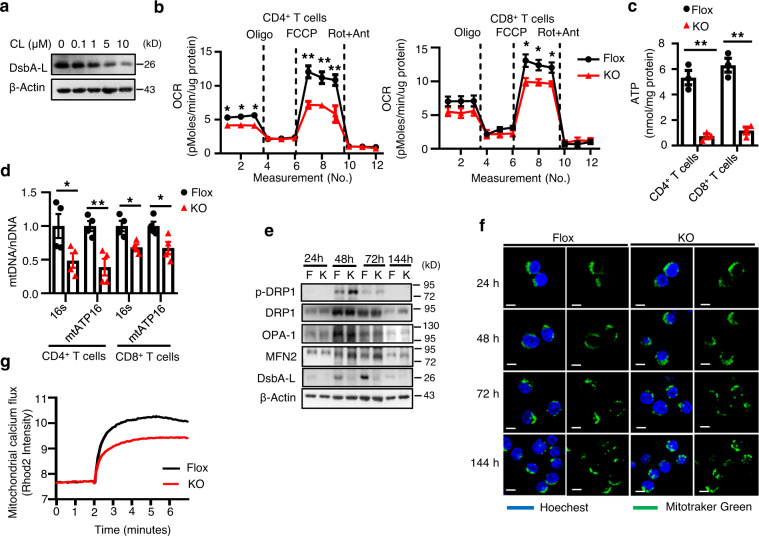
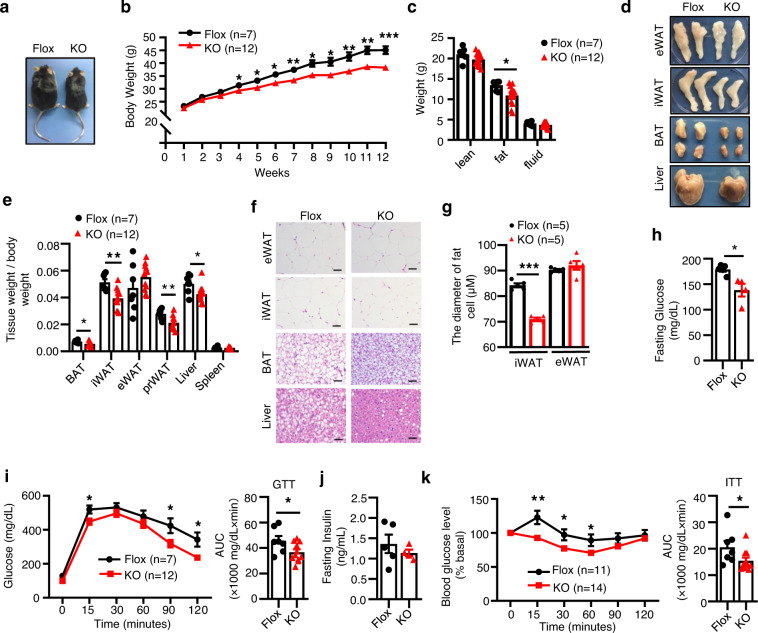
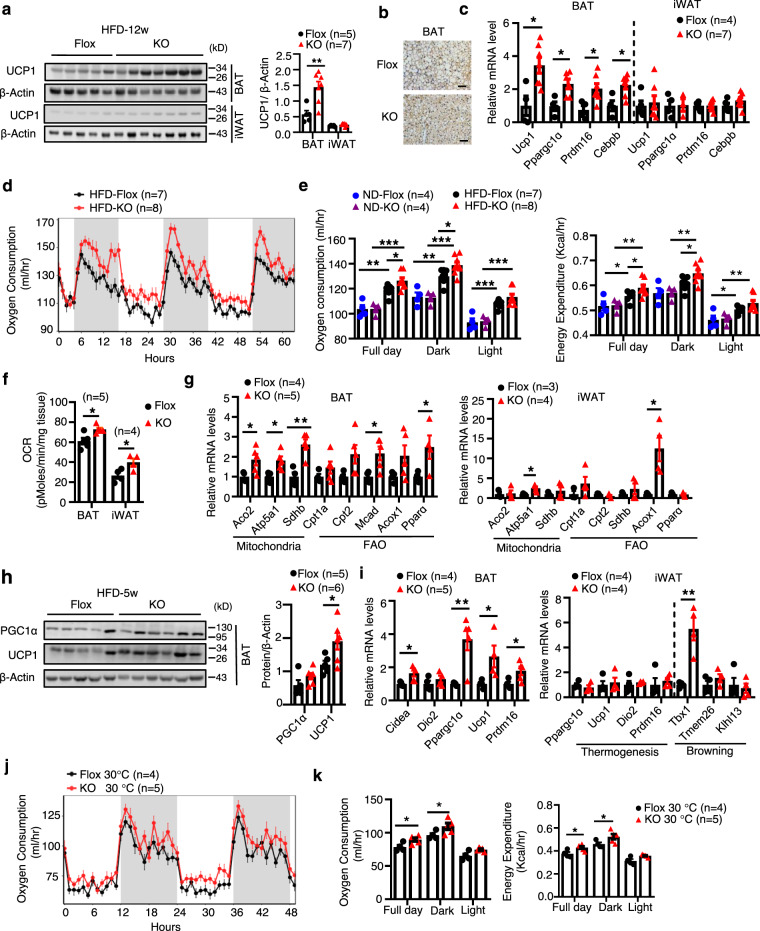
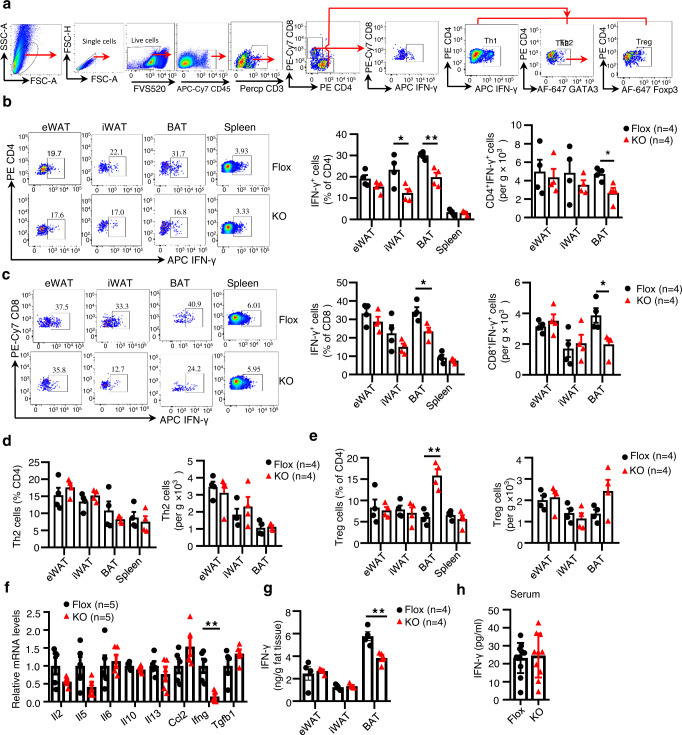
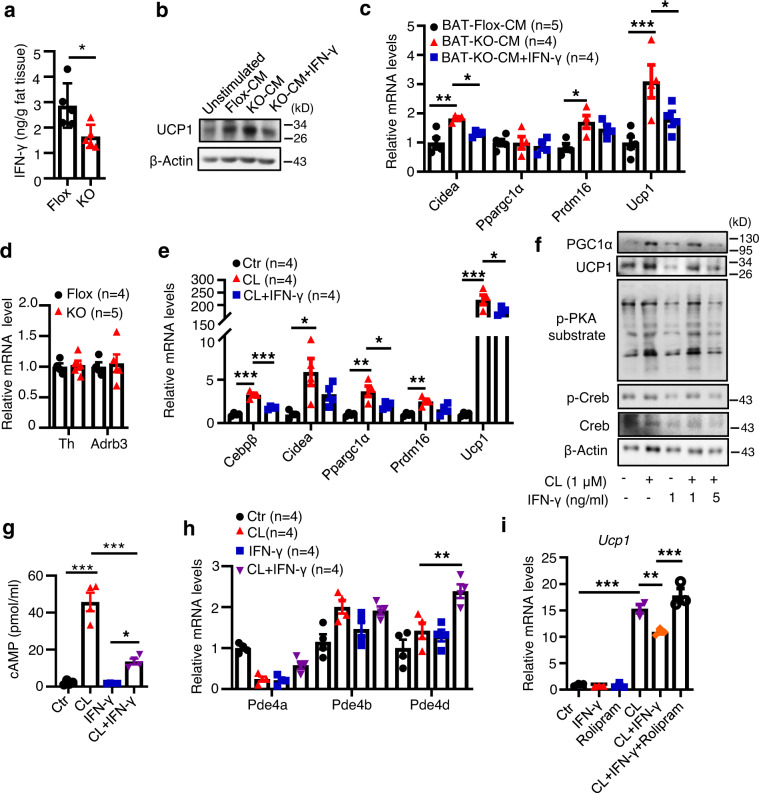
Adipose tissue-resident T cells have been recognized as a critical regulator of thermogenesis and energy expenditure, yet the underlying mechanisms remain unclear. Here, we show that high-fat diet (HFD) feeding greatly suppresses the expression of disulfide-bond A oxidoreductase-like protein (DsbA-L), a mitochondria-localized chaperone protein, in adipose-resident T cells, which correlates with reduced T cell mitochondrial function. T cell-specific knockout of DsbA-L enhances diet-induced thermogenesis in brown adipose tissue (BAT) and protects mice from HFD-induced obesity, hepatosteatosis, and insulin resistance. Mechanistically, DsbA-L deficiency in T cells reduces IFN-γ production and activates protein kinase A by reducing phosphodiesterase-4D expression, leading to increased BAT thermogenesis. Taken together, our study uncovers a mechanism by which T cells communicate with brown adipocytes to regulate BAT thermogenesis and whole-body energy homeostasis. Our findings highlight a therapeutic potential of targeting T cells for the treatment of over nutrition-induced obesity and its associated metabolic diseases.
脂肪组织驻留 T 细胞已被认为是产热和能量消耗的关键调节因子,但潜在机制尚不清楚。在这里,我们表明高脂肪饮食(HFD)喂养极大地抑制了驻留于脂肪组织中的 T 细胞中线粒体定位的伴侣蛋白二硫键 A 氧化还原酶样蛋白(DsbA-L)的表达,这与 T 细胞线粒体功能降低有关。T 细胞特异性敲除 DsbA-L 可增强棕色脂肪组织(BAT)的饮食诱导产热,并防止小鼠发生 HFD 诱导的肥胖、肝脂肪变性和胰岛素抵抗。在机制上,T 细胞中 DsbA-L 的缺乏通过降低磷酸二酯酶 4D 的表达减少 IFN-γ的产生并激活蛋白激酶 A,从而导致 BAT 产热增加。总之,我们的研究揭示了 T 细胞与棕色脂肪细胞通讯以调节 BAT 产热和全身能量稳态的机制。我们的发现强调了针对 T 细胞治疗由过度营养引起的肥胖及其相关代谢疾病的治疗潜力。