Radiomics Group, Vall d'Hebron Institute of Oncology (VHIO), 117 Natzaret, 08035, Barcelona, Spain.
Department of Radiology, Institut de Diagnòstic Per La Imatge (IDI), Bellvitge University Hospital, Barcelona, Spain.
Sci Rep. 2021 Jan 12;11(1):695. doi: 10.1038/s41598-020-79829-3.
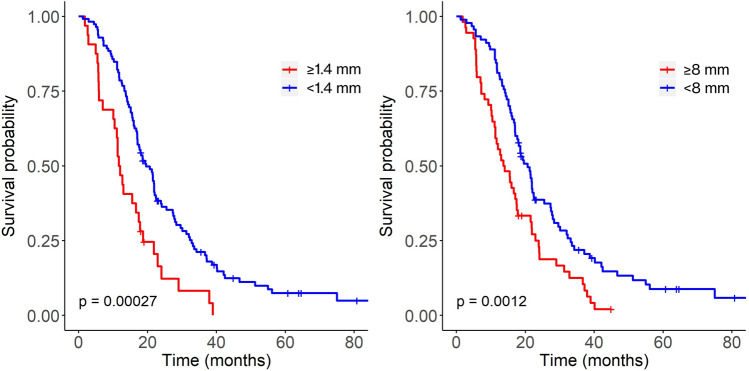
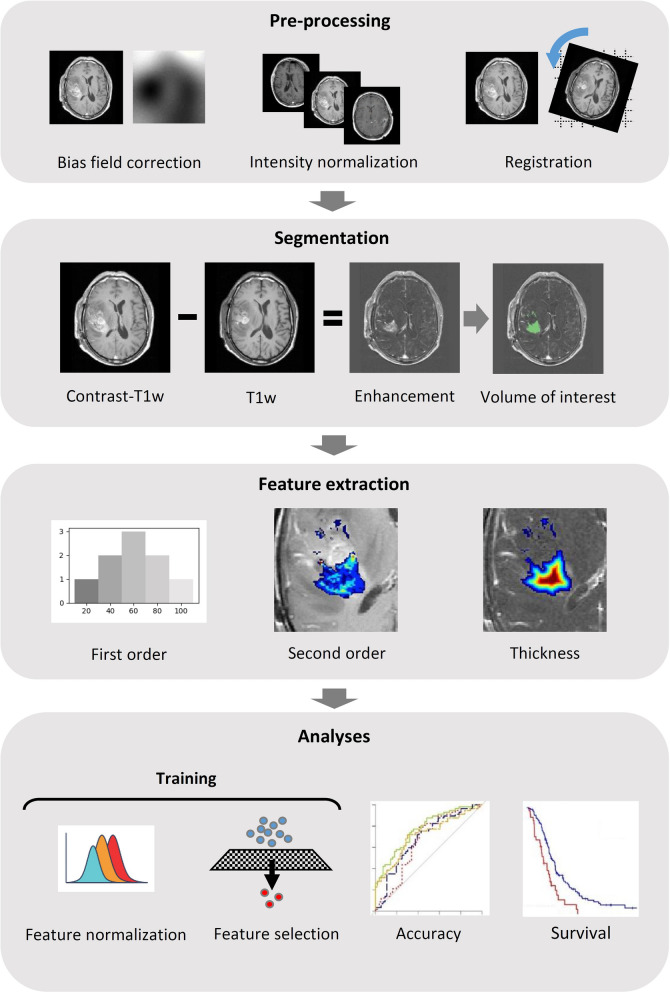
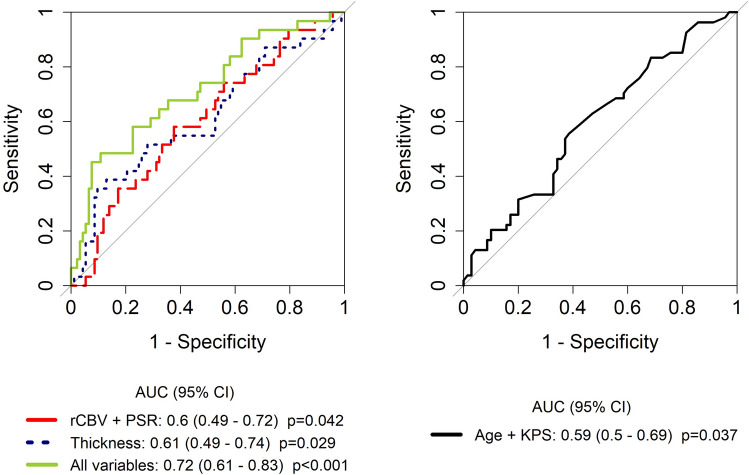
Glioblastoma is the most common primary brain tumor. Standard therapy consists of maximum safe resection combined with adjuvant radiochemotherapy followed by chemotherapy with temozolomide, however prognosis is extremely poor. Assessment of the residual tumor after surgery and patient stratification into prognostic groups (i.e., by tumor volume) is currently hindered by the subjective evaluation of residual enhancement in medical images (magnetic resonance imaging [MRI]). Furthermore, objective evidence defining the optimal time to acquire the images is lacking. We analyzed 144 patients with glioblastoma, objectively quantified the enhancing residual tumor through computational image analysis and assessed the correlation with survival. Pathological enhancement thickness on post-surgical MRI correlated with survival (hazard ratio: 1.98, p < 0.001). The prognostic value of several imaging and clinical variables was analyzed individually and combined (radiomics AUC 0.71, p = 0.07; combined AUC 0.72, p < 0.001). Residual enhancement thickness and radiomics complemented clinical data for prognosis stratification in patients with glioblastoma. Significant results were only obtained for scans performed between 24 and 72 h after surgery, raising the possibility of confounding non-tumor enhancement in very early post-surgery MRI. Regarding the extent of resection, and in agreement with recent studies, the association between the measured tumor remnant and survival supports maximal safe resection whenever possible.
胶质母细胞瘤是最常见的原发性脑肿瘤。标准疗法包括最大限度地安全切除,辅以辅助放化疗,然后用替莫唑胺进行化疗,但预后极差。目前,手术后残留肿瘤的评估和患者分层为预后组(即根据肿瘤体积)受到医学图像(磁共振成像 [MRI])中残留增强的主观评估的阻碍。此外,缺乏定义获取图像最佳时间的客观证据。我们分析了 144 名胶质母细胞瘤患者,通过计算图像分析客观量化了增强的残留肿瘤,并评估了与生存的相关性。术后 MRI 上的病理性增强厚度与生存相关(风险比:1.98,p<0.001)。单独和联合分析了几种影像学和临床变量的预后价值(放射组学 AUC 为 0.71,p=0.07;联合 AUC 为 0.72,p<0.001)。残留增强厚度和放射组学为胶质母细胞瘤患者的预后分层补充了临床数据。仅在手术后 24 至 72 小时之间进行的扫描中获得了有统计学意义的结果,这增加了在非常早期的术后 MRI 中存在非肿瘤增强的可能性。关于切除范围,与最近的研究一致,测量的肿瘤残余物与生存之间的关联支持尽可能进行最大限度的安全切除。