Fang Jia-Long, Beland Frederick A, Tang Yangshun, Roffler Steve R
Division of Biochemical Toxicology, National Center for Toxicological Research, Jefferson, Arkansas, 72079, USA.
Institute of Biomedical Sciences, Academia Sinica, Taipei, 11529, Taiwan.
Toxicol Rep. 2020 Dec 26;8:148-154. doi: 10.1016/j.toxrep.2020.12.022. eCollection 2021.
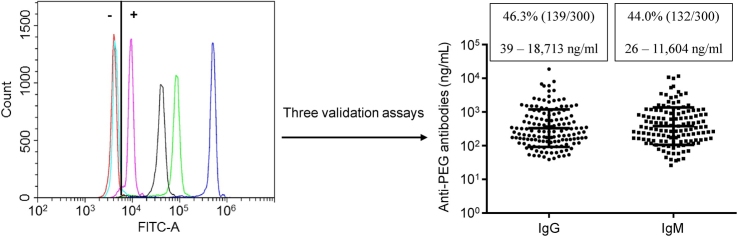
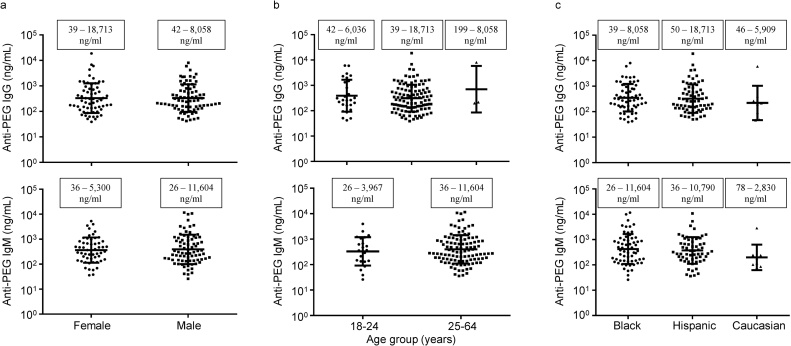
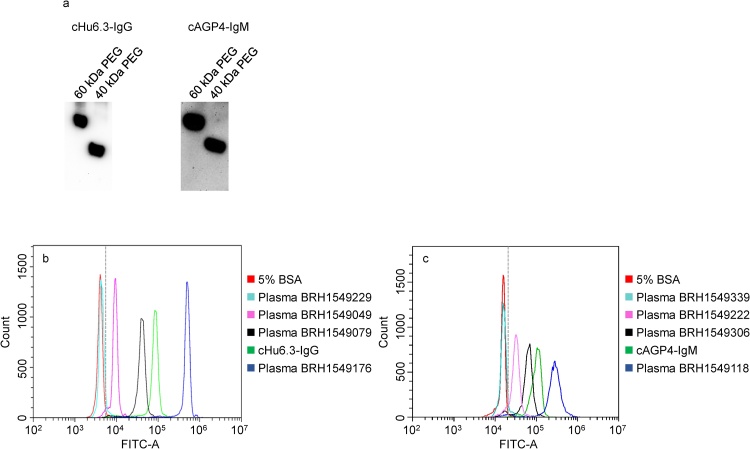
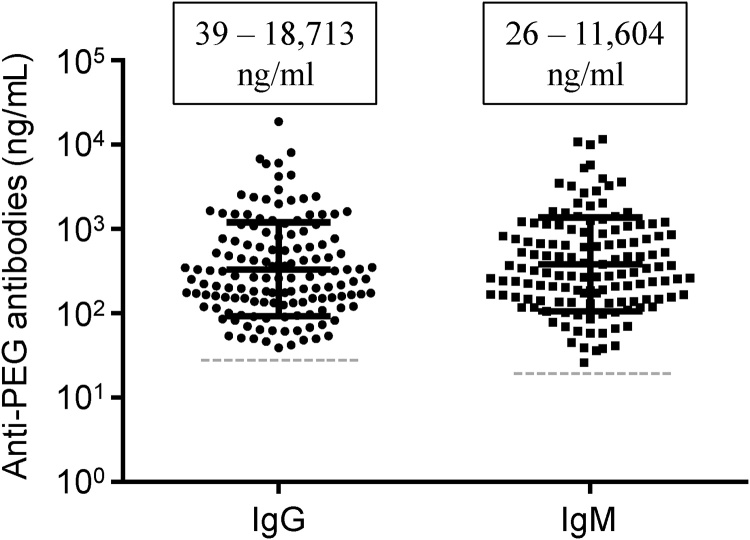
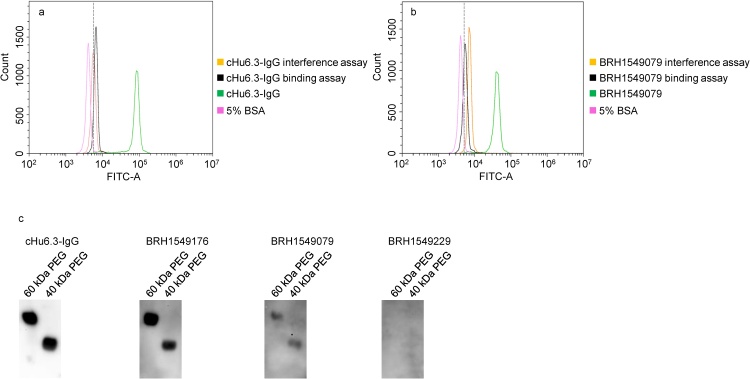
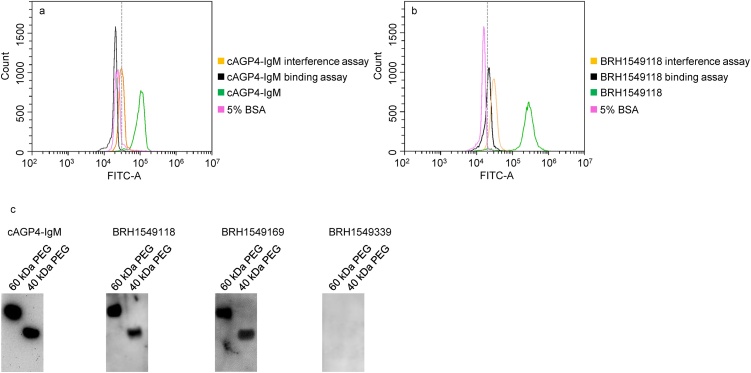
Polyethylene glycol (PEG) is a biocompatible polymer used in biotherapeutics to increase bioavailability, reduce the frequency of administration, and optimize pharmacokinetics. Anti-PEG antibodies have been detected in healthy individuals and may decrease efficacy and alter the pharmacokinetics of PEGylated therapeutics; however, the prevalence of anti-PEG antibodies is unclear. In this study, a flow cytometry assay was optimized to detect anti-PEG IgG and IgM in human blood plasma. Three hundred (300) plasma samples from healthy blood donors were screened; anti-PEG IgG or IgM was detected in 65.3% of the total population, with 21.3% having anti-PEG IgG, 19.0% having anti-PEG IgM, and 25.0% having both anti-PEG IgG and IgM. The presence of anti-PEG IgG and IgM was confirmed using a 0.5% Tween-20 interference assay, a 20 kDa PEGylated polystyrene bead binding assay, and Western blotting of purified plasma from human IgG and IgM purification columns. The concentrations of anti-PEG IgG and IgM in positive samples ranged from 39 ng/mL to 18.7 μg/mL and 26 ng/mL to 11.6 μg/mL, respectively. The highest prevalence of both anti-IgG and anti-IgM was in individuals 18-24 years of age. The prevalence of anti-PEG IgG and IgM tended to be higher in women but did not differ among races. Age, sex, and race were not associated with the concentrations of anti-PEG IgG or IgM. No correlation was found between anti-PEG IgG and IgM concentrations. Our study indicates that flow cytometry can be used to detect anti-PEG IgG and IgM antibodies in human plasma.
聚乙二醇(PEG)是一种生物相容性聚合物,用于生物治疗中以提高生物利用度、减少给药频率并优化药代动力学。在健康个体中已检测到抗PEG抗体,这些抗体可能会降低疗效并改变聚乙二醇化治疗药物的药代动力学;然而,抗PEG抗体的流行率尚不清楚。在本研究中,优化了一种流式细胞术检测方法,以检测人血浆中的抗PEG IgG和IgM。对300份来自健康献血者的血浆样本进行了筛查;在总人群中,65.3%检测到抗PEG IgG或IgM,其中21.3%有抗PEG IgG,19.0%有抗PEG IgM,25.0%同时有抗PEG IgG和IgM。使用0.5%吐温-20干扰试验、20 kDa聚乙二醇化聚苯乙烯珠结合试验以及来自人IgG和IgM纯化柱的纯化血浆的蛋白质印迹法,证实了抗PEG IgG和IgM的存在。阳性样本中抗PEG IgG和IgM的浓度分别为39 ng/mL至18.7 μg/mL和26 ng/mL至11.6 μg/mL。抗IgG和抗IgM两者的最高流行率出现在18 - 24岁的个体中。抗PEG IgG和IgM的流行率在女性中往往较高,但在不同种族之间没有差异。年龄、性别和种族与抗PEG IgG或IgM的浓度无关。未发现抗PEG IgG和IgM浓度之间存在相关性。我们的研究表明,流式细胞术可用于检测人血浆中的抗PEG IgG和IgM抗体。