Zzaman Wahidu, Biswas Rahul, Hossain Mohammad Afzal
Department of Food Engineering and Tea Technology, Shahjalal University of Science and Technology, Sylhet-3114, Bangladesh.
Heliyon. 2021 Jan 1;7(1):e05882. doi: 10.1016/j.heliyon.2020.e05882. eCollection 2021 Jan.
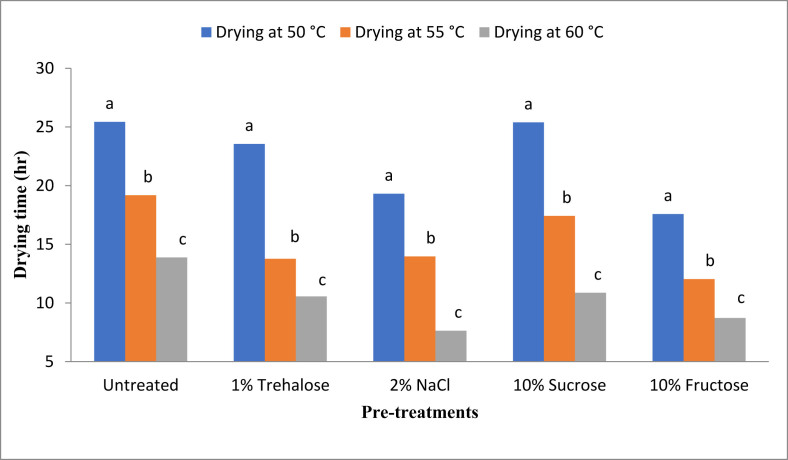
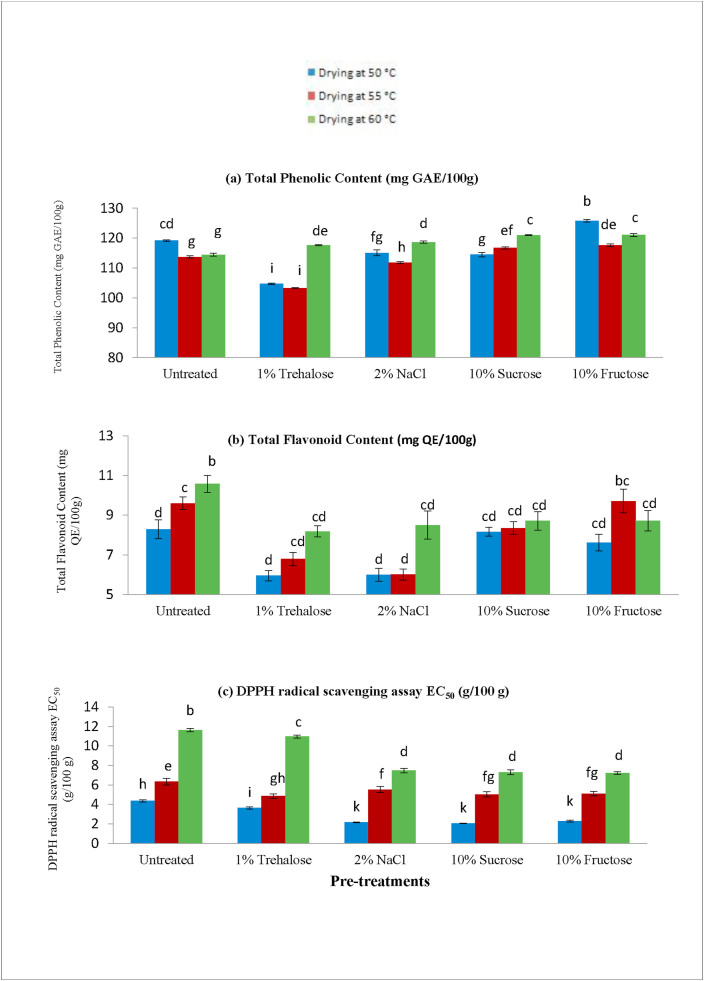
Drying of pineapple slices combined with different pre-treatments was done to reduce various adverse changes by adding satisfactory value. Process optimization was done by dipping the pineapple slices in four different solutions (1% trehalose, 2% NaCl, 10% sucrose, and 10% fructose) before drying. The effects of different pre-treatments and drying temperatures of 50, 55, and 60 °C with a constant 30% relative humidity (RH) were optimized based on the quality attributes, drying time and microbial load of dried pineapple slices. The optimal drying temperature was 55 °C using 1% trehalose pre-treatments based on the physical and biochemical properties. The reconstituted dried pineapples implied at this condition, contributed to the better structure preservation as indicated by the lower shrinkage (0.21) and the higher Coefficient of Rehydration (0.941), and rehydration ratio (6.840). On the other hand, the retention of color, vitamin C, B vitamins, and antioxidant activity of the samples were decreased by increasing drying time and temperatures. The highest Total Phenolic Content (121.02 mg GAE/100g), Total Flavonoid Content (8.72 mg QE/100g), and DPPH radical scavenging activity (7.22 EC g/100g) were found at 60 °C drying temperature with 10% fructose pretreatment's samples. The lowest drying time required was 7.64 h using 2% NaCl pre-treatment at 60 °C, considering the time required to reach 20% moisture content in the dried product at 30% RH. Based on the reported results, it is concluded that 1% trehalose at 50 °C can be used to develop high quality pineapple snacks, which maintained the maximum desired physicochemical and nutritious properties. This study could play an essential role in meeting the emerging demand of developing good quality nutritious dried pineapple snacks.
将菠萝片干燥并结合不同预处理,通过增加令人满意的价值来减少各种不利变化。在干燥前,将菠萝片浸入四种不同溶液(1%海藻糖、2%氯化钠、10%蔗糖和10%果糖)中进行工艺优化。基于干菠萝片的质量属性、干燥时间和微生物负荷,对50、55和60°C的不同预处理和干燥温度以及恒定30%相对湿度(RH)的效果进行了优化。基于物理和生化特性,使用1%海藻糖预处理时的最佳干燥温度为55°C。在此条件下复水的干菠萝,收缩率较低(0.21)、复水系数较高(0.941)和复水率较高(6.840),表明其结构保存较好。另一方面,随着干燥时间和温度的增加,样品的颜色、维生素C、B族维生素和抗氧化活性的保留率降低。在60°C干燥温度且采用10%果糖预处理的样品中,发现总酚含量最高(121.02 mg GAE/100g)、总黄酮含量最高(8.72 mg QE/100g)和DPPH自由基清除活性最高(7.22 EC g/100g)。考虑到在30%RH下干燥产品达到20%水分含量所需的时间,在60°C使用2%氯化钠预处理时所需的最短干燥时间为7.64 h。根据报告结果得出结论,50°C的1%海藻糖可用于开发高品质菠萝零食,其能保持最大程度的理想理化和营养特性。这项研究对于满足开发优质营养干菠萝零食的新需求可能发挥重要作用。