Briggs Andrew, Nasser Shuaib, Hammerby Eva, Buchs Sarah, Virchow J Christian
Department of Health Services Research & Policy, London School of Hygiene & Tropical Medicine, London, England.
Department of Allergy, Cambridge University Hospitals NHS Foundation Trust, Cambridge, England.
J Patient Rep Outcomes. 2021 Jan 12;5(1):6. doi: 10.1186/s41687-020-00274-x.
This paper reports the duration of moderate and severe exacerbations in patients with house dust mite induced allergic asthma and the impact on patients' quality of life.
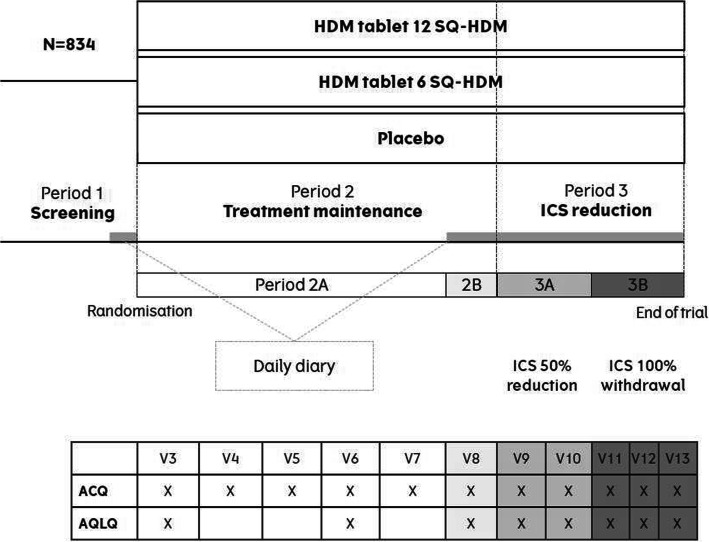
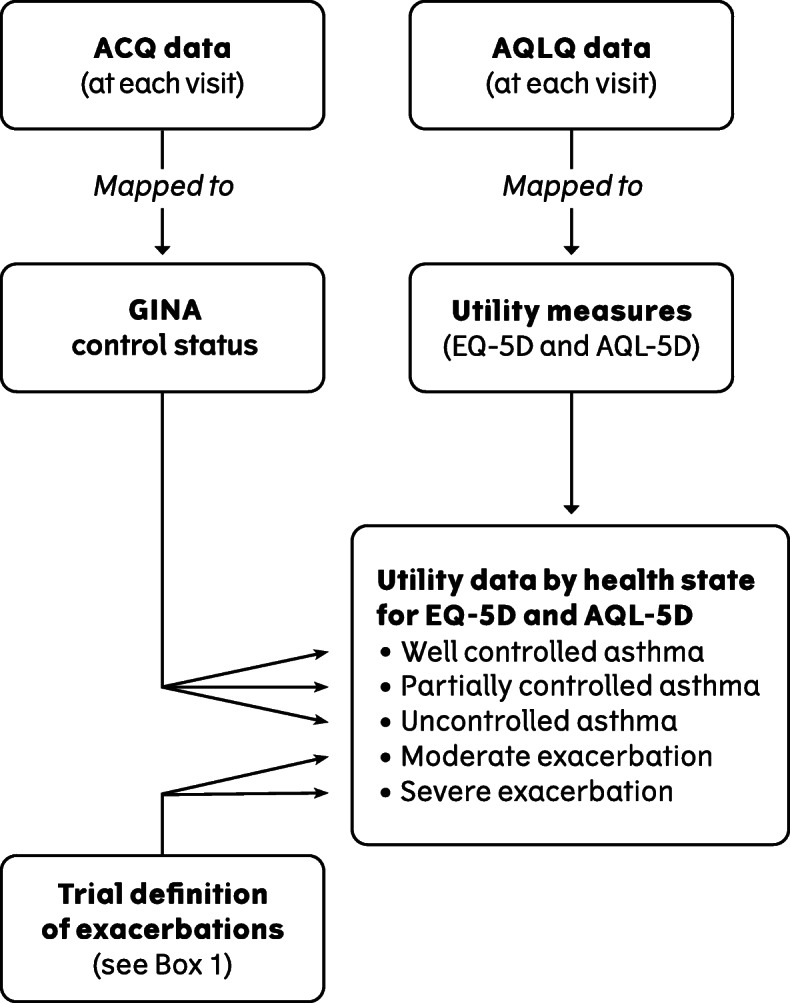
Post-hoc analyses were conducted using data collected during a phase III multi-national trial (MT-04) that investigated time to moderate or severe asthma exacerbation among 485 patients during withdrawal from inhaled corticosteroids. Patient diaries were analysed to ascertain duration of exacerbations. The impact on patients' quality of life was measured by calculating utilities for five health states using the EuroQol-5 Dimension (EQ-5D-3L) and Asthma Quality of Life Questionnaire (AQL-5D). A regression analysis predicted the disutility of moving from 'well controlled asthma' to the other four health states: 'partially controlled asthma', 'uncontrolled asthma', 'moderate exacerbation' and 'severe exacerbation'.
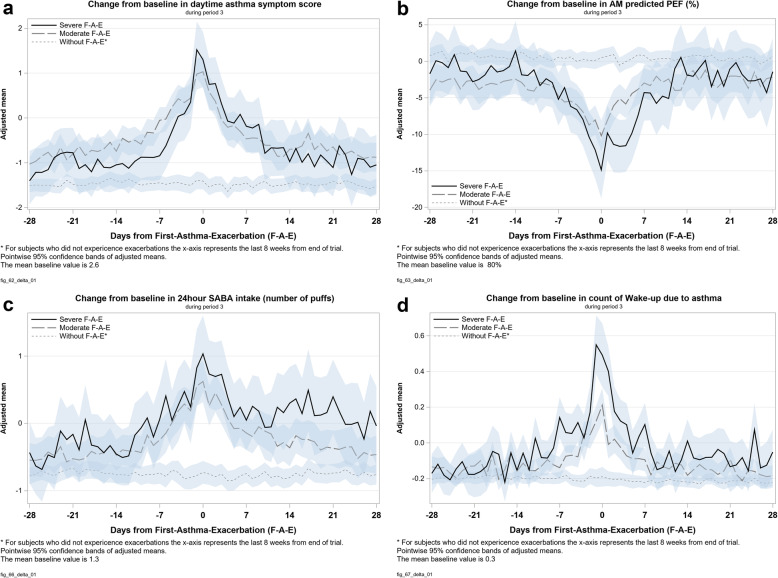
Two hundred four patients experienced exacerbations. Moderate and severe exacerbations involved statistically significant reductions in lung function compared to the constant peak expiratory flow observed for patients without exacerbations. Lung function decline occurred for 28 days, decreasing approximately 14 days before an exacerbation followed by a return to baseline over 14 days. Asthma symptoms, the use of short-acting β2-agonists, and frequency of nocturnal awakening all increased, starting 10-14 days before an exacerbation, and returned to baseline within 10-28 days following exacerbations. Compared to 'well controlled asthma', the disutility of having a 'moderate exacerbation' ranged from - 0.0834 to - 0.0921 (EQ-5D-3L) and from - 0.114 to - 0.121 (AQL-5D); and of having a 'severe exacerbation' from - 0.115 to - 0.163 (EQ-5D-3L) and from - 0.153 to - 0.217 (AQL-5D), depending on the length of the observation period.
The impact of moderate and severe exacerbations in house dust mite induced allergic asthma extends 14 days before and 28 days after the peak exacerbation event. The impact of exacerbations on patients' health-related quality of life (HRQoL) continues long after their occurrence.
本文报告了屋尘螨诱发的过敏性哮喘患者中度和重度加重发作的持续时间及其对患者生活质量的影响。
采用在一项III期多国试验(MT - 04)中收集的数据进行事后分析,该试验调查了485例患者在停用吸入性糖皮质激素期间出现中度或重度哮喘加重发作的时间。分析患者日记以确定加重发作的持续时间。通过使用欧洲五维健康量表(EQ - 5D - 3L)和哮喘生活质量问卷(AQL - 5D)计算五种健康状态的效用值,来衡量对患者生活质量的影响。回归分析预测了从“哮喘控制良好”转变为其他四种健康状态(“哮喘部分控制”、“哮喘未控制”、“中度加重发作”和“重度加重发作”)的负效用值。
204例患者出现了加重发作。与未出现加重发作的患者持续的最高呼气流量相比,中度和重度加重发作导致肺功能出现具有统计学意义的下降。肺功能下降持续28天,在加重发作前约14天开始下降,随后在14天内恢复到基线水平。哮喘症状、短效β2受体激动剂的使用以及夜间觉醒频率均在加重发作前10 - 14天开始增加,并在加重发作后10 - 28天内恢复到基线水平。与“哮喘控制良好”相比,“中度加重发作”的负效用值范围为 - 0.0834至 - 0.0921(EQ - 5D - 3L)和 - 0.