Laboratory of Mitochondrial Dynamics, Graduate School of Frontier Biosciences, Osaka University, Suita, Japan.
The Ubiquitin Project, Tokyo Metropolitan Institute of Medical Science, Tokyo, Japan.
EMBO J. 2021 Feb 1;40(3):e104705. doi: 10.15252/embj.2020104705. Epub 2021 Jan 13.
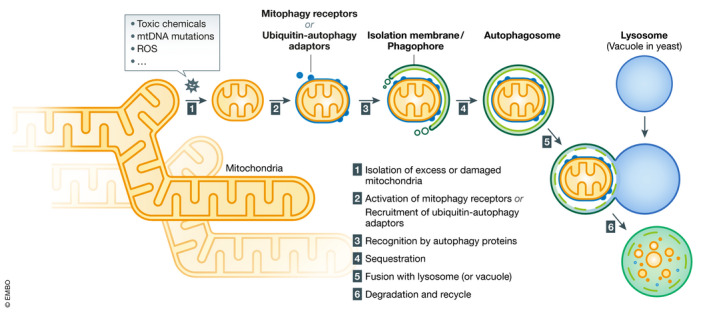
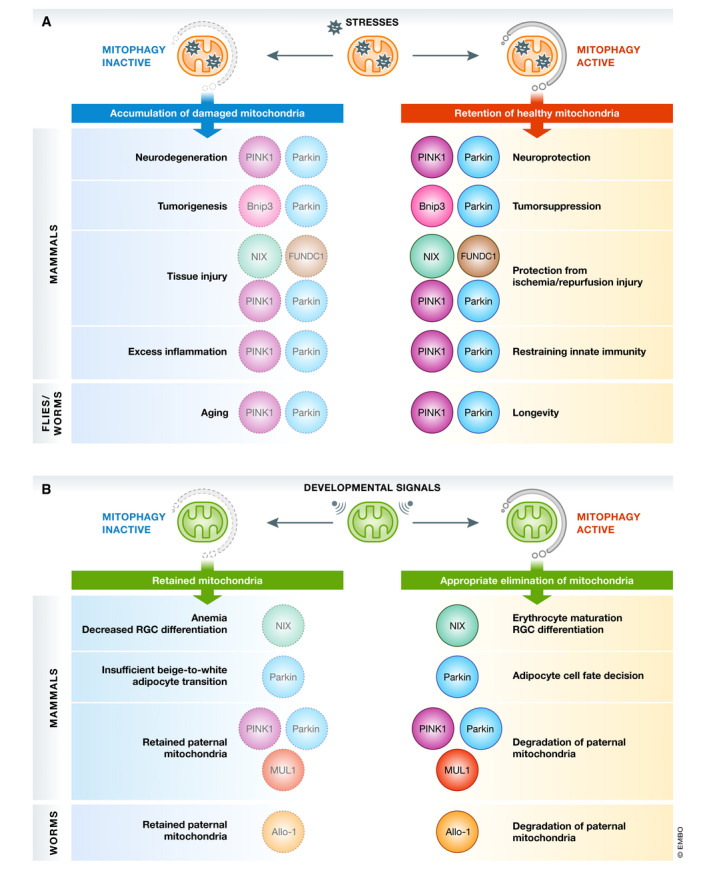
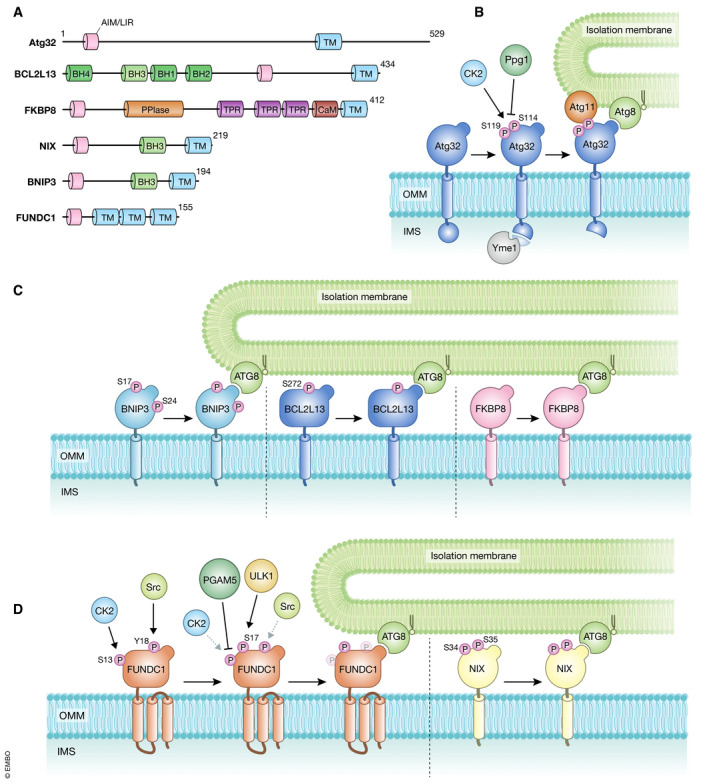
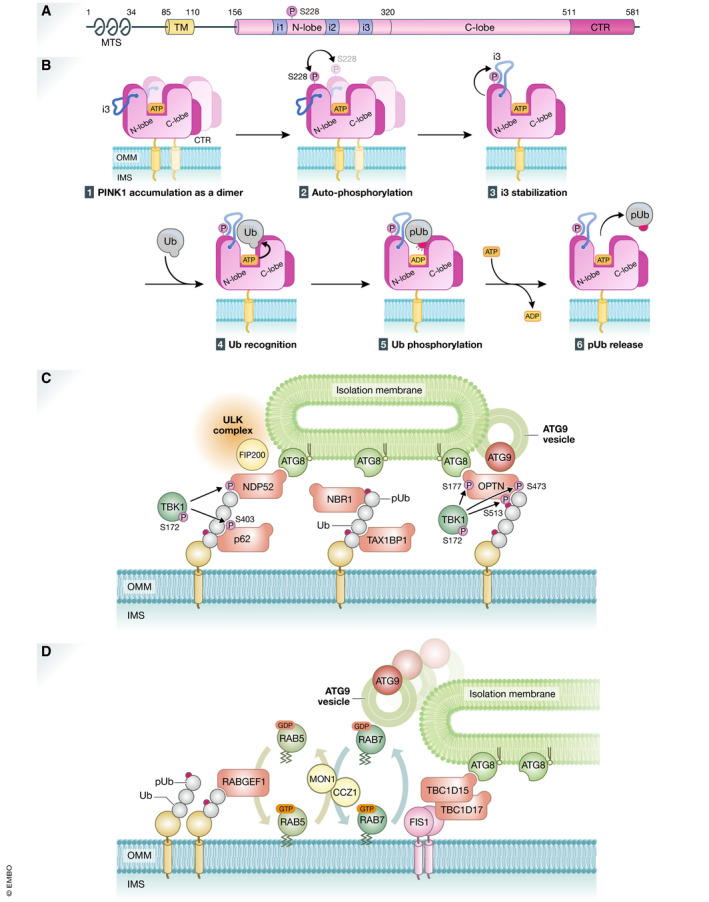
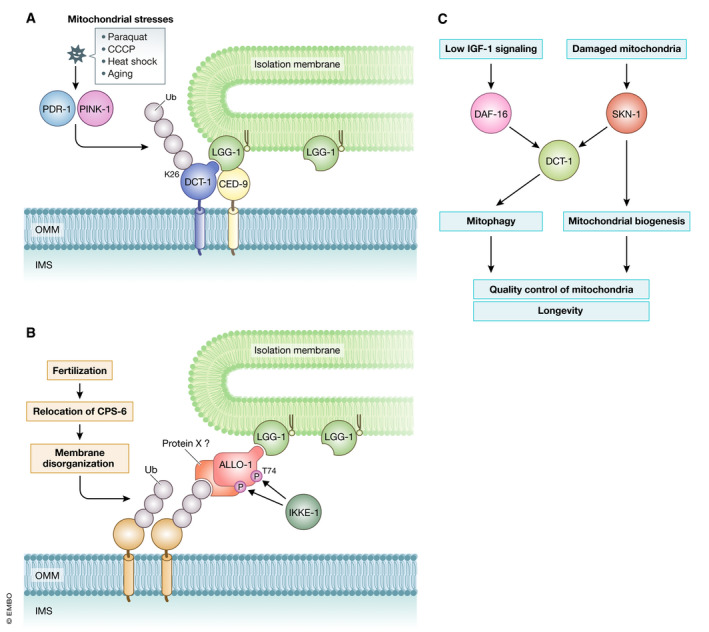
Degradation of mitochondria via a selective form of autophagy, named mitophagy, is a fundamental mechanism conserved from yeast to humans that regulates mitochondrial quality and quantity control. Mitophagy is promoted via specific mitochondrial outer membrane receptors, or ubiquitin molecules conjugated to proteins on the mitochondrial surface leading to the formation of autophagosomes surrounding mitochondria. Mitophagy-mediated elimination of mitochondria plays an important role in many processes including early embryonic development, cell differentiation, inflammation, and apoptosis. Recent advances in analyzing mitophagy in vivo also reveal high rates of steady-state mitochondrial turnover in diverse cell types, highlighting the intracellular housekeeping role of mitophagy. Defects in mitophagy are associated with various pathological conditions such as neurodegeneration, heart failure, cancer, and aging, further underscoring the biological relevance. Here, we review our current molecular understanding of mitophagy, and its physiological implications, and discuss how multiple mitophagy pathways coordinately modulate mitochondrial fitness and populations.
线粒体通过一种被称为自噬的选择性自噬形式进行降解,这是一种从酵母到人类都保守的基本机制,它可以调节线粒体的质量和数量控制。自噬通过特定的线粒体外膜受体或连接到线粒体表面蛋白上的泛素分子促进,导致自噬体围绕线粒体形成。线粒体介导的线粒体消除在许多过程中发挥着重要作用,包括早期胚胎发育、细胞分化、炎症和细胞凋亡。最近在体内分析自噬的进展也揭示了不同细胞类型中线粒体周转率的高比率,突出了自噬在细胞内的管家作用。自噬缺陷与多种病理状况有关,如神经退行性疾病、心力衰竭、癌症和衰老,进一步强调了其生物学相关性。在这里,我们回顾了我们目前对自噬的分子理解及其生理意义,并讨论了多种自噬途径如何协调调节线粒体的适应性和种群。