GAO: New York State Psychiatric Institute, New York, NY.
J Psychiatr Pract. 2021 Jan 21;27(1):33-42. doi: 10.1097/PRA.0000000000000524.
The US criminal justice system has witnessed dramatic increases in its mentally ill population during the past 50 years. The decreasing number of psychiatric beds is one proposed cause and more psychiatric beds may be one solution.
This study examined the relationships among large changes in local psychiatric bed capacity, local jail inmate populations, and the psychiatric burden at local general hospitals.
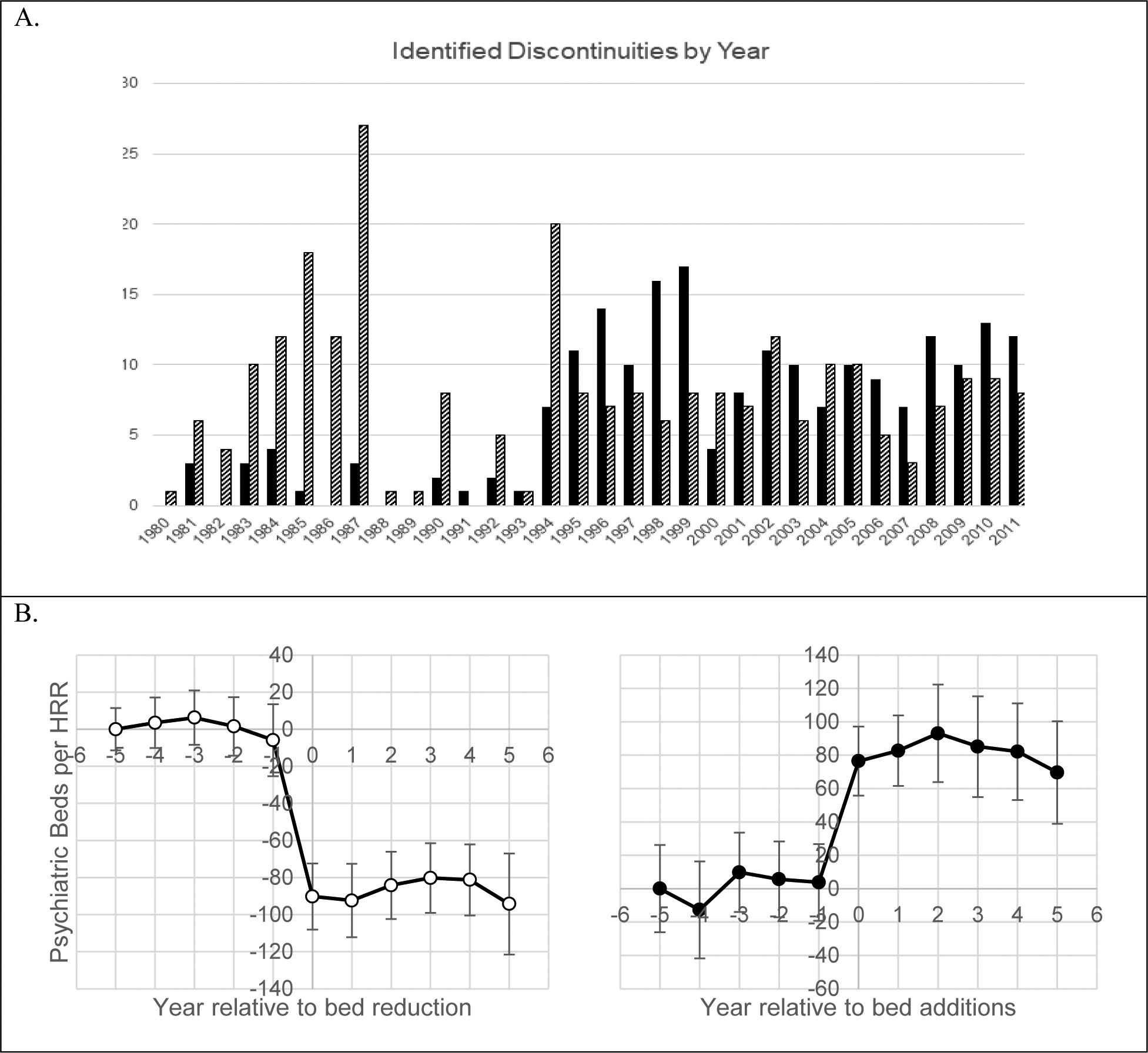
The study used a kernel method to identify abrupt changes in psychiatric bed capacity using the American Hospital Association Survey and Medicare Provider of Services data. Data were aggregated to the hospital referral region-year level and matched to the National Inpatient Sample of hospital discharges 1988-2015 and the Annual Survey of Jails 1985-2014. Subsequent analysis by event study examined the effect of abrupt bed changes on numbers of jail inmates.
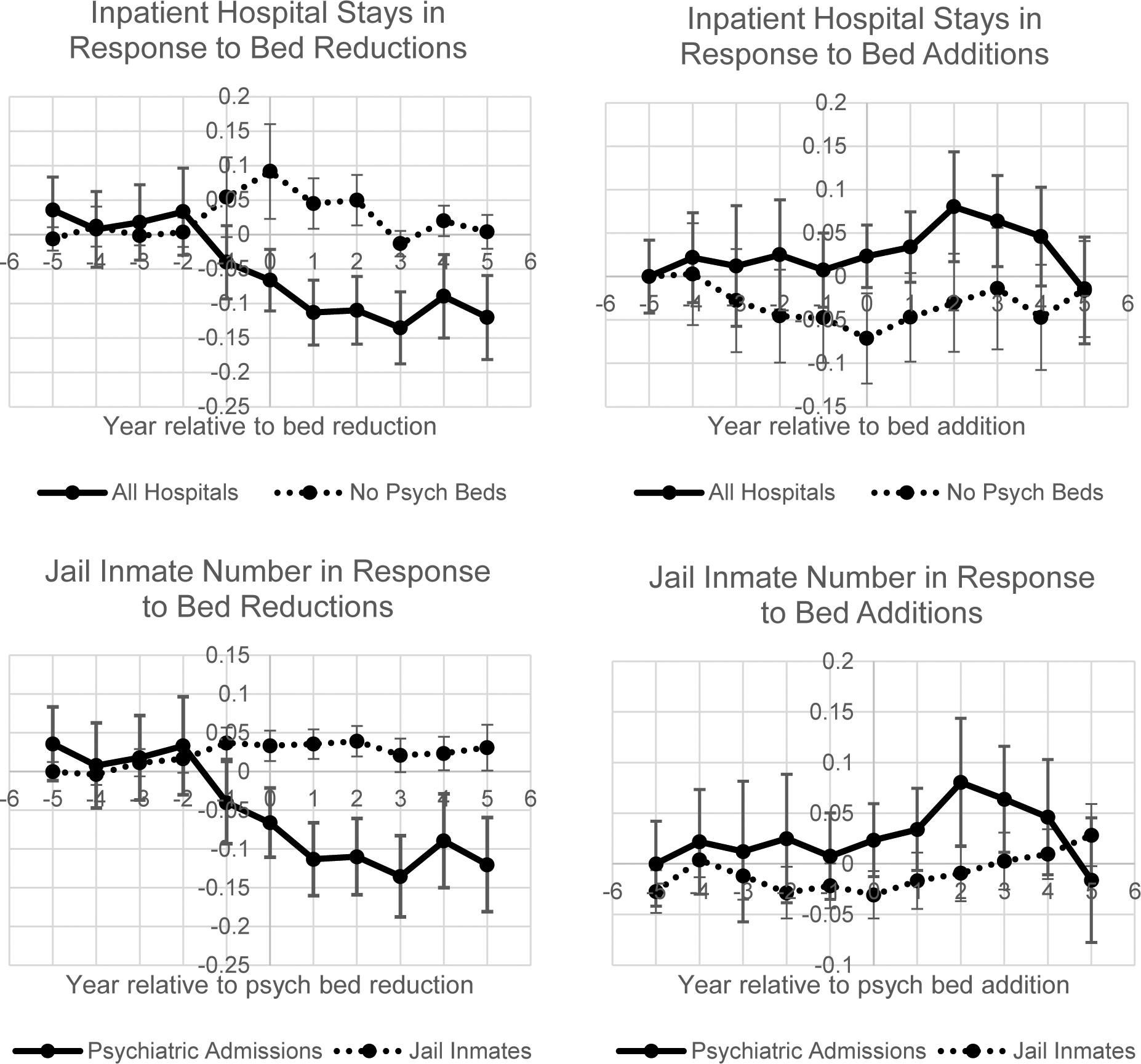
Decreases in local psychiatric bed capacity were associated with an average increase of 256.2 jail inmates (95% confidence interval: 3.3-509.1). Increases in psychiatric bed capacity were associated with an average decrease of 199.3 jail inmates (95% confidence interval: -457.4 to 58.8). There was limited evidence for spillovers to general hospitals immediately following decreases in psychiatric beds.
Decreases in local psychiatric bed capacity appear to be associated with subsequent increases in local jail populations. There was no clear evidence of treatment shifting from psychiatric units to local general hospitals. These findings support concerns that a consequence of reducing psychiatric inpatient bed capacity is an increase in the jail population due to more psychiatrically ill inmates, aggravating the challenge of psychiatric treatment delivery within the US criminal justice system.
在过去的 50 年里,美国刑事司法系统中的精神病患者人数急剧增加。精神科病床数量的减少是一个被提出的原因,增加更多的精神科病床可能是一个解决方案。
本研究调查了当地精神科病床容量的大幅变化、当地监狱囚犯人数以及当地综合医院的精神负担之间的关系。
本研究使用核方法,利用美国医院协会调查和医疗保险服务提供者数据,确定精神科病床容量的突然变化。数据被汇总到医院转诊区-年水平,并与 1988-2015 年全国住院病人样本和 1985-2014 年年度监狱调查相匹配。随后通过事件研究分析突然改变病床对监狱囚犯人数的影响。
当地精神科病床容量的减少与平均增加 256.2 名监狱囚犯(95%置信区间:3.3-509.1)有关。精神科病床容量的增加与平均减少 199.3 名监狱囚犯(95%置信区间:-457.4 至 58.8)有关。在精神科病床减少后,立即对综合医院产生溢出效应的证据有限。
当地精神科病床容量的减少似乎与随后当地监狱人口的增加有关。没有明确的证据表明治疗从精神科病房转移到当地综合医院。这些发现支持了这样一种担忧,即减少精神科住院病床容量的后果是由于更多的精神病患者,导致监狱人口增加,从而加剧了美国刑事司法系统中精神科治疗的提供所面临的挑战。