State Key Laboratory of Medical Molecular Biology, Institute of Basic Medical Sciences, Chinese Academy of Medical Sciences & Peking Union Medical College, Beijing 100005, China; Department of Medical Genetics, Institute of Basic Medical Sciences, Chinese Academy of Medical Sciences & Peking Union Medical College, Beijing 100005, China.
State Key Laboratory of Medical Molecular Biology, Institute of Basic Medical Sciences, Chinese Academy of Medical Sciences & Peking Union Medical College, Beijing 100005, China; Department of Medical Genetics, Institute of Basic Medical Sciences, Chinese Academy of Medical Sciences & Peking Union Medical College, Beijing 100005, China.
Stem Cell Reports. 2021 Jan 12;16(1):29-38. doi: 10.1016/j.stemcr.2020.11.016.
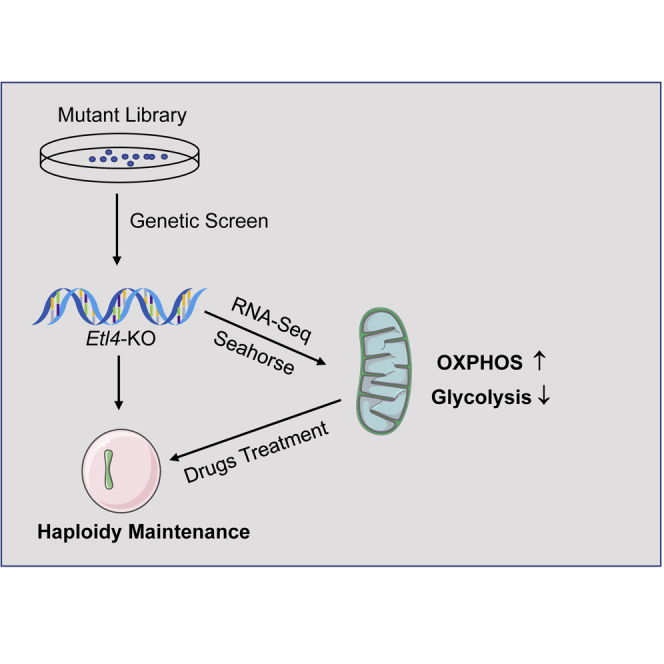
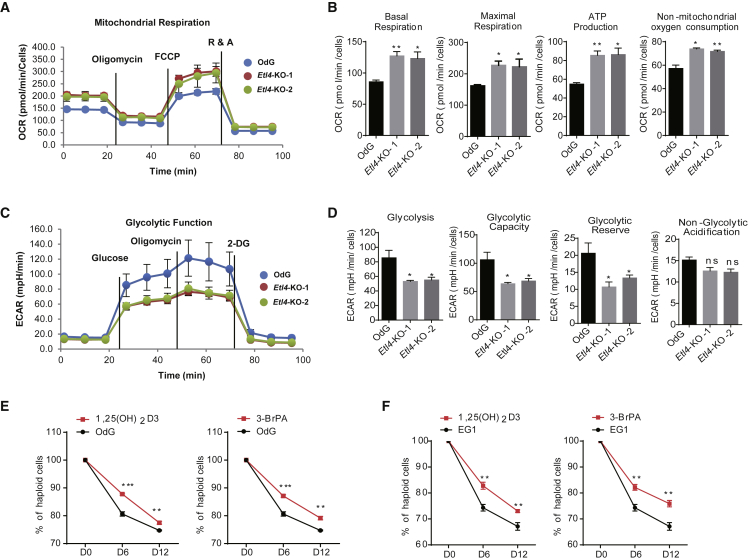
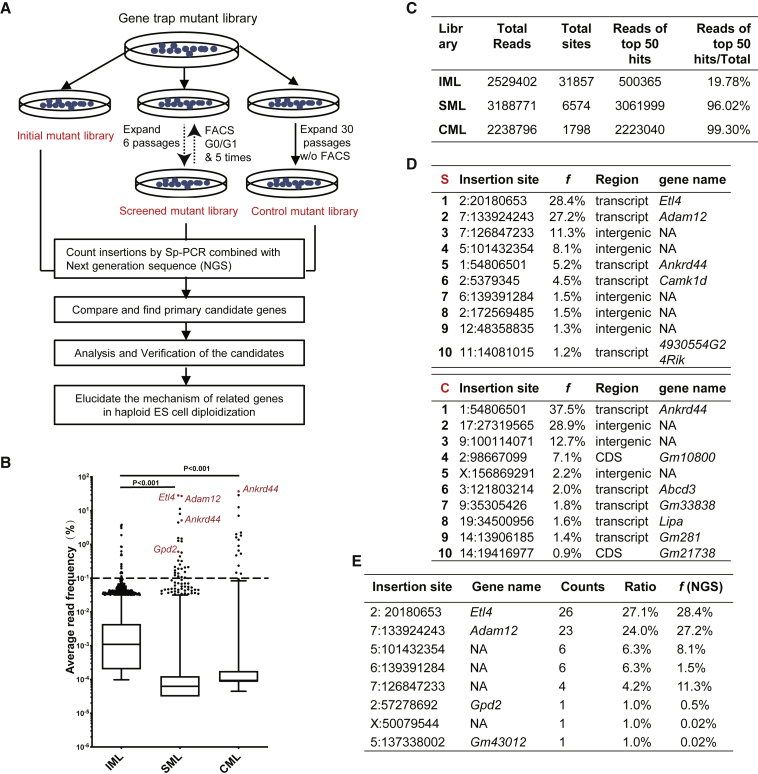
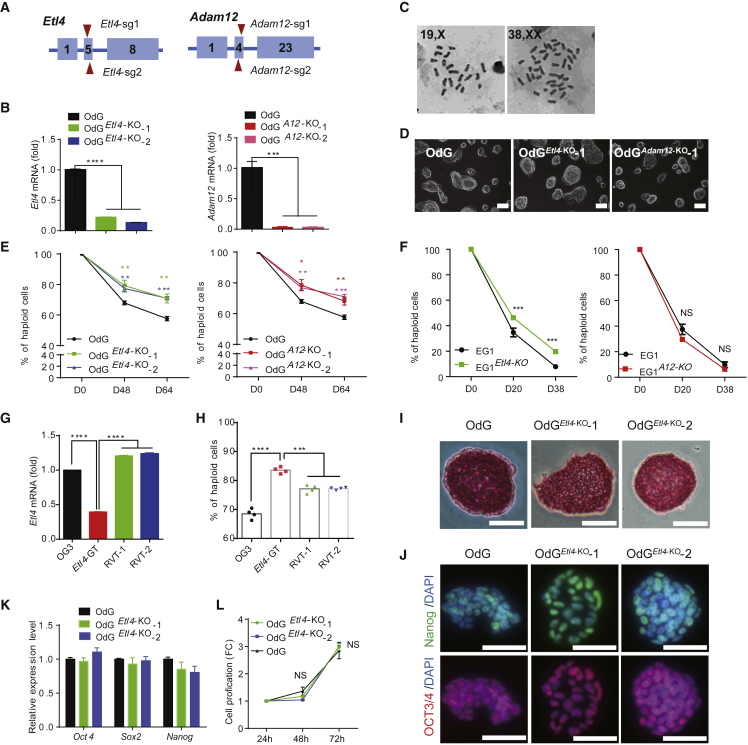
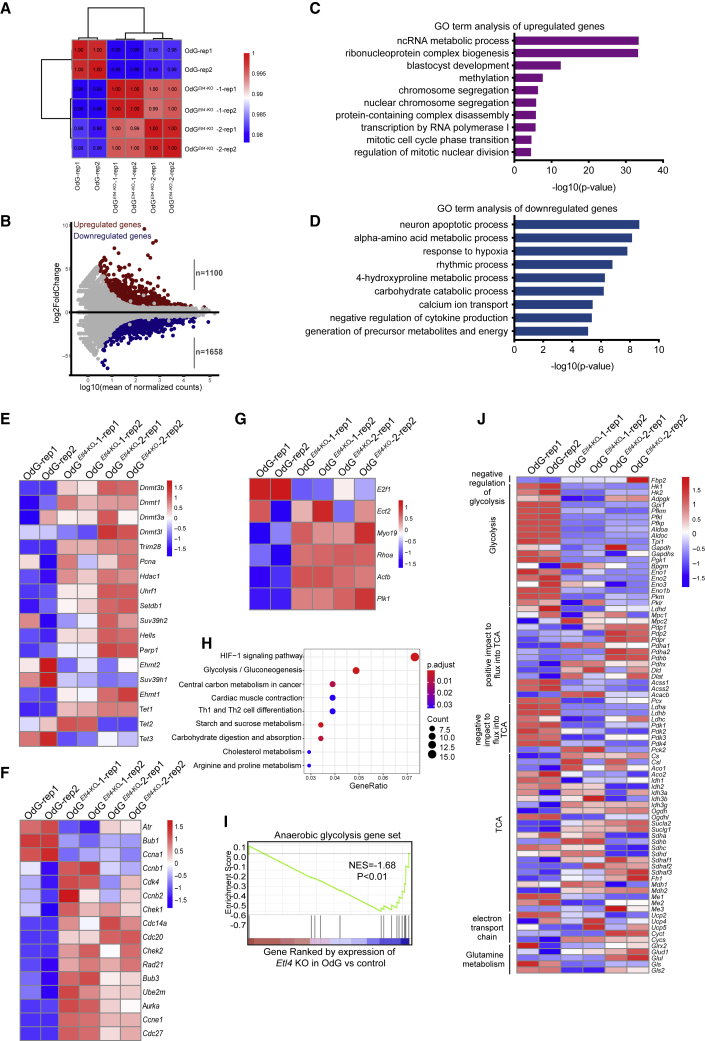
Mammalian haploid embryonic stem cells (haESCs) hold great promise for functional genetic studies and forward screening. However, all established haploid cells are prone to spontaneous diploidization during long-term culture, rendering application challenging. Here, we report a genome-wide loss-of-function screening that identified gene mutations that could significantly reduce the rate of self-diploidization in haESCs. We further demonstrated that CRISPR/Cas9-mediated Etl4 knockout (KO) stabilizes the haploid state in different haESC lines. More interestingly, Etl4 deficiency increases mitochondrial oxidative phosphorylation (OXPHOS) capacity and decreases glycolysis in haESCs. Mimicking this effect by regulating the energy metabolism with drugs decreased the rate of self-diploidization. Collectively, our study identified Etl4 as a novel haploidy-related factor linked to an energy metabolism transition occurring during self-diploidization of haESCs.
哺乳动物单倍体胚胎干细胞 (haESCs) 在功能遗传研究和正向筛选方面具有巨大的潜力。然而,所有已建立的单倍体细胞在长期培养过程中都容易自发地二倍体化,这使得应用具有挑战性。在这里,我们报告了一项全基因组功能丧失筛选,该筛选确定了基因突变,这些基因突变可以显著降低 haESCs 自我二倍体化的速率。我们进一步证明,CRISPR/Cas9 介导的 Etl4 敲除 (KO) 可稳定不同 haESC 系中的单倍体状态。更有趣的是,Etl4 缺乏会增加 haESCs 中线粒体氧化磷酸化 (OXPHOS) 的能力并降低糖酵解。通过用药物调节能量代谢来模拟这种效应,可降低自我二倍体化的速率。总的来说,我们的研究确定了 Etl4 作为一种与 haESCs 自我二倍体化过程中发生的能量代谢转变相关的新型单倍体相关因子。