Department of Radiology, Memorial Sloan Kettering Cancer Center, New York, New York.
Department of Radiology, Weill Cornell Medical College, New York, New York.
Clin Cancer Res. 2021 Apr 1;27(7):2050-2060. doi: 10.1158/1078-0432.CCR-20-3614. Epub 2021 Jan 13.
Most patients with prostate cancer treated with androgen receptor (AR) signaling inhibitors develop therapeutic resistance due to restoration of AR functionality. Thus, there is a critical need for novel treatment approaches. Here we investigate the theranostic potential of hu5A10, a humanized mAb specifically targeting free PSA ().
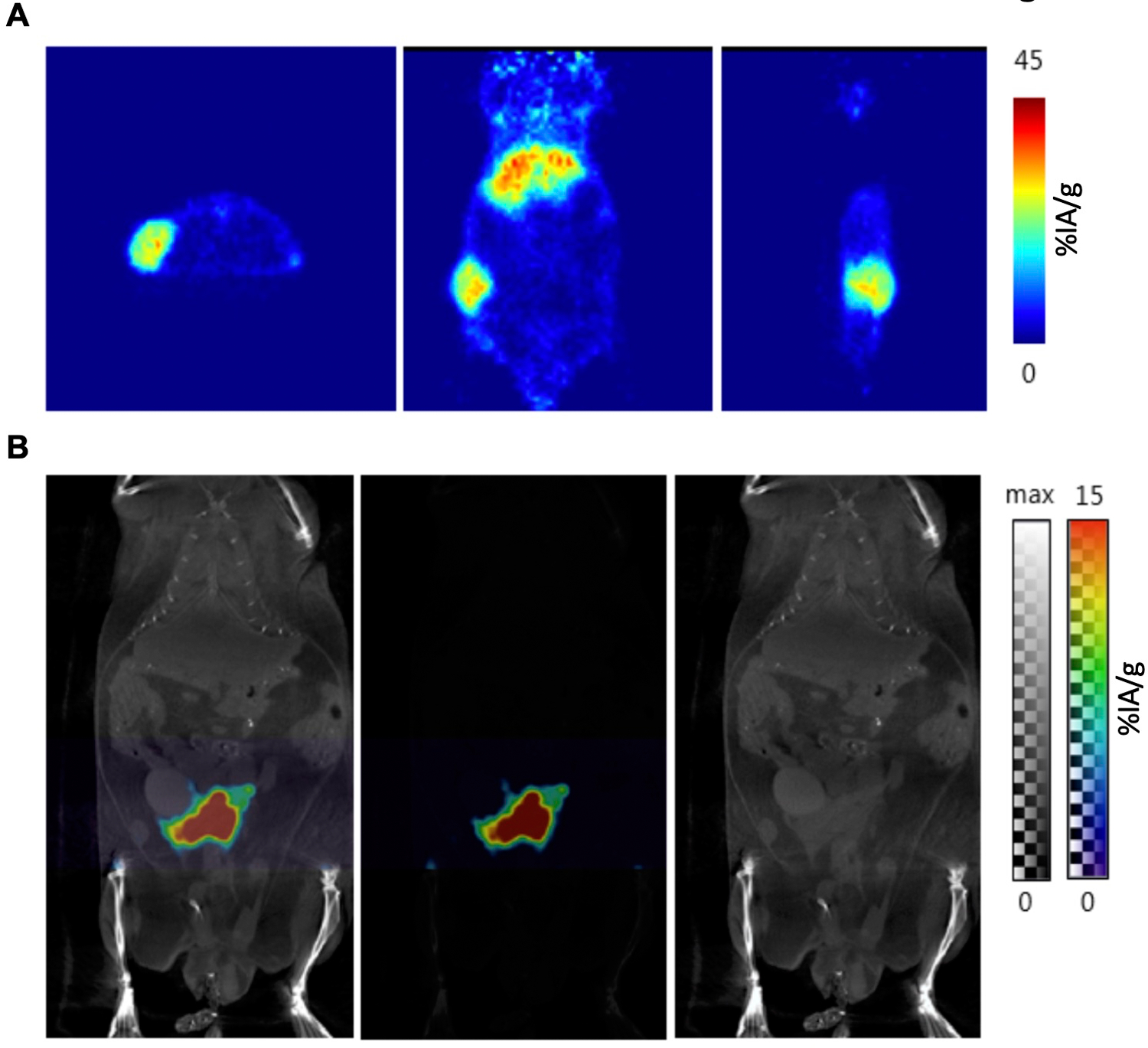
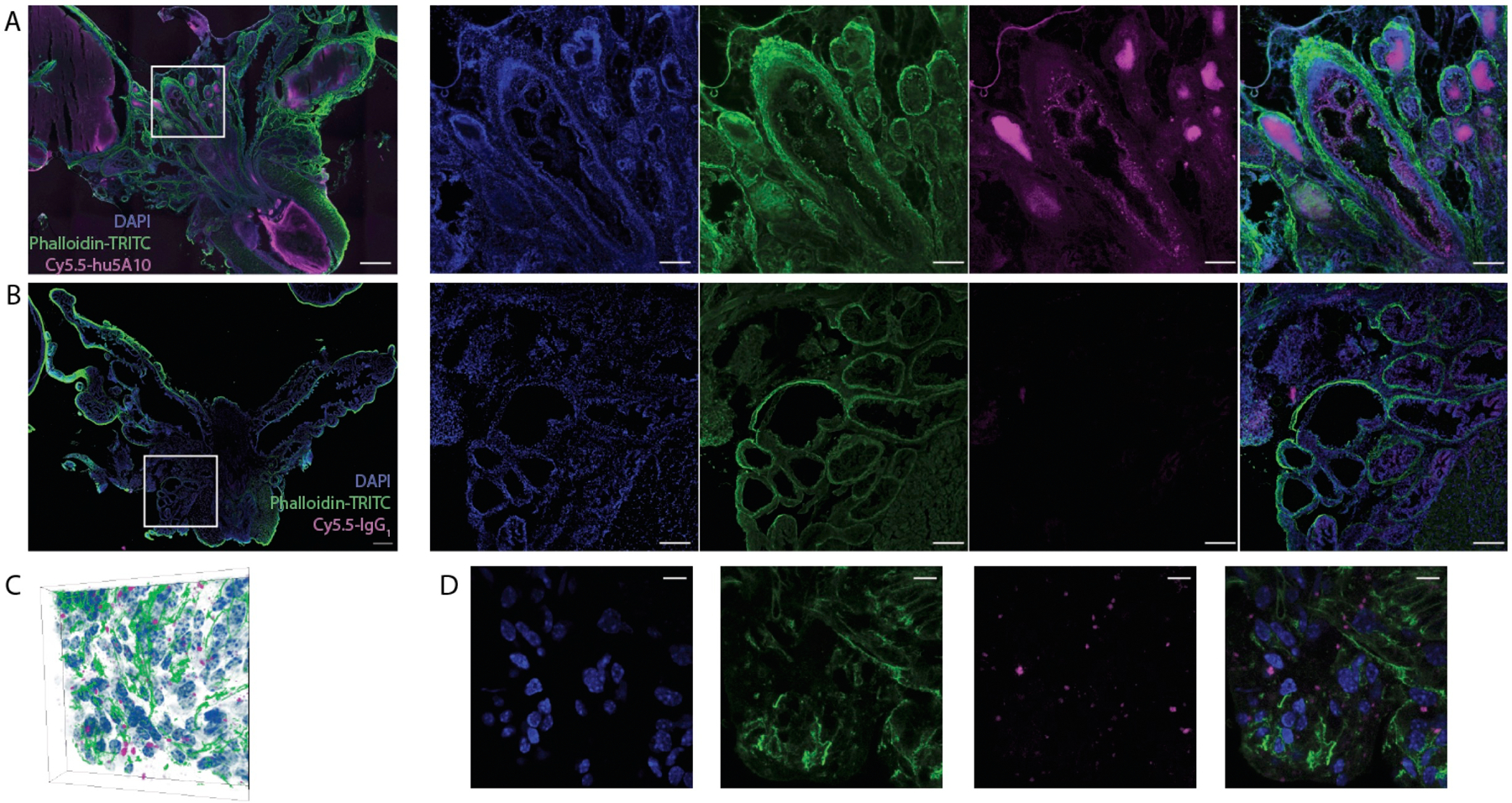
LNCaP-AR (LNCaP with overexpression of wildtype AR) xenografts (NSG mice) and _Hi- transgenic mice were imaged with Zr- or treated with Y- or Ac-labeled hu5A10; biodistribution and subcellular localization were analyzed by gamma counting, PET, autoradiography, and microscopy. Therapeutic efficacy of [Ac]hu5A10 and [Y]hu5A10 in LNCaP-AR tumors was assessed by tumor volume measurements, time to nadir (TTN), time to progression (TTP), and survival. Pharmacokinetics of [Zr]hu5A10 in nonhuman primates (NHP) were determined using PET.
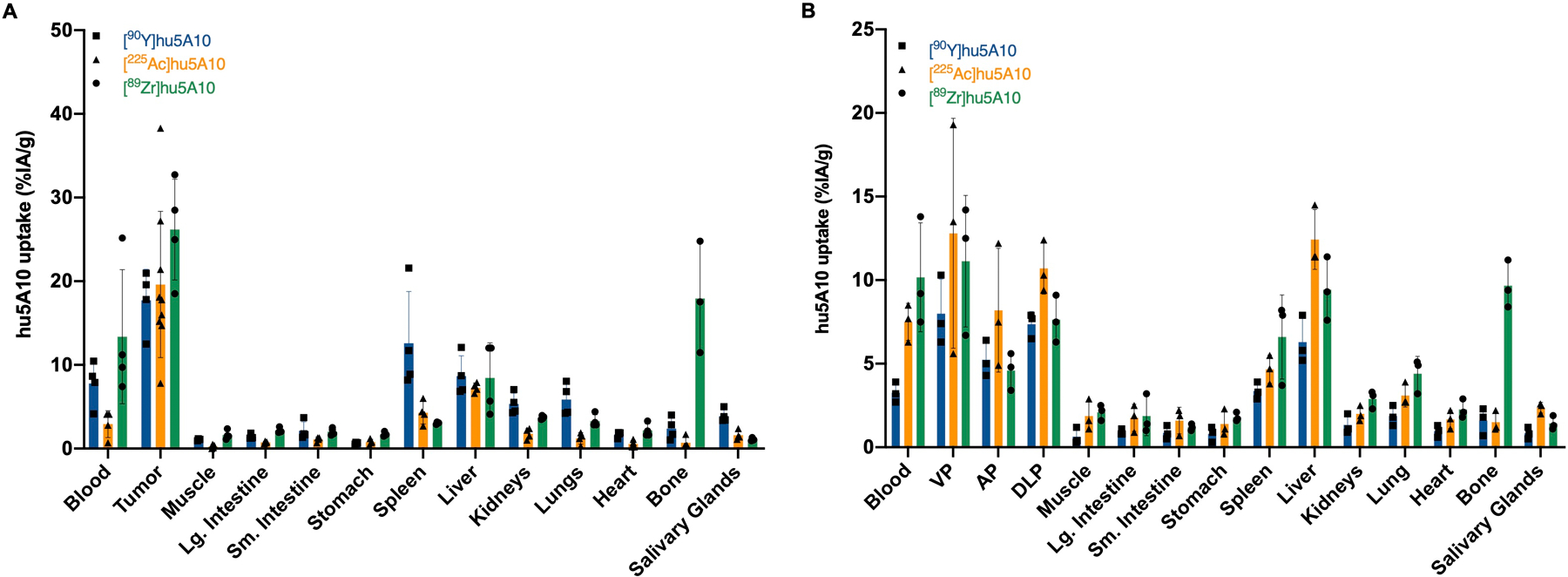
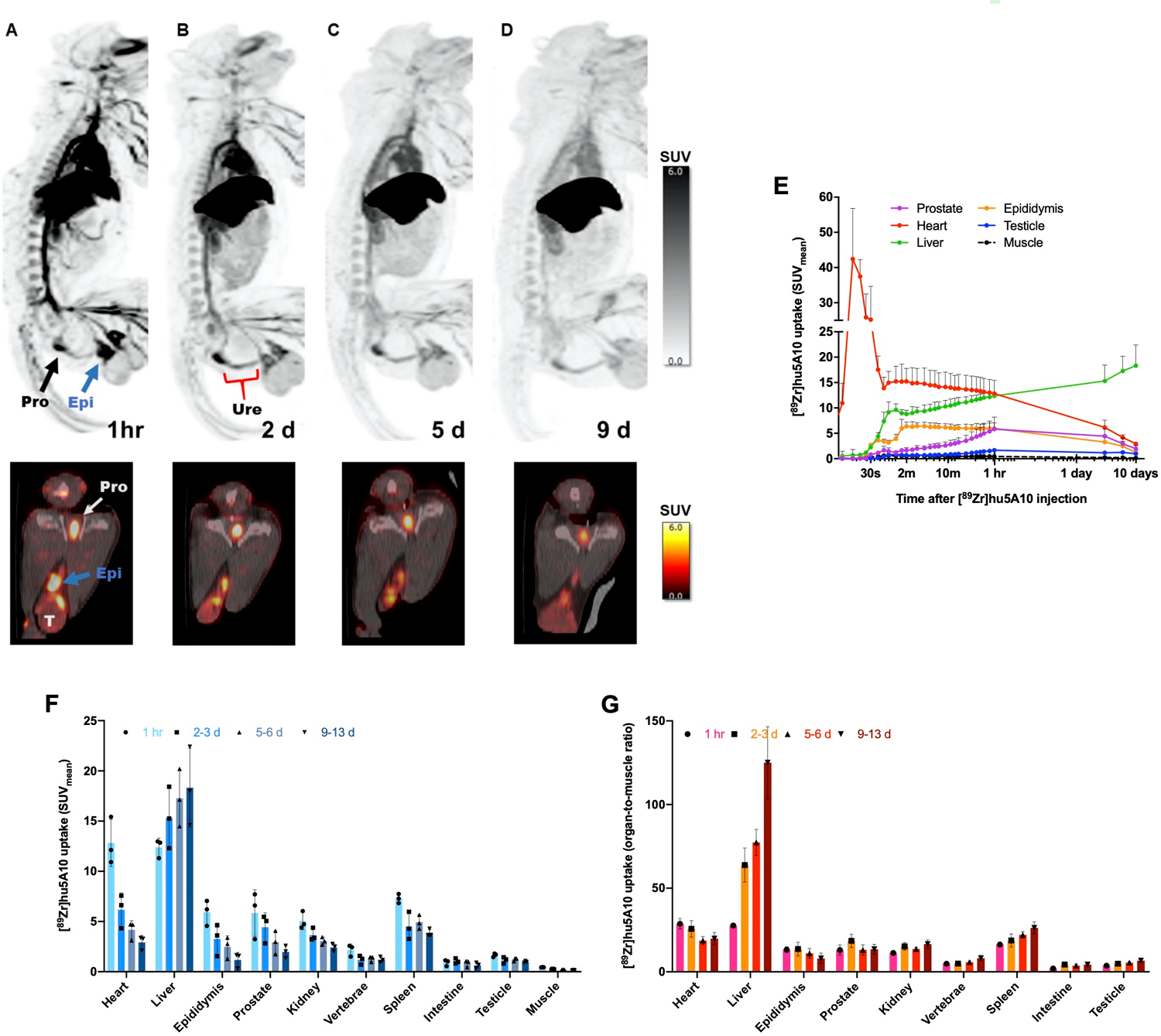
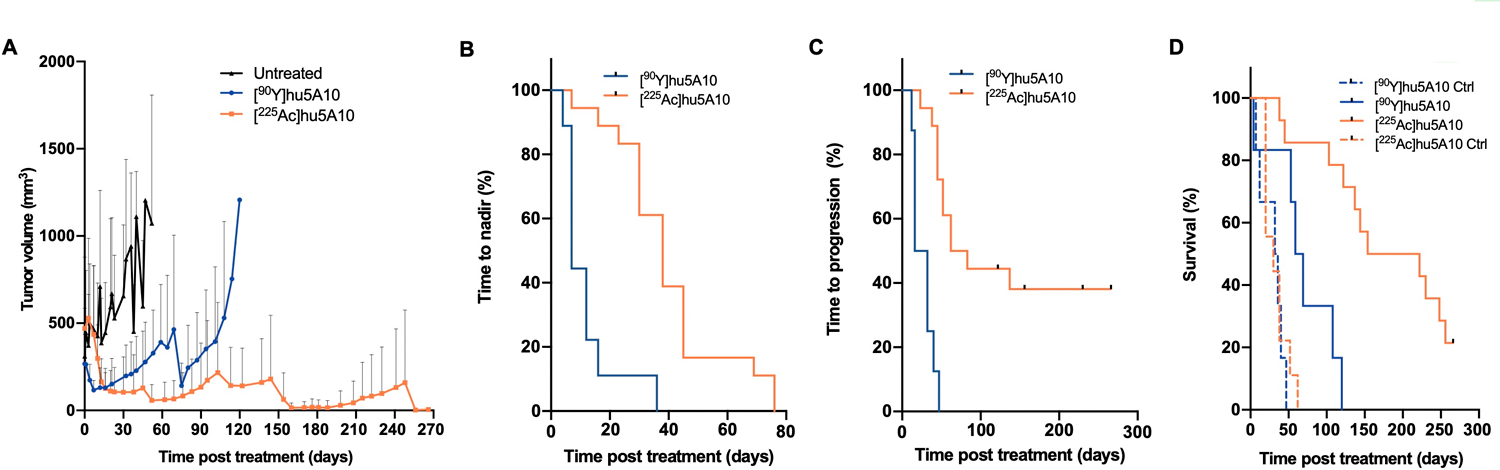
Biodistribution of radiolabeled hu5A10 constructs was comparable in different mouse models. Specific tumor uptake increased over time and correlated with PSA expression. Treatment with [Y]/[Ac]hu5A10 effectively reduced tumor burden and prolonged survival ( ≤ 0.0054). Effects of [Y]hu5A10 were more immediate than [Ac]hu5A10 (TTN, < 0.0001) but less sustained (TTP, < 0.0001). Complete responses were observed in 7 of 18 [Ac]hu5A10 and 1 of 9 mice [Y]hu5A10. Pharmacokinetics of [Zr]hu5A10 were consistent between NHPs and comparable with those in mice. [Zr]hu5A10-PET visualized the NHP-prostate over the 2-week observation period.
We present a complete preclinical evaluation of radiolabeled hu5A10 in mouse prostate cancer models and NHPs, and establish hu5A10 as a new theranostic agent that allows highly specific and effective downstream targeting of AR in PSA-expressing tissue. Our data support the clinical translation of radiolabeled hu5A10 for treating prostate cancer.
大多数接受雄激素受体 (AR) 信号抑制剂治疗的前列腺癌患者由于 AR 功能恢复而产生治疗耐药性。因此,迫切需要新的治疗方法。在这里,我们研究了 hu5A10 的治疗潜力,hu5A10 是一种针对游离 PSA() 的人源化单克隆抗体。
用 Zr-或 Y-或 Ac-标记的 hu5A10 对 LNCaP-AR(过表达野生型 AR 的 LNCaP)异种移植(NSG 小鼠)和 _Hi-转基因小鼠进行成像;通过伽马计数、PET、放射自显影和显微镜分析生物分布和亚细胞定位。通过肿瘤体积测量、至最低点时间 (TTN)、进展时间 (TTP) 和存活来评估 [Ac]hu5A10 和 [Y]hu5A10 在 LNCaP-AR 肿瘤中的治疗效果。使用 PET 确定非人类灵长类动物 (NHP) 中 [Zr]hu5A10 的药代动力学。
不同小鼠模型中放射性标记的 hu5A10 构建体的生物分布相似。肿瘤摄取随时间增加,并与 PSA 表达相关。用 [Y]/[Ac]hu5A10 治疗可有效降低肿瘤负担并延长存活时间(≤0.0054)。[Y]hu5A10 的作用比 [Ac]hu5A10 更迅速(TTN,<0.0001),但持续时间更短(TTP,<0.0001)。在 18 只 [Ac]hu5A10 小鼠中有 7 只和 9 只 [Y]hu5A10 小鼠中观察到完全反应。NHP 中的 [Zr]hu5A10 药代动力学与小鼠相似。[Zr]hu5A10-PET 在 2 周观察期内可视化了 NHP-前列腺。
我们在小鼠前列腺癌模型和 NHP 中进行了放射性标记的 hu5A10 的完整临床前评估,并将 hu5A10 确立为一种新的治疗诊断剂,可允许在 PSA 表达组织中对 AR 进行高度特异性和有效的下游靶向治疗。我们的数据支持放射性标记的 hu5A10 用于治疗前列腺癌的临床转化。