Division of Oncology and Pathology, Department of Clinical Sciences Lund, Lund University, Lund, Sweden.
Department of Medical Physics and Biomedical Engineering, Sahlgrenska University Hospital, Gothenburg, Sweden.
Theranostics. 2019 Apr 6;9(8):2129-2142. doi: 10.7150/thno.31179. eCollection 2019.
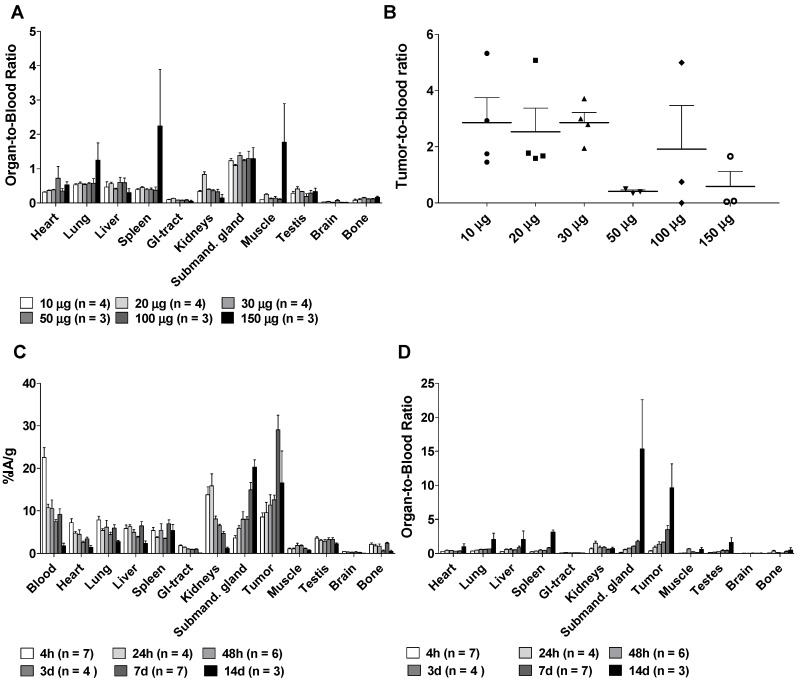
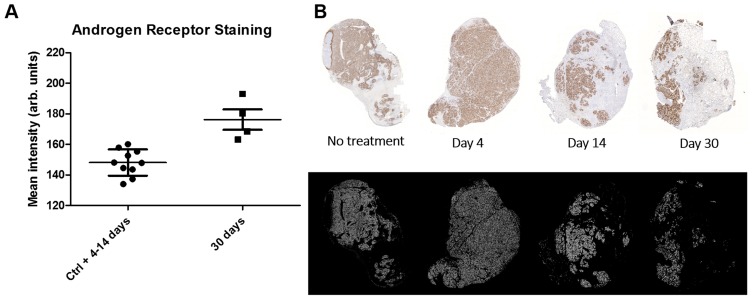
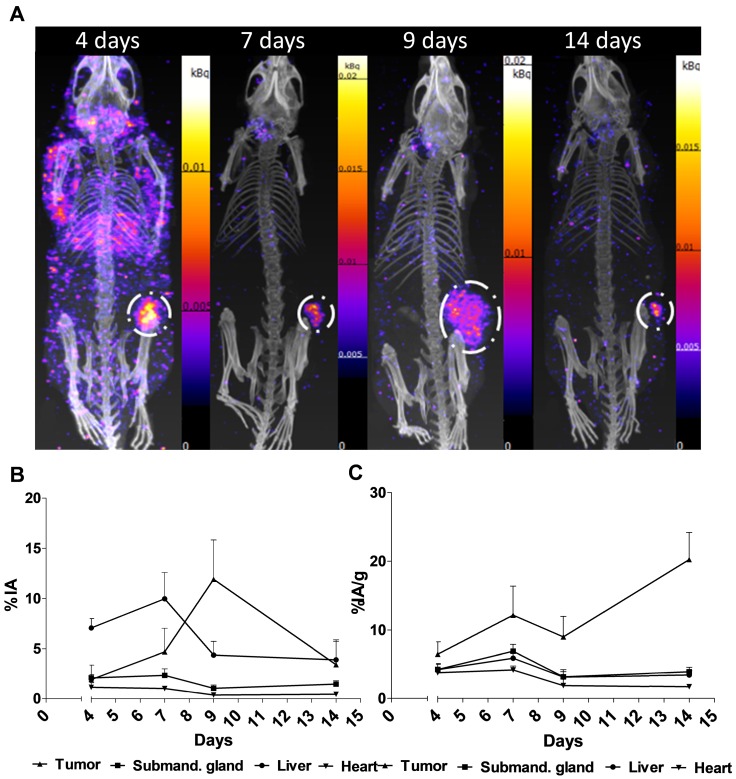
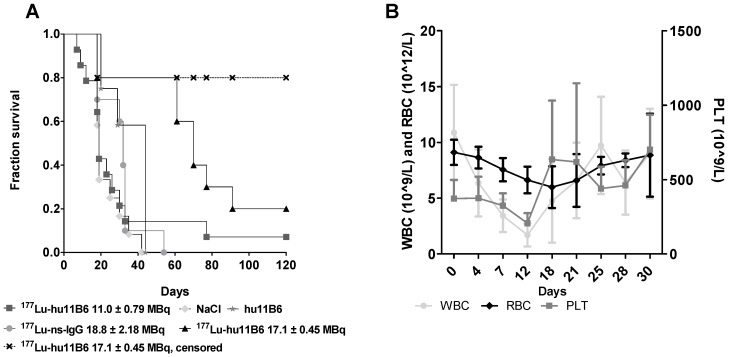
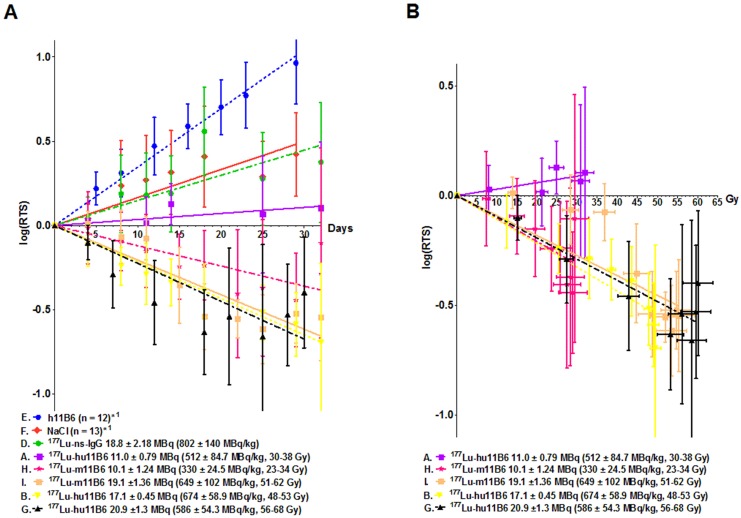
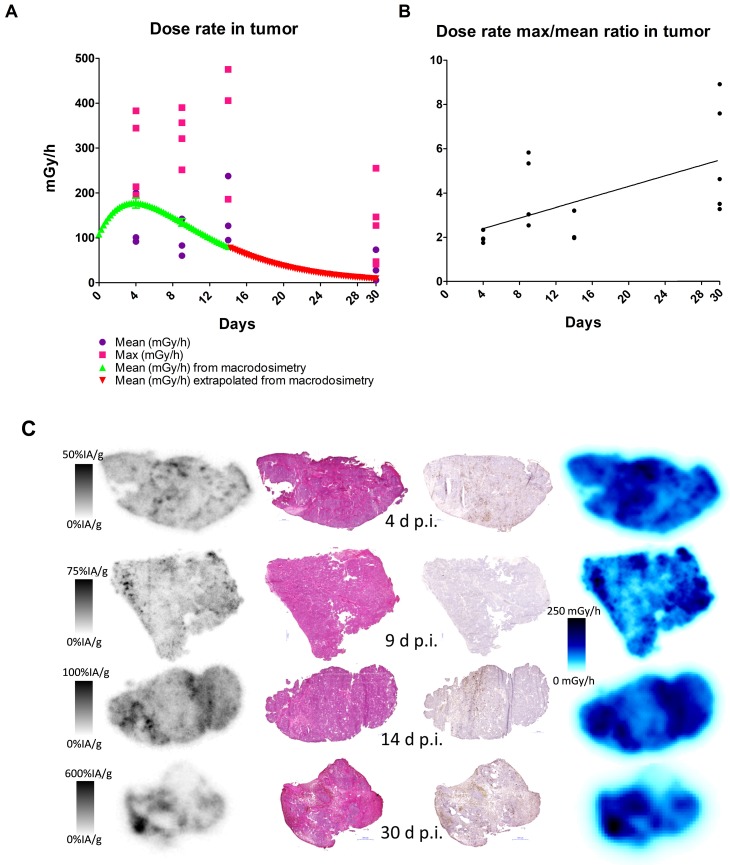
Androgen ablating drugs increase life expectancy in men with metastatic prostate cancer, but resistance inevitably develops. In a majority of these recurrent tumors, the androgen axis is reactivated in the form of increased androgen receptor (AR) expression. Targeting proteins that are expressed as a down-stream effect of AR activity is a promising rationale for management of this disease. The humanized IgG1 antibody hu11B6 internalizes into prostate and prostate cancer (PCa) cells by binding to the catalytic cleft of human kallikrein 2 (hK2), a prostate specific enzyme governed by the AR-pathway. In a previous study, hu11B6 conjugated with Actinium-225 (Ac), a high linear energy transfer (LET) radionuclide, was shown to generate an AR-upregulation driven feed-forward mechanism that is believed to enhance therapeutic efficacy. We assessed the efficacy of hu11B6 labeled with a low LET beta-emitter, Lutetium-177 (Lu) and investigated whether similar tumor killing and AR-enhancement is produced. Moreover, single-photon emission computed tomography (SPECT) imaging of Lu is quantitatively accurate and can be used to perform treatment planning. [Lu]hu11B6 therefore has significant potential as a theranostic agent. : Subcutaneous PCa xenografts (LNCaP s.c.) were grown in male mice. Biokinetics at 4-336 h post injection and uptake as a function of the amount of hu11B6 injected at 72 h were studied. Over a 30 to 120-day treatment period the therapeutic efficacy of different activities of [Lu]hu11B6 were assessed by volumetric tumor measurements, blood cell counts, molecular analysis of the tumor as well as SPECT/CT imaging. Organ specific mean absorbed doses were calculated, using a MIRD-scheme, based on biokinetic data and rodent specific S-factors from a modified MOBY phantom. Tumor tissues of treated xenografts were immunohistochemically (IHC) stained for Ki-67 (proliferation) and AR, SA-β-gal activity (senescence) and analyzed by digital autoradiography (DAR). : Organ-to-blood and tumor-to-blood ratios were independent of hu11B6 specific activity except for the highest amount of antibody (150 µg). Tumor accumulation of [Lu]hu11B6 peaked at 168 h with a specific uptake of 29 ± 9.1 percent injected activity per gram (%IA/g) and low accumulation in normal organs except in the submandibular gland (15 ± 4.5 %IA/g), attributed to a cross-reaction with mice kallikreins in this organ, was seen. However, SPECT imaging with therapeutic amounts of [Lu]hu11B6 revealed no peak in tumor accumulation at 7 d, probably due to cellular retention of Lu and decreasing tumor volumes. For [Lu]hu11B6 treated mice, tumor decrements of up to 4/5 of the initial tumor volume and reversible myelotoxicity with a nadir at 12 d were observed after a single injection. Tumor volume reduction correlated with injected activity and the absorbed dose. IHC revealed retained expression of AR throughout treatment and that Ki-67 staining reached a nadir at 9-14 d which coincided with high SA- β-gal activity (14 d). Quantification of nuclei staining showed that Ki-67 expression correlated negatively with activity uptake. AR expression levels in cells surviving therapy compared to previous timepoints and to controls at 30 d were significantly increased (p = 0.017). : This study shows that hu11B6 labeled with the low LET beta-emitting radionuclide Lu can deliver therapeutic absorbed doses to prostate cancer xenografts with transient hematological side-effects. The tumor response correlated with the absorbed dose both on a macro and a small scale dosimetric level. Analysis of AR staining showed that AR protein levels increased late in the study suggesting a therapeutic mechanism, a feed forward mechanism coupled to AR driven response to DNA damage or clonal lineage selection, similar to that reported in high LET alpha-particle therapy using Ac labeled hu11B6, however emerging at a later timepoint.
雄激素剥夺药物可延长转移性前列腺癌男性的预期寿命,但不可避免地会产生耐药性。在大多数这些复发性肿瘤中,雄激素轴以增加雄激素受体 (AR) 表达的形式重新激活。针对 AR 活性下游表达的蛋白是管理这种疾病的合理方法。人源化 IgG1 抗体 hu11B6 通过与人类激肽 2 (hK2) 的催化裂隙结合,内化到前列腺和前列腺癌 (PCa) 细胞中,hK2 是一种受 AR 通路调控的前列腺特异性酶。在之前的研究中,hu11B6 与锕-225 (Ac) 缀合,Ac 是一种高线性能量转移 (LET) 放射性核素,被证明可产生 AR 上调驱动的正反馈机制,据信可增强治疗效果。我们评估了用低 LET β发射体镥-177 (Lu) 标记的 hu11B6 的疗效,并研究了是否产生类似的肿瘤杀伤和 AR 增强作用。此外,Lu 的单光子发射计算机断层扫描 (SPECT) 成像具有定量准确性,可用于进行治疗计划。[Lu]hu11B6 因此具有作为治疗诊断剂的巨大潜力。:皮下种植 LNCaP 前列腺癌异种移植瘤(LNCaP s.c.)于雄性小鼠中生长。研究了注射后 4-336 h 的生物动力学以及在 72 h 时注射不同剂量 hu11B6 的摄取量与注射量的关系。在 30 至 120 天的治疗期间,通过体积肿瘤测量、血细胞计数、肿瘤的分子分析以及 SPECT/CT 成像来评估不同[Lu]hu11B6 活性的治疗效果。根据生物动力学数据和来自改良 MOBY 体模的啮齿动物特异性 S 因子,使用 MIRD 方案计算了器官特异性平均吸收剂量。用 Ki-67(增殖)和 AR、SA-β-半乳糖酶活性(衰老)的免疫组织化学(IHC)对治疗性异种移植瘤的肿瘤组织进行染色,并通过数字放射自显影(DAR)进行分析。:器官与血液和肿瘤与血液的比值与 hu11B6 的特异性活性无关,除了最高的抗体量(150 µg)。[Lu]hu11B6 的肿瘤摄取在 168 h 时达到峰值,特异性摄取为每克 29±9.1%的注入活性(%IA/g),正常器官的摄取量低,除了下颌下腺(15±4.5%IA/g)外,这归因于该器官中的小鼠激肽的交叉反应。然而,用治疗量的[Lu]hu11B6 进行 SPECT 成像,在 7 d 时肿瘤摄取没有达到峰值,可能是由于 Lu 的细胞保留和肿瘤体积的减少。对于接受[Lu]hu11B6 治疗的小鼠,单次注射后观察到肿瘤体积减少高达初始肿瘤体积的 4/5,并且骨髓毒性可逆,在 12 d 时达到最低点。肿瘤体积的减少与注入的活性和吸收剂量相关。IHC 显示 AR 的表达在整个治疗过程中得以保留,Ki-67 染色在 9-14 d 时达到最低点,这与高 SA-β-半乳糖酶活性(14 d)相一致。对细胞核染色的定量分析表明,Ki-67 表达与活性摄取呈负相关。与之前的时间点和 30 d 时的对照组相比,治疗后存活的细胞中 AR 表达水平显著增加(p = 0.017)。:本研究表明,用低 LET β发射体 Lu 标记的 hu11B6 可以将治疗性吸收剂量输送到前列腺癌异种移植瘤,同时伴有短暂的血液学副作用。肿瘤反应与宏观和微观水平的吸收剂量相关。AR 染色分析显示,AR 蛋白水平在研究后期升高,表明存在一种治疗机制,即与 AR 驱动的 DNA 损伤或克隆谱系选择相关的正反馈机制,类似于使用 Ac 标记的 hu11B6 进行高 LET α 粒子治疗时报告的机制,但出现的时间较晚。