Department of Pathology, University Hospital of Dijon, Dijon, France.
National Reference Centre for Gastroenteritis Viruses, Laboratory of Virology, University Hospital of Dijon, Dijon, France.
mSphere. 2021 Jan 13;6(1):e01185-20. doi: 10.1128/mSphere.01185-20.
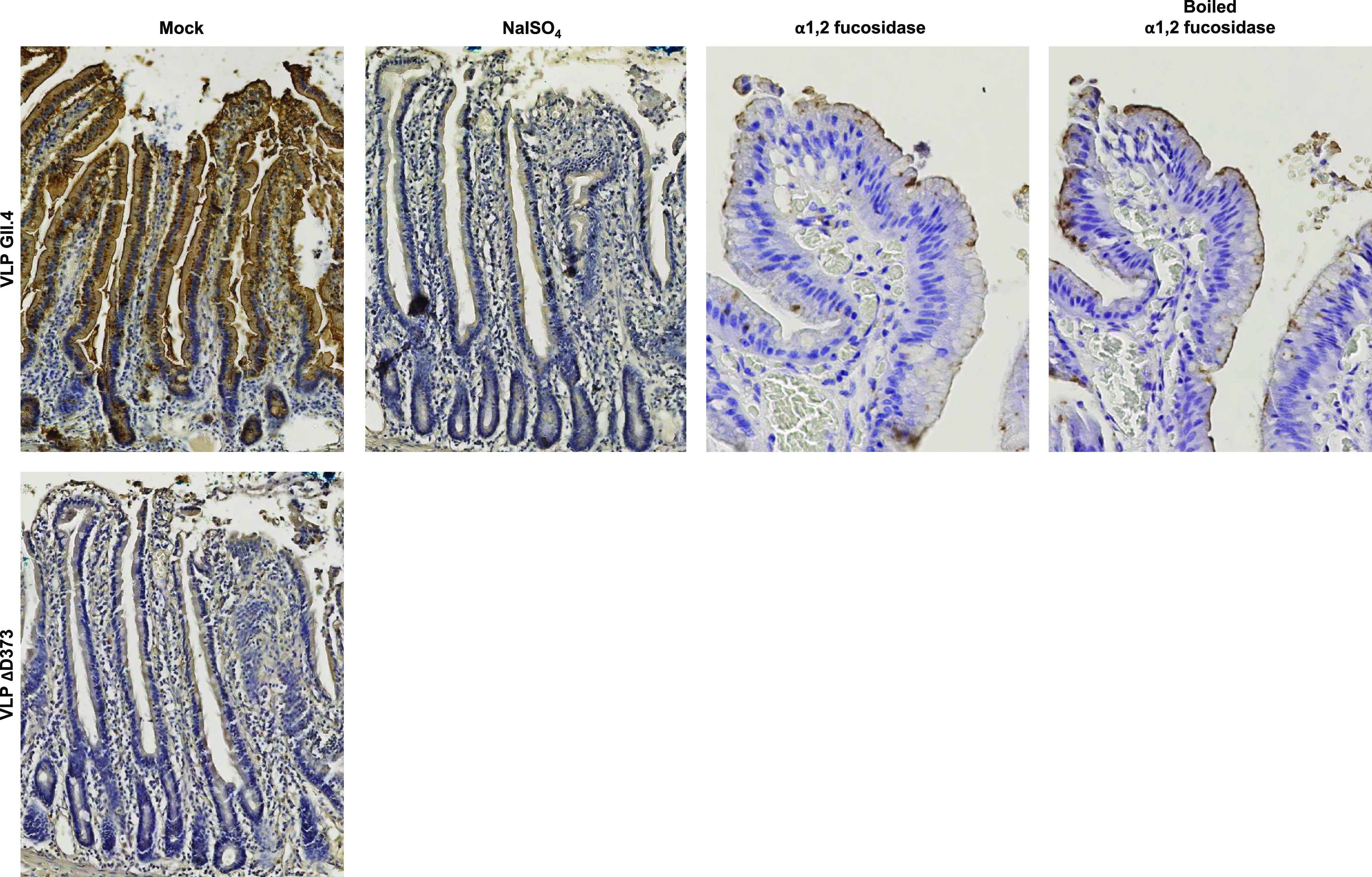
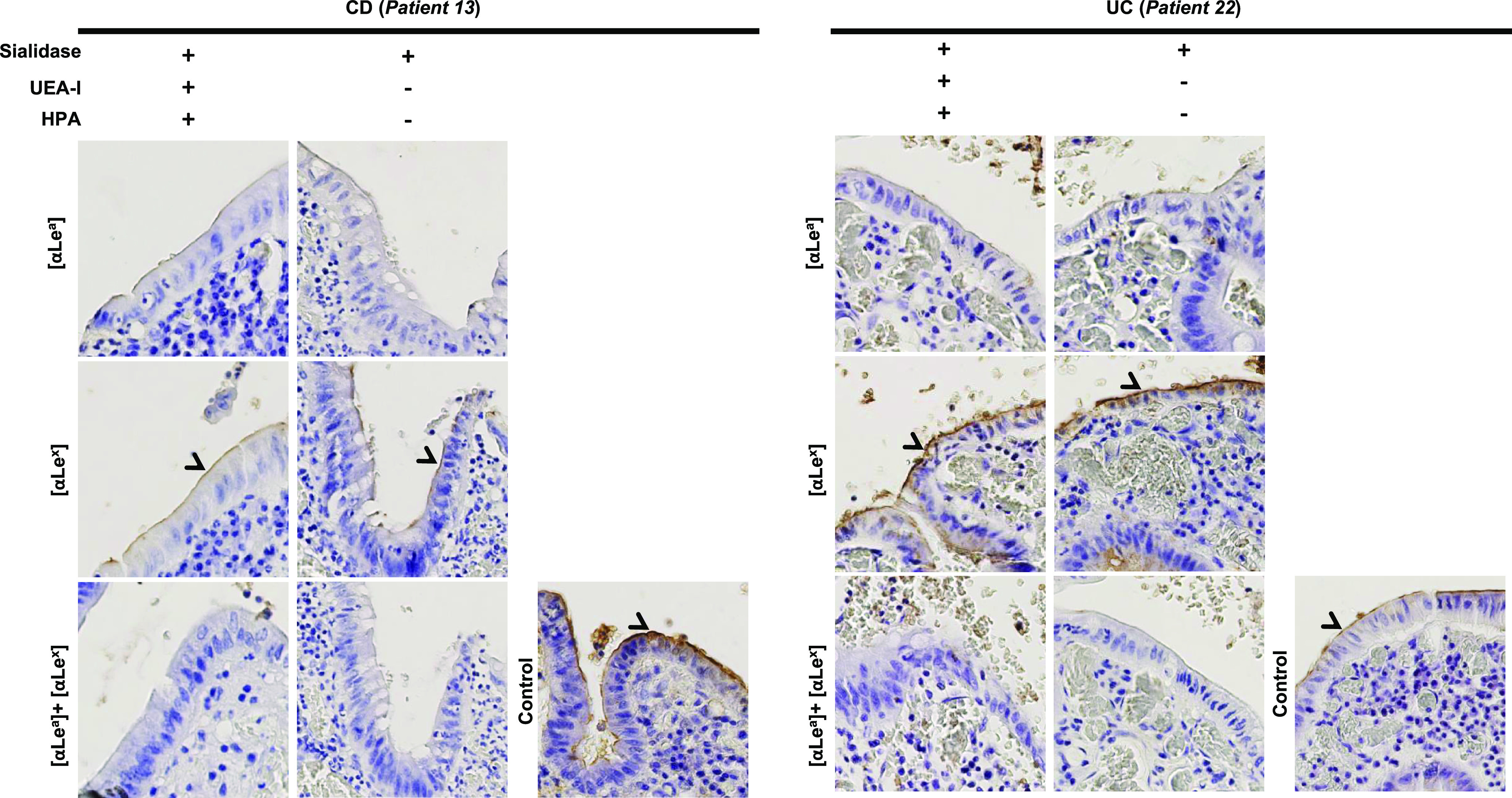
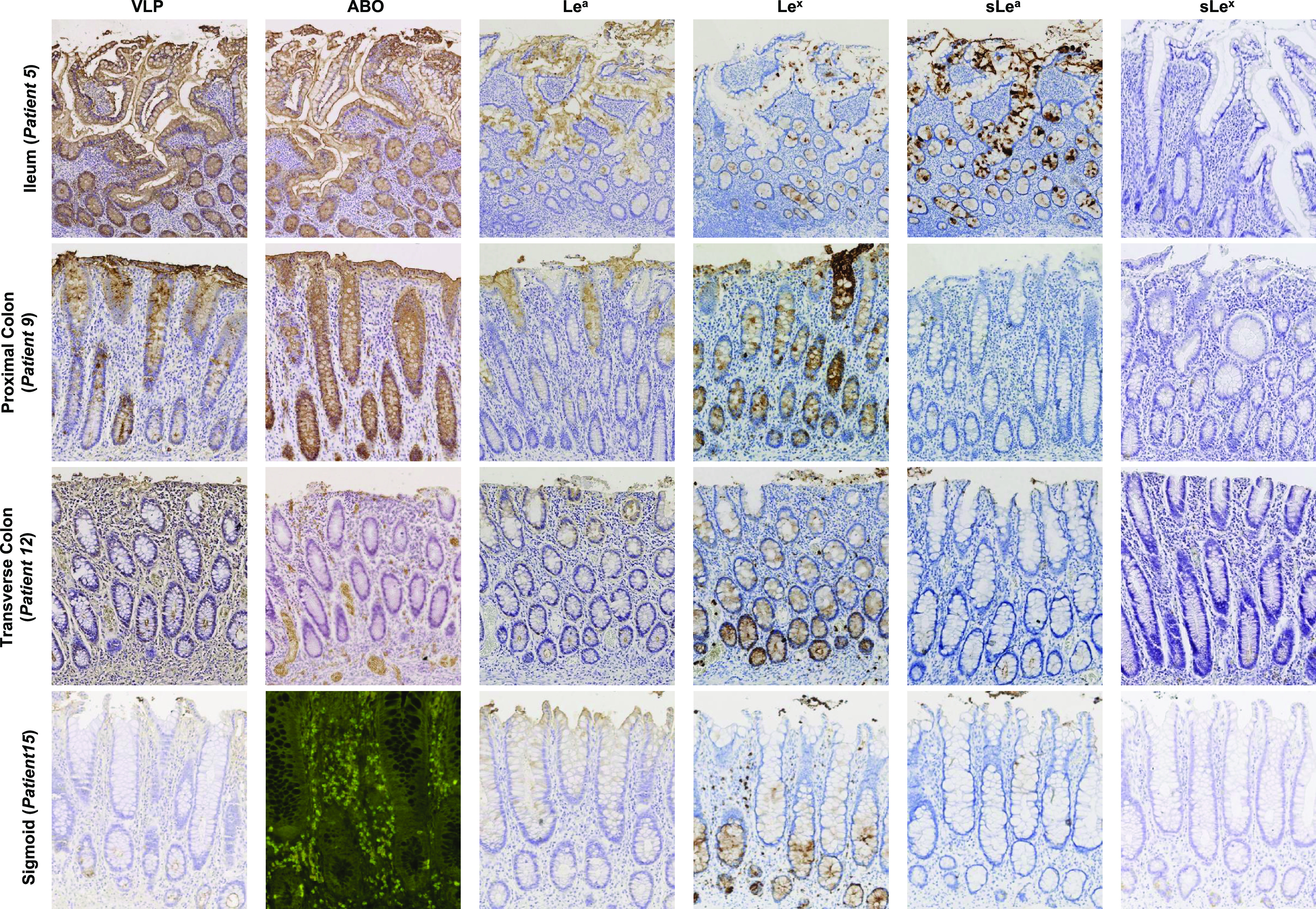
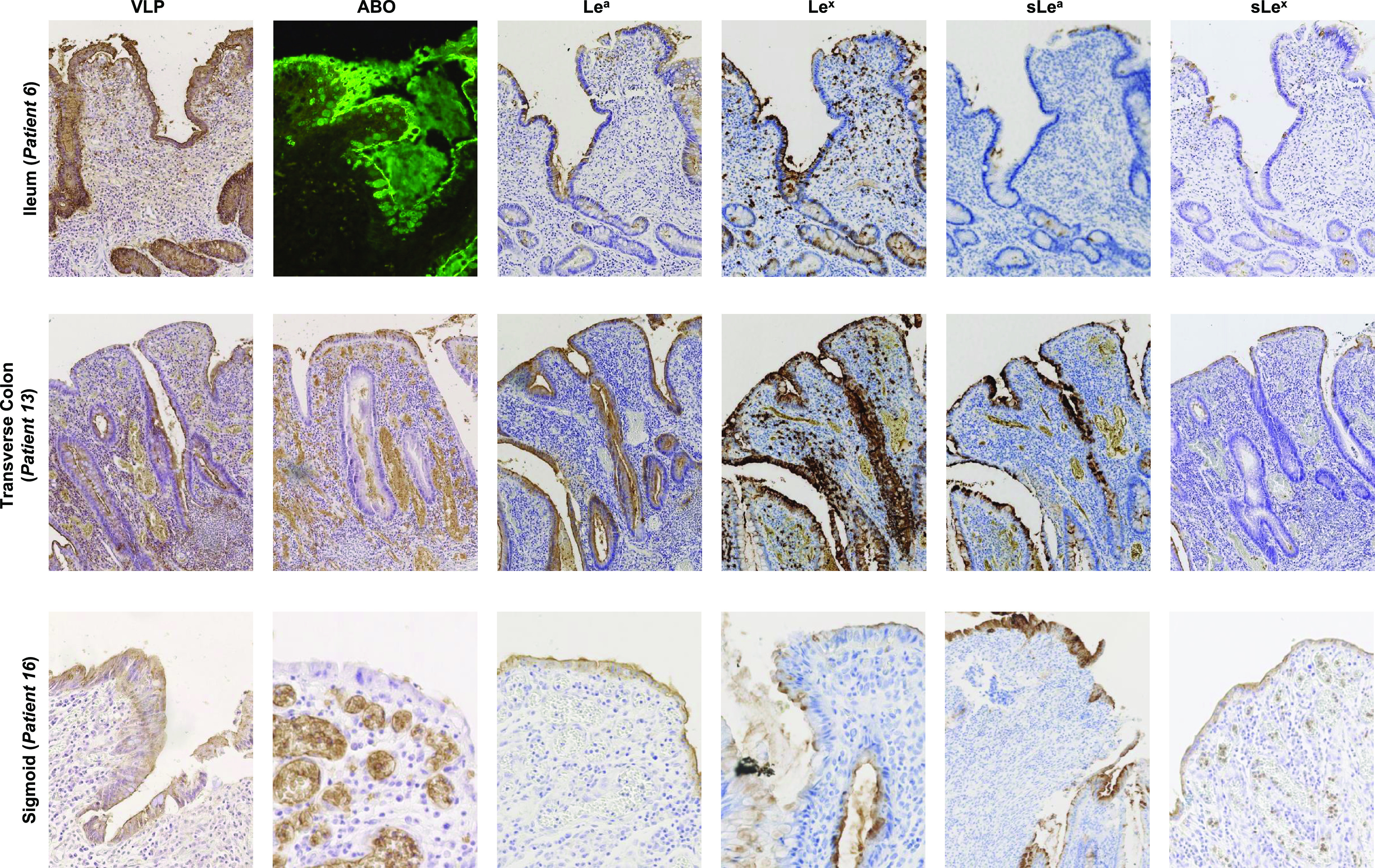
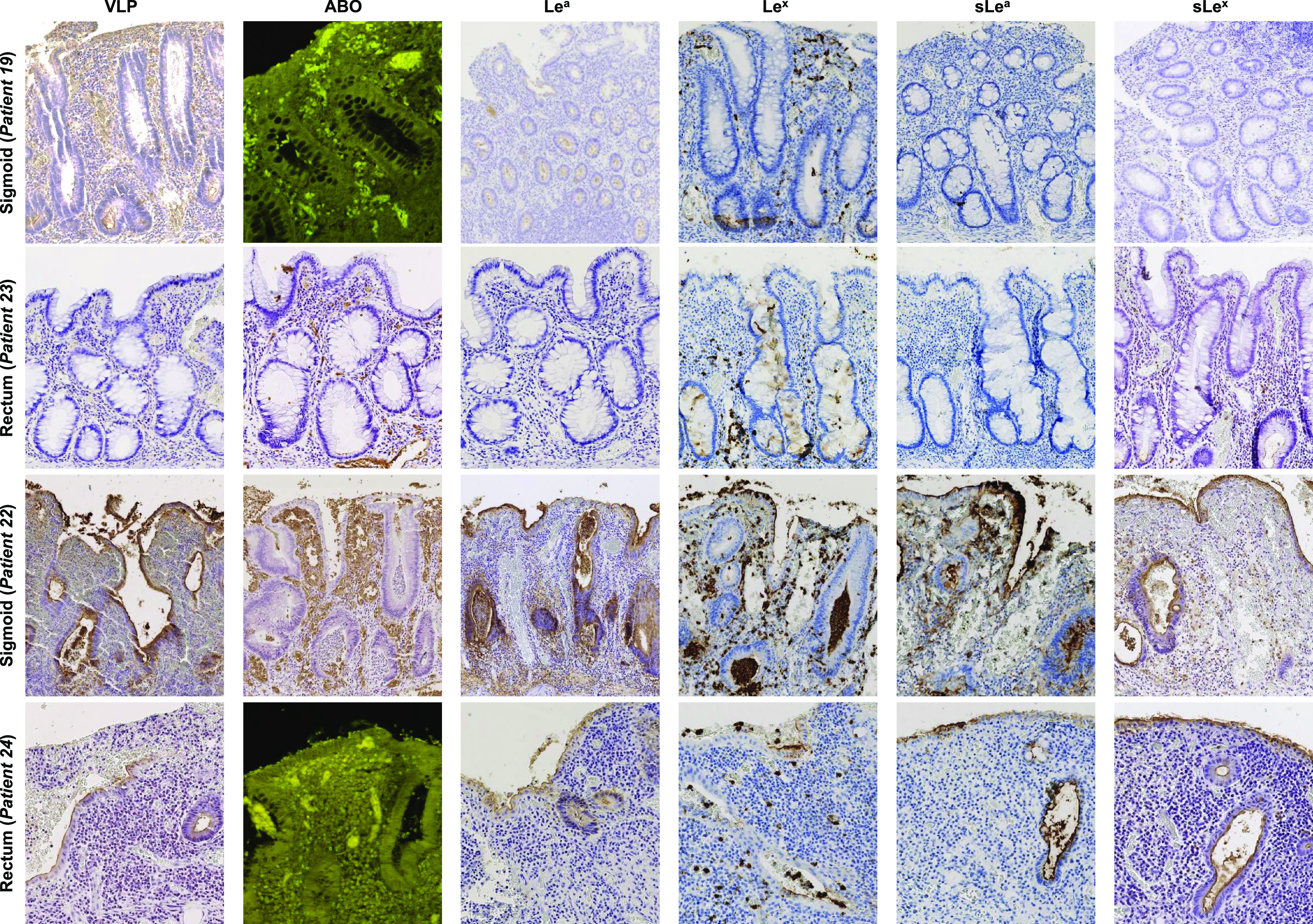
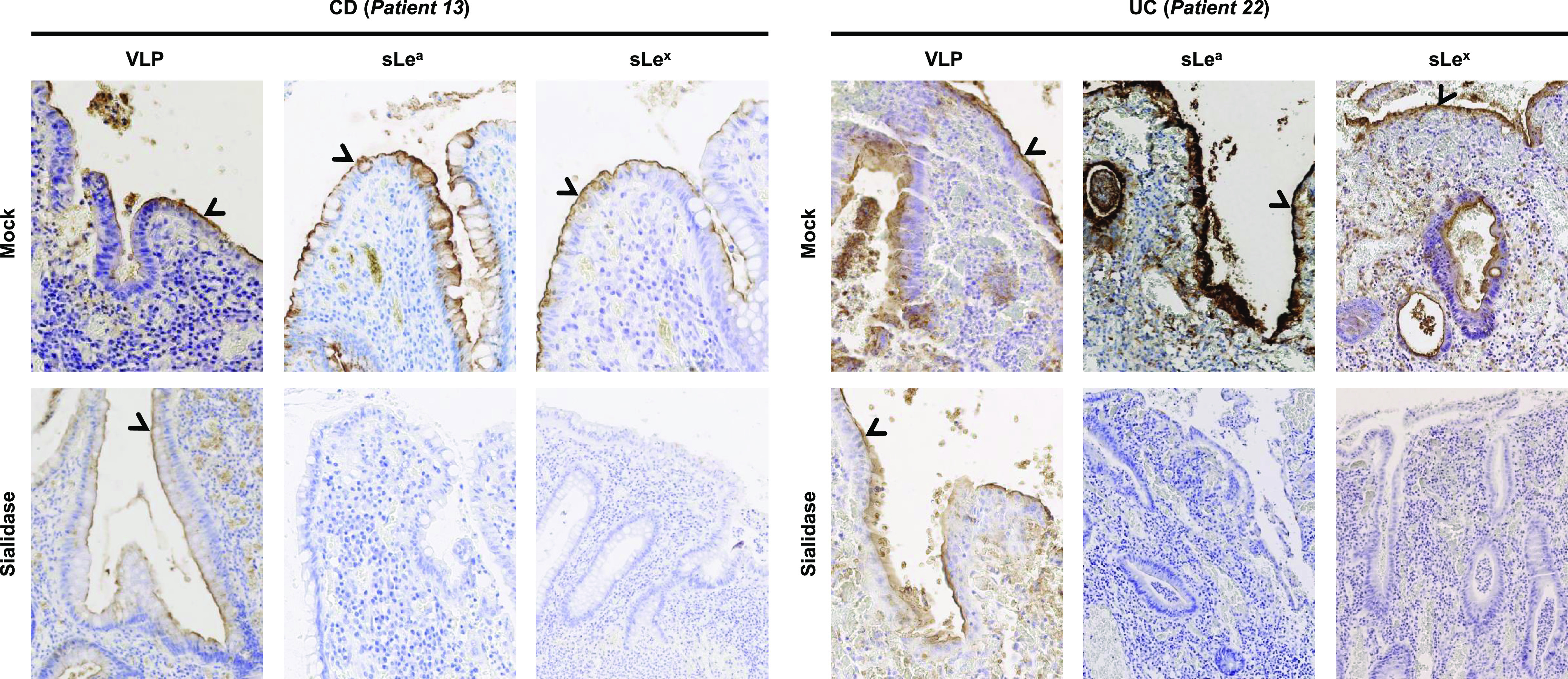
Inflammatory bowel disease (IBD), which includes Crohn's disease (CD) and ulcerative colitis (UC), is related to immunological and microbial factors, with the possible implication of enteric viruses. We characterized the interaction between human noroviruses (HuNoVs) and blood group antigens in refractory CD and UC using HuNoV virus-like particles (VLPs) and histological tissues. Immunohistochemistry was conducted on inflammatory tissue samples from the small intestine, colon, and rectum in 15 CD and 9 UC patients. Analysis of the regenerative mucosa of the colon and rectum revealed strong expression of sialylated Lewis a (sLe) and Lewis x (sLe) antigens and HuNoV VLP binding in the absence of ABO antigen expression in both UC and CD. Competition experiments using sialidase, lectins, and monoclonal antibodies demonstrated that HuNoV attachment mostly involved Le and, to a lesser extent, Le moieties on regenerative mucosa in both UC and CD. Further studies will be required to understand the implications of specific HuNoV binding to regenerative mucosa in refractory IBD. Inflammatory bowel diseases (IBD), including Crohn's disease (CD) and ulcerative colitis (UC), are progressive diseases affecting millions of people each year. Flare-ups during IBD result in severe mucosal alterations of the small intestine (in CD) and in the colon and rectum (in CD and UC). Immunohistochemical analysis of CD and UC samples showed strong expression of known tumoral markers sialyl Lewis a (CA19.9) and sialyl Lewis x (CD15s) antigens on colonic and rectal regenerative mucosa, concurrent with strong human norovirus (HuNov) VLP GII.4 affinity. Sialidase treatment and competition experiments using histo-blood group antigen (HBGA)-specific monoclonal antibodies and lectins clearly demonstrated the implication of the Lewis a moiety and, to a lesser extent, the Lewis x moiety in HuNov recognition in regenerative mucosa of CD and UC tissues. Further studies are required to explore the possible implications of enteric viruses in the impairment of epithelial repair and dysregulation of inflammatory pathways during severe IBD.
炎症性肠病(IBD)包括克罗恩病(CD)和溃疡性结肠炎(UC),与免疫和微生物因素有关,可能涉及肠道病毒。我们使用人类诺如病毒(HuNoV)病毒样颗粒(VLPs)和组织学组织来描述难治性 CD 和 UC 中 HuNoV 与血型抗原之间的相互作用。对 15 例 CD 和 9 例 UC 患者的小肠、结肠和直肠炎症组织样本进行免疫组织化学分析。在 UC 和 CD 中,在不存在 ABO 抗原表达的情况下,在结肠和直肠的再生黏膜中均发现强烈表达唾液酸化 Lewis a(sLe)和 Lewis x(sLe)抗原和 HuNoV VLP 结合。使用唾液酸酶、凝集素和单克隆抗体进行的竞争实验表明,HuNoV 附着主要涉及 Le,在 UC 和 CD 中,较少涉及 Le 部分。需要进一步研究才能了解特定 HuNoV 与难治性 IBD 再生黏膜结合的意义。炎症性肠病(IBD)包括克罗恩病(CD)和溃疡性结肠炎(UC),是每年影响数百万人的进行性疾病。IBD 发作会导致小肠(CD 中)和结肠和直肠(CD 和 UC 中)的严重黏膜改变。对 CD 和 UC 样本的免疫组织化学分析显示,在结肠和直肠再生黏膜上强烈表达已知的肿瘤标志物唾液酸化 Lewis a(CA19.9)和唾液酸化 Lewis x(CD15s)抗原,同时强烈结合人诺如病毒(HuNov)VLP GII.4。唾液酸酶处理和使用组织血型抗原(HBGA)特异性单克隆抗体和凝集素进行的竞争实验清楚地表明,Lewis a 部分以及在较小程度上,Lewis x 部分在 HuNov 识别 CD 和 UC 组织的再生黏膜中起作用。需要进一步研究以探索肠道病毒在严重 IBD 期间上皮修复受损和炎症途径失调中的可能作用。